
Contents
- 1 Introduction & Spiritual Essence
- 2 Historical Origins & Scriptural Legend
- 3 Architectural Marvels
- 4 Darshan & Ritual Logistics
- 5 Practical Visitor Guidance
- 6 Pilgrimage Connectivity
- 6.1 How to Reach
- 6.2 Nearby Sacred Sites
- 6.3 Frequently Asked Questions (FAQs)
- 6.3.1 1. Is there a VIP darshan entry at Vadaranyeswarar Temple?
- 6.3.2 2. What is the significance of the “Neeli” story associated with this temple?
- 6.3.3 3. Are there accommodation facilities available near the temple?
- 6.3.4 4. Is non-vegetarian food allowed in the temple?
- 6.3.5 5. What is the “Rathina Sabha”?
Introduction & Spiritual Essence
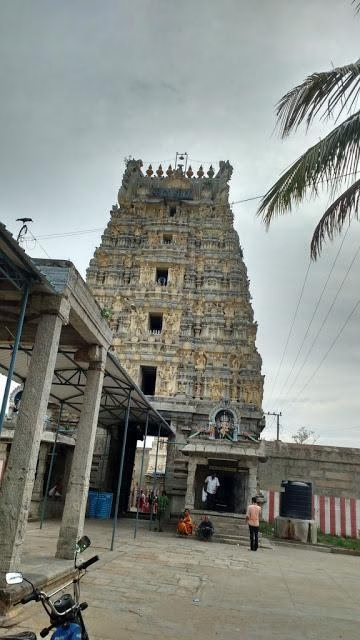
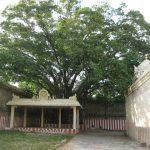
The Vadaranyeswarar Temple, situated in the sacred soil of Thiruvalangadu, Tiruvallur district, stands as a colossal testament to Dravidian spiritual and architectural heritage. Known locally as the “Nataraja Temple of the South,” this shrine is one of the Pancha Sabhams (Five Courts) of Lord Shiva, specifically representing the Rathina Sabha (the stage of the ruby throne).
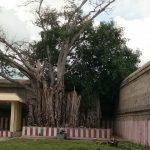
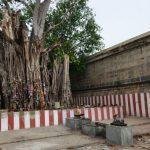
Primary Deity: The presiding deity is Vadaranyeswarar (Lord Shiva), enshrined as a Swayambhu Lingam (self-manifested). The name derives from “Vadaram” (Banyan tree) and “Aranyam” (Forest), referring to the ancient grove where the deity was discovered. The consort, Goddess Parvati, is worshipped as Abhirami (also referred to as Azhagiyanayagi).
Phalaśruti: The Benefits of Pilgrimage
Devotees flock to Thiruvalangadu primarily to witness the cosmic dance of Lord Nataraja and to cleanse ancestral karma. According to temple lore and scriptural records, the vibrations of the Oordhva Thandavam (Upward Dance) performed here by Lord Shiva hold immense power. Worshipping here is believed to:
- Remove Karmic Debt: Cleanses sins accumulated through past lives.
- Astrological Remedies: Highly effective for those suffering from severe Shani (Saturn) or Rahu-Ketu afflictions.
- Instill Confidence: Just as Lord Shiva defeated Kali through rhythm and grace, devotees gain mental stability and victory over enemies.
Historical Origins & Scriptural Legend
Thiruvalangadu is a Paadal Petra Sthalam (holy place glorified by the songs of the Nayanmars). While the exact date of the original structure is lost to antiquity, the temple complex has seen extensive renovation and expansion under the patronage of the Chola Dynasty (particularly Rajaraja Chola I) and later by the Vijayanagara Nayak rulers. The inscriptions on the temple walls date back to the 10th–12th centuries, documenting land grants and ritual endowments.
The Legend of Oordhva Thandavam
Tradition holds that this is the site where Lord Shiva performed the Oordhva Thandavam (The Celestial Dance of Liberation). The legend begins with the demons Sumban and Nisumban, whose blood, upon hitting the ground, transformed into additional Shiva Lingams. To subdue the chaos caused by Goddess Kali (who grew uncontrollable after destroying the demons), Lord Shiva engaged her in a dance battle.
Witnessed by Goddess Parvathi, Brahma, Vishnu, and Narada, Shiva and Kali danced for hours. Finally, Shiva lifted his right leg high into the sky, removed his ringing anklet (the Valari) with his toes, and wore it again—a feat Kali could not replicate. Defeated, Kali conceded defeat, and the spot became a seat of cosmic power.
Architectural Marvels
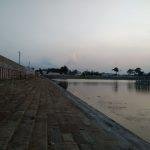
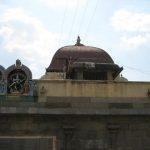
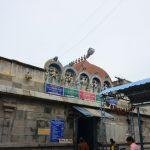
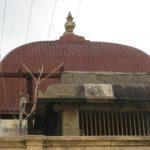
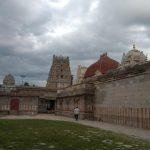
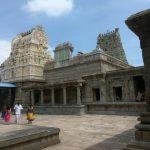
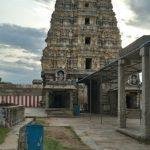
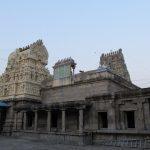
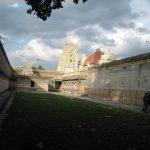
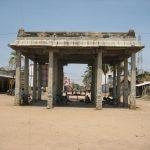
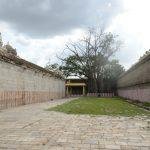
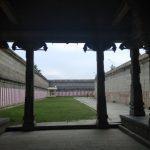
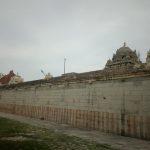
The temple exemplifies the grandeur of Dravidian Architecture. The complex is enclosed by a massive granite wall, covering an area of approximately 4 acres.
Structural Highlights
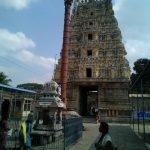
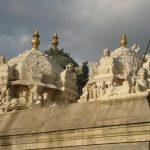
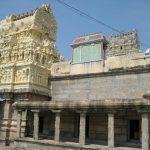
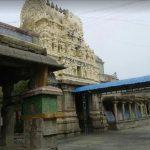
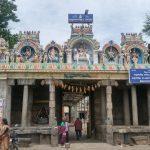
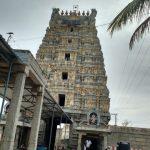
- The Rajagopuram: A towering gateway structure rising to over 70 feet, adorned with intricate stucco figures depicting stories from the Periya Puranam.
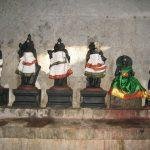
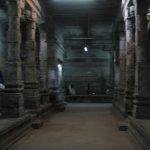
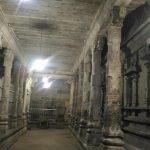
- Rathina Sabha: A distinct circular hall with ruby-colored flooring, believed to be the stage where the dance competition occurred. The ceiling is supported by 36 pillars, each carved with unique sculptures of Sapta Matas and celestial musicians.
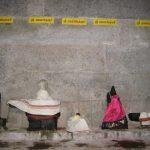
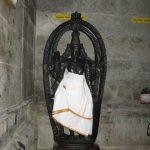
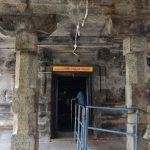
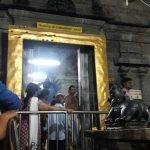
- Sanctum Sanctorum: The inner sanctum houses the Swayambhu Lingam facing east. Unlike many temples, the Somaskandar (Shiva, Parvati, and Skanda) shrines are located in the Pradakshina (circumambulatory) path.
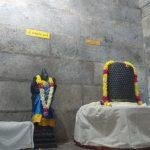
Notably, the temple features a separate shrine for Karaikal Ammaiyar, one of the 63 Nayanmars, who witnessed Shiva’s dance here. Her shrine is unique as it depicts her walking upside down on her head, a symbol of her intense penance.


Darshan & Ritual Logistics
To ensure a smooth spiritual journey, devotees should adhere to the temple schedule. Please note that timings may vary slightly during festival seasons.
Daily Timings
| Session | Timing | Description |
|---|---|---|
| Morning | 06:00 AM – 12:00 PM | Opening, Ushatkala Puja, Abhishekam. |
| Afternoon | 12:00 PM – 04:30 PM | Temple remains closed. |
| Evening | 04:30 PM – 08:30 PM | Arthajama Puja, Nataraja Pooja, Closure. |
Key Sevas & Online Booking
While walk-in darshans are free, specific Sevas require prior booking. These are highly sought after, especially on Mondays and Fridays.
- Abhishekam: Performed to the Swayambhu Lingam with milk, honey, and sandalwood paste.
- Rudra Abhishekam: An elaborate Vedic ritual for removing obstacles.
- Archana: Personalized prayers offered at the shrine of Karaikal Ammaiyar.
Online Booking: As of 2026, bookings for special Sevas are managed via the official Tamil Nadu Hindu Religious and Charitable Endowments (HR&CE) portal. Devotees are advised to book at least 14 days in advance for festival days.
2026 Festival Calendar
Major festivals are celebrated with grandeur, drawing thousands of devotees.
- Arudra Darshanam: January 2026. Celebrates the cosmic dance of Nataraja. The chariot procession is a key highlight.
- Maha Shivaratri: February 26, 2026. Continuous chanting of hymns and special night-long Abhishekam.
- Aadi Perukku: July 2026. Ritualistic worship of the Holy Rivers (Theerthavari).
- Karthigai Deepam: November 2026. Lighting of the holy lamp; signifies the victory of light over darkness.
Practical Visitor Guidance
Thiruvalangadu is a serene village, but practical preparation enhances the experience.
- Dress Code: Traditional attire is mandatory. Men should wear Veshti (dhoti) or formal trousers with a shirt; women should wear saree, churidar, or other modest traditional wear. Western attire (jeans, shorts) is discouraged inside the sanctum.
- Photography: Strictly prohibited inside the Garbhagriha (Sanctum Sanctorum) and the Rathina Sabha. Photography is generally allowed in the outer corridors, but permission is required for professional shoots.
- Crowd Management: The best time for a peaceful darshan is between 6:00 AM – 7:30 AM or during the afternoon closure window. During Arudra Darshan, expect significant crowds; arrival by 4:00 AM is recommended.
- Seasonal Advice:
- Summer (April–June): Temperatures exceed 40°C. Carry reusable water bottles and a head covering. The temple provides free water stations.
- Monsoon (October–December): Carry an umbrella; the surrounding precincts can get slippery.
- Accessibility: The temple has wheelchair access via the side entrance near the office, though the inner sanctum requires climbing steps (assistance available from temple staff).
Pilgrimage Connectivity
Thiruvalangadu is well-connected by road and rail, making it a convenient weekend getaway from Chennai.
How to Reach
- By Air: The nearest airport is Chennai International Airport (MAA), approximately 65 km away.
- By Train: Thiruvalangadu Railway Station is the penultimate stop on the Chennai Central–Arakkonam route. From the station, a 5-minute auto-rickshaw ride brings you to the temple. Alternatively, alight at Arakkonam Junction (18 km away) for more frequent train options.
- By Road: Located on NH 205 (Chennai–Tirupati route). From Chennai, drive via Poonamallee, Thiruvallur, and take the detour towards Narayanapuram. Regular buses ply from T. Nagar (Bus No. 597) and Koyambedu CBT.
Nearby Sacred Sites
To complete your pilgrimage circuit, consider visiting these nearby Paadal Petra Sthalams within a 20 km radius:
- Saatchi Boodeshwarar Temple (Pazhayanur): Located just 1 km away. Associated with the Neeli legend.
- Thiruvirkolam Temple: 20 km away. Where Lord Shiva promised Kali a pleasing dance performance.
- Thirupachur: 15 km away. Known as the “Madhya Arjunam”.
Frequently Asked Questions (FAQs)
1. Is there a VIP darshan entry at Vadaranyeswarar Temple?
Yes, the temple offers a Quick Darshan ticket for ₹50. However, during peak hours and major festivals like Arudra Darshan, these lines also experience heavy rush. The most effective way to bypass crowds is to book the Suprabhatam or Abhishekam Seva tickets in advance.
2. What is the significance of the “Neeli” story associated with this temple?
The “Neeli” story is a folk legend regarding a woman named Neeli who was wrongfully killed by her husband. Her spirit sought revenge and eventually attained salvation here. It is the origin of the Tamil proverb “Neeli Kanneer” (crocodile tears). Her presence is linked to the Saatchi Boodeshwarar shrine nearby.
3. Are there accommodation facilities available near the temple?
Basic guest houses are available at very nominal rates managed by the local temple administration. For better amenities (AC rooms, hotels), it is recommended to stay in Thiruvallur (18 km) or Arakkonam (18 km). Chennai offers the widest range of hotels 65 km away.
4. Is non-vegetarian food allowed in the temple?
No, the Vadaranyeswarar Temple is a strict vegetarian zone. Alcohol, tobacco, and non-vegetarian food are strictly prohibited within the temple complex and its immediate vicinity.
5. What is the “Rathina Sabha”?
The Rathina Sabha (Ruby Court) is one of the five courts of Lord Nataraja. It is the specific location within the temple where Lord Shiva performed the Oordhva Thandavam to defeat Goddess Kali. It is identified by the ruby-colored flooring and intricate stone carvings of dancers on the pillars.
Address: Vadaranyeswarar Temple, Thiruvalangadu, Tiruvallur District, Tamil Nadu 631205
Recent Posts

ओ सांवरे तूने ही मुझको संभाला – Lyrics & Meaning
ओ सांवरे तूने ही मुझको संभाला – A Prayer to Shyam Origin & Spiritual Essence Why This Bhajan Resonates Devotees chant this when overwhelmed by life’s storms—the refrain ‘तूने ही मुझको संभाला’ is the soul’s sigh of relief: “You…

कथा ये है महाराज मेरे की – Lyrics & Meaning
कथा ये है महाराज मेरे की छत्रपति संभाजी महाराज – A Prayer to Chhatrapati Sambhaji Maharaj Origin & Spiritual Essence Why This Bhajan Resonates Devotees chant this when their spirit feels tested—its powerful refrain “महाराज मेरे” is a soul’s…

Rigveda Samhita Yathartha Anuvada (ऋग्वेद संहिता यथार्थ अनुवाद) – Complete Set with Anvayartha & Hindi/English Translation
The Rigveda is the oldest surviving scripture of humanity and the foundational text of Sanātana Dharma. For serious students, scholars, UPSC aspirants studying ancient Indian history, Sanskrit learners, and spiritual seekers, a precise and grammatically structured translation is indispensable.…

आना भी अकेला है जाना भी अकेला है – Lyrics & Meaning | BharatTemples
आना भी अकेला है जाना भी अकेला है – A Prayer to the Divine Witness Origin & Spiritual Essence Why This Bhajan Resonates Devotees turn to this bhajan in moments of deep reflection—when life’s attachments begin to ache. The…

माता शेरावाली के द्वार जो भी जाता है – Lyrics & Meaning
माता शेरावाली के द्वार जो भी जाता है – A Prayer to Maa Sherawali Origin & Spiritual Essence Why This Bhajan Resonates Devotees turn to this bhajan in times of fear or uncertainty—its promise that no one leaves Maa’s…

मार लेना सपणी उबार लेणा भवरा – Lyrics & Meaning
मार लेना सपणी उबार लेणा भवरा – A Prayer to the Divine Beloved Origin & Spiritual Essence Why This Bhajan Resonates Devotees chant this in moments of deep vulnerability—its cry of “मार लेना सपणी, उबार लेणा भवरा” is the…

हमें श्याम सुंदर भरोसा तुम्हारा – Lyrics & Meaning
हमें श्याम सुंदर भरोसा तुम्हारा – A Prayer to Shyam Sundar Origin & Spiritual Essence Why This Bhajan Resonates Devotees chant this when feeling alone—its refrain ‘de do sahara’ is the soul’s cry for divine support. Lyrics in Hindi…

Mere Satguru Ne Di Thi Davai Lyrics in Hindi & Meaning
Mere Satguru Ne Di Thi Davai: Invoking the Guru’s Liberating Wisdom This soul-stirring bhajan venerates the Satguru (True Spiritual Master) as the divine physician who dispenses the only remedy for life’s deepest sufferings. Composed by Sant Karmaveer Tufani, it…

Janm Diyo Thari Maa Dukh Dekhiyo Lyrics in Hindi & Meaning
जन्म दियो थारी माँ दुख देखियो (Maa’s Grief Upon Birthing You) This soul-stirring Chetavani Bhajan (admonitory hymn) is addressed to the Divine Mother (Maa) – a call for repentance when children forget their filial duties in the dark age…
Bhadi Sabha Mein Thane Manaun Lyrics in Hindi & Meaning
Bhadi Sabha Mein Thane Manaun: Invoking the Spear-Wielding Mother Mata Bhawani (श्री ज्वाला भवानी), the fiery manifestation of Shakti worshipped as the Protector of Dharma in Her Dhaulagarh sanctum. Origin & Spiritual Essence Composed in Rajasthani folk tradition by…