Vakra Tund Vinayak (Bada Ganesh) Temple: Varanasi History, Timings & Darshan Guide
Receive daily temple updates, divine darshan, and morning bhajans directly on WhatsApp.
Contents
- 1 Introduction & Spiritual Essence
- 2 Historical Origins & Scriptural Legend
- 3 Architectural Marvels
- 4 Darshan & Ritual Logistics (2026 Update)
- 5 Practical Visitor Guidance
- 6 Pilgrimage Connectivity
- 7 Frequently Asked Questions (FAQ)
Introduction & Spiritual Essence
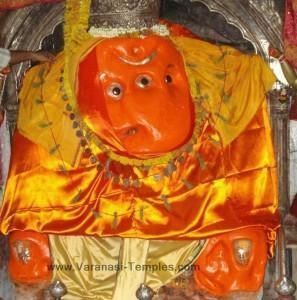
In the heart of Kashi (Varanasi), amidst the spiritual vibrancy of Lauhatia, stands a colossal guardian of the devotees: the Vakra Tund Vinayak, popularly revered as Bada Ganesh Temple. This ancient shrine is dedicated to Lord Ganesha in his “Vakra Tund” form, symbolizing the Lord with a curved trunk. Unlike traditional idols, the Ganesh murti here is massive and powerful, said to be the size of a hill.
Phalaśruti (Spiritual Benefits): According to temple records and local devotees, worshipping here is believed to rectify the ill effects of Paap Karma (sins) committed knowingly or unknowingly. The deity is known to remove obstacles (Vighna) and bestow overall happiness and prosperity upon the devotee. It is specifically significant for those seeking relief from chronic diseases and financial instability.
Why do devotees visit Vakra Tund Vinayak?
- Ancestral Cleansing: Offering prayers here is believed to cleanse ancestral lineage issues.
- Resolution of Obstacles: As the remover of hurdles, devotees visit before embarking on new ventures.
- Protection from Negativity: The idol’s immense energy is said to shield against black magic and negative energies.
Historical Origins & Scriptural Legend
The exact date of construction of the Bada Ganesh Temple remains shrouded in the mists of time, a common trait for many ancient shrines in Varanasi. However, temple historians and ASI (Archaeological Survey of India) references suggest the structure dates back several centuries, likely established during the medieval period of temple architecture in North India.
📖 Related: Hayagreeva Keshav Temple, Varanasi: History, Timings & Complete Guide
The Sthala Purana (Local Legend)
Tradition holds that the idol of Vakra Tund Vinayak was not carved by human hands but emerged naturally or was discovered by a renowned sage in ancient times. Legend states that Lord Ganesha took this form to protect the sacred land of Kashi from a demon whose power could only be neutralized by a deity with immense, curving energy. The “Vakra” (curved) trunk represents the dynamic flow of cosmic energy that absorbs and transforms negative forces.
Unlike many temples that were commissioned by kings, this shrine evolved from deep-rooted folk faith. It is a living monument where the architecture and the deity are inseparable from the local culture of Varanasi’s trading communities who historically worshipped Ganesha for success.
Architectural Marvels
The Vakra Tund Vinayak temple showcases a distinct Dravidian architectural style, which is somewhat unique for North India, particularly Varanasi. This influence suggests a synthesis of South Indian temple traditions adopted by builders who sought a monumental presence for the Lord.
Key Architectural Elements:
- The Sanctum (Garbhagriha): The inner sanctum is designed to accommodate the massive Ganesha idol. The ceiling is low and arches, focusing all visual attention on the murti.
- Carvings: Though modest compared to grand ancient complexes, the temple features intricate carvings of other deities, including Lord Ganesha’s consorts, Riddhi and Siddhi, on the outer walls.
- Vastu Shastra: The temple layout adheres to Vastu principles, with the entrance facing east to welcome the rising sun (Surya), and the Garbhagriha located at the center to amplify the energy field.
- The Idol: The stone murti is unique. While most Ganesha idols are worshipped as white (Safaed) Ganesh, the Bada Ganesh idol is naturally dark in color, adding to its mystery and allure.
Darshan & Ritual Logistics (2026 Update)
The temple is a hub of daily rituals, managed by the head priest, Shri Subhash Chandra Tiwari, and his team. The atmosphere is charged with continuous chanting and Aarti.
Daily Darshan Timings
Below are the standard operating hours for 2026. Note: The temple remains closed briefly during the afternoon break.
📖 Related: Pichandil Vinayak Temple Varanasi: History, Darshan Timings & Guide
| Session | Timing | Event |
|---|---|---|
| Morning | 04:45 AM | Mangala Aarti (Opening) |
| Morning | 05:00 AM – 12:00 PM | General Darshan & Pujas |
| Midday | 12:00 PM – 04:00 PM | Closed (Break) |
| Afternoon | 04:00 PM | Temple Reopens |
| Evening | 10:30 PM | Shayan Aarti (Closing) |
| Special Day | Wednesday (11:30 PM) | Midnight Aarti (Bada Aarti) |
Online Seva Booking & Pujas
While the temple is traditionally managed, many services are now digitized for the convenience of pilgrims. Key Sevas include:
- Abhishekam: Ritual bathing of the deity (usually performed in the morning).
- Archana: Recitation of 108 names of Lord Ganesha.
- Maha Aarti Ticket: Access to the VIP gallery during the evening Aarti.
How to Book: Visit the official Varanasi Temple Trust portal or authorized third-party vendors to book specific dates. For 2026, special arrangements are in place for festivals.
2026 Key Festival Dates
- Ganesh Chaturthi: August 26, 2026
- Diwali (Annakut): November 01, 2026
- Sankashti Chaturthi (Monthly): Every fourth day of the waxing moon (Chaturthi) is highly auspicious here.
Practical Visitor Guidance
To ensure a spiritually fulfilling experience, please adhere to the following guidelines.
Dress Code & Etiquette
- Traditional attire is recommended: Men should wear dhotis or full-length trousers; women should wear sarees or salwar kameez.
- Strictly avoid leather items (belts, wallets) inside the sanctum.
Photography & Mobile
- Photography: Strictly prohibited inside the inner sanctum (Garbhagriha). Exterior photography may be allowed subject to priest discretion.
- Lockers: Free mobile lockers are available near the entrance. Electronic devices must be deposited before Darshan.
Accessibility & Crowd Management
- Best Time to Visit: The best time for Darshan is between 6:00 AM and 9:00 AM, or post-4:00 PM when crowds are thinner. Wednesdays are exceptionally crowded; plan accordingly.
- Accessibility: The temple is located on Lauhatia Road, which is a busy market area. It is not wheelchair accessible by vehicle, but a short walk from the drop-off point is required. Wheelchair assistance is available upon request at the main gate.
- Seasonal Advice: In summer (May-June), Varanasi temperatures soar. Carry a reusable water bottle (fill stations available) and a head covering. Winters (Dec-Jan) are pleasant but require a shawl for evening Aarti.
📖 Related: Aapa Stambeshwar Temple Varanasi: History, Darshan Timings & Complete Guide
Pilgrimage Connectivity
Vakra Tund Vinayak is centrally located in Varanasi, making it accessible for all pilgrims.
How to Reach
- By Air: Lal Bahadur Shastri International Airport (VNS) is approximately 25 km away. A taxi or cab app (Uber/Ola) takes about 50-60 minutes.
- By Train: Varanasi Junction (BSB) is the nearest major railway station, roughly 4 km (15-20 mins by auto).
- By Road: The temple is located off NH 19 (formerly NH 2). From the Lahartara area, head towards Maidagin/Lauhatia.
Nearby Sacred Sites (Pilgrimage Circuit)
Complete your spiritual journey by visiting these nearby shrines:
- Kashi Vishwanath Temple (Main): Located approximately 1.5 km away. The spiritual center of the city.
- Sankat Mochan Hanuman Temple: About 3 km away. Famous for the belief that writing wishes here gets them fulfilled.
- Tridev Temple (Maidagin): Just steps away, dedicated to the trinity of Brahma, Vishnu, and Mahesh.
Frequently Asked Questions (FAQ)
1. Is there a VIP Darshan entry at Bada Ganesh Temple?
Yes, the temple offers a special entry pass for a quick Darshan, which can be purchased from the counter at the entrance. However, during peak festivals like Ganesh Chaturthi, this is subject to crowd management protocols.
2. What is the significance of Wednesday at Vakra Tund Vinayak?
Wednesday is dedicated to Lord Ganesha. The temple conducts a special midnight Aarti (11:30 PM) exclusively on Wednesdays, which is considered highly powerful for removing long-standing obstacles.
3. Is the temple open 24/7?
No, the temple closes for a few hours in the afternoon (approx. 12:00 PM to 4:00 PM). However, the morning and evening rituals are fixed and continue daily.
4. Can I perform an Abhishekam with milk or honey?
Yes, Abhishekam is allowed, but only with pure water, milk, or curd provided by the temple vendors. Outside items are generally not permitted for ritual purity reasons. It is best to consult the head priest upon arrival.
5. Is there parking available near the temple?
Due to narrow lanes in Lauhatia, direct parking at the temple is not available. Visitors are advised to park at the designated parking lots near Maidagin or Kachori Gali and walk the remaining distance (approx. 10 minutes).