
Contents
- 1 Valikoli Amman Temple, Parakkai: A Definitive Pilgrimage Guide
Valikoli Amman Temple, Parakkai: A Definitive Pilgrimage Guide
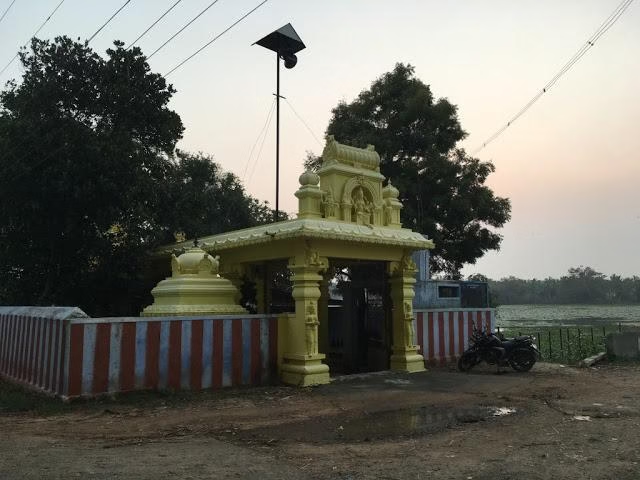
Located in the serene village of Parakkai, amidst the culturally rich landscape of Kanyakumari district, the Valikoli Amman Temple stands as a beacon of divine grace and ancient heritage. Dedicated to Goddess Parvathi, this sacred site offers pilgrims a profound spiritual experience, blending the rhythmic traditions of Dravidian temple architecture with deep-rooted mythological legends.
As we approach 2026, the temple continues to attract devotees seeking blessings for familial harmony, health, and spiritual upliftment. This guide provides a comprehensive overview of the temple’s history, architectural significance, and logistical details for a seamless pilgrimage experience.
1. Introduction & Spiritual Essence
The Valikoli Amman Temple is dedicated to Valikoli Amman, a form of Goddess Parvathi, the consort of Lord Shiva. While many temples in Kanyakumari are dedicated to Vishnu (a legacy of the Travancore dynasty), this temple stands out as a prominent Shakta worship center.
Phalaśruti: Why Devotees Visit
According to local scriptural tradition, worshipping Valikoli Amman is believed to bestow specific blessings upon devotees:
- Removal of Obstacles: The Goddess is revered for clearing hurdles in education and career paths.
- Marital Harmony: Unmarried women pray here for an early, righteous marriage, while families seek blessings for unity.
- Ancestral Karmic Cleansing: Rituals performed here are said to help free ancestors from earthly bonds, granting them spiritual liberation.
The temple is located in Parakkai, a village historically known as Pakshirajapuram, Kezharmangalam, and Paravaikasur, indicating its mythical origins and connection to ancient folklore.
2. Historical Origins & Scriptural Legend
Builders and Era
While specific inscriptional evidence regarding the exact founding dynasty is sparse in general records, the temple’s architecture and local priesthood suggest origins dating back to the Pandya or Early Chera periods (roughly between the 9th and 12th centuries). The structure has been meticulously maintained and renovated over centuries by the Travancore Royal Family, who were ardent patrons of temple arts in the region.
The Sthala Purana (Local Legend)
Tradition holds that this sacred grove was the site of intense penance by sages. The name “Valikoli” is steeped in folklore. One prominent legend suggests that the Goddess manifested to bless a devotee who had lost everything, restoring prosperity and ensuring a bountiful harvest. The village’s alternate name, Pakshirajapuram (City of the King of Birds), references a legend involving Garuda (the divine eagle), linking the site to the Ramayana era.
Devotees believe that the energy here is particularly potent for those suffering from Rahu-Ketu dosham (planetary afflictions), a common reason for the high footfall on Tuesdays and Fridays.
3. Architectural Marvels
The temple exemplifies the Dravidian style of architecture, characterized by its towering gateways (Gopurams) and intricate sculptural details.
Key Features:
- The Sanctum (Garbhagriha): The inner sanctum houses the Swayambhu (self-manifested) idol of Valikoli Amman. The deity is carved from black granite, radiating a calm yet powerful presence.
- Mandapas: The temple features several pillared halls (Mandapas) with carved bases depicting mythological scenes and floral motifs, typical of Tamil temple architecture.
- Sculptures: The outer walls are adorned with stucco sculptures depicting various forms of the Goddess and animal motifs symbolic of protection.
While the temple may not hold a UNESCO status, it is considered a heritage jewel of the Kanyakumari district, reflecting the zenith of South Indian temple artistry.
Photo Gallery


4. Darshan & Ritual Logistics
To ensure a smooth visit to the Valikoli Amman Temple, devotees should be aware of the daily schedules and seva (service) offerings. Please note that timings may vary slightly during festival seasons.
Daily Darshan Timings
Below is the standard schedule for 2026:
| Session | Timings | Rituals |
|---|---|---|
| Morning | 6:00 AM – 12:00 PM | Gushti Puja, Abhishekam, Alankaram |
| Afternoon | 12:00 PM – 4:30 PM | Temple remains closed for Deity rest |
| Evening | 4:30 PM – 8:30 PM | Darshan, Nada Ozhivu (Closing) |
Key Sevas & Booking
Pilgrims can participate in several rituals. While walk-ins are accepted for general darshan, specific Sevas require prior registration.
- Abhishekam: Performed with milk, honey, and sandalwood paste. Best time: Morning (7:00 AM – 8:00 AM).
- Archana: Individual or family names are recited. Available throughout the day.
- Special Poojas: Conducted on full moon days (Pournami) and new moon days (Amavasya).
Online Seva Booking:
The temple administration is currently upgrading its digital infrastructure. For the 2026 season, devotees are advised to check the official Tamil Nadu HR&CE website or the temple’s official social media handles for the “Online Seva Booking” portal. This allows pilgrims to book Abhishekam slots in advance, avoiding long queues.
2026 Major Festivals
- Aadi Perukku: August 2, 2026 – A grand celebration along the riverbanks, offering rice preparations to the Goddess.
- Navarathri: September 22 – October 1, 2026 – Nine nights of special decorations and cultural performances.
- Deepavali: October 21, 2026 – Special early morning Abhishekam and oil lamp lighting.
5. Practical Visitor Guidance
To respect the sanctity of the temple and ensure comfort:
Dress Code: Traditional attire is mandatory. Men should wear dhotis or trousers with shirts; women should wear sarees, salwar kameez, or long skirts. Avoid shorts and sleeveless tops.
Photography & Mobiles: Photography is strictly prohibited inside the sanctum sanctorum. Lockers are available near the entrance to store mobile phones and bags before entering the inner praharam (circumambulation path).
Crowd Management:
- Best Hours: Weekday mornings (6:00 AM – 7:30 AM) are the least crowded.
- Weekends: Expect heavy crowds, especially on Tuesdays and Fridays.
- Seasonal Advice: During summer (April–June), carry a water bottle and an umbrella as temperatures in Kanyakumari can be high. The temple grounds provide shaded areas for resting.
Accessibility: The temple is accessible via a paved pathway. Devotees with mobility issues can use wheelchairs (available upon request at the administration office).
6. Pilgrimage Connectivity
Parakkai is well-connected by road and rail, making it an accessible stop on a Kanyakumari pilgrimage circuit.
How to Reach
- By Air: The nearest airport is Trivandrum International Airport (TRV) in Kerala, located approximately 93 km away. Taxis and buses are available directly to Nagercoil/Kanyakumari.
- By Rail: The nearest major railway junction is Nagercoil Junction (NCJ), about 9 km from the temple. Auto-rickshaws are readily available from the station.
- By Road: Parakkai is accessible via the NH 66 (formerly NH 47). It is located roughly 4 km from Suchindram and 15 km from the district headquarters, Kanyakumari.
Nearby Sacred Sites (Pilgrimage Circuit)
Enhance your spiritual journey by visiting these nearby temples:
- Mathusoothana Perumal Temple (Parakkai): Located just 700 meters away, dedicated to Lord Vishnu. A visit to both temples in a single trip is considered auspicious.
- Thanumalayan Temple (Suchindram): Located 4 km away, famous for its massive monolithic Hanuman statue and musical pillars.
- Bhagavathi Amman Temple (Kanyakumari): Located 15 km away, facing the sea, dedicated to the virgin goddess.
7. Frequently Asked Questions (FAQs)
1. What is the historical significance of Valikoli Amman Temple?
The temple is believed to date back to the early medieval period (Pandya era) and is deeply rooted in the local Sthala Purana. It serves as a significant Shakta worship center in the predominantly Vishnu-centric Kanyakumari region.
2. Is there a VIP darshan entry available?
The temple administration prioritizes senior citizens and differently-abled devotees for easy access. While there is no commercial “VIP ticket” system, special entry passes for rituals like Abhishekam allow closer proximity to the deity.
3. How do I perform an online seva booking for 2026?
Online seva booking is facilitated through the official Tamil Nadu HR&CE portal. Search for “Valikoli Amman Temple, Parakkai” in the search bar to view available slots and make payments securely.
4. What is the significance of the name ‘Valikoli’?
The etymology of “Valikoli” is linked to ancient Tamil folklore, symbolizing the Goddess’s power to protect her devotees like a mother hen protects her chicks. It also represents the fierce yet nurturing aspect of Parvathi.
5. Are food facilities available at the temple?
Currently, the temple does not have a permanent annadanam (free meal) hall, but small eateries serving vegetarian food are available in Parakkai village. For a full meal, Nagercoil (9 km away) has several restaurants.
Contact Details
Official Address: Valikoli Amman Temple, Parakkai, Kanyakumari District, Tamil Nadu.
Note: For specific inquiries, please contact the local temple administration office upon arrival.
Conclusion
A visit to the Valikoli Amman Temple is more than a physical journey; it is a step into a realm of tranquility and divine grace. Whether you are drawn by the architectural beauty, the ancient legends, or the promise of spiritual solace, Parakkai welcomes you with open arms. As you plan your trip for 2026, may the blessings of Valikoli Amman clear your path and illuminate your life.
Har Har Mahadev! Amman Tiruvadigale Sharanam!
Recent Posts

ओ सांवरे तूने ही मुझको संभाला – Lyrics & Meaning
ओ सांवरे तूने ही मुझको संभाला – A Prayer to Shyam Origin & Spiritual Essence Why This Bhajan Resonates Devotees chant this when overwhelmed by life’s storms—the refrain ‘तूने ही मुझको संभाला’ is the soul’s sigh of relief: “You…

कथा ये है महाराज मेरे की – Lyrics & Meaning
कथा ये है महाराज मेरे की छत्रपति संभाजी महाराज – A Prayer to Chhatrapati Sambhaji Maharaj Origin & Spiritual Essence Why This Bhajan Resonates Devotees chant this when their spirit feels tested—its powerful refrain “महाराज मेरे” is a soul’s…

Rigveda Samhita Yathartha Anuvada (ऋग्वेद संहिता यथार्थ अनुवाद) – Complete Set with Anvayartha & Hindi/English Translation
The Rigveda is the oldest surviving scripture of humanity and the foundational text of Sanātana Dharma. For serious students, scholars, UPSC aspirants studying ancient Indian history, Sanskrit learners, and spiritual seekers, a precise and grammatically structured translation is indispensable.…

आना भी अकेला है जाना भी अकेला है – Lyrics & Meaning | BharatTemples
आना भी अकेला है जाना भी अकेला है – A Prayer to the Divine Witness Origin & Spiritual Essence Why This Bhajan Resonates Devotees turn to this bhajan in moments of deep reflection—when life’s attachments begin to ache. The…

माता शेरावाली के द्वार जो भी जाता है – Lyrics & Meaning
माता शेरावाली के द्वार जो भी जाता है – A Prayer to Maa Sherawali Origin & Spiritual Essence Why This Bhajan Resonates Devotees turn to this bhajan in times of fear or uncertainty—its promise that no one leaves Maa’s…

मार लेना सपणी उबार लेणा भवरा – Lyrics & Meaning
मार लेना सपणी उबार लेणा भवरा – A Prayer to the Divine Beloved Origin & Spiritual Essence Why This Bhajan Resonates Devotees chant this in moments of deep vulnerability—its cry of “मार लेना सपणी, उबार लेणा भवरा” is the…

हमें श्याम सुंदर भरोसा तुम्हारा – Lyrics & Meaning
हमें श्याम सुंदर भरोसा तुम्हारा – A Prayer to Shyam Sundar Origin & Spiritual Essence Why This Bhajan Resonates Devotees chant this when feeling alone—its refrain ‘de do sahara’ is the soul’s cry for divine support. Lyrics in Hindi…

Mere Satguru Ne Di Thi Davai Lyrics in Hindi & Meaning
Mere Satguru Ne Di Thi Davai: Invoking the Guru’s Liberating Wisdom This soul-stirring bhajan venerates the Satguru (True Spiritual Master) as the divine physician who dispenses the only remedy for life’s deepest sufferings. Composed by Sant Karmaveer Tufani, it…

Janm Diyo Thari Maa Dukh Dekhiyo Lyrics in Hindi & Meaning
जन्म दियो थारी माँ दुख देखियो (Maa’s Grief Upon Birthing You) This soul-stirring Chetavani Bhajan (admonitory hymn) is addressed to the Divine Mother (Maa) – a call for repentance when children forget their filial duties in the dark age…
Bhadi Sabha Mein Thane Manaun Lyrics in Hindi & Meaning
Bhadi Sabha Mein Thane Manaun: Invoking the Spear-Wielding Mother Mata Bhawani (श्री ज्वाला भवानी), the fiery manifestation of Shakti worshipped as the Protector of Dharma in Her Dhaulagarh sanctum. Origin & Spiritual Essence Composed in Rajasthani folk tradition by…