
Contents
Introduction & Spiritual Essence
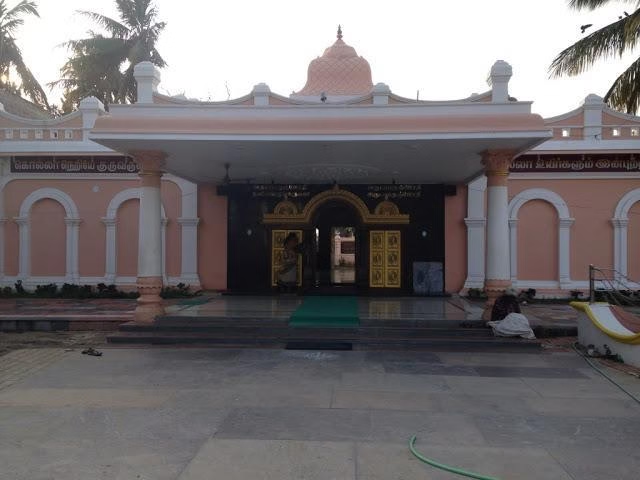
The humble dwelling at Vallalar Mother Birth Place in Chinnakavanam, Thiruvallur district, stands as a silent witness to the early life of the great Tamil saint and philanthropist, Vallalar (Sri Ramalinga Adigalar). While Vallalar is the primary deity of reverence for millions, this site is unique; it is not a temple enshrining a sculpted murti, but a holy site (Sthalam) consecrated by the presence of his mother, Chinnammayar.
Phalaśruti (Spiritual Benefit): Why do devotees visit Chinnakavanam? According to the oral traditions of the Vallalar movement, visiting the birthplace of the saint’s mother is believed to be equivalent to seeking blessings from the divine mother figure herself. Devotees believe that paying obeisance here helps in purifying ancestral karma and instilling a spirit of compassion (Jeeva Karunyam), which was the core teaching of Vallalar. It is a place of introspection, connecting the pilgrim to the humble origins of a divine soul.
Historical Origins & Scriptural Legend
The House of Adigalar:
Chinnakavanam holds a distinct place in the history of the Arutperunjothi movement. It is historically recorded that Ramalinga Adigalar lived in this village between 1824 and 1826 during his formative years. This location is not merely a geographical point but the site where the saint composed his early verses and experienced profound spiritual realizations.
Local Legend:
Tradition holds that the spiritual atmosphere of Chinnakavanam was nurtured by the devout life of Chinnammayar. The house is currently maintained by followers of Vallalar (the Sangam), preserving the sanctity of the 19th-century structure. Unlike grand dynastic temples, this site reflects the ascetic and simple lifestyle of the saint, making it a unique historical monument in the Thiruvallur district.
Architectural Marvels
The structure of the Vallalar Mother Birth Place is a modest representation of traditional Dravidian vernacular architecture. Unlike the towering gopurams of major temples, this residence emphasizes simplicity and functionality, reflecting the saint’s rejection of material excess.
- Style: Traditional Tamil Nadu residential architecture with thick walls for natural cooling.
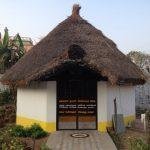
- Layout: The house features a central courtyard and a tiled roof, typical of homes in the Ponneri region during the early 19th century.
- Preservation: The structure has been carefully preserved by the followers, ensuring that the original layout remains intact. While it is not a ASI-protected monument, it serves as a living heritage site managed by the Sangam.
Darshan & Ritual Logistics
The site operates differently from a standard temple. It is a shrine maintained by the Sangam trust. Below are the standard timings, though devotees are advised to contact the trust for specific festival schedules.
| Session | Timings | Activity |
|---|---|---|
| Morning | 08:00 AM – 11:00 AM | Opening, Morning Aradhana, General Darshan |
| Afternoon | 11:00 AM – 04:00 PM | Closed for maintenance / Noon service |
| Evening | 04:00 PM – 07:00 PM | Closing Aradhana, Evening Prayers |
Sevas and Offerings
While online booking is not typically available for this specific site (unlike larger government temples), the local Sangam office manages donations and specific services.
- Abhishekam: Performed on specific Thirukalyanam anniversaries.
- Archana: Recitation of Thiruvarutpa (Vallalar’s verses) is conducted daily.
- Annadhanam: Free meal services are often provided on Sundays and full moon days (Pournami).
2026 Festival Dates
Key events at Chinnakavanam typically align with the Tamil calendar:
- Arutperunjothi Deepam: January 15, 2026
- Vallalar Jayanthi: October/November 2026 (Date as per Thamizh Margazhi)
- Chinnammayar Festival: Celebrated on the first Sunday of May 2026 (Projected).
Practical Visitor Guidance
Visiting a heritage home requires mindfulness. Since this is a preserved residential site, strict protocols are maintained.
- Dress Code: Traditional attire is recommended. Men should wear Dhoti/Shirt or formal trousers; women should wear Saree or Salwar Kameez.
- Photography: Strictly Prohibited inside the house. Photography is permitted in the courtyard only with prior permission from the Sangam trustee.
- Mobile/Lockers: There are no electronic lockers. Visitors are requested to keep mobile phones on silent mode and avoid usage inside the shrine rooms.
- Accessibility: The house has traditional entryways with raised thresholds; wheelchair accessibility is limited due to the heritage nature of the structure.
Crowd Management & Seasonal Advice
The site sees a surge of visitors during Vallalar Jayanthi and Sundays.
- Best Hours: Weekday mornings (8:00 AM – 9:30 AM) offer the most peaceful Darshan.
- Seasonal Tip: The region near Ponneri can get extremely hot in May. If visiting during summer, carry water and a head covering. The coastal breeze from nearby Pulicat can be strong in the monsoon.
Pilgrimage Connectivity
How to Reach
Chinnakavanam is located on the outskirts of the Chennai metropolitan area, making it an accessible day trip.
- Nearest Airport: Chennai International Airport (approx. 39-51 km depending on route).
- Nearest Railway Station: Ponneri Railway Station (approx. 2 km) or Gummidipoondi.
- By Road: Take the Kolkata Highway (NH16). Pass the Karanodai Bridge and Tollgate. Proceed towards Thatchur Cross Road and turn right (East) towards Ponneri. After crossing Ponneri town, continue towards Pulicat. Cross the railway under-bridge and the Brahma Aranya river bridge; Chinna Kavanam village begins immediately after on the right side.
Nearby Sacred Sites
Extend your pilgrimage circuit by visiting these locations near Chinnakavanam:
- Ponneri Mariamman Temple: A historic temple dedicated to Goddess Mariamman, located just 2 km away.
- Kashyapa Tirtham (Pulicat): A sacred tank located on the way to Pulicat, believed to have been created by the sage Kashyapa.
- Sri Kalahasteeswarar Temple: While further away (approx. 60 km), this is a major Shaivite temple in the region often combined with the Thiruvallur circuit.
Frequently Asked Questions
Is there a VIP darshan entry?
No, Chinnakavanam operates on a first-come, first-served basis for all devotees. There are no VIP tickets. The focus is on collective spiritual equality.
Is the site open year-round?
Yes, the house is generally open daily. However, it may close early on Sundays or specific festival days if a private gathering is scheduled. Checking the local Sangam notice board is advisable.
Are there accommodation facilities in Chinnakavanam?
Chinnakavanam is a small village. For accommodation, it is best to stay in Ponneri or travel back to Chennai/Tiruvallur where hotels and lodges are available.
What is the significance of the Brahma Aranya River here?
Historically, this region is part of the Brahmadesam (Land of Brahma). The river flowing nearby is integral to the local ecosystem and is mentioned in the historical context of the region’s geography, adding to the spiritual vibe of the location.
Architecture
Legend / Local stories
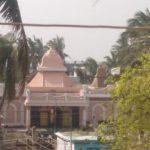
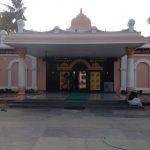
Photo Gallery
How to Reach:
The house is located at about 300 meters from Chinnakavanam Bus Stop, 1.5 Kms from Ponneri, 3 Kms from Ponneri Bus Depot, 2 Kms from Ponneri Railway Station, 9 Kms from Thatchoor, 10 Kms from Thirupalaivanam, 14 Kms from Minjur, 18 Kms from Pulicat, 8 Kms from Perumbedu, 17 Kms from Gummudipoondi, 51 Kms from Thiruvallur, 39 Kms from Chennai and 51 Kms from Chennai International Airport.
Chinnakavanam is located to the east of Ponneri touching the Ponneri town en route Pulicat. When you take the Kolkata highways, you will come across the Karanodai bridge and immediately after, the Tollgate. Go beyond that in the same direction till Thatchur Cross road and turn right (east) towards Ponneri. After crossing the Ponneri town continue towards Pulicat and you will encounter the Rail under-bridge first and then a road bridge over the Brahma Aranya river. Immediately after the bridge the Chinna Kavanam village starts. The house is on the right side on an adjoining lane. Town buses and autos are available frequently from Ponneri.
Contact Details
Official Address
Recent Posts

ओ सांवरे तूने ही मुझको संभाला – Lyrics & Meaning
ओ सांवरे तूने ही मुझको संभाला – A Prayer to Shyam Origin & Spiritual Essence Why This Bhajan Resonates Devotees chant this when overwhelmed by life’s storms—the refrain ‘तूने ही मुझको संभाला’ is the soul’s sigh of relief: “You…

कथा ये है महाराज मेरे की – Lyrics & Meaning
कथा ये है महाराज मेरे की छत्रपति संभाजी महाराज – A Prayer to Chhatrapati Sambhaji Maharaj Origin & Spiritual Essence Why This Bhajan Resonates Devotees chant this when their spirit feels tested—its powerful refrain “महाराज मेरे” is a soul’s…

Rigveda Samhita Yathartha Anuvada (ऋग्वेद संहिता यथार्थ अनुवाद) – Complete Set with Anvayartha & Hindi/English Translation
The Rigveda is the oldest surviving scripture of humanity and the foundational text of Sanātana Dharma. For serious students, scholars, UPSC aspirants studying ancient Indian history, Sanskrit learners, and spiritual seekers, a precise and grammatically structured translation is indispensable.…

आना भी अकेला है जाना भी अकेला है – Lyrics & Meaning | BharatTemples
आना भी अकेला है जाना भी अकेला है – A Prayer to the Divine Witness Origin & Spiritual Essence Why This Bhajan Resonates Devotees turn to this bhajan in moments of deep reflection—when life’s attachments begin to ache. The…

माता शेरावाली के द्वार जो भी जाता है – Lyrics & Meaning
माता शेरावाली के द्वार जो भी जाता है – A Prayer to Maa Sherawali Origin & Spiritual Essence Why This Bhajan Resonates Devotees turn to this bhajan in times of fear or uncertainty—its promise that no one leaves Maa’s…

मार लेना सपणी उबार लेणा भवरा – Lyrics & Meaning
मार लेना सपणी उबार लेणा भवरा – A Prayer to the Divine Beloved Origin & Spiritual Essence Why This Bhajan Resonates Devotees chant this in moments of deep vulnerability—its cry of “मार लेना सपणी, उबार लेणा भवरा” is the…

हमें श्याम सुंदर भरोसा तुम्हारा – Lyrics & Meaning
हमें श्याम सुंदर भरोसा तुम्हारा – A Prayer to Shyam Sundar Origin & Spiritual Essence Why This Bhajan Resonates Devotees chant this when feeling alone—its refrain ‘de do sahara’ is the soul’s cry for divine support. Lyrics in Hindi…

Mere Satguru Ne Di Thi Davai Lyrics in Hindi & Meaning
Mere Satguru Ne Di Thi Davai: Invoking the Guru’s Liberating Wisdom This soul-stirring bhajan venerates the Satguru (True Spiritual Master) as the divine physician who dispenses the only remedy for life’s deepest sufferings. Composed by Sant Karmaveer Tufani, it…

Janm Diyo Thari Maa Dukh Dekhiyo Lyrics in Hindi & Meaning
जन्म दियो थारी माँ दुख देखियो (Maa’s Grief Upon Birthing You) This soul-stirring Chetavani Bhajan (admonitory hymn) is addressed to the Divine Mother (Maa) – a call for repentance when children forget their filial duties in the dark age…
Bhadi Sabha Mein Thane Manaun Lyrics in Hindi & Meaning
Bhadi Sabha Mein Thane Manaun: Invoking the Spear-Wielding Mother Mata Bhawani (श्री ज्वाला भवानी), the fiery manifestation of Shakti worshipped as the Protector of Dharma in Her Dhaulagarh sanctum. Origin & Spiritual Essence Composed in Rajasthani folk tradition by…