
Contents
Introduction & Spiritual Essence
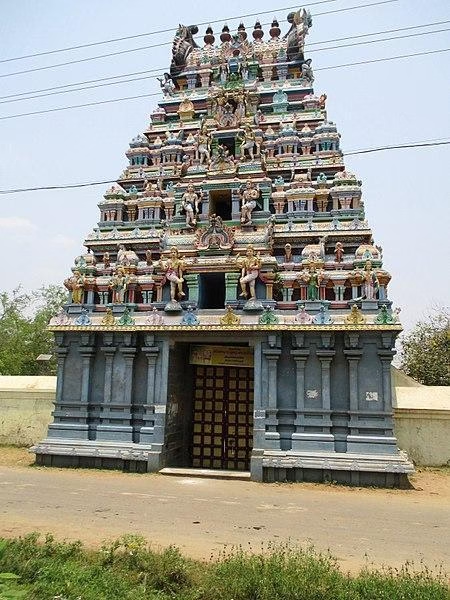
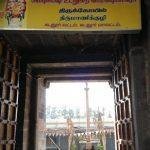
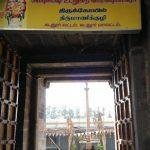
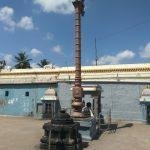
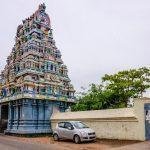
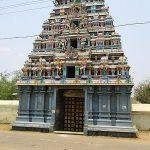
Located on the southern banks of the Gadilam River in Thirumanikuzhi, Cuddalore, the Vamanapureeswarar Temple stands as a beacon of Shaivism and the 49th Devaram Padal Petra Sthalam. This sacred shrine, also historically known as Udhavi Maanikuzhi, is dedicated to Lord Shiva (Vamanapureeswarar) and Goddess Parvathi (Ambujakshi). It is revered as the 17th Sthalam on the banks of the river Kedilam in the Nadu Naadu region.
Phalaśruti: Why Devotees Visit
Devotees visit this temple primarily for two significant benefits:
- Santhana Prapthi (Child Blessings): Couples seeking progeny circumambulate the shrine wearing wet clothes on a new moon day and consume butter offered as Neivedhyam for 45 days.
- Resolution of Brahmathi Dosham: As Lord Mahavishnu performed puja here to absolve his sins, devotees believe this shrine holds immense power to cleanse ancestral karma and familial disputes.
Historical Origins & Scriptural Legend
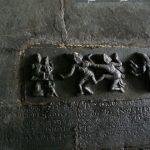
According to temple records and inscriptions, this is one of the oldest Shiva temples built during the regime of the Chola Dynasty. Subsequent contributions and renovations were made by the Pandya and Vijayanagara emperors. Tradition holds that the site was originally renovated by the ancient emperors Thirisangu and Harichandra.
The Legend of Vamana and Mahabali
The Sthala Puranam (local legend) weaves a fascinating narrative linking Lord Mahavishnu and Asura King Mahabali. It is believed that a rat (Mahabali in his previous birth) accidentally lit a dying lamp wick inside the sanctum. Pleased with this act, Lord Shiva granted the rat a boon to be reborn as a demon king. Later, as Mahabali, he was subdued by Lord Vamana (Vishnu’s dwarf avatar).
To atone for the Brahmathi Dosham (sin of killing a Brahmin, incurred during the avatar), Lord Mahavishnu worshipped Lord Shiva here. The Lord appeared in a smaller form within a pit (Kuzhi) to facilitate the worship, bestowing the name Thiru Manikku-zhi. Unique to this temple is the ritual of offering the first Aarathi to Kubera Bheema Rudra (a Sivaganam/guard) before offering it to Lord Shiva, ensuring no disturbance to Mahavishnu’s eternal worship.
Architectural Marvels
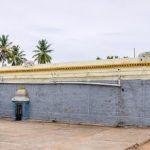
The temple exemplifies the classic Dravidian architectural style. The structure is a physical manifestation of Vastu principles, detailed in the local lore.
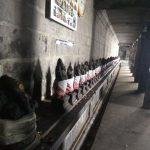
- The Mandapas: The hall preceding the sanctum features four pillars representing the four Vedas, followed by six pillars representing the Shastras.
- The Corridors: The 28 pillars in the corridors are believed to represent the 28 Agamas.
- The Screen: A unique feature is the screen in front of the sanctum bearing the image of Kubera Bheema Rudra. This screen is closed after every Aarathi.
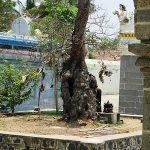
- Sthala Viruksham: The sacred tree of the temple is the Kondrai tree, believed to have existed through previous Yugas.
While the temple is not a UNESCO site, it is a protected monument by the Hindu Religious and Charitable Endowments (HR&CE) Department of Tamil Nadu.
Darshan & Ritual Logistics
Devotees note that this is the only Shiva temple where Darshan cannot be had without the help of a priest. The screen is removed only for a brief period (approximately 2 minutes) for viewing the deity.
Daily Temple Timings (Standard)
The temple generally remains open during the following hours. Please verify locally before travel.
| Session | Timing |
|---|---|
| Morning | 7:00 AM – 11:00 AM |
| Evening | 4:30 PM – 8:30 PM |
Key Sevas & Online Booking
While physical booking is available at the temple counter, the Tamil Nadu government and HR&CE have digitized many services.
How to Book Online:
- Visit the official HR&CE Tamil Nadu portal.
- Search for “Vamanapureeswarar Temple, Thirumanikuzhi”.
- Select the desired Seva (e.g., Abhishekam, Archana, Deepa Aradhana).
- Pay via UPI/Net Banking and carry the receipt.
2026 Major Festivals
Assuming the current year is 2026, devotees should plan for these major events:
- Maha Shivarathri: February/March 2026 (Phalguna Masam). A grand procession is held.
- Navarathri: September/October 2026 (Puratasi Month). Special Golu decoration.
- Rohini Deepa Brahmotsavam: November/December 2026 (Karthikai Month). This is the car festival where a lamp is lit on Jyothi Giri (Rathinagiri hill).
- Pradosham: Occurring every 13 days. Special Abhishekam is performed. Devotees believe Darshan on Pradosham is equal to 3 visits to Thiruvannamalai and 16 visits to Kasi.



Practical Visitor Guidance
Code of Conduct & Dress Code
- Dress Code: Traditional attire is mandatory. Men should wear dhotis or trousers with shirts; women should wear sarees, half-sarees, or churidars.
- Photography: Photography is strictly prohibited inside the Sanctum Sanctorum. Please seek permission for photography in the outer corridors.
- Mobile & Lockers: As the Darshan time is short (2 minutes), visitors are advised to deposit mobile phones and bags in the locker facilities provided at the entrance to avoid distractions.
- Accessibility: The temple has stone steps and uneven flooring. It may be challenging for those with mobility issues. The priest assists with movement during Darshan.
Crowd Management Tips
- Best Hours: Visit immediately after the temple opens (7:00 AM) or during the late evening hours (after 6:30 PM) to avoid the mid-morning rush.
- Seasonal Advice: Cuddalore can be humid. Carry a water bottle and wear breathable cotton fabrics. Use an umbrella during the summer (April–June) and the monsoon (October–December).
Pilgrimage Connectivity
How to Reach
- By Road: The temple is located on the Cuddalore to Panruti route via Palur (State Highway 68). Bus number 16 from Cuddalore connects to Thirumanikuzhi. The temple is a 1.5 km walk from the bus stop. Private vehicles can drive up to the hill base.
- By Train: The nearest railway junction is Cuddalore Port (CUPR), located approximately 13 km away.
- By Air:
- Puducherry (PON): ~30 km (Closest).
- Chennai (MAA): ~200 km.
- Tiruchirappalli (TRZ): ~177 km.
Nearby Sacred Sites (Pilgrimage Circuit)
Expand your journey by visiting these nearby Shiva temples within the region:
- Thirupathiripuliyur (Adhipureeswarar Temple): Just a few kilometers away, dedicated to Lord Shiva as a Tiger Guardian.
- Thiruvadigai (Vaitheeswaran Koil): Located near Panruti, famous for the fire pit and healing powers.
- Thirupugalur (Agni Pureeswarar Temple): A Pancha Bhoota temple associated with the element of Fire.
Frequently Asked Questions (FAQs)
1. Is there a VIP Darshan entry?
Unlike some major temples, Vamanapureeswarar Temple does not have a formal VIP pass system. However, due to the small size of the sanctum, entry is managed strictly in queues, and the priest controls the flow to allow everyone the 2-minute Darshan window.
2. Can we perform Abhishekam ourselves?
No. Due to the nature of the idol and the pit (Kuzhi) structure, only the designated temple priests can perform Abhishekam. Devotees can offer milk or water to the priest to perform it on their behalf.
3. What is the significance of the hill opposite the temple?
The hill opposite the temple is called Jyothi Giri or Rathinagiri. During the Brahmotsavam, a lamp is lit here, and devotees perform Girivalam (circumambulation), similar to the practice at Thiruvannamalai.
4. Is accommodation available?
Basic accommodation is available in Cuddalore and Panruti. For a spiritual stay, devotees often travel to Puducherry (30 km), which offers a wide range of options from hotels to ashrams.
5. What makes this temple unique among Shiva temples?
The unique screening process: A permanent screen (Kubera Bheema Rudra) blocks direct view unless the priest removes it. It is believed that worshiping here gives the spiritual merit of worshiping at 16 Kasi temples combined.
Contact Details
Vamanapureeswarar Temple
Thirumanikuzhi Post,
Cuddalore District – 607 401
Phone: +91 4142 224 328
Mobile: +91 9486387154 / 9047238423 / 9626321383 / 9787607727
Recent Posts

Shri Kaamkoteeshwar Mandir, Varanasi – History & Significance
In the heart of Kashi, the eternal city of Lord Shiva, where the Ganges flows with celestial grace, stands the Shri Kaamkoteeshwar Mandir. This sacred Sannidhi is not merely a temple but a profound spiritual bridge between the Northern…

ओ सांवरे तूने ही मुझको संभाला – Lyrics & Meaning
ओ सांवरे तूने ही मुझको संभाला – A Prayer to Shyam Origin & Spiritual Essence Why This Bhajan Resonates Devotees chant this when overwhelmed by life’s storms—the refrain ‘तूने ही मुझको संभाला’ is the soul’s sigh of relief: “You…

कथा ये है महाराज मेरे की – Lyrics & Meaning
कथा ये है महाराज मेरे की छत्रपति संभाजी महाराज – A Prayer to Chhatrapati Sambhaji Maharaj Origin & Spiritual Essence Why This Bhajan Resonates Devotees chant this when their spirit feels tested—its powerful refrain “महाराज मेरे” is a soul’s…

Rigveda Samhita Yathartha Anuvada (ऋग्वेद संहिता यथार्थ अनुवाद) – Complete Set with Anvayartha & Hindi/English Translation
The Rigveda is the oldest surviving scripture of humanity and the foundational text of Sanātana Dharma. For serious students, scholars, UPSC aspirants studying ancient Indian history, Sanskrit learners, and spiritual seekers, a precise and grammatically structured translation is indispensable.…

आना भी अकेला है जाना भी अकेला है – Lyrics & Meaning | BharatTemples
आना भी अकेला है जाना भी अकेला है – A Prayer to the Divine Witness Origin & Spiritual Essence Why This Bhajan Resonates Devotees turn to this bhajan in moments of deep reflection—when life’s attachments begin to ache. The…

माता शेरावाली के द्वार जो भी जाता है – Lyrics & Meaning
माता शेरावाली के द्वार जो भी जाता है – A Prayer to Maa Sherawali Origin & Spiritual Essence Why This Bhajan Resonates Devotees turn to this bhajan in times of fear or uncertainty—its promise that no one leaves Maa’s…

मार लेना सपणी उबार लेणा भवरा – Lyrics & Meaning
मार लेना सपणी उबार लेणा भवरा – A Prayer to the Divine Beloved Origin & Spiritual Essence Why This Bhajan Resonates Devotees chant this in moments of deep vulnerability—its cry of “मार लेना सपणी, उबार लेणा भवरा” is the…

हमें श्याम सुंदर भरोसा तुम्हारा – Lyrics & Meaning
हमें श्याम सुंदर भरोसा तुम्हारा – A Prayer to Shyam Sundar Origin & Spiritual Essence Why This Bhajan Resonates Devotees chant this when feeling alone—its refrain ‘de do sahara’ is the soul’s cry for divine support. Lyrics in Hindi…

Mere Satguru Ne Di Thi Davai Lyrics in Hindi & Meaning
Mere Satguru Ne Di Thi Davai: Invoking the Guru’s Liberating Wisdom This soul-stirring bhajan venerates the Satguru (True Spiritual Master) as the divine physician who dispenses the only remedy for life’s deepest sufferings. Composed by Sant Karmaveer Tufani, it…

Janm Diyo Thari Maa Dukh Dekhiyo Lyrics in Hindi & Meaning
जन्म दियो थारी माँ दुख देखियो (Maa’s Grief Upon Birthing You) This soul-stirring Chetavani Bhajan (admonitory hymn) is addressed to the Divine Mother (Maa) – a call for repentance when children forget their filial duties in the dark age…