Vana Durgai Amma Temple Palani: History, Darshan Timings & Guide 2026

Receive daily temple updates, divine darshan, and morning bhajans directly on WhatsApp.
Contents
- 1 Introduction & Spiritual Essence: The Guardian of Palani
- 2 Historical Origins & Scriptural Legend
- 3 Architectural Marvels
- 4 Darshan & Ritual Logistics
- 5 Practical Visitor Guidance
- 6 Pilgrimage Connectivity
- 7 How to Reach:
- 8 Frequently Asked Questions (FAQ)
- 8.1 1. Is there a VIP Darshan entry for Vana Durgai Amma Temple?
- 8.2 2. Can we perform homas or special pujas for Vana Durga?
- 8.3 3. Is the temple accessible for the elderly and differently-abled?
- 8.4 4. What is the significance of the Kumkum vessel held by the Goddess?
- 8.5 5. Is non-vegetarian food allowed near the temple?
- 9 Photo Gallery
- 10 Contact Details
| Date built: | – |
|---|---|
| Deity: | Vana Durgai |
| Architectural style: | – |
| Major festivals | |
| Locale: | palani |
| District:: | Dindigul |
| Address: | – |
| Phone | – |
Introduction & Spiritual Essence: The Guardian of Palani
Vana Durgai Amma Temple stands as a formidable spiritual sentinel within the sacred hills of Palani, Tamil Nadu. Dedicated to Goddess Vana Durga (literally “Forest Durga”), this temple is intrinsically linked to the worship of Lord Murugan, the presiding deity of the Palani Murugan Temple. While millions flock to see the Sri Dhandayuthapani Swamy, the powerful feminine energy—the Shakthi—that guards the surrounding forests is worshipped here.
The Divine Form and Phalaśruti
Unlike the fierce Mahishasura Mardini often depicted in battle, the idol here represents a protective, maternal aspect of the Goddess. As described in the original temple lore, she stands majestically in yellow cloth, wielding a trident, yet holds a kumkum receptacle, signifying auspiciousness and blessings rather than just destruction.
Why do devotees visit?
- Protection from Evil: As the guardian of the Vana (forest) surrounding the hill, she is believed to ward off negative energies and evil spirits.
- Resolution of Kalithoshi: In Tamil tradition, she is worshipped to remove “Kalithoshi” (a form of astrological affliction related to the planet Rahu/Ketu).
- Removal of Fear: Devotees seeking courage and relief from psychological fears (Bhaya) find solace at her feet.
Historical Origins & Scriptural Legend
While the exact date of construction is not etched on official plaques, temple historians date the structure back several centuries, likely established during the period of the Pandya or Nayak dynasties who were ardent patrons of the Palani temple complex. The temple is not a standalone structure but a vital component of the Panchamirtham (five abodes) circuit of Lord Murugan.
📖 Related: Srivilliputhur Andal Temple History, Darshan Timings & Complete Guide (2026)
The Legend of Vana Durga
According to the Sthala Purana and oral traditions of the Palani Adheenam, the temple was established to contain the immense energy of Lord Murugan. The Arda Mandapa (front hall) houses Dandapani Swamy in a yoga pose, the manifestation of the Lord as the wielder of the staff. Flanking him is the Vana Durga.
The legend holds that Durga was invoked to guard the Prakaram (circumambulatory path) of Muruga. It is said that during the Brahma Rakshasa episode (a legend associated with Palani where a cursed Brahmin was redeemed by Lord Murugan), the protective deity ensured that no external forces disturbed the penance of the Lord and his devotees. The presence of a Samadhi Koil (shrine housing a Yogi’s tomb) of Guruswamy Swamigal near the temple complex further deepens its spiritual history, where devotees worship the Linga from the entrance.
Architectural Marvels
The architecture of Vana Durgai Amma Temple is a classic example of the Dravidian style of South Indian temple architecture, characterized by its compact structure and intricate sculptural details.
Vastu Shastra and Layout
The temple is designed according to Vastu principles, facing east. The Shikhara (tower) above the sanctum is modest compared to the massive Rajagopuram of the main Palani temple but follows the Mana (measurement) ratios typical of Pandya architecture.
- The Ardha Mandapa: This pillared hall features sculptures depicting various forms of Shakti. The pillars are carved with motifs of nature—creepers, lotus, and animals—signifying the “Vana” or forest element.
- The Sanctum (Garbhagriha): The main idol is unique. Durga is depicted with sixteen arms (Shodasha Bhuja), holding various weapons (Trisula, Sword, Discus), yet the dominant feature is the Lion (Vahana) beneath her feet, symbolizing the control over animal instincts.
- Notable Sculptures: The entrance is flanked by a Vinayagar (Ganesha) idol on the right, which is renowned for fulfilling specific wishes of devotees. The walls are adorned with Yalis (mythical creatures) to protect the sanctum.
Darshan & Ritual Logistics
The temple follows the traditional Puja timings adhered to by the Palani Adheenam. The rituals are performed daily with Bell and Veena accompaniment.
Daily Timings
Note: Timings may vary slightly during festival seasons.
📖 Related: Avinashi Lingeswarar Temple: History, Darshan Timings & Complete Guide
| Session | Timing | Activity |
|---|---|---|
| Morning | 06:00 AM – 12:00 PM | Opening, Morning Abhishekam, Archana |
| Afternoon | 12:00 PM – 04:00 PM | Midday Seva / Temple Rest |
| Evening | 04:00 PM – 08:30 PM | Deepa Aradhana, Night Puja, Closing |
Key Sevas & Online Booking
While Vana Durgai is a smaller shrine, the Sevas are often clubbed with the main Palani temple bookings.
- Abhishekam: Performed with holy water, milk, and turmeric.
- Archana: Recitation of the 108 names of Durga.
- Deepa Aradhana: The waving of lamps (evening ritual).
Booking: Devotees can book general darshan and special sevas via the official Palani Temple portal (managed by the Dhandayuthapani Swamy Temple Devasthanam).
2026 Festival Calendar
Devotees planning a visit in 2026 should note these specific dates for a vibrant experience:
- Thai Poosam: January 13, 2026 (Massive crowds; special procession).
- Masi Magam: February 26, 2026 (Sacred dip in the temple tank).
- Panguni Uthiram: March 25, 2026 (The final festival of the year, elaborate chariot procession).
- Karthigai Deepam: November 18, 2026 (Lighting of lamps; highly significant for Vana Durga).
Practical Visitor Guidance
To ensure a spiritually fulfilling and hassle-free visit, please adhere to the following guidelines.
Code of Conduct
- Dress Code: Traditional attire is mandatory. Men should wear Veshti (dhoti) or trousers with a shirt; women should wear Saree or Salwar Kameez. Avoid shorts and sleeveless tops.
- Photography: Strictly prohibited inside the Garbhagriha (inner sanctum). Photography is allowed in the outer corridors but not during active Puja.
- Mobile Lockers: Due to the strict security in Palani, electronic devices (phones, cameras) are not allowed inside. Use the free Mobile Lockers available at the entrance counters.
Crowd Management
Best Hours: For a peaceful Darshan of Vana Durgai, visit between 8:00 AM and 10:00 AM or after 5:30 PM. Avoid weekends and full moon days (Pournami) if possible.
Seasonal Advice:
- Summer (May – July): Temperatures can exceed 38°C. Carry a reusable water bottle; hydration is essential while climbing.
- Monsoon (Oct – Nov): Palani receives moderate rain. The temple steps can be slippery; wear rubber-slippers with grip.
Pilgrimage Connectivity
Palani is well-connected to major cities in Tamil Nadu and Kerala.
How to Reach:
Palani is approximately 100 kilometers from Coimbatore. The temple is located atop the Palani Hill (Sivagiri).
By Air
The nearest airport is Coimbatore International Airport (CJB), roughly 2 hours away by road. Regular flights operate from Chennai, Bangalore, Hyderabad, and Dubai. Taxis and buses are available directly from the airport to Palani.
📖 Related: Mondaicaud Bhagavathi Temple: History, Timings & Complete Guide
By Train
Palani has its own railway station (Palani Railway Station – PLNI), which is part of the Madurai-Coimbatore line. Direct trains connect Palani to Chennai Central (Chennai Central – Palani Express) and Tiruchendur via Madurai.
By Bus
The Tamil Nadu State Transport Corporation (TNSTC) and private operators ply frequent buses from Coimbatore, Madurai, Trichy, and Tuticorin. The bus stand is located at the foothills.
Nearby Sacred Sites
Expand your pilgrimage with these nearby circuits:
- Periyanayaki Amman Temple (Periakovil): Located roughly 5km from Palani, this is a powerful Shakti temple dedicated to Parvati.
- Thiruvathira Lingam: A naturally formed Shiva Lingam located in the foothills of Palani, usually circled during Pradosham.
Frequently Asked Questions (FAQ)
1. Is there a VIP Darshan entry for Vana Durgai Amma Temple?
Since Vana Durgai is a shrine within the larger Palani complex, VIP Darshan tickets purchased for the main Dhandayuthapani Swamy temple generally cover this shrine. However, special entry is not required solely for Vana Durga.
2. Can we perform homas or special pujas for Vana Durga?
Yes, homas such as Chandi Homa or Durga Homa can be arranged. Devotees must coordinate with the Priest (Othuvar) at the temple office at the foothills at least one day in advance.
3. Is the temple accessible for the elderly and differently-abled?
The shrine is located on the upper level of the hill. While the main Palani temple has a winch/cable car and dolai (pedestrian path), reaching the inner prakarams requires walking stairs. Wheelchairs are available at the base, but porters can assist with carrying devotees up if required.
4. What is the significance of the Kumkum vessel held by the Goddess?
Unlike Durga in battle zones who hold weapons in all hands, the Vana Durga of Palani holds a Kumkum (vermilion powder) vessel in one hand. This symbolizes auspiciousness, fertility, and the power to grant boons, indicating she is a benevolent protector rather than a destroyer in this context.
5. Is non-vegetarian food allowed near the temple?
No. Palani is a strictly vegetarian zone. Alcohol, smoking, and non-vegetarian food are prohibited within the temple town.
Photo Gallery
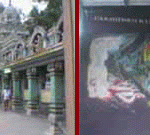
Vana Durgai Amma Temple, Palani
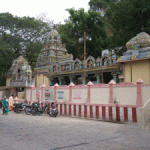
vanadurgai_temple, Vana Durgai Amma Temple, Palani
Contact Details
Official Address:
Vana Durgai Amman Temple,
Palani, Dindigul District,
Tamil Nadu, India.
Contact (Palani Central Office):
+91-4545-242127