
Contents
- 1 Introduction & Spiritual Essence: The Sanctity of Haridwaramangalam
- 2 Historical Origins & Scriptural Legend
- 3 Architectural Marvels: Dravidian Grandeur
- 4 Darshan & Ritual Logistics
- 5 Practical Visitor Guidance
- 6 Pilgrimage Connectivity
- 7 Frequently Asked Questions (FAQ)
- 7.1 1. Is there a VIP Darshan entry available?
- 7.2 2. What is the significance of the name “Varadaraja”?
- 7.3 3. Are there food facilities (Annadanam) at the temple?
- 7.4 4. Can we perform naming ceremonies or thread ceremonies here?
- 7.5 5. What is the contact number for the temple office?
- 7.6 6. Is the temple open during Tamil Months of Adi and Purattasi?
Introduction & Spiritual Essence: The Sanctity of Haridwaramangalam
The Varadaraja Perumal Temple in Haridwaramangalam, Thiruvarur district, stands as a timeless beacon of Bhakti (devotion) dedicated to Lord Vishnu. In this sacred Kshetram (holy ground), the presiding deity is Varadaraja Perumal, the wish-fulfilling Lord, facing east. His divine consort, Mother Perundevi Thaayar (Lakshmi), graces devotees from her separate shrine, also facing east.
Phalaśruti: Why Devotees Visit
According to Hindu tradition, worshipping Varadaraja Perumal bestows Vidya (knowledge), Arogya (health), and prosperity. This temple is particularly renowned for blessings related to education and ancestral prosperity. The temple is believed to be as ancient as the nearby Paadal Petra Sthalam, the Padaleeswarar Temple, holding immense spiritual energy for cleansing ancestral karma and liberating devotees from worldly sufferings.
Historical Origins & Scriptural Legend
While specific epigraphic data regarding the exact founding dynasty is under scholarly review by the Tamil Nadu Archaeology Department, temple records suggest the structure dates back several centuries, sharing a historical timeline with the 9th-century Chola architectural era in the Thiruvarur region. The temple follows the Dravidian style of architecture, typical of the Vaishnava institutions established during the Chola and Nayak periods.
The Legend of Varadaraja
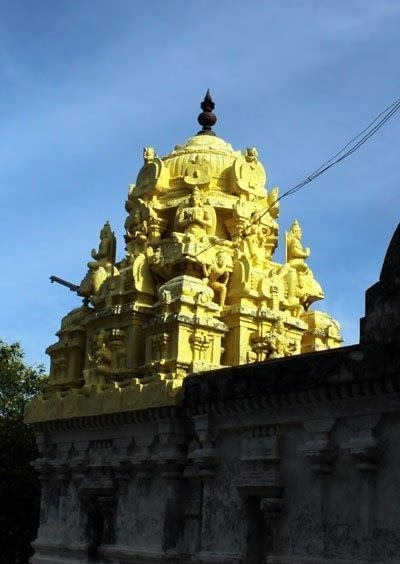
Tradition holds that this temple was originally a smaller shrine expanded by pious devotees. The Sthala Purana (local oral legend) narrates that Lord Varadaraja appeared here to grant the boon (Varam) of prosperity to a pious Brahmin who performed intense Tapas (penance) in this region. The presence of the five-tiered Rajagopuram (main entrance tower) signifies the temple’s historical significance and royal patronage in ancient times.
Architectural Marvels: Dravidian Grandeur
The temple is an exemplary specimen of Dravidian Architecture. It is a medium-sized yet visually striking temple complex.
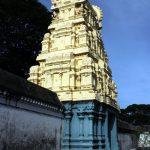
- Entrance Gopurams: The temple features a towering 5-tier Rajagopuram (main gateway). A smaller, 3-tier Gopuram is situated on the southern side, leading to the inner sanctums.
- Sanctum Sanctorum (Garbhagriha): The inner structure is designed to align with Vastu Shastra principles, ensuring the free flow of positive energy. The central shrine houses Varadaraja Perumal alongside Sridevi and Bhoo Devi (Lakshmi).
- Notable Sculptures: The Mandapas (pillared halls) feature exquisite carvings of celestial beings and mythological narratives from the Vishnu Puranas.
- Preserved Heritage: While not officially listed as a UNESCO site, the temple retains authentic stone carvings and stucco work characteristic of the Vijayanagara or Nayak period renovations.
Darshan & Ritual Logistics
Devotees can participate in daily rituals and special sevas. Below is the general schedule for 2026. (Note: Timings may vary slightly during festivals; please check with the temple office for real-time updates.)
| Session | Timing | Activity |
|---|---|---|
| Morning | 6:00 AM – 11:00 AM | Opening, Suprabhatam, Abhishekam |
| Midday | 11:00 AM – 4:00 PM | Closure (Cleaning/Rest) |
| Evening | 4:00 PM – 8:30 PM | Dresser, Deepa Aradhanai, Palliyarai Pujai |
Key Sevas and Online Booking
Primary sevas include:
- Abhishekam: Ritual bathing of the deity (usually performed on Ekadashi days).
- Archana: Recitation of the 108 names of Vishnu/Perumal.
- Tirumanjanam: Holy offering of sandalwood paste.
As of 2026, the temple administration is streamlining operations. While this specific temple is a smaller regional shrine, devotees are advised to visit the official Tamil Nadu HR&CE website to check for online seva booking availability. For major offerings, direct contact with the temple priest is recommended.
2026 Festival Dates
- Vaikuntha Ekadashi: January 10, 2026 – The most auspicious day for Varadaraja Perumal Darshan.
- Brahmotsavam: May 5–15, 2026 (Tentative) – Includes Garuda Vahana procession.
- Vishnuvakasi (Vaikasi Visakam): May 25, 2026.
- Pavitra Utsavam: July–August 2026.
- Vaikuntha Ekadashi (2027): January 2027 (For planning purposes).
Practical Visitor Guidance
To ensure a serene pilgrimage experience at Haridwaramangalam:
- Dress Code: Strict adherence to traditional attire is required. Men must wear Dhotis or formal trousers with shirts; vests are discouraged. Women should wear sarees, half-sarees, or salwar kameez.
- Photography: Photography is strictly prohibited inside the inner sanctum (Garbhagriha) and the courtyard housing the Dwajasthambam (flagpole). Mobile cameras are allowed in the outer prakaram (circumambulatory path).
- Mobile Lockers: There are no automated lockers available. It is advisable to travel light and keep valuables in your vehicle. Avoid carrying phones or large bags during the inner pradakshina.
- Accessibility: The temple has stone steps leading to the main entrance. While there is ramp access in the outer courtyard, wheelchair access to the inner sanctum is restricted due to the ancient structure.
- Crowd Management:
- Best Time: Weekday mornings (6:00 AM – 8:00 AM) offer the most peaceful darshan.
- Seasonal Advice: May (Tamil Month of Vaikasi) is extremely hot. Carry water bottles and a wet towel. The monsoon (October–November) brings lush greenery but can make the temple steps slippery; proceed with caution.
Pilgrimage Connectivity
How to Reach Varadaraja Perumal Temple
The temple is centrally located in the delta region of Tamil Nadu.
- By Air: The nearest airport is Trichy International Airport (TRZ), located approximately 85 km away. Taxi services are available from Trichy to Haridwaramangalam.
- By Rail: The nearest railway station is Ammapettai Railway Station (approx. 13 km). Alternatively, Kumbakonam Junction (22 km) is a major hub with frequent trains from Chennai and Tiruchirapalli.
- By Road:
- From Kumbakonam: Take the State Highway towards Ammapettai. Haridwaramangalam is 22 km from Kumbakonam.
- From Thanjavur: Proceed towards Nagapattinam via the NH 266 (approx. 30 km). You can get down at Ammapettai and head north 13 km to Haridwaramangalam.
- From Thiruvarur: Approx. 25 km via Mannargudi road.
Nearby Sacred Sites
Extend your pilgrimage to these nearby holy destinations:
- Padaleeswarar Temple (Avalivanallur): Located just 3 km from Haridwaramangalam, this Shiva temple is a Paadal Petra Sthalam, revered in the hymns of the Nayanmars.
- Mannargudi Rajagopalaswamy Temple: A major Krishna temple located 29 km away, known for its sprawling temple complex and annual festival.
- Thiruvarur Thyagarajaswamy Temple: The district headquarters (30 km) houses the famous temple dedicated to Lord Shiva as Muktinath Thyagaraja, one of the 276 Shiva Tevaram sites.
Gallery
Frequently Asked Questions (FAQ)
1. Is there a VIP Darshan entry available?
Yes, the temple administration permits a prioritized line for senior citizens and persons with disabilities. For general VIP entry, a pass from the local revenue officer or temple executive officer is usually required.
2. What is the significance of the name “Varadaraja”?
“Varada” translates to “boon” or “wish,” and “Raja” means “King.” Thus, Varadaraja Perumal is the ‘King of Wish-Granters,’ a form of Lord Vishnu believed to bless devotees with their sincere requests.
3. Are there food facilities (Annadanam) at the temple?
As a smaller shrine, a full-fledged kitchen may not be operational daily. However, prasadam is distributed during festivals. It is recommended to eat in Kumbakonam or Thanjavur before traveling to Haridwaramangalam.
4. Can we perform naming ceremonies or thread ceremonies here?
Yes, the temple allows conducting specific Vedic rituals like naming ceremonies (Namakaranam) and weddings. Prior appointment with the temple priest is mandatory.
5. What is the contact number for the temple office?
For the most current contact details and administrative queries, it is best to reach out to the Assistant Executive Officer (AEO) of the Haridwaramangalam Varadaraja Perumal Temple under the Tamil Nadu Hindu Religious and Charitable Endowments (HR&CE) Department.
6. Is the temple open during Tamil Months of Adi and Purattasi?
Yes, the temple remains open. However, expect larger crowds, especially on Fridays in Adi and Saturdays in Purattasi, as these are auspicious for Mother Perundevi Thaayar and Lord Varadaraja respectively.
Recent Posts

ओ सांवरे तूने ही मुझको संभाला – Lyrics & Meaning
ओ सांवरे तूने ही मुझको संभाला – A Prayer to Shyam Origin & Spiritual Essence Why This Bhajan Resonates Devotees chant this when overwhelmed by life’s storms—the refrain ‘तूने ही मुझको संभाला’ is the soul’s sigh of relief: “You…

कथा ये है महाराज मेरे की – Lyrics & Meaning
कथा ये है महाराज मेरे की छत्रपति संभाजी महाराज – A Prayer to Chhatrapati Sambhaji Maharaj Origin & Spiritual Essence Why This Bhajan Resonates Devotees chant this when their spirit feels tested—its powerful refrain “महाराज मेरे” is a soul’s…

Rigveda Samhita Yathartha Anuvada (ऋग्वेद संहिता यथार्थ अनुवाद) – Complete Set with Anvayartha & Hindi/English Translation
The Rigveda is the oldest surviving scripture of humanity and the foundational text of Sanātana Dharma. For serious students, scholars, UPSC aspirants studying ancient Indian history, Sanskrit learners, and spiritual seekers, a precise and grammatically structured translation is indispensable.…

आना भी अकेला है जाना भी अकेला है – Lyrics & Meaning | BharatTemples
आना भी अकेला है जाना भी अकेला है – A Prayer to the Divine Witness Origin & Spiritual Essence Why This Bhajan Resonates Devotees turn to this bhajan in moments of deep reflection—when life’s attachments begin to ache. The…

माता शेरावाली के द्वार जो भी जाता है – Lyrics & Meaning
माता शेरावाली के द्वार जो भी जाता है – A Prayer to Maa Sherawali Origin & Spiritual Essence Why This Bhajan Resonates Devotees turn to this bhajan in times of fear or uncertainty—its promise that no one leaves Maa’s…

मार लेना सपणी उबार लेणा भवरा – Lyrics & Meaning
मार लेना सपणी उबार लेणा भवरा – A Prayer to the Divine Beloved Origin & Spiritual Essence Why This Bhajan Resonates Devotees chant this in moments of deep vulnerability—its cry of “मार लेना सपणी, उबार लेणा भवरा” is the…

हमें श्याम सुंदर भरोसा तुम्हारा – Lyrics & Meaning
हमें श्याम सुंदर भरोसा तुम्हारा – A Prayer to Shyam Sundar Origin & Spiritual Essence Why This Bhajan Resonates Devotees chant this when feeling alone—its refrain ‘de do sahara’ is the soul’s cry for divine support. Lyrics in Hindi…

Mere Satguru Ne Di Thi Davai Lyrics in Hindi & Meaning
Mere Satguru Ne Di Thi Davai: Invoking the Guru’s Liberating Wisdom This soul-stirring bhajan venerates the Satguru (True Spiritual Master) as the divine physician who dispenses the only remedy for life’s deepest sufferings. Composed by Sant Karmaveer Tufani, it…

Janm Diyo Thari Maa Dukh Dekhiyo Lyrics in Hindi & Meaning
जन्म दियो थारी माँ दुख देखियो (Maa’s Grief Upon Birthing You) This soul-stirring Chetavani Bhajan (admonitory hymn) is addressed to the Divine Mother (Maa) – a call for repentance when children forget their filial duties in the dark age…
Bhadi Sabha Mein Thane Manaun Lyrics in Hindi & Meaning
Bhadi Sabha Mein Thane Manaun: Invoking the Spear-Wielding Mother Mata Bhawani (श्री ज्वाला भवानी), the fiery manifestation of Shakti worshipped as the Protector of Dharma in Her Dhaulagarh sanctum. Origin & Spiritual Essence Composed in Rajasthani folk tradition by…