
Contents
- 1 Introduction & Spiritual Essence
- 2 Historical Origins & Scriptural Legend
- 3 Architectural Marvels
- 4 Darshan & Ritual Logistics (2026 Schedule)
- 5 Practical Visitor Guidance
- 6 Pilgrimage Connectivity
- 6.1 How to Reach Siruvapuri
- 6.2 Nearby Sacred Sites (Pilgrimage Circuit)
- 6.3 Frequently Asked Questions (FAQ)
- 6.4 1. Is there a VIP Darshan entry at Varadharaja Perumal Temple?
- 6.5 2. What is the significance of Ooraga Perumal?
- 6.6 3. Are there accommodation facilities nearby?
- 6.7 4. Is the temple accessible for the elderly?
- 6.8 5. Can we book the Abhishekam online?
Introduction & Spiritual Essence
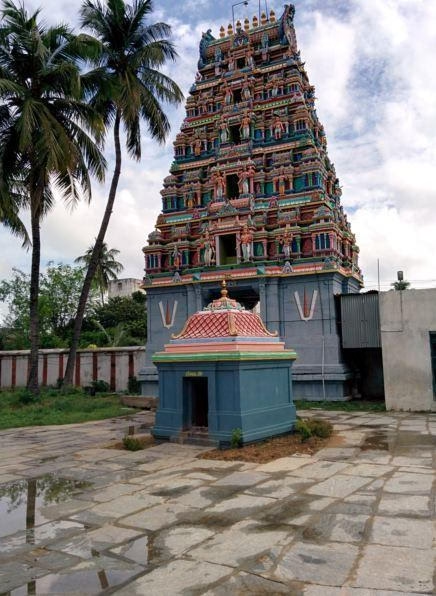
Amidst the spiritual energy of the Thiruvallur district lies the ancient Varadharaja Perumal Temple, a sacred abode of Lord Vishnu nestled in Siruvapuri (also known locally as Chinnambedu). Known in local folklore as the Ooraga Perumal Temple, this shrine holds a unique spiritual significance. The term “Ooraga” refers to a serpent (Adisesha), and legend states that Lord Vishnu assumed this form to protect the sage Suthapas from a curse.
Devotees flock to this temple primarily for the Phalaśruti (spiritual benefits) associated with eye afflictions and ancestral karma. It is strongly believed that worshipping the presiding deity, Theenda Thirumeni Perumal, helps cure eye-related ailments and removes obstacles in one’s life path. The temple is also revered for its connection to the Ramayana, where Sage Valmiki is said to have imparted archery skills to Lava and Kusha, the sons of Lord Rama.
Historical Origins & Scriptural Legend
The Legend of Suthapas and Siravanasuran
According to the Sthala Purana, this region is hallowed by the presence of saints and celestial beings. Tradition holds that the demon Siravanasuran tormented the sages residing here. To vanquish this Asura and protect his devotees, Lord Vishnu appeared as Varadaraja Perumal. The term “Varada” signifies a boon-bestower, and here, the Lord grants the boon of liberation (Moksha) and protection from serpentine fears (Naga Dosha).
While specific construction dates are often difficult to pinpoint in ancient Dravidian history, the temple’s architectural style suggests a structure dating back several centuries, maintained by the local community and subsequent royal patrons. The temple records highlight the deity’s unique posture and the unbroken lineage of rituals performed here.
Architectural Marvels
The temple exemplifies the classic Dravidian architectural style, characterized by its towering Rajagopuram (though this temple is unique for its modest, east-facing entrance that lacks a grand gateway, preserving its ancient, rustic charm).
- The Sanctum (Garbhagriha): The main deity, Varadaraja Perumal, stands in a majestic posture (Nindra Kolam) flanked by his consorts, Sri Devi and Bhoo Devi. The idol is revered as Theenda Thirumeni (the body that is cool and soothing), often covered with sandalwood paste (Thaila Kappu) during the Karthikai month.
- Unique Shrines: A remarkable feature is the shrine of Srinivasa Perumal (Venkateswara) carved from granite, alongside a shrine for Lakshmi Narayana.
- Garuda and Hanuman: The corridor (prakaram) houses a Swayambhu (self-manifested) idol of Lord Hanuman and a small idol of Garuda facing the presiding deity.
- Goddess Perundevi: A separate shrine for the consort goddess, Parvati (Perundevi), is located within the temple premises.
Darshan & Ritual Logistics (2026 Schedule)
The temple follows traditional Tamil Nadu temple timings. Below is the schedule for daily darshan. Please note that temple timings are subject to change during festivals.
| Session | Timings | Details |
|---|---|---|
| Morning Darshan | 7:00 AM – 12:00 PM | Includes Morning Thaila Kappu (Oil Abhishekam). |
| Afternoon Break | 12:00 PM – 4:00 PM | Temple remains closed. |
| Evening Darshan | 4:00 PM – 8:00 PM | Closing rituals and Aarthi. |
Key Sevas & Online Booking
To participate in specific rituals, devotees can book through the Tiruvallur Devaswom Board (official administrative body). While direct online booking for smaller temples like Siruvapuri is often managed locally, the following Sevas are popular:
- Thaila Kappu: Application of medicated oil (Sesame oil) to the deity, specifically on the full moon day of the Karthikai month.
- Archana: Chanting of the 108 names of Vishnu (Purusha Suktam).
- Abhishekam: Ritual bathing of the deity (usually performed on request).
Note on 2026 Festivals:
Masi Magam (Feb 2026): A grand procession is held.
Panguni Uthiram (March/April 2026): Special Thirukalyanam (Celestial Wedding) rituals.
Karthikai Deepam (Nov/Dec 2026): Deepa Aradhana (Lamp lighting) is the highlight.
Practical Visitor Guidance
- Dress Code: Traditional attire is mandatory. Men should wear Dhotis or pants with shirts; women should wear Sarees, Salwar Kameez, or long skirts. Western attire is strictly prohibited.
- Photography: Photography inside the sanctum is strictly prohibited. Mobile phones are allowed but must be switched to silent mode.
- Crowd Management: Weekends (Saturdays) and festival days see significant crowds. The best time to visit for a peaceful Darshan is Tuesday or Wednesday mornings between 7:00 AM and 8:00 AM.
- Seasonal Advice: Tamil Nadu summers (May) can be intensely hot. It is advisable to carry a water bottle and use covered footwear as the temple floor heats up significantly.
Pilgrimage Connectivity
How to Reach Siruvapuri
The temple is strategically located on the Chennai-Kolkata Highway (NH16).
- By Bus: From Chennai, buses numbered 133 (from Madras Basin Bridge) and 533 (from Koyambedu) connect directly to Siruvapuri (Chinnambedu) bus stop, which is just 250 meters from the temple.
- By Rail: The nearest railway stations are Kavaraippettai (10 km), Ponneri (13 km), and Gummidipoondi (14 km). Auto-rickshaws are available from these stations.
- By Air: Chennai International Airport (MAA) is approximately 50 km away.
Nearby Sacred Sites (Pilgrimage Circuit)
- Siruvapuri Murugan Temple: Located just a few hundred meters away, dedicated to Lord Murugan.
- Periyapalayam Temple: (10 km) Famous for the Avattappar temple where the annual Kanda Sashti festival is celebrated grandly.
- Pulicat Lake (15 km): While not a temple, this is a serene spot for devotees seeking nature’s tranquility after the pilgrimage.
Frequently Asked Questions (FAQ)
1. Is there a VIP Darshan entry at Varadharaja Perumal Temple?
Currently, the temple does not have a formal VIP entry system like major Tirupati shrines. Darshan is generally free and open to all devotees. However, prior intimation to the temple administration (Tiruvallur Devaswom Board) is required for large groups or special pujas.
2. What is the significance of Ooraga Perumal?
The term “Ooraga” refers to the Serpent form (Adisesha). Devotees with Sarpa Dosha (serpent afflictions) or eye ailments visit this temple for relief. It is believed Lord Vishnu sleeps on the serpent here, offering protection.
3. Are there accommodation facilities nearby?
Basic guest houses are available in Ponneri and Thiruvallur. For better facilities and hotels, devotees usually stay in Chennai (Gummudipoondi or Redhills) and make a day trip.
4. Is the temple accessible for the elderly?
Yes, the temple has a flat layout, and the pathways are wheelchair friendly to an extent. However, footwear must be removed at the main entrance, and some areas have uneven stone flooring.
5. Can we book the Abhishekam online?
Online booking is limited. It is recommended to call the temple office or visit the Tiruvallur Devaswom Board website for updated online services, though on-the-spot booking for Abhishekam is common and usually available.
Recent Posts

ओ सांवरे तूने ही मुझको संभाला – Lyrics & Meaning
ओ सांवरे तूने ही मुझको संभाला – A Prayer to Shyam Origin & Spiritual Essence Why This Bhajan Resonates Devotees chant this when overwhelmed by life’s storms—the refrain ‘तूने ही मुझको संभाला’ is the soul’s sigh of relief: “You…

कथा ये है महाराज मेरे की – Lyrics & Meaning
कथा ये है महाराज मेरे की छत्रपति संभाजी महाराज – A Prayer to Chhatrapati Sambhaji Maharaj Origin & Spiritual Essence Why This Bhajan Resonates Devotees chant this when their spirit feels tested—its powerful refrain “महाराज मेरे” is a soul’s…

Rigveda Samhita Yathartha Anuvada (ऋग्वेद संहिता यथार्थ अनुवाद) – Complete Set with Anvayartha & Hindi/English Translation
The Rigveda is the oldest surviving scripture of humanity and the foundational text of Sanātana Dharma. For serious students, scholars, UPSC aspirants studying ancient Indian history, Sanskrit learners, and spiritual seekers, a precise and grammatically structured translation is indispensable.…

आना भी अकेला है जाना भी अकेला है – Lyrics & Meaning | BharatTemples
आना भी अकेला है जाना भी अकेला है – A Prayer to the Divine Witness Origin & Spiritual Essence Why This Bhajan Resonates Devotees turn to this bhajan in moments of deep reflection—when life’s attachments begin to ache. The…

माता शेरावाली के द्वार जो भी जाता है – Lyrics & Meaning
माता शेरावाली के द्वार जो भी जाता है – A Prayer to Maa Sherawali Origin & Spiritual Essence Why This Bhajan Resonates Devotees turn to this bhajan in times of fear or uncertainty—its promise that no one leaves Maa’s…

मार लेना सपणी उबार लेणा भवरा – Lyrics & Meaning
मार लेना सपणी उबार लेणा भवरा – A Prayer to the Divine Beloved Origin & Spiritual Essence Why This Bhajan Resonates Devotees chant this in moments of deep vulnerability—its cry of “मार लेना सपणी, उबार लेणा भवरा” is the…

हमें श्याम सुंदर भरोसा तुम्हारा – Lyrics & Meaning
हमें श्याम सुंदर भरोसा तुम्हारा – A Prayer to Shyam Sundar Origin & Spiritual Essence Why This Bhajan Resonates Devotees chant this when feeling alone—its refrain ‘de do sahara’ is the soul’s cry for divine support. Lyrics in Hindi…

Mere Satguru Ne Di Thi Davai Lyrics in Hindi & Meaning
Mere Satguru Ne Di Thi Davai: Invoking the Guru’s Liberating Wisdom This soul-stirring bhajan venerates the Satguru (True Spiritual Master) as the divine physician who dispenses the only remedy for life’s deepest sufferings. Composed by Sant Karmaveer Tufani, it…

Janm Diyo Thari Maa Dukh Dekhiyo Lyrics in Hindi & Meaning
जन्म दियो थारी माँ दुख देखियो (Maa’s Grief Upon Birthing You) This soul-stirring Chetavani Bhajan (admonitory hymn) is addressed to the Divine Mother (Maa) – a call for repentance when children forget their filial duties in the dark age…
Bhadi Sabha Mein Thane Manaun Lyrics in Hindi & Meaning
Bhadi Sabha Mein Thane Manaun: Invoking the Spear-Wielding Mother Mata Bhawani (श्री ज्वाला भवानी), the fiery manifestation of Shakti worshipped as the Protector of Dharma in Her Dhaulagarh sanctum. Origin & Spiritual Essence Composed in Rajasthani folk tradition by…