Vedanarayana Temple Nagalapuram: History, Timings & Surya Pooja Guide
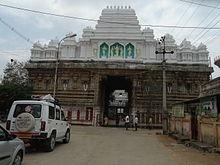
Receive daily temple updates, divine darshan, and morning bhajans directly on WhatsApp.
Contents
- 1 The Divine Reservoir of Vedas: A Definitive Guide to Vedanarayana Temple
The Divine Reservoir of Vedas: A Definitive Guide to Vedanarayana Temple
Amidst the rolling hills of the Chittoor district in Andhra Pradesh lies a sanctum where the sun itself pays obeisance to the Divine. Welcome to the Vedanarayana Temple of Nagalapuram, a beacon of Vaishnavite heritage and the only abode of Lord Vishnu in the Matsya (Fish) avatar within the region. Unlike the towering granite gopurams of typical Dravidian temples, this shrine is distinguished by its unique orientation and an astronomical phenomenon that has baffled scientists and awed devotees for centuries.
For the modern pilgrim, this guide serves as a spiritual compass. Whether you seek the grace of the Lord of the Vedas or wish to witness the miracle of the sun’s rays illuminating the inner sanctum, this 1,500-word guide encapsulates the soul of Nagalapuram.
1. Introduction & Spiritual Essence
The Deity: Matsya Narayana
The temple is dedicated to Vishnu, specifically in his first incarnation as Matsya (the Fish). The primary idol, known as Vedanarayana, is a swayambhu (self-manifested) murthy residing in the Garbhagriha (inner sanctum). The name “Vedanarayana” suggests the Lord as the protector of the Vedas (divine knowledge), whom he saved during the cosmic deluge by taking the form of a fish.
Phalaśruti: The Benefits of Visiting
According to temple traditions, a visit to Vedanarayana Temple is believed to have profound spiritual benefits:
- Cleansing Ancestral Karma: Devotees believe that offering prayers here helps resolve pitru doshas (ancestral sins) and brings peace to departed souls.
- Protection from Misfortune: As Matsya protected the Vedic scriptures from the demon Hayagriva, devotees pray here to overcome obstacles in education and knowledge.
- Health and Vitality: Ruled by Surya (Sun) energy during the annual festival, the temple is associated with curing chronic ailments and improving vitality.
📖 Related: Hatimura Temple Nagaon: History, Darshan Timings & Complete Guide
2. Historical Origins & Scriptural Legend
Architectural Timeline & Builders
While the exact date of the initial construction remains shrouded in the mists of ancient history, temple records and ASI (Archaeological Survey of India) observations suggest the structures were significantly expanded during the Vijayanagara Empire (roughly 14th–17th century). The temple showcases a fusion of early Dravidian styles with later Vijayanagara architectural insertions.
The Sthala Purana: The Sun Worships the Fish
The legend of Vedanarayana is as unique as its architecture. It is deeply tied to the solar cycle. Tradition holds that during the Varaha Avatar of Vishnu, the earth was lifted from the cosmic ocean. To purify this act, Lord Surya (the Sun God) performed a penance at this very spot. To this day, it is believed that the Sun God visits this temple in the form of rays to worship Lord Matsya Narayana.
Scripturally, this aligns with the Bhagavata Purana, where Vishnu as Matsya saves the four Vedas from a demon named Hayagriva. By residing here, Vedanarayana serves as the eternal protector of knowledge.
3. Architectural Marvels
Dravidian Style & Orientation
The temple is a classic example of Dravidian Architecture. The sanctum is aligned such that the Shikhara (tower above the sanctum) casts a shadow that never falls inside the inner chamber—a feat of Vastu Shastra. The temple complex is enclosed by a massive prakaram (corridor) typical of Vijayanagara temple construction.
The Astronomical Gopuram
The most notable feature is the Temple Tower (Gopuram), which is not the typical pyramidal structure but is specifically designed to channel light. The temple is an astronomical marvel where the architecture serves as a lens.
Current Status: While not a UNESCO World Heritage site, it is protected by the Andhra Pradesh Archaeology Department and is considered a protected monument of national importance due to its unique solar phenomenon.
📖 Related: Sivasagar Sivadol: History, Timings & Complete Pilgrimage Guide
4. Darshan & Ritual Logistics
The temple follows strict Agamic rituals. The priests (Archakas) belong to the Madhwa tradition, chanting Vedic mantras dedicated to Vishnu.
Daily Timings
Timings may vary slightly during festivals; however, the standard schedule is as follows:
| Session | Time Slot | Activity |
|---|---|---|
| Morning | 6:00 AM – 12:00 PM | Suprabhatam, Thomala, Archana |
| Afternoon | 12:00 PM – 4:00 PM | Rajabhoga Alankaram (Closing) |
| Evening | 4:00 PM – 8:00 PM | Evening Darshan, Sri Veera Anjaneya Swamy Seva |
Key Sevas (Service Offerings)
- Abhishekam: Performed on Ekadashi days. Booking required.
- Surya Pooja Utsavam: The annual festival (see below).
- Archana: Can be performed daily; tickets available at the counter.
Festival Dates for 2026
The temple is most crowded during the Surya Pooja Utsavam and Kalyanotsavam.
- Vaikuntha Ekadashi: January 7, 2026 (Special Darshan).
- Rama Navami: April 4, 2026 (Kalyanotsavam).
- Vyasa Purnima: July 12, 2026 (Ideal for spiritual initiation).
- Vedanarayana Brahmotsavam (Major Festival): Typically falls in November. Exact dates to be announced by the Tirupati Tirumala Devasthanams (TTD) in late 2025.
Online Seva Booking
While Nagalapuram is a smaller shrine compared to Tirupati, specific sevas can be booked via the local temple administration office. For larger events like Brahmotsavam, check the TTD (Tirumala Tirupati Devasthanams) website or the official Andhra Pradesh Endowments portal starting in December 2025.
5. Practical Visitor Guidance
Dress Code & Etiquette
As a conservative Vaishnavite temple, dress code is strict.
- Men: Dhoti or formal trousers with a shirt. Remove shirts before entering the sanctum.
- Women: Saree, Half-Saree, or Chudidar with Dupatta. Avoid western wear like jeans or shorts.
Photography & Mobiles
- Cameras/Phones: Strictly prohibited inside the inner sanctum.
- Lockers: A free locker facility is available at the entrance for electronic devices and footwear.
Crowd Management & Seasonal Tips
The temple is relatively peaceful year-round, except during the annual Surya Pooja and festival seasons.
- Best Time to Visit: November to February (Cool weather).
- Surya Pooja Peak: If visiting in May (dates vary annually), the heat is intense. Carry water, an umbrella, and wear protective footwear.
- Accessibility: The main sanctum has steep steps; however, the outer corridors are wheelchair accessible. Helpers (dandies) are available for elderly devotees.
6. Pilgrimage Connectivity
How to Reach Nagalapuram
Nagalapuram is located approximately 70 km from Tirupati and 100 km from Chennai.
- By Air: The nearest airport is Chennai International Airport (MAA) (approx. 90 km) or Tirupati Airport (TIR) (approx. 80 km).
- By Rail: The nearest major railway junction is Tirupati Main. From there, frequent buses are available to Nagalapuram.
- By Road: The temple is situated off the National Highway 16 (NH16) (formerly NH5). It connects seamlessly to the Mumbai-Nagpur-Srikakulam highway corridor.
📖 Related: Bhairabi Temple, Tezpur: History, Darshan Timings & Complete Guide
Nearby Sacred Sites (Pilgrimage Circuit)
Extend your spiritual journey by visiting these nearby tirthas:
- Sri Kalahasteeswara Temple: Located 25 km away. A powerful Shiva temple dedicated to the lord of the spider, representing the Vayu (wind) element.
- Sri Kalahasteeswara Wildlife Sanctuary: For nature lovers, offering a serene backdrop to the temple town.
- Nagalapuram Falls (Puligundu): Located just 5 km from the temple, this is a popular trekking spot where water cascades over rocky terrain (seasonal access).
Photo Gallery

511b1d94e4b015f836878289_600x315, Vedanarayana Temple, Nagalapuram, Andhra Pradesh
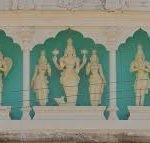
images (66), Vedanarayana Temple, Nagalapuram, Andhra Pradesh
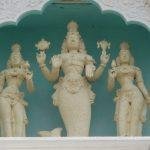
Picture-500-640×405, Vedanarayana Temple, Nagalapuram, Andhra Pradesh
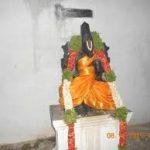
download (96), Vedanarayana Temple, Nagalapuram, Andhra Pradesh
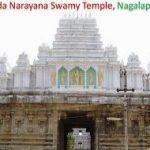
download (95), Vedanarayana Temple, Nagalapuram, Andhra Pradesh
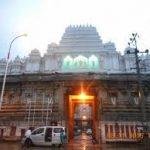
download (94), Vedanarayana Temple, Nagalapuram, Andhra Pradesh
7. Frequently Asked Questions (FAQs)
What is the significance of the Surya Pooja at Vedanarayana Temple?
The Surya Pooja is a unique astronomical event where sunrays penetrate the temple architecture and fall directly on the feet of the deity for the first day, the navel on the second day, and the crown on the third day. This alignment occurs only for a few days in a year, usually around the month of March/April.
Is there a VIP darshan entry?
Yes, the temple administration allows special darshan for senior citizens, differently-abled devotees, and families with infants. A nominal fee (usually ₹50–₹100) is charged for special entry darshan during non-peak hours.
What is the history of the idol of Vedanarayana?
The idol is believed to be swayambhu (self-manifested) in the form of Matsya Narayana (the fish incarnation of Vishnu). It is carved from a single stone and stands in a standing posture, holding the Sudarshana Chakra and the Shankha (conch).
Are there accommodation facilities available?
While there is no dedicated guest house at the temple, several private lodges and choultries are available in the town of Nagalapuram. For better amenities, pilgrims often choose to stay in Tirupati (70 km away), which offers a wide range of TTDC and private hotels.
What is the best route from Chennai to Nagalapuram?
Take NH16 via Chengalpattu and Melmaruvathur. The road is well-maintained, and the drive takes approximately 2 hours. There are frequent bus services operated by APSRTC and TNSTC.
Contact Details
Official Address:
Vedanarayana Temple,
Nagalapuram Village, Nagalapuram Mandal,
Chittoor District, Andhra Pradesh – 517589.
Phone: 098485 69581 (Temple Office)