
Contents
Introduction & Spiritual Essence
The Vedapureeswarar Temple in Puducherry stands as a resilient beacon of devotion on the Coromandel Coast. Dedicated to Lord Shiva, this ancient shrine is revered as a place where the divine grace of Veda (knowledge) meets the purity of the soul.
The Deity: Vedapureeswarar & Tiripurasundari
The primary deity is worshipped as Vedapureeswarar (Shiva), representing the essence of the Vedas. His consort, Parvathi, is revered as Tiripurasundari. The Lingam is a Swayambhu (self-manifested) murthi, enhancing the temple’s spiritual potency.
Phalaśruti: The Spiritual Benefits
Devotees flock to Vedapureeswarar Temple to seek blessings for:
- Removal of Vastu Doshas: The temple’s unique alignment is believed to rectify architectural faults in one’s home.
- Knowledge and Wisdom: As the Lord of the Vedas, worship here is said to enhance clarity, memory, and spiritual insight.
- Ancestral Liberation: Performing rites here aids in cleansing Karma and granting peace to ancestors.
Historical Origins & Scriptural Legend
While the sanctity of the temple is ancient, its physical form bears the marks of a turbulent and triumphant history.
Legends of Podouke and Divine Migration
According to local tradition, the region was anciently known as Podouke (identified as Arikamedu, a major Roman trade port). Legend holds that the current presiding deity originally resided on Samba Easwaran Street. In a display of divine will, the deity migrated to the current location in the late 19th century.
Historical Trials and Reconstruction
According to temple records and the diary of the chronicler Ananda Rangam Pillai, the temple faced near-total destruction twice. First, by invading Muslim forces, and again by French troops in 1748. During this conflict, the images of Vedapureeswarar were moved to the Varadaraja Perumal Temple for protection. The temple was reconstructed in 1788 by Dewan Kandappa Mudaliar through public contributions.
Architectural Marvels
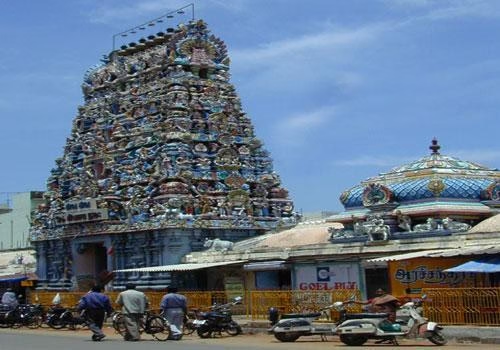
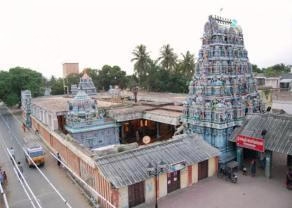
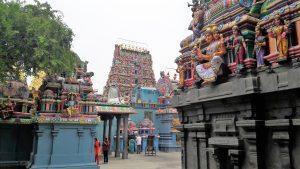
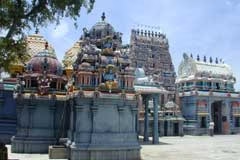
The temple showcases the grandeur of the Dravidian style of architecture. It is a fortress of stone and faith, featuring a seven-tiered Rajagopuram (gateway tower) that rises majestically to 75 feet.
Layout and Sculptures
A massive granite wall encloses the complex, protecting the sanctity of the shrines.
- The Sanctum: Approached through the Maha Mandap and Artha Mandap, the inner sanctum is guarded by imposing Dwarapalas (gatekeepers).
- Nandi Shrine: A large stone image of Nandi (the bull) faces the sanctum, oriented eastward in the Maha Mandap.
- Secondary Shrines: The temple complex houses shrines dedicated to Vinayaga, Muruga, Shani, Durga, Chandikeswara, Dakshinamurthy, and the Navagrahas.
- The Temple Tank: Located within the precincts, the rectangular tank features 35 steps leading to the water, facilitating ritual purification.
Darshan & Ritual Logistics
The temple is administered by the Department of Hindu Religious and Charitable Endowments (HR&CE) of the Government of Puducherry. The daily schedule is designed to accommodate devotees throughout the day.
Daily Timings
| Session | Timing |
|---|---|
| Morning Darshan | 06:00 AM – 12:30 PM |
| Afternoon Break | 12:30 PM – 04:30 PM |
| Evening Darshan | 04:30 PM – 08:00 PM |
Sevas and Rituals
The temple conducts four daily rituals. Key sevas include:
- Abhishekam: Performed usually in the morning hours. Devotees can request special Abhishekam for Vedapureeswarar and Tiripurasundari.
- Archana: Personal prayers (Sankalpam) can be offered at the counter.
- Online Seva Booking: While the temple office handles physical bookings, devotees should check the official Puducherry HR&CE portal for online availability prior to 2026.
2026 Festival Calendar
The temple hosts major festivals according to the Tamil Solar Calendar. If you plan to visit in 2026, mark these dates:
- Brahmotsavam: The most significant annual festival occurs during the Tamil month of Vaikasi (May–June 2026).
- Annabishekam: Sacred offering of cooked rice to the deity during Aipassi (October–November 2026).
- Maha Shivaratri: A major night-long vigil during Masi (February–March 2026).
Practical Visitor Guidance
To ensure a smooth and respectful visit, please adhere to the following guidelines.
Dress Code & Etiquette
Traditional attire is preferred. Men should wear dhotis or formal trousers with shirts; women should wear sarees, salwar kameez, or long skirts. Avoid shorts and sleeveless tops.
Photography & Mobiles
- Photography is strictly prohibited inside the sanctum sanctorum.
- Mobile Lockers: It is recommended to leave valuables in your vehicle or use the designated cloakrooms available at the temple entrance.
Crowd Management & Accessibility
- Best Hours: The least crowded time is between 8:00 AM and 10:00 AM on weekdays. Saturday afternoons are generally busy.
- Seasonal Advice: Puducherry can be humid in May. Carry a water bottle (plastic bottles are discouraged; use reusable flasks) and a hand fan.
- Accessibility: The outer courtyards are flat, but there are steps leading to the sanctum. Volunteers are usually available to assist elderly devotees.
Pilgrimage Connectivity
Puducherry is well-connected by road and rail, making it a prime stop for a coastal pilgrimage circuit.
How to Reach
By Road: The temple is located in the heart of Puducherry. Access is via NH 32 (East Coast Road) or NH 38.
By Rail: The nearest railway station is Puducherry Railway Station, approximately 2-3 km away (10 mins by auto/taxi).
By Air: Puducherry International Airport is located in Lawspet, roughly 12 km from the temple.
Nearby Sacred Sites
Enhance your spiritual journey by visiting these nearby landmarks:
- Varadaraja Perumal Temple: Just a short distance away; the very temple that sheltered the Vedapureeswarar idol during the French raids.
- Manakula Vinayagar Temple: A historic Ganesha temple famous for its golden chariot.
- Paradise Beach: After seeking blessings, rejuvenate at this serene beach accessible by boat.
Frequently Asked Questions (FAQ)
Is there a VIP darshan entry?
The temple follows a standard entry system for all devotees. However, special arrangements can be made for elderly citizens or those with disabilities through the temple office.
Can I book accommodation at the temple?
The temple does not have its own guesthouse. However, numerous guest houses and hotels are available in Puducherry (Rock Beach and Mission Street areas) ranging from budget to premium.
Is non-vegetarian food allowed near the temple?
No. As with most Shiva temples in Tamil Nadu, the temple precincts and immediate surroundings are strictly vegetarian zones. Alcohol is also prohibited.
What is the historical significance of the temple tank?
The rectangular tank located inside the precinct is used for ritual purification before entering the sanctum. It represents the waters of the celestial Ganges.
Is there a parking facility?
Yes, designated two-wheeler and car parking areas are available on the streets surrounding the temple. During peak festivals, paid parking lots are operational.
Photo Gallery
How to Reach
Location: Puducherry, Tamil Nadu
The temple is centrally located and accessible by local bus, auto-rickshaws, and taxis.
Contact Details
Official Address:
Vedapureeswarar Temple,
Puducherry, Tamil Nadu.
Administrative Body: Sri Vedapureeswarar Sri Varadaraja Perumal Devastanam under the Department of Hindu Religious Institutions and Wakf, Government of Puducherry.
Recent Posts

Shri Kaamkoteeshwar Mandir, Varanasi – History & Significance
In the heart of Kashi, the eternal city of Lord Shiva, where the Ganges flows with celestial grace, stands the Shri Kaamkoteeshwar Mandir. This sacred Sannidhi is not merely a temple but a profound spiritual bridge between the Northern…

ओ सांवरे तूने ही मुझको संभाला – Lyrics & Meaning
ओ सांवरे तूने ही मुझको संभाला – A Prayer to Shyam Origin & Spiritual Essence Why This Bhajan Resonates Devotees chant this when overwhelmed by life’s storms—the refrain ‘तूने ही मुझको संभाला’ is the soul’s sigh of relief: “You…

कथा ये है महाराज मेरे की – Lyrics & Meaning
कथा ये है महाराज मेरे की छत्रपति संभाजी महाराज – A Prayer to Chhatrapati Sambhaji Maharaj Origin & Spiritual Essence Why This Bhajan Resonates Devotees chant this when their spirit feels tested—its powerful refrain “महाराज मेरे” is a soul’s…

Rigveda Samhita Yathartha Anuvada (ऋग्वेद संहिता यथार्थ अनुवाद) – Complete Set with Anvayartha & Hindi/English Translation
The Rigveda is the oldest surviving scripture of humanity and the foundational text of Sanātana Dharma. For serious students, scholars, UPSC aspirants studying ancient Indian history, Sanskrit learners, and spiritual seekers, a precise and grammatically structured translation is indispensable.…

आना भी अकेला है जाना भी अकेला है – Lyrics & Meaning | BharatTemples
आना भी अकेला है जाना भी अकेला है – A Prayer to the Divine Witness Origin & Spiritual Essence Why This Bhajan Resonates Devotees turn to this bhajan in moments of deep reflection—when life’s attachments begin to ache. The…

माता शेरावाली के द्वार जो भी जाता है – Lyrics & Meaning
माता शेरावाली के द्वार जो भी जाता है – A Prayer to Maa Sherawali Origin & Spiritual Essence Why This Bhajan Resonates Devotees turn to this bhajan in times of fear or uncertainty—its promise that no one leaves Maa’s…

मार लेना सपणी उबार लेणा भवरा – Lyrics & Meaning
मार लेना सपणी उबार लेणा भवरा – A Prayer to the Divine Beloved Origin & Spiritual Essence Why This Bhajan Resonates Devotees chant this in moments of deep vulnerability—its cry of “मार लेना सपणी, उबार लेणा भवरा” is the…

हमें श्याम सुंदर भरोसा तुम्हारा – Lyrics & Meaning
हमें श्याम सुंदर भरोसा तुम्हारा – A Prayer to Shyam Sundar Origin & Spiritual Essence Why This Bhajan Resonates Devotees chant this when feeling alone—its refrain ‘de do sahara’ is the soul’s cry for divine support. Lyrics in Hindi…

Mere Satguru Ne Di Thi Davai Lyrics in Hindi & Meaning
Mere Satguru Ne Di Thi Davai: Invoking the Guru’s Liberating Wisdom This soul-stirring bhajan venerates the Satguru (True Spiritual Master) as the divine physician who dispenses the only remedy for life’s deepest sufferings. Composed by Sant Karmaveer Tufani, it…

Janm Diyo Thari Maa Dukh Dekhiyo Lyrics in Hindi & Meaning
जन्म दियो थारी माँ दुख देखियो (Maa’s Grief Upon Birthing You) This soul-stirring Chetavani Bhajan (admonitory hymn) is addressed to the Divine Mother (Maa) – a call for repentance when children forget their filial duties in the dark age…