
Contents
- 1 Veerabhadra Swamy Temple, Mylapore: A Definitive Pilgrimage Guide
Veerabhadra Swamy Temple, Mylapore: A Definitive Pilgrimage Guide
Lead Heritage Architect & SEO Strategist: In the heart of Chennai’s spiritual district of Mylapore stands a rare architectural gem—the Veerabhadra Swamy Temple. Unlike most South Indian Shiva temples where Veerabhadra is a subsidiary deity in a side shrine, this temple venerates him as the presiding deity. This guide is engineered for the modern pilgrim of 2026, blending ancient Sthala Purana with logistical precision.
1. Introduction & Spiritual Essence
Primary Deity: Veerabhadra Swamy (a fearsome yet benevolent form of Lord Shiva).
Consort: Abhayambikai (a form of Goddess Parvati).
Form: While the temple houses a Murti, Veerabhadra is traditionally viewed as a Swayambhu (self-manifested) energy manifestation, though in this specific structure, it is a consecrated idol.
Phalaśruti: The Benefits of Pilgrimage
Devotees flock to Veerabhadra Swamy Temple not merely for blessings, but for the removal of obstacles caused by negative planetary influences and ancestral karma.
- Protection from Enemies: Veerabhadra is the personification of Shiva’s wrath. Worshipping him is believed to neutralize malefic effects of Mars (Mangal) and Saturn (Shani).
- Cleansing Ancestral Karma: Performing Abhishekam here is said to liberate ancestors from Preta Yoni (trapped states), ensuring their journey to higher realms.
- Fulfillment of Desires: As mentioned in local lore, offering Vilva Bhadra leaves with water on Ashtami tithi (the 8th lunar day) pleases the deity immensely.
2. Historical Origins & Scriptural Legend
While specific epigraphic dating for this structure is sparse, the temple is a classic example of late-period Vijayanagara architecture, likely constructed between the 16th and 18th centuries. It stands as a testament to the religious fervor of the Nayak and Vijayanagara governors who fortified Mylapore’s spiritual landscape.
The Legend of Veerabhadra
According to Hindu mythology and the Sthala Purana associated with this site:
- The Birth of Wrath: When Daksha Prajapati insulted Lord Shiva and caused the self-immolation of Sati, Shiva’s anger manifested as Veerabhadra. He was instructed to destroy Daksha’s Yagna.
- The Symbolism: The temple enshrines Veerabhadra alongside a smaller image of Daksha (often depicted with a goat’s head). This iconography represents the subjugation of ego (Daksha) by divine will (Veerabhadra).
- North Facing Sanctum: This is a unique architectural choice for a Shiva temple (typically East or West), symbolizing the direction from which the winds of change and protection blow.
3. Architectural Marvels
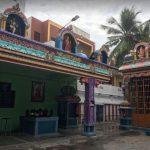
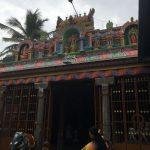
The Veerabhadra Swamy Temple is a masterclass in Dravidian Architecture. Unlike the towering Raja Gopurams found in larger complexes, this temple emphasizes the sanctity of the inner sanctum.
Key Structural Elements
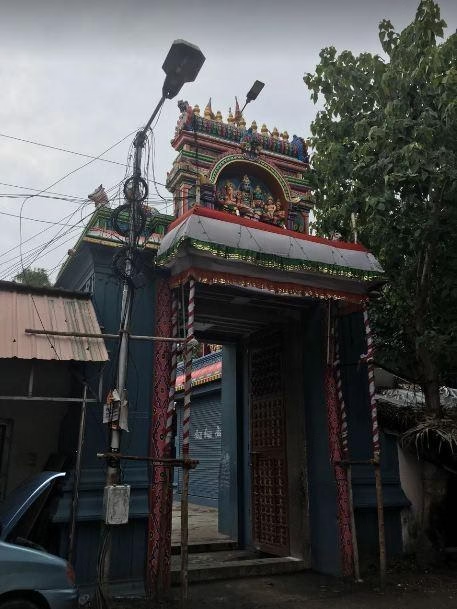
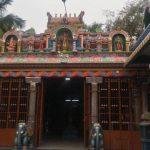
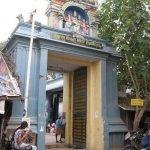
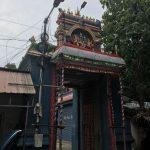
- The Entrance: The temple is north-facing and features a modest arch (Tamil: Thorana), rather than a multi-tiered Raja Gopuram, preserving the intimate scale of a neighborhood temple.
- Sanctum Sanctorum: The presiding deity, Veerabhadra, is towering and fierce in countenance, holding weapons, yet the inner atmosphere is one of profound peace.
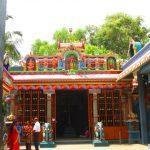
- Maha Mandapam: The pillared hall features shorter flagstaffs (Dhwaja Stambha) and a sacrificial altar (Bali Peetha) facing the sanctum.
- Sub-Shrines: The complex houses an extensive network of shrines including:
Bala Vinayaka, Sivasundara Vinayaka, Sarabeswarar, Murugan with Valli and Devasena, Perumal, and Adi Shankaracharya. - Prakara (Circumambulatory Path): Lined with niche deities such as Saneeswara (Saturn), Navagraha, Vishnu Durga, and Dakshinamoorthi.
4. Darshan & Ritual Logistics (2026 Update)
To facilitate a smooth pilgrimage, the temple follows a structured routine. Below are the approximate timings for 2026. Note: Always verify locally during festivals.
| Session | Timing | Activity |
|---|---|---|
| Morning | 06:00 AM – 08:00 AM | Suprabhatam, Abhishekam |
| Morning | 08:00 AM – 12:00 PM | General Darshan & Archana |
| Noon | 12:00 PM – 04:30 PM | Closed for Deity Rest |
| Evening | 04:30 PM – 07:30 PM | Evening Darshan, Deeparadhana |
| Night | 07:30 PM – 08:30 PM | Palliyarai Pooja (Closing) |
Key Sevas & Online Booking
The temple administration facilitates several rituals. For 2026, digital integration is expected to be high.
- Abhishekam: Performed with milk, honey, and sandalwood paste.
- Archana: Recitation of 108 names dedicated to Veerabhadra.
- Kalyana Utsavam: Annual wedding ceremony of the deity.
- Online Seva: While this specific temple relies on local booking, most Chennai temples are migrating to the Tamil Nadu HR&CE portal. Pilgrims should visit the official HR&CE website or contact the temple office for specific online slots.
2026 Festival Calendar
- Navaratri: October 2026 (9 nights of Goddess worship).
- Arudra Darshanam: December 2026 (Celebrating Shiva’s cosmic dance).
- Pradosham: 13th and 28th of every month (Twilight worship).
- Maha Shivaratri: February/March 2026 (Grand all-night vigil).
5. Practical Visitor Guidance
Mylapore is a bustling cultural hub. Preparation ensures a serene experience.
- Dress Code: Traditional attire is mandatory. Men: Dhoti or formal trousers with shirt. Women: Saree, Salwar Kameez, or long skirts. Avoid shorts and sleeveless tops.
- Photography: Strictly prohibited inside the Sanctum Sanctorum. Photography in the Maha Mandapam is subject to the Head Priest’s discretion.
- Mobile & Lockers: Electronic devices should be kept on silent. There are no large digital lockers here; pilgrims are advised to carry minimal valuables.
- Crowd Management:
Best Hours: Weekday mornings (6 AM – 8 AM) or Tuesday evenings.
Seasonal Advice: Chennai summers (April–June) are humid. Carry a water bottle and a hand fan. The temple’s open courtyard can get hot; light cotton clothing is advised.
6. Pilgrimage Connectivity
Mylapore is centrally located in Chennai, making it highly accessible via public transport.
How to Reach
- Nearest Railway Station: Mylapore (Mylapore Railway Station) is just 700 meters away. Alternatively, Chennai Central (9 km) and Egmore (6 km) are major hubs.
- Nearest Airport: Chennai International Airport (MAA) is approximately 17 km away (approx. 45 mins by car).
- By Road (NH/SH): Mylapore connects via National Highway 48 (NH48) via the Kathipara junction. Local MTC buses are frequent.
- Bus Routes: Key routes stopping at Mylapore include Route 1 (Thiruvottriyur to Thiruvanmiyur), Route 5B (T. Nagar to Mylapore), and Route 21G (Broadway to Tambaram).
Divine Detours: Nearby Sacred Sites
Construct a complete pilgrimage circuit by visiting these nearby temples:
- Madhava Perumal Temple: Located in the immediate vicinity (VSV Koil Street), dedicated to Lord Vishnu.
- Kapaleeshwarar Temple: One of Chennai’s most famous Shiva temples, located less than 1.5 km away in the heart of Mylapore.
- Sri Parthasarathy Temple: Located in Triplicane (2 km away), an ancient Krishna temple.
7. Frequently Asked Questions (FAQ)
Is there a VIP Darshan entry available?
For this specific temple, VIP darshan is not formally structured as in Tirupati. However, donations to the Hundi or prior appointment with the trust can sometimes facilitate a closer view of the deity during non-peak hours.
What is the significance of the Goat-headed figure with the deity?
The small image represents Daksha Prajapati, who was beheaded during the chaos of the Yagna destruction. Lord Shiva later replaced Daksha’s head with that of a goat to grant him a new life. This iconography signifies forgiveness and the continuity of life despite ego-driven destruction.
Are there accommodation facilities near the temple?
Yes, Mylapore has numerous guest houses (Choultries) and budget hotels. The TTD (Tirumala Tirupati Devasthanam) choultries and private lodges near Mandaveli are popular options for pilgrims.
What is the specific address and contact number?
Address: Veerabhadra Swamy Temple, VSV Koil Street, Near Madhava Perumal Temple, Mylapore, Chennai, Tamil Nadu 600004.
Contact: For the latest contact details, pilgrims are advised to check the Tamil Nadu HR&CE website or visit the temple office directly, as landlines may be updated by the administration.
Can I perform last rites (Shraddha) here?
While the temple is primarily dedicated to Veerabhadra (a fierce form of Shiva), shrines like Rahu-Ketu and Navagraha are potent for Pitru Dosha remedies. However, for detailed Shraddha rituals, consulting the temple priest beforehand is recommended.
Photo Gallery
Recent Posts

Shri Kaamkoteeshwar Mandir, Varanasi – History & Significance
In the heart of Kashi, the eternal city of Lord Shiva, where the Ganges flows with celestial grace, stands the Shri Kaamkoteeshwar Mandir. This sacred Sannidhi is not merely a temple but a profound spiritual bridge between the Northern…

ओ सांवरे तूने ही मुझको संभाला – Lyrics & Meaning
ओ सांवरे तूने ही मुझको संभाला – A Prayer to Shyam Origin & Spiritual Essence Why This Bhajan Resonates Devotees chant this when overwhelmed by life’s storms—the refrain ‘तूने ही मुझको संभाला’ is the soul’s sigh of relief: “You…

कथा ये है महाराज मेरे की – Lyrics & Meaning
कथा ये है महाराज मेरे की छत्रपति संभाजी महाराज – A Prayer to Chhatrapati Sambhaji Maharaj Origin & Spiritual Essence Why This Bhajan Resonates Devotees chant this when their spirit feels tested—its powerful refrain “महाराज मेरे” is a soul’s…

Rigveda Samhita Yathartha Anuvada (ऋग्वेद संहिता यथार्थ अनुवाद) – Complete Set with Anvayartha & Hindi/English Translation
The Rigveda is the oldest surviving scripture of humanity and the foundational text of Sanātana Dharma. For serious students, scholars, UPSC aspirants studying ancient Indian history, Sanskrit learners, and spiritual seekers, a precise and grammatically structured translation is indispensable.…

आना भी अकेला है जाना भी अकेला है – Lyrics & Meaning | BharatTemples
आना भी अकेला है जाना भी अकेला है – A Prayer to the Divine Witness Origin & Spiritual Essence Why This Bhajan Resonates Devotees turn to this bhajan in moments of deep reflection—when life’s attachments begin to ache. The…

माता शेरावाली के द्वार जो भी जाता है – Lyrics & Meaning
माता शेरावाली के द्वार जो भी जाता है – A Prayer to Maa Sherawali Origin & Spiritual Essence Why This Bhajan Resonates Devotees turn to this bhajan in times of fear or uncertainty—its promise that no one leaves Maa’s…

मार लेना सपणी उबार लेणा भवरा – Lyrics & Meaning
मार लेना सपणी उबार लेणा भवरा – A Prayer to the Divine Beloved Origin & Spiritual Essence Why This Bhajan Resonates Devotees chant this in moments of deep vulnerability—its cry of “मार लेना सपणी, उबार लेणा भवरा” is the…

हमें श्याम सुंदर भरोसा तुम्हारा – Lyrics & Meaning
हमें श्याम सुंदर भरोसा तुम्हारा – A Prayer to Shyam Sundar Origin & Spiritual Essence Why This Bhajan Resonates Devotees chant this when feeling alone—its refrain ‘de do sahara’ is the soul’s cry for divine support. Lyrics in Hindi…

Mere Satguru Ne Di Thi Davai Lyrics in Hindi & Meaning
Mere Satguru Ne Di Thi Davai: Invoking the Guru’s Liberating Wisdom This soul-stirring bhajan venerates the Satguru (True Spiritual Master) as the divine physician who dispenses the only remedy for life’s deepest sufferings. Composed by Sant Karmaveer Tufani, it…

Janm Diyo Thari Maa Dukh Dekhiyo Lyrics in Hindi & Meaning
जन्म दियो थारी माँ दुख देखियो (Maa’s Grief Upon Birthing You) This soul-stirring Chetavani Bhajan (admonitory hymn) is addressed to the Divine Mother (Maa) – a call for repentance when children forget their filial duties in the dark age…