
Contents
Introduction & Spiritual Essence
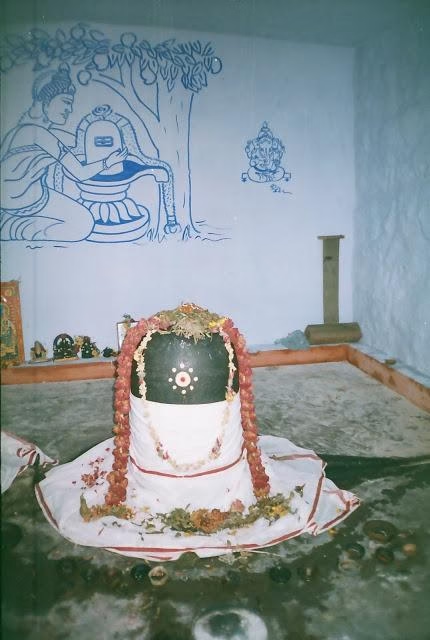
Amidst the sacred silk lanes of Kanchipuram stands the Veeraraghaveswarar Temple, a spiritual sanctuary dedicated to Lord Shiva. Here, the divine energy of Shiva resonates with the valor of Lord Rama. The primary deity, Veeraraghaveswarar, is a Swayambhu Lingam (self-manifested) representing the combined essence of Veera (Heroism) and Raghava (Lord Rama).
Phalaśruti: The Fruits of Visitation
Devotees flock to this temple seeking relief from Pitru Dosha (ancestral afflictions) and obstacles in marriage prospects. According to local tradition, worshipping here brings forth the protective grace of Lord Rama and the transformative energy of Lord Shiva. It is believed that sincere prayers here cleanse past karma and grant spiritual courage.
Historical Origins & Scriptural Legend
The history of the Veeraraghaveswarar Temple is deeply intertwined with the epic Ramayana.
The Legend of Rama’s Worship
Tradition holds that Lord Rama, along with Sita and Lakshmana, stayed in Kanchipuram during his exile. As a devout follower of Shiva, Rama performed daily rituals. Finding no Lingam on one particular morning, he fashioned a makeshift Lingam from mud and clay. This specific spot is where the Veeraraghaveswarar Temple now stands. The Lingam is referred to as “Rama’s Lingam,” symbolizing the unity of Vishnu’s avatar and Shiva.
Architectural Heritage
While specific dynastic records are sparse in the available text, the temple structure reflects the classic Dravidian style prevalent in the Kanchipuram region, likely developed during the Vijayanagara era. The presiding deity is enshrined in a sanctum facing east, a hallmark of Vastu Shastra alignment to welcome the rising sun.
Architectural Marvels
The temple is a testament to the Dravidian architectural grandeur, characterized by its towering Gopuram (gateway tower) and intricate carvings.
- Garbhagriha (Sanctum Sanctorum): The Veeraraghaveswarar Lingam is installed in the inner sanctum, accompanied by a niche image of Lord Rama.
- Mandapas: The temple features pillared halls (Mandapas) adorned with sculptures depicting scenes from the Ramayana.
- Sculptural Details: The walls showcase exquisite stonework typical of South Indian temple art, with depictions of deities and mythological narratives.
- Presiding Goddess: The Amman (Goddess) shrine is dedicated to Giri Gujambika (or Periyanayagi), facing south.
Darshan & Ritual Logistics
To ensure a seamless spiritual experience, devotees are advised to plan their visit according to the temple schedule. Note: Timings are based on standard temple practices for 2026.
Daily Timings
| Session | Timing |
|---|---|
| Morning Opening | 6:00 AM |
| Abhishekam / Archana | 7:00 AM – 10:00 AM |
| Afternoon Closure | 12:00 PM – 4:00 PM |
| Evening Opening | 4:00 PM |
| Pradosham / Pooja | 6:00 PM – 7:30 PM |
| Closing | 8:00 PM |
Key Sevas & Online Booking
The temple allows devotees to perform special Sevas (rituals) to Lord Veeraraghaveswarar.
- Abhishekam: Ritual bathing of the Lingam with water, milk, and honey.
- Archana: Chanting of names (Theertham Prasadam).
- Rudra Abhishekam: A grand Vedic ritual performed on Mondays and Pradosham days.
Booking: While local temple procedures vary, many Kanchipuram temples now utilize the Tamil Nadu HR&CE (Hindu Religious and Charitable Endowments) online portal. Devotees are advised to visit the official Tamil Nadu HR&CE website to book slots for specific dates in 2026.
2026 Festival Dates
- Maha Shivaratri: February 26, 2026
- Arudra Darshanam: January 3, 2026 (Falling in December 2025 based on Tamil calendar)
- Panguni Uthiram: March 17 – 23, 2026
Practical Visitor Guidance
Kanchipuram is a bustling temple town. Preparation ensures a peaceful Darshan.
- Dress Code: Traditional attire is mandatory. Men should wear dhoti or pants with a shirt; women should wear saree or salwar kameez. Avoid shorts and sleeveless tops.
- Photography: Photography is strictly prohibited inside the sanctum sanctorum. Mobile phones are allowed but must be silenced.
- Lockers: Free mobile and baggage locker facilities are usually available at the temple entrance.
- Accessibility: The temple has steps at the entrance. Wheelchair access may be limited due to the heritage structure; please contact the temple office for assistance.
- Crowd Management:
- Best Time to Visit: Early morning (6:00 AM – 8:00 AM) to avoid crowds.
- Seasonal Advice: Kanchipuram can get very hot in April/May. Carry water bottles and wear head coverings.
Pilgrimage Connectivity
How to Reach Veeraraghaveswarar Temple
- By Air: Chennai International Airport (MAA) is the nearest airport, approximately 70 km away (1.5 hours drive).
- By Rail: Kanchipuram Railway Station (KCM) is well-connected to Chennai and Chengalpattu. Auto-rickshaws are readily available from the station.
- By Road: Kanchipuram is well-connected via NH 48 (Chennai-Bangalore Highway). Buses from Chennai (CMBT/OMR) run frequently every 15-20 minutes.
Nearby Sacred Sites
Extend your pilgrimage by visiting these nearby landmarks in Kanchipuram:
- Ekambareswarar Temple: One of the Pancha Bhoota Stalam (Temple of Earth), located approximately 2 km away.
- Kailasanathar Temple: The oldest structural temple in Kanchipuram (built by Pallavas), located about 3 km away.
- Varadaraja Perumal Temple: A premier Vaishnavite temple representing the Vishnu-Shiva unity of Kanchipuram.
Frequently Asked Questions (FAQ)
1. Is there a VIP Darshan entry available?
Yes, the temple often provides special entry tickets (VIP or Quick Darshan) for a nominal fee. These can be purchased at the counter inside the temple premises.
2. What are the Veeraraghaveswarar Temple timings on festival days?
On major festivals like Maha Shivaratri, the temple remains open throughout the night. Specific timings for 2026 will be updated on the Tamil Nadu HR&CE website closer to the date.
3. Is the temple open for all religions?
Yes, the Veeraraghaveswarar Temple, under the administration of Tamil Nadu HR&CE, is open to devotees of all faiths and castes.
4. Can I perform Rudra Abhishekam daily?
While daily Abhishekam is performed by the temple priests, specific Rudra Abhishekams for devotees are usually conducted on Mondays, Pradosham, and Maha Shivaratri. Booking in advance is recommended.
5. Is accommodation available near the temple?
Kanchipuram offers numerous guest houses and hotels. The Tamil Nadu Tourism Development Corporation (TTDC) also runs a hotel and guest house near the temple town.
Photo Gallery
Contact Details
Recent Posts

ओ सांवरे तूने ही मुझको संभाला – Lyrics & Meaning
ओ सांवरे तूने ही मुझको संभाला – A Prayer to Shyam Origin & Spiritual Essence Why This Bhajan Resonates Devotees chant this when overwhelmed by life’s storms—the refrain ‘तूने ही मुझको संभाला’ is the soul’s sigh of relief: “You…

कथा ये है महाराज मेरे की – Lyrics & Meaning
कथा ये है महाराज मेरे की छत्रपति संभाजी महाराज – A Prayer to Chhatrapati Sambhaji Maharaj Origin & Spiritual Essence Why This Bhajan Resonates Devotees chant this when their spirit feels tested—its powerful refrain “महाराज मेरे” is a soul’s…

Rigveda Samhita Yathartha Anuvada (ऋग्वेद संहिता यथार्थ अनुवाद) – Complete Set with Anvayartha & Hindi/English Translation
The Rigveda is the oldest surviving scripture of humanity and the foundational text of Sanātana Dharma. For serious students, scholars, UPSC aspirants studying ancient Indian history, Sanskrit learners, and spiritual seekers, a precise and grammatically structured translation is indispensable.…

आना भी अकेला है जाना भी अकेला है – Lyrics & Meaning | BharatTemples
आना भी अकेला है जाना भी अकेला है – A Prayer to the Divine Witness Origin & Spiritual Essence Why This Bhajan Resonates Devotees turn to this bhajan in moments of deep reflection—when life’s attachments begin to ache. The…

माता शेरावाली के द्वार जो भी जाता है – Lyrics & Meaning
माता शेरावाली के द्वार जो भी जाता है – A Prayer to Maa Sherawali Origin & Spiritual Essence Why This Bhajan Resonates Devotees turn to this bhajan in times of fear or uncertainty—its promise that no one leaves Maa’s…

मार लेना सपणी उबार लेणा भवरा – Lyrics & Meaning
मार लेना सपणी उबार लेणा भवरा – A Prayer to the Divine Beloved Origin & Spiritual Essence Why This Bhajan Resonates Devotees chant this in moments of deep vulnerability—its cry of “मार लेना सपणी, उबार लेणा भवरा” is the…

हमें श्याम सुंदर भरोसा तुम्हारा – Lyrics & Meaning
हमें श्याम सुंदर भरोसा तुम्हारा – A Prayer to Shyam Sundar Origin & Spiritual Essence Why This Bhajan Resonates Devotees chant this when feeling alone—its refrain ‘de do sahara’ is the soul’s cry for divine support. Lyrics in Hindi…

Mere Satguru Ne Di Thi Davai Lyrics in Hindi & Meaning
Mere Satguru Ne Di Thi Davai: Invoking the Guru’s Liberating Wisdom This soul-stirring bhajan venerates the Satguru (True Spiritual Master) as the divine physician who dispenses the only remedy for life’s deepest sufferings. Composed by Sant Karmaveer Tufani, it…

Janm Diyo Thari Maa Dukh Dekhiyo Lyrics in Hindi & Meaning
जन्म दियो थारी माँ दुख देखियो (Maa’s Grief Upon Birthing You) This soul-stirring Chetavani Bhajan (admonitory hymn) is addressed to the Divine Mother (Maa) – a call for repentance when children forget their filial duties in the dark age…
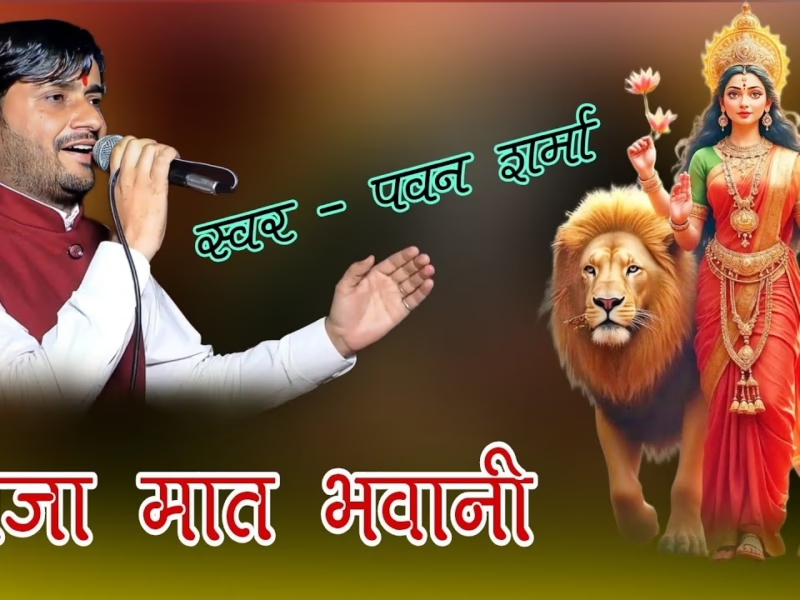
Bhadi Sabha Mein Thane Manaun Lyrics in Hindi & Meaning
Bhadi Sabha Mein Thane Manaun: Invoking the Spear-Wielding Mother Mata Bhawani (श्री ज्वाला भवानी), the fiery manifestation of Shakti worshipped as the Protector of Dharma in Her Dhaulagarh sanctum. Origin & Spiritual Essence Composed in Rajasthani folk tradition by…