Venugopala Temple Anaikuppam: History, Darshan Timings & Complete Pilgrimage Guide
Receive daily temple updates, divine darshan, and morning bhajans directly on WhatsApp.
Contents
- 1 Introduction & Spiritual Essence
- 2 Historical Origins & Scriptural Legend
- 3 Architectural Marvels
- 4 Darshan & Ritual Logistics
- 5 Practical Visitor Guidance
- 6 Pilgrimage Connectivity
- 7 Frequently Asked Questions (FAQ)
- 8 Contact Details
- 9 Photo Gallery
Introduction & Spiritual Essence
Nestled in the serene village of Anaikuppam, near Nannilam in the Thiruvarur district, the Venugopala Temple stands as a testament to unwavering devotion and the enduring grace of Lord Vishnu. While modest in scale, this sanctuary is profound in spiritual potency, dedicated to Venugopala—a captivating form of Lord Krishna playing the flute, surrounded by his beloved gopikas.
The Divine Form and Phalaśruti
The primary deity, Venugopala, is enshrined as a Swayambhu (self-manifested) murti, believed to have risen from the earth to protect devotees. He is flanked by his consorts, Rukmini and Satyabhama, embodying the principles of Dharma and Dhanur (wealth).
According to local devotees and the Phalaśruti (scriptural promise of benefits) associated with this shrine, visiting this temple is said to bring about:
- Financial Liberation: Removing debts and obstacles in career growth, particularly aided by the shrine of Lord Kubera located within the complex.
- Ancestral Cleansing: Performing Archana here is believed to pacify ancestors, clearing karmic blocks for the family lineage.
- Mental Peace: The eastern-facing deity and the proximity to the temple tank create an atmosphere of sublime tranquility.
Historical Origins & Scriptural Legend
While the exact century of construction is not explicitly recorded in mainstream epigraphical data, the architectural style suggests significant historical depth, likely dating back several centuries, with recent renovations preserving its sanctity.
📖 Related: Vaitheeswaran Temple History and Darshan Timings | Pillaipakkam, Kanchipuram
The Legend of Anaikuppam
Tradition holds that this site was once a dense forest (Aranyam) where Sage Narada visited and pleaded with Lord Vishnu to manifest in a form that would offer solace to the local villagers suffering from economic hardship. Responding to their prayers, the Lord appeared as Venugopala, holding the flute (Venu) which symbolizes the call of the soul to the divine.
Interestingly, the temple is deeply connected to the concept of Dhana (Wealth) through its proximity to Kubera. Devotees believe that the energy here aligns with the principles of Vastu Shastra to attract prosperity.
Architectural Marvels
The Venugopala Temple is a classic example of Dravidian Temple Architecture, characterized by its pyramidal towers (Vimana) and enclosed prakarams (corridors).
- The Vimanam: The roof over the sanctum sanctorum (Garbhagriha) features the Dravidian style tiered architecture, capped by a Kalasha (pot).
- Garbhagriha: The inner sanctum houses the main deity, facing east. The murti is crafted from stone, with intricate carvings depicting the flute held gracefully.
- Shrines: Apart from the main deity, the temple complex houses a dedicated shrine for Kubera (the treasurer of the Gods), which is a major highlight of this temple. There are also niches (Devakoshtas) housing other deities.
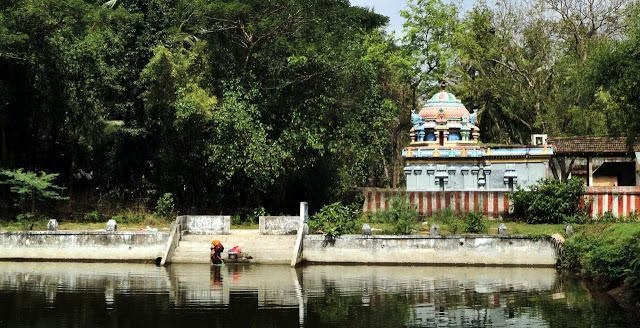
- Temple Tank: The temple is beautifully situated adjoining a large temple tank (Kalyani), which reflects the stunning Vimana during sunrise and sunset.
Darshan & Ritual Logistics
Visitors are encouraged to check the specific timings during major festivals as they may vary. The current operational schedule is as follows:
| Session | Timings | Notes |
|---|---|---|
| Morning Darshan | 06:00 AM – 12:00 PM | Best time: 7:00 AM – 8:00 AM |
| Afternoon Break | 12:00 PM – 04:30 PM | Temple remains closed |
| Evening Darshan | 04:30 PM – 08:30 PM | Best time: 6:00 PM (Sandhya) |
📖 Related: Vaitheeswaran Koil Temple History, Darshan Timings & Guide 2026
Key Sevas and Offerings
To deepen the spiritual experience, devotees can participate in the following Sevas:
- Vishnu Sahasranama Archana: Chanted for overall well-being.
- Kubera Archana: Specifically for financial stability. The ritual involves lighting 5 deepams (lamps) each at the Lord Venugopalan Sannathi and Kuberar Sannathi.
- Abhishekam: Performed with milk, honey, and sandalwood paste.
Online Seva Booking (2026 Guide)
While the temple is maintained by local trusts, standard pujas can be arranged through authorized local priests. For major festivals in 2026, devotees are advised to coordinate with the Thiruvarur District Temple Administration or visit the official Tamil Nadu HR&CE portal if listed. Please contact the local manager for remote bookings.
2026 Festival Calendar
- Janmashtami (Birth of Krishna): August 14–15, 2026. Special night-long vigil and milk Abhishekam.
- Vaikuntha Ekadashi: December 29, 2026. A highly auspicious day for Vishnu temples.
- Garuda Vahana Seva: Conducted during the Brahmotsavam (dates to be confirmed by local calendar).
Practical Visitor Guidance
Because this is a heritage site, visitors should adhere to specific guidelines to maintain sanctity.
Dress Code & Etiquette
- Attire: Traditional dress is preferred (Dhoti/Saree). Strict modesty is advised.
- Photography: Photography is generally permitted in the outer prakarams but strictly prohibited inside the Garbhagriha (Sanctum Sanctorum).
- Mobile Phones: Please keep phones on silent mode. While no formal lockers exist, visitors are urged to limit phone usage inside the temple.
Crowd Management & Seasons
- Best Hours: Mornings (6:00 AM – 8:00 AM) are the least crowded.
- Seasonal Advice:
- May (Summer): Thiruvarur temperatures can be high; carry a water bottle and a head cover.
- October–December (Post-Monsoon): Ideal weather for travel.
Pilgrimage Connectivity
How to Reach
The Venugopala Temple in Anaikuppam is well-connected via road and rail.
- By Air: The nearest airport is Trichy (Tiruchirappalli) International Airport, located approximately 120 km away.
- By Rail: The nearest railway junction is Nannilam (approx. 5 km). From there, local autos and buses are available to Anaikuppam.
- By Road:
- From Thiruvarur: 13 km via State Highway 22.
- From Nannilam: 5 km.
- From Srivanchiyam: 8 km.
📖 Related: Seval Vilrutham Temple Palani: History, Darshan Timings & Guide
Nearby Sacred Sites (Pilgrimage Circuit)
Extend your trip by visiting these nearby spiritual destinations:
- Abathsahayeswarar Temple (Alangudi): Located about 20 km away, famous for the Guru (Jupiter) shrine.
- Thiruvarur Thyagarajaswamy Temple: The massive temple complex in the district headquarters, one of the Pancha Sabha Stalam.
- Srivanchiyam Vanchinadhaswamy Temple: Known as the “South Kashi,” located 8 km from Anaikuppam.
Frequently Asked Questions (FAQ)
Is there a VIP Darshan entry available?
As a smaller heritage temple, there are no formal VIP tickets. However, during regular hours, the darshan is swift as the crowd is manageable. For special Abhishekam, you can coordinate with the temple priest for priority access.
What is the significance of lighting 5 Deepams here?
Lighting 5 lamps (Deepams) at both the Venugopala and Kubera shrines is a specific local ritual believed to clear financial hurdles and bring monetary stability.
Is the temple wheelchair accessible?
The temple is an ancient structure with steps at the entrance. While the outer areas are flat, the inner sanctum might be challenging for wheelchair users. Assistance from local devotees is usually available.
Are there dining facilities (Prasadam) available?
There is no modern cafeteria on site. However, Annadhanam (free food) is often distributed during festivals. It is advisable to carry water and light snacks for personal consumption.
What is the best time to visit to avoid the summer heat?
The months of November to February offer the most pleasant weather in Thiruvarur district for a comfortable pilgrimage experience.
Contact Details
For specific ritual bookings or inquiries, please contact the local temple manager or the District Temple Office in Thiruvarur.
Note: While specific phone numbers for this village temple fluctuate, inquiries can be directed to the District Curator’s Office in Thiruvarur.
Original Source: https://tamilnadu-favtourism.blogspot.com/2017/10/venugopala-temple-anaikuppam-thiruvarur.html
Photo Gallery
venugopal-aanaikuppam-2-1, Venugopala Temple, Anaikuppam, Thiruvarur