
Contents
Introduction & Spiritual Essence
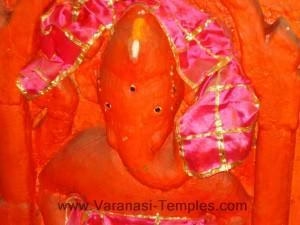
In the labyrinthine spiritual geography of Varanasi (Kashi), every step leads to a divine revelation. Among the most potent spiritual abodes is the Vighna Raja Vinayak Temple. As the name suggests, the presiding deity here is Vighna Raja, the “Lord of Obstacles,” a form of Lord Ganesha (Vinayak) worshipped specifically for removing hurdles from one’s path and bestowing success.
Unlike the massive stone structures that dominate the landscape of South India, this temple in Varanasi embodies the intimate, organic nature of Kashi’s heritage—it is a living, breathing shrine integrated into the residential fabric of the city.
Phalaśruti: The Spiritual Benefits
Why do devotees flock to these ancient steps? The Phalaśruti (the benefits of devotion) associated with Vighna Raja Vinayak is profound:
- Removal of Obstacles: It is believed that seeking blessings here clears the path of all temporary and eternal hurdles.
- Attainment of Siddhi: As noted in local traditions, this deity is worshipped for Siddhi—spiritual attainment, but also success, prosperity, and the fulfillment of worldly endeavors.
- Cleansing of Karmic Debt: In the context of Kashi, worshipping Ganapati is considered essential before any major spiritual ritual, as he guards the threshold of the divine and protects the devotee from negative karma.
Historical Origins & Scriptural Legend
While specific carbon dating for the Vighna Raja Vinayak Temple is elusive, its placement in Varanasi suggests a lineage spanning centuries. Varanasi is one of the oldest continuously inhabited cities in the world, and its temples evolved from simple village shrines to complex architectural marvels over millennia.
Scriptural Context and Local Lore
According to the Kashi Khanda (a section of the Skanda Purana), Kashi is a divine form of Lord Vishwanath, and Ganapati acts as the gatekeeper.
Tradition holds that the local area of Chitrakoot (where the temple resides) has deep ties to the Ramayana. It is said that Lord Rama, Sita, and Lakshmana stayed in this region during their exile. The very ground where the temple stands is associated with the Ram Lila festivities, where processions begin to reenact the epic. Thus, the presence of Vighna Raja (remover of obstacles) in this area is seen as a divine blessing for the divine play (Lila) of Lord Rama.
Architectural Marvels
The architecture of Vighna Raja Vinayak Temple is a prime example of Ekakshi (solitary) shrine style prevalent in Kashi, adapting to the constraints of urban living while maintaining Vastu Shastra principles.
Structure and Design
Unlike the towering Shikharas (spires) of North Indian Nagara style or the pyramidal towers of Dravida style seen in the south, this temple integrates the Garbhagriha (sanctum sanctorum) into a residential setting.
- The Sanctum: The inner chamber houses the Swayambhu (self-manifested) or ancient idol of Lord Ganesha. The deity is facing East, adhering to traditional Vastu, allowing the morning sun to touch the idol.
- The Mandapa: A small but functional Mandapa (hall) allows devotees to gather for Aarti. The architecture focuses on the sacred geometry of the square, centered on the idol.
- Preservation: While not a UNESCO site, the temple is preserved through the devotion of the local community and private custodians. The structure features traditional lime mortar and brick, typical of Varanasi’s older residential architecture.
Darshan & Ritual Logistics
The temple operates on a schedule that accommodates both the priest and the devotees. It functions as a private household shrine, making the timings somewhat flexible, but generally consistent.
Daily Timings
| Session | Timing | Activity |
|---|---|---|
| Morning | 06:00 AM – 11:30 AM | Opening, Morning Aarti, Abhishekam |
| Evening | 04:00 PM – 09:00 PM | Darshan, Evening Aarti |
Key Sevas and Online Booking
Given the intimate nature of the temple, operations are largely traditional. However, for major festivals and specific Sevas, inquiries can be directed through local Varanasi temple boards.
- Abhishekam: Ritual bathing of the deity with milk, honey, and curd. Best performed in the early morning.
- Archana: Recitation of names. A 108-name offering is common for Vighna Raja.
- Sankalpa Pooja: For specific personal intentions (Sankalpa).
Note on Online Seva Booking: For smaller historic shrines like Vighna Raja Vinayak, dedicated centralized online portals may not exist. Devotees typically coordinate directly with the temple priest (Pandit) or through the Kashi Vishwanath Temple administration for broader packages that include subsidiary Ganesh shrines.
2026 Festival Dates (Varanasi)
Varanasi celebrates Ganesh Chaturthi with unique fervor. For 2026, plan your visit around:
- Ganesh Chaturthi: Date to be confirmed by lunar calendar (Likely August/September 2026). This is the most auspicious time to visit Vighna Raja Vinayak.
- Angarki Chaturthi: Occurs when Chaturthi falls on a Tuesday (Tuesday is dedicated to Ganesh).
- Diwali: (Oct/Nov 2026) – Deep cleaning and special Aartis.
- Magh Mela: (Jan/Feb 2026) – While not a Ganesh-specific festival, the temple sees increased footfall due to the pilgrimage season.
Practical Visitor Guidance
Visiting Vighna Raja Vinayak Temple requires a bit of navigation through the narrow lanes of Varanasi.
Code of Conduct
- Dress Code: Traditional attire is recommended. Men should wear dhotis or long trousers and shirts; women should wear sarees or modest clothing covering shoulders and knees.
- Photography: As the temple is located in a private residential area, photography inside the sanctum is often restricted. Always ask the caretaker.
- Mobile/Lockers: There are no dedicated locker facilities at this specific shrine. It is advisable to carry minimal belongings.
Crowd Management & Seasonal Advice
- Best Hours: Early morning (6:00 AM – 8:00 AM) or late evening (after 7:30 PM) offer the most peaceful darshan.
- Summer (May-June): Varanasi temperatures can exceed 40°C. Carry water and a head covering.
- Monsoon (July-August): The lanes near Chitrakoot can get waterlogged. Wear waterproof footwear.
Pilgrimage Connectivity
How to Reach
The temple is located at J-12/32, Chitrakoot Talab, near the Ram Lila Ground.
- Nearest Railway Station: Varanasi Junction (BSB) – Approx 5 km (20-30 mins by auto).
- Nearest Airport: Lal Bahadur Shastri International Airport (VNS) – Approx 25 km.
- Road Access: The temple is accessible via State Highway 5 (Varanasi-Lahartara Road) and connects to NH 19. Auto-rickshaws are the best mode for the last mile.
Nearby Sacred Sites
Complete your pilgrimage circuit by visiting these nearby spiritual landmarks:
- Kashi Vishwanath Jyotirlinga (Approx 3 km): The primary attraction of Varanasi and one of the 12 Jyotirlingas.
- Sankat Mochan Hanuman Temple (Approx 3.5 km): Located near Banaras Hindu University, dedicated to Lord Hanuman.
- Durga Temple (Approx 2.5 km): Also known as the Monkey Temple, a stunning red-stone Nagara style structure.
Frequently Asked Questions (FAQ)
1. Is there a VIP darshan entry at Vighna Raja Vinayak Temple?
As this is a smaller, residential-style temple, there is no formal VIP entry system like at mega-shrines. However, visiting during non-peak hours (early morning) allows for a quick and intimate darshan.
2. Is parking available near the temple?
Parking is limited in the narrow lanes of Chitrakoot Talab. It is best to park near the Ram Lila Ground or on the main road and walk the remaining distance (approx 5-10 minutes).
3. Is the temple wheelchair accessible?
The temple is located in an old residential area with narrow passages and steps. Unfortunately, it is not currently wheelchair accessible.
4. Can we perform our own Puja/Sankalpa?
While devotees can offer prayers and flowers, specific rituals like Abhishekam are performed by the resident priest. You can request a personalized Sankalpa, which the priest will perform on your behalf.
5. Is photography allowed inside the temple?
Photography inside the sanctum is generally discouraged to maintain the sanctity of the space. Photography of the exterior architecture is usually permitted.
Recent Posts

ओ सांवरे तूने ही मुझको संभाला – Lyrics & Meaning
ओ सांवरे तूने ही मुझको संभाला – A Prayer to Shyam Origin & Spiritual Essence Why This Bhajan Resonates Devotees chant this when overwhelmed by life’s storms—the refrain ‘तूने ही मुझको संभाला’ is the soul’s sigh of relief: “You…

कथा ये है महाराज मेरे की – Lyrics & Meaning
कथा ये है महाराज मेरे की छत्रपति संभाजी महाराज – A Prayer to Chhatrapati Sambhaji Maharaj Origin & Spiritual Essence Why This Bhajan Resonates Devotees chant this when their spirit feels tested—its powerful refrain “महाराज मेरे” is a soul’s…

Rigveda Samhita Yathartha Anuvada (ऋग्वेद संहिता यथार्थ अनुवाद) – Complete Set with Anvayartha & Hindi/English Translation
The Rigveda is the oldest surviving scripture of humanity and the foundational text of Sanātana Dharma. For serious students, scholars, UPSC aspirants studying ancient Indian history, Sanskrit learners, and spiritual seekers, a precise and grammatically structured translation is indispensable.…

आना भी अकेला है जाना भी अकेला है – Lyrics & Meaning | BharatTemples
आना भी अकेला है जाना भी अकेला है – A Prayer to the Divine Witness Origin & Spiritual Essence Why This Bhajan Resonates Devotees turn to this bhajan in moments of deep reflection—when life’s attachments begin to ache. The…

माता शेरावाली के द्वार जो भी जाता है – Lyrics & Meaning
माता शेरावाली के द्वार जो भी जाता है – A Prayer to Maa Sherawali Origin & Spiritual Essence Why This Bhajan Resonates Devotees turn to this bhajan in times of fear or uncertainty—its promise that no one leaves Maa’s…

मार लेना सपणी उबार लेणा भवरा – Lyrics & Meaning
मार लेना सपणी उबार लेणा भवरा – A Prayer to the Divine Beloved Origin & Spiritual Essence Why This Bhajan Resonates Devotees chant this in moments of deep vulnerability—its cry of “मार लेना सपणी, उबार लेणा भवरा” is the…

हमें श्याम सुंदर भरोसा तुम्हारा – Lyrics & Meaning
हमें श्याम सुंदर भरोसा तुम्हारा – A Prayer to Shyam Sundar Origin & Spiritual Essence Why This Bhajan Resonates Devotees chant this when feeling alone—its refrain ‘de do sahara’ is the soul’s cry for divine support. Lyrics in Hindi…

Mere Satguru Ne Di Thi Davai Lyrics in Hindi & Meaning
Mere Satguru Ne Di Thi Davai: Invoking the Guru’s Liberating Wisdom This soul-stirring bhajan venerates the Satguru (True Spiritual Master) as the divine physician who dispenses the only remedy for life’s deepest sufferings. Composed by Sant Karmaveer Tufani, it…

Janm Diyo Thari Maa Dukh Dekhiyo Lyrics in Hindi & Meaning
जन्म दियो थारी माँ दुख देखियो (Maa’s Grief Upon Birthing You) This soul-stirring Chetavani Bhajan (admonitory hymn) is addressed to the Divine Mother (Maa) – a call for repentance when children forget their filial duties in the dark age…
Bhadi Sabha Mein Thane Manaun Lyrics in Hindi & Meaning
Bhadi Sabha Mein Thane Manaun: Invoking the Spear-Wielding Mother Mata Bhawani (श्री ज्वाला भवानी), the fiery manifestation of Shakti worshipped as the Protector of Dharma in Her Dhaulagarh sanctum. Origin & Spiritual Essence Composed in Rajasthani folk tradition by…