
Contents
Introduction & Spiritual Essence
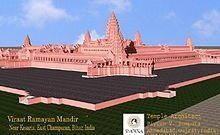
In the sacred landscape of East Champaran, Bihar, a monumental spiritual edifice is taking shape. The Viraat Ramayan Mandir is not merely a structure; it is a physical manifestation of the epic Ramayana. Dedicated to Lord Rama, the presiding deity of this temple complex is revered in his “Viraat” or colossal form, symbolizing his universal sovereignty.
While many temples in India are ancient, the Viraat Ramayan Mandir represents a modern devotion scaled to ancient proportions. It is designed to be an architectural marvel that will stand as the tallest religious monument in the world upon completion.
Phalaśruti: Why Visit?
Devotees visiting this site are driven by the profound spiritual benefits (Phalaśruti) associated with the Ramayana:
- Direct Connection to Shri Rama: The temple is designed to align with the narrative of the Ramayana, offering a tangible pathway to the life of the Lord.
- Karmic Cleansing: As per temple trusts, circumambulating this massive structure and offering prayers aids in the dissolution of ancestral karmic debt.
- Spiritual Peace: The sheer scale of the Viraat form is intended to induce a state of awe and surrender, fostering deep meditation.
Historical Origins & Scriptural Legend
The genesis of Viraat Ramayan Mandir is rooted in the vision of Swami Ram Singh, the spiritual head of the Vishwa Shanti Preksha Gyan Mandir Trust in Kesaria. The project was initiated with a staggering estimated budget of ₹500 crore (US$70 million).
Scriptural Legend & The Viraat Roop
While the structure is new, the legend it represents is timeless. The temple draws inspiration from the Yuddha Kanda of the Ramayana, specifically Lord Rama’s Viraat Swaroop (cosmic form) witnessed by Sita during the war in Lanka. This form represents the all-encompassing, supreme reality that transcends physical limitations.
Construction Timeline & Status
According to temple records and Trust updates:
- Original Plan: Construction was initially scheduled to start in June 2015.
- Current Status (2026): The project has faced significant delays due to diplomatic discussions between the governments of India and Cambodia regarding architectural similarities to the Angkor Wat temple complex. While litigation and regulatory approvals have slowed physical work, the architectural blueprints remain finalized, and the site at Kesaria continues to be a focal point for pilgrims awaiting its completion.
Architectural Marvels
The Viraat Ramayan Mandir is designed to surpass the 12th-century Angkor Wat in Cambodia (215 feet) by reaching a colossal height of 405 feet. It is envisioned as a fusion of spiritual symbolism and monumental engineering.
Design & Scale
- Total Area: 200 acres (spread across Bahuara-Kathwalia villages).
- Dimensions: 2800 ft in length, 1400 ft in width, and 405 ft in height.
- Style: While the dispute with Cambodia references Nagara-style proportions similar to Angkor Wat, the aesthetic elements are deeply rooted in Hindu temple architecture (Shikhara style) representing the cosmic mountain.
Interior Layout
The complex is designed to accommodate massive congregations:
- Main Hall: A capacity to seat 20,000 devotees for spiritual discourses and collective prayer.
- Sanctum Sanctorum: The Garbhagriha will house the idol of Lord Rama in the Viraat form, flanked by Sita and Lakshmana.
Darshan & Ritual Logistics
Note: As the temple construction is ongoing, the following timings and sevas are projected based on the scale of the project for future reference. Visitors should check for official announcements closer to the grand inauguration.
Daily Timings (Projected)
| Session | Timings | Description |
|---|---|---|
| Morning | 05:00 AM – 12:00 PM | Mangala Aarti, Shringar Darshan, and Mid-day rituals. |
| Evening | 04:00 PM – 09:00 PM | Bhog Aarti, Sandhya Aarti, and closing rituals. |
Key Sevas & Online Booking
The temple trust aims to utilize digital platforms for crowd management. Upon completion, sevas will likely include:
- Ramayan Path: Recitation of the epic.
- Maha Abhishekam: Ritual bathing of the deity (weekly).
- Special Archana: Offering flowers and mantras.
Booking: Online booking will be available via the official Viraat Ramayan Mandir Trust website (once live). Look for the “Online Seva Booking” portal.
2026 Major Festival Dates
While the inauguration date is unconfirmed, devotees often gather at the site for:
- Navratri: Chaitra Navratri (March/April 2026) and Sharad Navratri (September/October 2026).
- Ram Navami: April 6, 2026 (Birthday of Lord Rama).
- Diwali: November 1, 2026.
Practical Visitor Guidance
Since the temple is in a developmental phase, current visitors are often pilgrims viewing the site and the nearby Kesaria Stupa.
Visitor Guidelines
- Dress Code: Traditional Indian attire is recommended (Kurtas, Sarees, Dhotis). Modest clothing is essential.
- Photography: Restrictions may apply near the sanctum once operational. Site photography during construction may require permission.
- Accessibility: The flat terrain of Bihar (Champaran) is accessible. The future complex promises ramps and elevators for the elderly.
- Crowd Management: Once open, early morning (5 AM – 7 AM) is the best time to avoid peak crowds.
- Seasonal Advice: Summers (April-June) in East Champaran are hot; carry water and wear sun protection.
Pilgrimage Connectivity
The temple is strategically located in North Bihar, making it accessible from major spiritual hubs.
How to Reach
- Nearest Airport: Jay Prakash Narayan Airport, Patna (approx. 120 km).
- Nearest Railway Station: Raxaul Junction (approx. 90 km) or Chakia (East Champaran).
- Road Access: Located on the Kesaria-Chakia road (NH 227A). It is well-connected via National Highways from Patna (via Muzaffarpur/Sitamarhi).
- Distance from Key Sites:
- Vaishali (Buddhist site): 60 km
- Patna (Capital): 120 km
- Sitamarhi (Birthplace of Sita): Approx. 90 km
Nearby Sacred Sites
- Kesaria Stupa: Located very close to the Viraat Ramayan Mandir site, this is one of the tallest and oldest Buddhist stupas (approx. 150 ft), mentioned by Chinese traveler Xuanzang.
- Patna (Patliputra): Visit the Mahavir Mandir and the Patna Museum.
- Sitamarhi: The mythological birthplace of Goddess Sita, a major Shakti Peeth.
Frequently Asked Questions (FAQ)
1. What is the current status of Viraat Ramayan Mandir construction?
As of 2026, the project is in a state of delay due to regulatory and diplomatic concerns raised regarding the architectural resemblance to Angkor Wat. While the site is active, the completion timeline remains pending official government clearance and finalization of construction agreements.
2. Is there a VIP Darshan entry available?
Currently, there is no operational VIP entry as the temple is not fully functional. However, upon completion, the Trust is expected to offer special passes for donors and senior citizens, similar to other major temple trusts in India.
3. Why is it named “Viraat” Ramayan Mandir?
The name “Viraat” refers to the “Cosmic Form” of Lord Rama, as described in the Ramayana. The temple aims to symbolize the infinite and all-encompassing nature of the deity, distinguishing it from temples depicting the standard standing or sitting form.
4. Can I visit the site right now?
Yes, visitors can travel to Kesaria to view the site premises and the nearby Kesaria Stupa. However, access to the main sanctum and interior structures may be restricted depending on the current phase of construction.
5. How does this compare to Angkor Wat?
The Viraat Ramayan Mandir is designed to be 405 feet high (compared to Angkor Wat’s 215 feet), making it taller. It also aims to have a larger footprint and seating capacity, potentially becoming the world’s largest religious monument upon completion.
Recent Posts

Shri Kaamkoteeshwar Mandir, Varanasi – History & Significance
In the heart of Kashi, the eternal city of Lord Shiva, where the Ganges flows with celestial grace, stands the Shri Kaamkoteeshwar Mandir. This sacred Sannidhi is not merely a temple but a profound spiritual bridge between the Northern…

ओ सांवरे तूने ही मुझको संभाला – Lyrics & Meaning
ओ सांवरे तूने ही मुझको संभाला – A Prayer to Shyam Origin & Spiritual Essence Why This Bhajan Resonates Devotees chant this when overwhelmed by life’s storms—the refrain ‘तूने ही मुझको संभाला’ is the soul’s sigh of relief: “You…

कथा ये है महाराज मेरे की – Lyrics & Meaning
कथा ये है महाराज मेरे की छत्रपति संभाजी महाराज – A Prayer to Chhatrapati Sambhaji Maharaj Origin & Spiritual Essence Why This Bhajan Resonates Devotees chant this when their spirit feels tested—its powerful refrain “महाराज मेरे” is a soul’s…

Rigveda Samhita Yathartha Anuvada (ऋग्वेद संहिता यथार्थ अनुवाद) – Complete Set with Anvayartha & Hindi/English Translation
The Rigveda is the oldest surviving scripture of humanity and the foundational text of Sanātana Dharma. For serious students, scholars, UPSC aspirants studying ancient Indian history, Sanskrit learners, and spiritual seekers, a precise and grammatically structured translation is indispensable.…

आना भी अकेला है जाना भी अकेला है – Lyrics & Meaning | BharatTemples
आना भी अकेला है जाना भी अकेला है – A Prayer to the Divine Witness Origin & Spiritual Essence Why This Bhajan Resonates Devotees turn to this bhajan in moments of deep reflection—when life’s attachments begin to ache. The…

माता शेरावाली के द्वार जो भी जाता है – Lyrics & Meaning
माता शेरावाली के द्वार जो भी जाता है – A Prayer to Maa Sherawali Origin & Spiritual Essence Why This Bhajan Resonates Devotees turn to this bhajan in times of fear or uncertainty—its promise that no one leaves Maa’s…

मार लेना सपणी उबार लेणा भवरा – Lyrics & Meaning
मार लेना सपणी उबार लेणा भवरा – A Prayer to the Divine Beloved Origin & Spiritual Essence Why This Bhajan Resonates Devotees chant this in moments of deep vulnerability—its cry of “मार लेना सपणी, उबार लेणा भवरा” is the…

हमें श्याम सुंदर भरोसा तुम्हारा – Lyrics & Meaning
हमें श्याम सुंदर भरोसा तुम्हारा – A Prayer to Shyam Sundar Origin & Spiritual Essence Why This Bhajan Resonates Devotees chant this when feeling alone—its refrain ‘de do sahara’ is the soul’s cry for divine support. Lyrics in Hindi…

Mere Satguru Ne Di Thi Davai Lyrics in Hindi & Meaning
Mere Satguru Ne Di Thi Davai: Invoking the Guru’s Liberating Wisdom This soul-stirring bhajan venerates the Satguru (True Spiritual Master) as the divine physician who dispenses the only remedy for life’s deepest sufferings. Composed by Sant Karmaveer Tufani, it…

Janm Diyo Thari Maa Dukh Dekhiyo Lyrics in Hindi & Meaning
जन्म दियो थारी माँ दुख देखियो (Maa’s Grief Upon Birthing You) This soul-stirring Chetavani Bhajan (admonitory hymn) is addressed to the Divine Mother (Maa) – a call for repentance when children forget their filial duties in the dark age…