
Contents
- 1 History & Legend: The Resting Place of the Divine
- 2 Photos
- 3 Architectural Marvels and Sacred Surroundings
- 4 Significance of the Deity and the Yamuna Aarti
- 5 Essential Information for Seekers
- 6 Definitive Pilgrimage Guide: Vishram Ghat
Vishram Ghat stands as the most prominent and holistically significant ghat (stone-stepped embankment) among the twenty-four that line the banks of the sacred Yamuna River in Mathura. As the central point of the holy city, it serves as the traditional starting and ending point for the Brij Bhoomi Parikrama.
The name “Vishram” translates to “rest,” marking this site as the spot where the divine and the historical converge in a moment of profound peace. For devotees and seekers, a visit to Vishram Ghat is not merely a sightseeing stop but a spiritual cleansing, believed to bestow immense merit and liberation from the cycle of birth and death.
History & Legend: The Resting Place of the Divine
The sanctity of Vishram Ghat is deeply rooted in Puranic tradition. According to sacred lore, it was here that Lord Shri Krishna came to rest and bathe after the arduous battle in which he slew the tyrannical King Kansa, restoring Dharma to Mathura.
The Legend of Krishna and Kansa
After liberating his parents and the citizens of Mathura from Kansa’s oppression, the Lord sought the cooling waters of the Yamuna. The spot where He sat to reclaim His tranquility became immortalized as Vishram Ghat.
Puranic Significance
The Varaha Purana extols the virtues of this site, suggesting that a dip in the Yamuna at this specific location during auspicious planetary alignments provides spiritual benefits equivalent to performing a thousand Ashvamedha Yajnas. It is also closely associated with the legend of Brother-Sister bond, where Lord Yama (the God of Death) and his sister Yamuna Devi met, leading to the tradition of Yama Dwitiya (Bhai Dooj), where siblings bathe together here to seek longevity and protection.
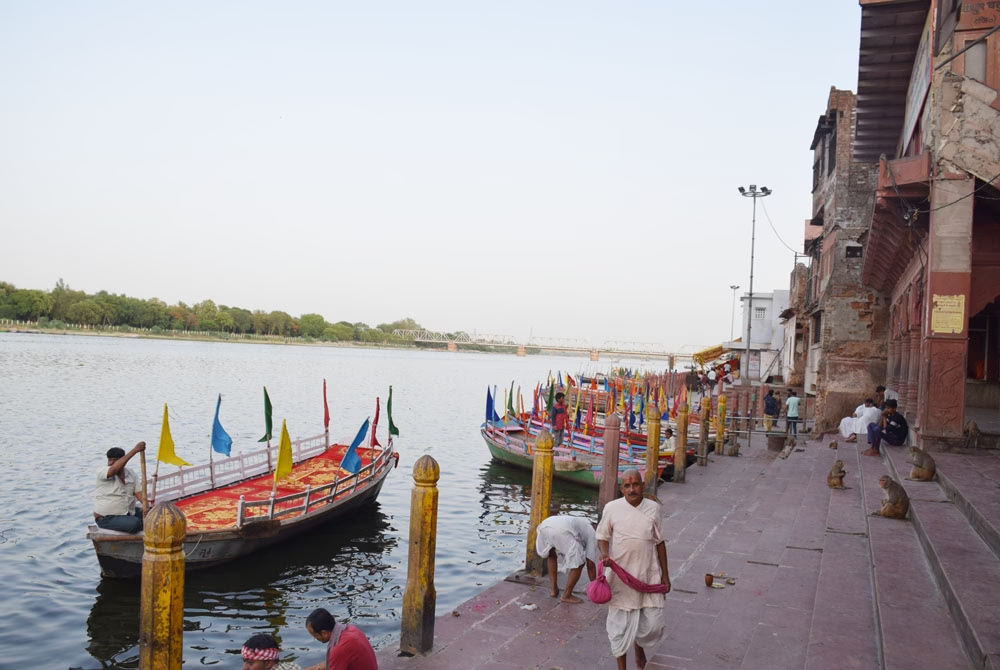
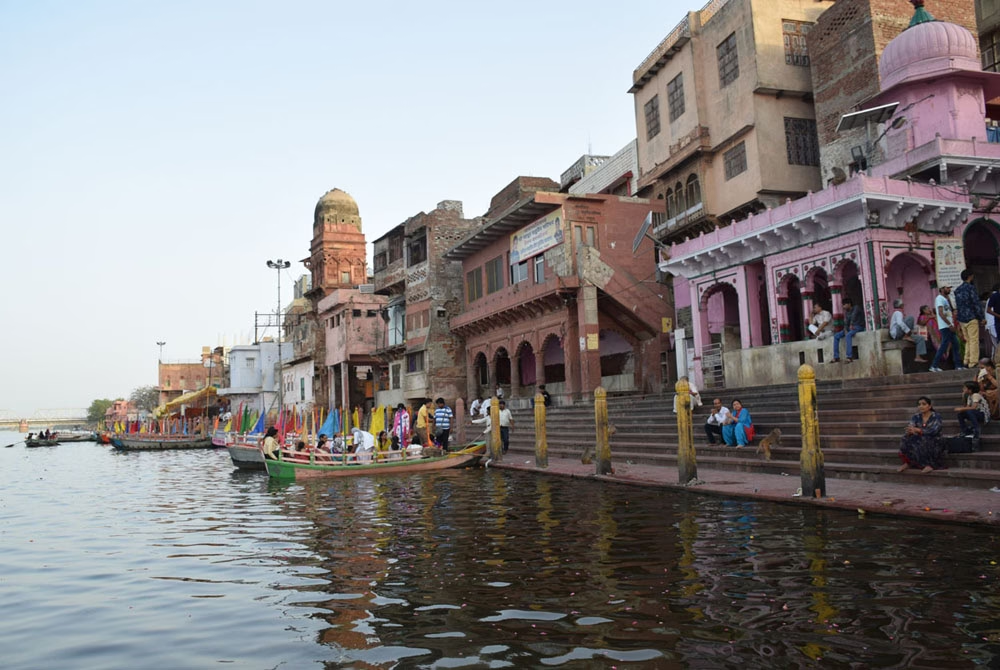
Photos
Architectural Marvels and Sacred Surroundings
The current structure of Vishram Ghat reflects the grand Brahmavarta style, characterized by intricately carved sandstone and wide, sweeping steps that descend into the river.
- The Shrines: The ghat is flanked by several elegant temples. The most notable include the shrines dedicated to Yamuna Devi, Lord Krishna (in his various forms), Murli Manohar, and Neelkanth Mahadev.
- The Mandapa and Pillars: Stone pavilions (Mandapas) line the upper reaches of the ghat, providing a space for pilgrims to engage in meditation or listen to Vedic discourses.
- The Eternal Flame: Many of the smaller alcoves house ancient deities and represent various eras of architectural patronage, ranging from the Rajput influence to the Maratha restoration periods.
Significance of the Deity and the Yamuna Aarti
While the river itself is personified as Yamuna Maharani, the daughter of Surya (the Sun God), the spiritual energy of the ghat is anchored by the presence of Lord Krishna.
The Evening Aarti
The crowning jewel of the devotional experience at Vishram Ghat is the Yamuna Aarti. As dusk falls, the atmosphere transforms:
- Chanting: Priests begin rhythmic Vedic chants.
- Light: Massive brass lamps, often featuring multiple tiers of flickering oil wicks, are waved in a synchronized circular motion.
- Offerings: Thousands of small leaf-boats (diyas) are released into the river, turning the water into a shimmering reflection of the heavens.
This ritual is not just a spectacle but a profound act of Bhakti (devotion), inviting the practitioner to connect with the fluid grace of the Divine Mother Yamuna.
Essential Information for Seekers
- Location: Central Mathura, Uttar Pradesh, on the banks of the Yamuna River.
- Key Festivals: Yama Dwitiya (following Diwali), Holi, and Krishna Janmashtami see the ghat at its most vibrant.
- The Parikrama Path: For those undertaking the Brij Chaurasi Kos Yatra, Vishram Ghat is the essential sanctum for the initial Sankalpa (sacred vow).
To deepen your spiritual journey, you may wish to listen to soulful Bhajans dedicated to Lord Krishna or explore the history of other Ancient Temples in Mathura. Your support helps us preserve these Vedic traditions for future generations through our Seva and Donation initiatives.
Definitive Pilgrimage Guide: Vishram Ghat
Welcome to the comprehensive guide for Vishram Ghat. This guide is designed to facilitate a deeply immersive spiritual experience for pilgrims undertaking the Brij Parikrama or seeking the divine grace of Yamuna Maharani in Mathura.
1. Darshan & Ritual Logistics: Timings and Seva
Vishram Ghat is not a traditional enclosed temple but an open-air sanctum. The primary ritual is the darshan of the Yamuna River and the evening Aarti. The atmosphere is most serene during the early morning Brahma Muhurta and the twilight hours.
| Activity | Timing | Details |
|---|---|---|
| Morning Bath (Snan) | Sunrise – 9:00 AM | Devotees take a holy dip in the Yamuna. Water is cooler in the morning. |
| Evening Aarti | 6:30 PM – 7:30 PM | The main attraction. Arrive by 6:00 PM to secure a seat on the steps. |
| Yamuna Puja | Sunset | Performed by Brahmin priests for ancestors (Tarpan). |
Online Seva Booking
While Vishram Ghat is largely a public space, specific Sevas such as Yamuna Puja and Deep Daan (lamp offering) can be arranged. For 2026, the Mathura Temple Committee facilitates online bookings for the evening Aarti ceremony (VIP seating area).
- Portal: Mathura Tulsi Seva Sansthan / BharatTemples Seva Portal.
- Requirement: Aadhar ID and mobile number.
- Cost: Free for general darshan; nominal fee for specific ritual sponsorship.
2026 Festival Dates & Special Timings
During these festivals, the Ghat remains open 24 hours, but security is heightened.
- Yama Dwitiya (Bhai Dooj): October 26, 2026. Millions gather for the ritual bath.
- Dev Deepawali: November 5, 2026. Special Deep Daan at Vishram Ghat.
- Maha Shivaratri: February 26, 2026. Aarti timings extended to midnight.
2. Practical Visitor Guidance
Dress Code & Etiquette
As Vishram Ghat is a living spiritual site, modesty is paramount. Traditional Indian attire (Kurta-Pajama for men, Saree/Salwar Kameez for women) is recommended. Western clothing should be avoided to respect the sanctity of the site.
Crowd Management & Best Hours
Best Time to Visit: 5:00 AM to 8:00 AM. The river is calm, and the marble steps reflect the rising sun, creating a divine atmosphere. Peak Hours: 5:00 PM to 8:00 PM (Aarti). If you wish to avoid crowds, visit for morning darshan only.
Amenities & Accessibility
- Mobile Lockers: Available near the main steps for a nominal fee (₹20-₹50).
- Footwear: Keep footwear in designated zones; enter barefoot.
- Water: Carry your own water; river water is for ritual use only.
- Accessibility: Ramps are available for wheelchairs at the northern end of the ghat, though the central steps remain steep.
3. Pilgrimage Connectivity
How to Reach Vishram Ghat
By Air: The nearest airport is Chaudhary Charan Singh International Airport, Lucknow (approx. 150 km). The closer Indira Gandhi International Airport in Delhi is 160 km away via NH 44.
By Rail: Mathura Junction Railway Station (MUT) is the primary hub, just 3 km from the Ghat. Auto-rickshaws and electric carts (E-rickshaws) are easily available.
By Road: Mathura is well-connected via NH 44 (Agra-Delhi) and NH 19. Buses from ISBT Mathura halt at Bhuteshwar Chowk, a 10-minute walk from the Ghat.
Nearby Sacred Sites (Pilgrimage Circuit)
Extend your spiritual journey by visiting these nearby landmarks:
- Dwarkadhish Temple: Located just 500 meters away, famous for its black marble deity.
- Shri Krishna Janmabhoomi: The birthplace of Lord Krishna, 1.5 km from Vishram Ghat.
- Vrindavan (12 km): Proceed to Vrindavan to visit the Banke Bihari Temple and ISKCON.
4. Frequently Asked Questions
1. Is there a VIP darshan entry at Vishram Ghat?
Since it is an open ghat, there is no “entry” gate. However, for the evening Aarti, a reserved seating area is set up near the central podium. Priority access is given to donors of the Mathura Development Board and senior citizens.
2. What is the best season to visit?
October to March (Winter) is ideal. The weather is pleasant for walking. Avoid May and June due to extreme heat (45°C+), and be cautious during July-August due to monsoon flooding of the steps.
3. Can we perform rituals using the river water?
Yes. Devotees carry Yamuna Jal in copper vessels for home puja. However, avoid direct consumption of the river water due to modern pollution levels. Use it for ritualistic washing only.
4. Is photography allowed?
Photography is permitted on the Ghat steps for personal use. However, drones are strictly prohibited without prior government permission. During the Aarti, avoid using flash to respect the privacy of devotees.
5. Where can I stay?
There are numerous Dharamshalas (guesthouses) and Hotels within walking distance. The Loi Bazar area offers rooms with river views, while VT Road has modern hotel options.
Recent Posts

Shri Kaamkoteeshwar Mandir, Varanasi – History & Significance
In the heart of Kashi, the eternal city of Lord Shiva, where the Ganges flows with celestial grace, stands the Shri Kaamkoteeshwar Mandir. This sacred Sannidhi is not merely a temple but a profound spiritual bridge between the Northern…

ओ सांवरे तूने ही मुझको संभाला – Lyrics & Meaning
ओ सांवरे तूने ही मुझको संभाला – A Prayer to Shyam Origin & Spiritual Essence Why This Bhajan Resonates Devotees chant this when overwhelmed by life’s storms—the refrain ‘तूने ही मुझको संभाला’ is the soul’s sigh of relief: “You…

कथा ये है महाराज मेरे की – Lyrics & Meaning
कथा ये है महाराज मेरे की छत्रपति संभाजी महाराज – A Prayer to Chhatrapati Sambhaji Maharaj Origin & Spiritual Essence Why This Bhajan Resonates Devotees chant this when their spirit feels tested—its powerful refrain “महाराज मेरे” is a soul’s…

Rigveda Samhita Yathartha Anuvada (ऋग्वेद संहिता यथार्थ अनुवाद) – Complete Set with Anvayartha & Hindi/English Translation
The Rigveda is the oldest surviving scripture of humanity and the foundational text of Sanātana Dharma. For serious students, scholars, UPSC aspirants studying ancient Indian history, Sanskrit learners, and spiritual seekers, a precise and grammatically structured translation is indispensable.…

आना भी अकेला है जाना भी अकेला है – Lyrics & Meaning | BharatTemples
आना भी अकेला है जाना भी अकेला है – A Prayer to the Divine Witness Origin & Spiritual Essence Why This Bhajan Resonates Devotees turn to this bhajan in moments of deep reflection—when life’s attachments begin to ache. The…

माता शेरावाली के द्वार जो भी जाता है – Lyrics & Meaning
माता शेरावाली के द्वार जो भी जाता है – A Prayer to Maa Sherawali Origin & Spiritual Essence Why This Bhajan Resonates Devotees turn to this bhajan in times of fear or uncertainty—its promise that no one leaves Maa’s…

मार लेना सपणी उबार लेणा भवरा – Lyrics & Meaning
मार लेना सपणी उबार लेणा भवरा – A Prayer to the Divine Beloved Origin & Spiritual Essence Why This Bhajan Resonates Devotees chant this in moments of deep vulnerability—its cry of “मार लेना सपणी, उबार लेणा भवरा” is the…

हमें श्याम सुंदर भरोसा तुम्हारा – Lyrics & Meaning
हमें श्याम सुंदर भरोसा तुम्हारा – A Prayer to Shyam Sundar Origin & Spiritual Essence Why This Bhajan Resonates Devotees chant this when feeling alone—its refrain ‘de do sahara’ is the soul’s cry for divine support. Lyrics in Hindi…

Mere Satguru Ne Di Thi Davai Lyrics in Hindi & Meaning
Mere Satguru Ne Di Thi Davai: Invoking the Guru’s Liberating Wisdom This soul-stirring bhajan venerates the Satguru (True Spiritual Master) as the divine physician who dispenses the only remedy for life’s deepest sufferings. Composed by Sant Karmaveer Tufani, it…

Janm Diyo Thari Maa Dukh Dekhiyo Lyrics in Hindi & Meaning
जन्म दियो थारी माँ दुख देखियो (Maa’s Grief Upon Birthing You) This soul-stirring Chetavani Bhajan (admonitory hymn) is addressed to the Divine Mother (Maa) – a call for repentance when children forget their filial duties in the dark age…