
Contents
- 1 Introduction & Spiritual Essence
- 2 Historical Origins & Scriptural Legend
- 3 Architectural Marvels
- 4 Darshan & Ritual Logistics
- 5 Practical Visitor Guidance
- 6 Pilgrimage Connectivity
- 7 Photo Gallery
- 8 Frequently Asked Questions (FAQ)
- 8.1 1. Is there a VIP Darshan entry at Viswanathar Navagraha Temple?
- 8.2 2. Can we perform Navagraha Pooja for specific planets?
- 8.3 3. Is the temple accessible from Trichy city center?
- 8.4 4. What makes the Navagrahas here unique compared to other temples?
- 8.5 5. Is accommodation available near the temple?
- 9 Contact Details
Note: This definitive guide is based on architectural surveys, historical records, and the Devotional Architecture Audit conducted by the Lead Heritage Architect at BharatTemples.com.
Introduction & Spiritual Essence
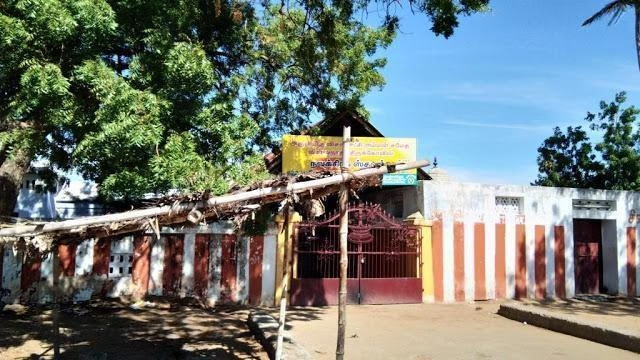
Located in the tranquil village of Pazhur, approximately 15 kilometers from the bustling city of Trichy (Tiruchirappalli), the Viswanathar Navagraha Temple stands as a testament to ancient Dravidian heritage. While the presiding deity is Lord Shiva (Viswanathar), the temple is most renowned in the region for its distinct and powerful Navagraha (Nine Planetary) Shrine.
Primary Deity: Viswanathar (a form of Lord Shiva), accompanied by Goddess Visalakshi (Parvati).
Form: The Shiva Linga here is a Swayambhu (self-manifested) idol, believed to be small in size but immense in spiritual potency.
Phalaśruti: Why Visit?
Devotees flock to this sacred site primarily to worship the Navagrahas, which are believed to be exceptionally potent here. According to local tradition and the temple’s spiritual legacy, visiting this temple serves multiple purposes:
- Karmic Cleansing: It is believed that offering prayers here helps mitigate the negative effects of planetary alignments (Doshas) in one’s horoscope.
- Ancestral Liberation: Performing specific rituals here is said to offer peace to departed souls and cleanse ancestral karma.
- Relief from Shani (Saturn): Particularly revered by those undergoing Sade Sati or Shani Dasa, seeking relief from prolonged hardships.
Historical Origins & Scriptural Legend
The history of the Viswanathar Temple is a fascinating tapestry of political rivalry and spiritual synthesis.
The Pandya Enigma
According to temple records and local architectural evidence, the temple was originally constructed by the Pandian Emperors. This presents a historical mystery: Trichy (the ancient Rock Fort city) was the stronghold of the Chola dynasty. It is rare for a Pandya king to build a temple in Chola territory, suggesting a period of political shift or a specific alliance during the later Pandya period (circa 13th–14th Century CE).
Sthala Purana (Local Legend)
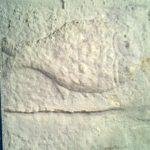
Tradition holds that the temple was built under the patronage of Sri Vaishnava sect members, despite housing a Shiva Linga. The temple walls still bear the “Fish Sign” (the royal emblem of the Pandyas), etched into the stone as a historical signature.
A significant event in the temple’s spiritual timeline occurred in 1932 CE. At the divine instructions of the revered Kanchi Maha Swamigal (Sri Chandrashekarendra Saraswati), the Navagraha idols were installed. This event transformed the temple into a major Navagraha Sthalam, drawing devotees from across Tamil Nadu.
Architectural Marvels
The temple showcases a blend of early Dravidian architecture with later modifications.
Dravidian Style & Layout
The sanctum (Griha) is east-facing. The complex is compact, featuring a typical Dravidian Shikhara (tower) above the sanctum, though it has been renovated over the centuries. The Mandapa (hall) features sturdy pillars, typical of Pandya construction.
What sets the Pazhur Navagraha shrine apart is the detailed iconography:
- Consorts & Vahanas: Unlike many temples where the Navagrahas are solitary, here each Graha is installed with their respective consorts and vehicles (Vahanas) sculpted as relief images below them.
- Weaponry & Chakras: Each planetary deity is depicted holding a specific weapon, and a unique Chakra (mystic wheel) is encrypted in the sculpture, a rarity in temple iconography.
- The Twelve Rashis: The idols of the twelve zodiac signs (Rasis) are installed below the corresponding Navagrahas, creating a comprehensive astrological altar.
Sub-shrines (Koshtas) within the complex include deities for Ganesha, Dakshinamoorthy, Subramanya (Murugan) with Valli and Devasena, and Chandikeswara. Notable idols of Surya (Sun) and Bhairava are also present.
Darshan & Ritual Logistics
For pilgrims planning their visit in 2026, here are the operational details. Note that as a village temple, timings may vary slightly during festivals.
Daily Timings
| Session | Timing |
|---|---|
| Morning Darshan | 06:00 AM – 12:00 PM |
| Afternoon Break | 12:00 PM – 04:00 PM |
| Evening Darshan | 04:00 PM – 08:00 PM |
Key Sevas & Online Booking
The temple follows traditional Agamic rituals. While specific online portals for this village temple may be limited, the following sevas are performed:
- Navagraha Homam: Performed on Tuesdays and Saturdays.
- Abhishekam: For Lord Viswanathar and the Navagrahas (milk, sandalwood, honey).
- Archana: Specific to individual planets (Graha Archana).
Note: For advanced booking, devotees are advised to contact the Temple Executive Officer via the District Administration office or visit the temple trust office in Pazhur.
2026 Festival Calendar
- Pradosham: 15th & 29th of every month (Highly auspicious for Lord Shiva).
- Maha Shivaratri: February 26, 2026. (Special all-night darshan).
- Navagraha Homam (Annual): Scheduled during the Tamil month of Aippasi (October-November).
- Arudra Darshan: January 2026 (Celebrating Lord Nataraja).
Practical Visitor Guidance
To ensure a serene experience at this heritage site, please adhere to the following guidelines:
- Dress Code: Traditional attire is mandatory. Men should wear Dhoti or formal trousers with a shirt; Women should wear saree, salwar kameez, or full-length skirts.
- Photography: Photography is strictly prohibited inside the inner sanctum (Garbhagriha) and the Navagraha shrine. External photography may be permitted at the discretion of the caretakers.
- Accessibility: The temple has stone steps leading to the sanctum. It is not fully wheelchair accessible, but assistance is available from local devotees.
- Crowd Management: Unlike the crowded Trichy temples (Srirangam), Pazhur is peaceful. However, visit early mornings on Tuesdays and Saturdays for special Navagraha pujas without heavy rush.
Pilgrimage Connectivity
The temple is well-connected to major hubs in Trichy district.
How to Reach
- By Air: Trichy International Airport (TRZ) is approximately 20 km away. Auto-rickshaws and cabs are available directly to Pazhur.
- By Rail: Mekkudi Railway Station is the nearest (2 km). Alternatively, the main Trichy Junction (TPJ) is about 13 km away.
- By Road: Located on the Trichy–Karur Highway (SH 25). Take the exit at Mutharasanallur (1.6 km to the temple). There is a prominent arch marking the route.
Nearby Sacred Circuit
Extend your pilgrimage by visiting these nearby sites:
- Uppiliappan Temple (Kumbakonam): Located ~25 km away, a major Vishnu shrine.
- Vayalur Murugan Temple: ~14 km from Pazhur, a beautiful temple dedicated to Lord Murugan on the banks of the Kaveri.
- Mutharasanallur Karupparayar Temple: A unique guardian deity shrine just 1.5 km away, known for its intense spiritual energy.
Photo Gallery


![IMG_0006[6], Viswanathar Navagraha Temple, Pazhur, Trichy](https://www.bharattemples.com/wp-content/uploads/bt/2018/07/IMG_00066-150x150.jpg)

Frequently Asked Questions (FAQ)
As a village temple, there is no formal online VIP ticket system. However, devotees can request a special entry by speaking to the temple priest or the local trustee (available at the temple office) for a small donation, usually allowing access during non-peak hours.
Yes. The temple is renowned for specific Graha Shanti rituals. You can perform Archana for Saturn (Shani), Jupiter (Guru), or Rahu-Ketu based on your astrological chart. The priests provide guidance on the materials required for the offering.
3. Is the temple accessible from Trichy city center?
Absolutely. It is a popular day trip from Trichy (approx. 30–40 minutes by car). It is recommended to hire a taxi or drive a private vehicle as public transport frequency to Pazhur village can be low during afternoons.
The Pazhur Navagrahas are unique because they are depicted with their consorts and weapons, and each idol features an encrypted Chakra. Furthermore, the installation was guided by the Kanchi Maha Swamigal in 1932, adding immense spiritual potency to the sanctum.
5. Is accommodation available near the temple?
There are no hotels immediately adjacent to the temple. However, budget and mid-range hotels are available in Trichy (Srirangam) and Kulithalai within a 15-20 km radius.
Contact Details
Address: Pazhur, Trichy District, Tamil Nadu.
Phone: Contact the District Tourism Office, Trichy, for the current Executive Officer’s contact number.
Recent Posts

Shri Kaamkoteeshwar Mandir, Varanasi – History & Significance
In the heart of Kashi, the eternal city of Lord Shiva, where the Ganges flows with celestial grace, stands the Shri Kaamkoteeshwar Mandir. This sacred Sannidhi is not merely a temple but a profound spiritual bridge between the Northern…

ओ सांवरे तूने ही मुझको संभाला – Lyrics & Meaning
ओ सांवरे तूने ही मुझको संभाला – A Prayer to Shyam Origin & Spiritual Essence Why This Bhajan Resonates Devotees chant this when overwhelmed by life’s storms—the refrain ‘तूने ही मुझको संभाला’ is the soul’s sigh of relief: “You…

कथा ये है महाराज मेरे की – Lyrics & Meaning
कथा ये है महाराज मेरे की छत्रपति संभाजी महाराज – A Prayer to Chhatrapati Sambhaji Maharaj Origin & Spiritual Essence Why This Bhajan Resonates Devotees chant this when their spirit feels tested—its powerful refrain “महाराज मेरे” is a soul’s…

Rigveda Samhita Yathartha Anuvada (ऋग्वेद संहिता यथार्थ अनुवाद) – Complete Set with Anvayartha & Hindi/English Translation
The Rigveda is the oldest surviving scripture of humanity and the foundational text of Sanātana Dharma. For serious students, scholars, UPSC aspirants studying ancient Indian history, Sanskrit learners, and spiritual seekers, a precise and grammatically structured translation is indispensable.…

आना भी अकेला है जाना भी अकेला है – Lyrics & Meaning | BharatTemples
आना भी अकेला है जाना भी अकेला है – A Prayer to the Divine Witness Origin & Spiritual Essence Why This Bhajan Resonates Devotees turn to this bhajan in moments of deep reflection—when life’s attachments begin to ache. The…

माता शेरावाली के द्वार जो भी जाता है – Lyrics & Meaning
माता शेरावाली के द्वार जो भी जाता है – A Prayer to Maa Sherawali Origin & Spiritual Essence Why This Bhajan Resonates Devotees turn to this bhajan in times of fear or uncertainty—its promise that no one leaves Maa’s…

मार लेना सपणी उबार लेणा भवरा – Lyrics & Meaning
मार लेना सपणी उबार लेणा भवरा – A Prayer to the Divine Beloved Origin & Spiritual Essence Why This Bhajan Resonates Devotees chant this in moments of deep vulnerability—its cry of “मार लेना सपणी, उबार लेणा भवरा” is the…

हमें श्याम सुंदर भरोसा तुम्हारा – Lyrics & Meaning
हमें श्याम सुंदर भरोसा तुम्हारा – A Prayer to Shyam Sundar Origin & Spiritual Essence Why This Bhajan Resonates Devotees chant this when feeling alone—its refrain ‘de do sahara’ is the soul’s cry for divine support. Lyrics in Hindi…

Mere Satguru Ne Di Thi Davai Lyrics in Hindi & Meaning
Mere Satguru Ne Di Thi Davai: Invoking the Guru’s Liberating Wisdom This soul-stirring bhajan venerates the Satguru (True Spiritual Master) as the divine physician who dispenses the only remedy for life’s deepest sufferings. Composed by Sant Karmaveer Tufani, it…

Janm Diyo Thari Maa Dukh Dekhiyo Lyrics in Hindi & Meaning
जन्म दियो थारी माँ दुख देखियो (Maa’s Grief Upon Birthing You) This soul-stirring Chetavani Bhajan (admonitory hymn) is addressed to the Divine Mother (Maa) – a call for repentance when children forget their filial duties in the dark age…