
Contents
Introduction & Spiritual Essence
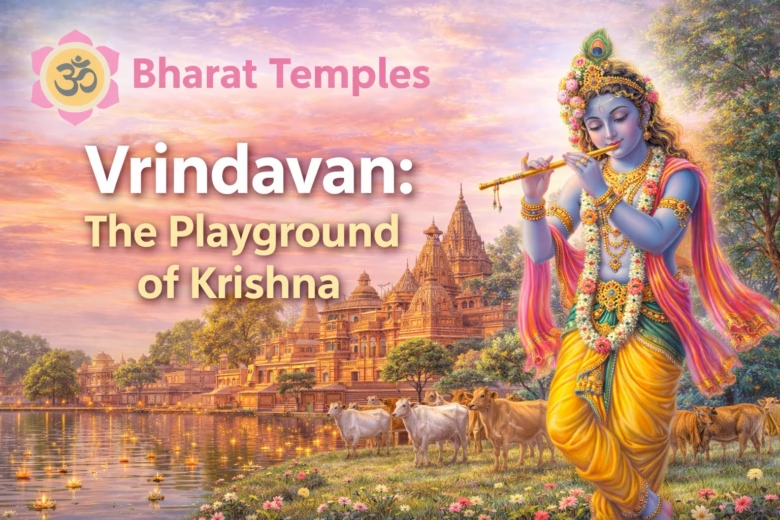
Nestled within the sacred Brij Bhoomi in Uttar Pradesh, Vrindavan is more than a geographical location; it is a spiritual dimension. Known as the Lila-Sthali (the place of divine play), it is here that Lord Shri Krishna spent his childhood and youth, performing miracles and demonstrating the path of Bhakti (devotional love).
Phalaśruti: Why Devotees Visit
The name itself is derived from ‘Vrinda’ (another name for the sacred Tulsi plant) and ‘Van’ (grove), signifying the lush, aromatic forests. According to the Brahmavaivarta Purana, Vrindavan is considered the spiritual heart of the Earth (Maha-Vaikuntha).
- Divine Union: It is the primary site to seek the blessings of Radha Rani and Krishna, believed to bestow Prema (pure divine love).
- Karmic Cleansing: The Parikrama (circumambulation) is believed to cleanse ancestral karma and purify the soul of lifetimes of sins.
- Inner Peace: The constant vibration of the name “Radhe Radhe” aids in meditation and mental stabilization.
Historical Origins & Scriptural Legend
Vrindavan’s prominence is chronicled in the Shrimad Bhagavatam and the Brahmavaivarta Purana. While the physical landscape has evolved, the spiritual essence remains anchored in the Nitya-Lila (eternal pastimes).
The Era of Rediscovery
Although an ancient site, the modern city structure emerged in the 16th century. Tradition holds that the great saint Chaitanya Mahaprabhu rediscovered the lost locations of Krishna’s pastimes. His disciples, the Six Goswamis (disciples of Rupa and Sanatana Goswami), built the foundational temples documented in their texts.
Sacred Sites of Lila
- Nidhivan: A mystical grove where it is believed the Lord performs the Rasa Lila even today. The trees here are said to be the Gopis who transform into their spiritual forms at night.
- Kaliya Dah: The spot on the Yamuna where Krishna subdued the serpent Kaliya, dancing upon its hoods to purify the river.
- Seva Kunj: The site where Krishna served Radha Rani, emphasizing the high spiritual status of Prem (divine love).
Architectural Marvels
The skyline of Vrindavan is a tapestry of Nagara and Rajasthani architectural styles. The temples are not merely structures but “Palaces of the Lord.”
Govind Dev Temple
Constructed during the era of Maharaja Man Singh of Amber, this temple was originally a seven-story red sandstone marvel. Though partially damaged by invasions, its massive vaulted ceilings and cross-plan design remain a testament to medieval Indian engineering.
Bankey Bihari Temple
Representing the pinnacle of Brij culture, this temple houses the deity discovered by Swami Haridas. The unique “Parda” (curtain) ritual, where the curtain is frequently pulled and closed, prevents the Lord’s intense gaze from overwhelming the devotees.
Sri Ranganatha (Rangji) Temple
A stunning example of Dravidian Architecture in the heart of North India, this temple features a towering Gopuram and a gold-plated Dhvaja-stambha (flagstaff), dedicated to Lord Vishnu in his Ranganatha form.
Darshan & Ritual Logistics (2026 Season)
Assuming the current date is 2026, please note that temple timings may vary slightly during the winter season (November–February) and festivals.
Daily Timings
| Session | Opening Time | Closing Time |
|---|---|---|
| Morning Darshan | 07:00 AM | 12:00 PM |
| Afternoon Break | 12:00 PM | 04:00 PM |
| Evening Darshan | 04:00 PM | 09:30 PM |
*Note: Bankey Bihari timings may extend during weekends. Nidhivan closes by 5:00 PM.
Key Sevas & Online Booking
Devotees can book major Sevas through the Shri Bankey Bihari Ji Seva portal or the Shri Krishna Janmabhoomi website.
- Abhishekam: Performed in the early morning. Requires prior booking 7 days in advance.
- Pushpanjali: Available daily at the booking counter or online.
- Maha Aarti: Open to all; tickets for the gallery seating can be booked online.
2026 Festival Dates
- Holi (Lathmar/Rang): March 14 – March 24, 2026
- Jhulan Yatra: August 10 – August 12, 2026
- Janmashtami: August 15, 2026
- Govardhan Puja: November 1, 2026
Practical Visitor Guidance
Dress Code & Rules
Modesty is strictly enforced. Traditional Indian attire is recommended. Western wear like shorts and sleeveless tops are prohibited in the inner sanctum. Photography is banned inside the main temple halls; use mobile lockers provided near entrances.
Crowd Management
Post-COVID, Vrindavan sees peak crowds in December and March.
Best hours to visit: 6:00 AM for a peaceful darshan or 10:30 AM when crowds disperse for lunch.
Seasonal Advice: Summers (May-June) are scorching; carry water and electrolytes. The Yamuna levels can be high during monsoons (July-August).
Pilgrimage Connectivity
How to Reach
- Air: Indira Gandhi International Airport (DEL) is the nearest major airport (approx. 160 km). The upcoming Noida International Airport (Jewar) will be closer.
- Rail: Mathura Junction (MTJ) is the primary railway station (12 km away). A secondary stop is Vrindavan Road (VRBD) for select trains.
- Road: Accessible via Yamuna Expressway (UP-1) and NH-19. Auto-rickshaws and e-rickshaws are available from Mathura station.
Nearby Sacred Sites (Pilgrimage Circuit)
- Govardhan (25 km): Walk the Parikrama of the holy hill sacred to Krishna lifting the mountain.
- Gokul (15 km): The childhood home of Lord Krishna where he was raised by Yashoda Maiya.
- Barsana (45 km): The birthplace of Radha Rani, famous for its temple on Bhanugarh hill.
Frequently Asked Questions
Is there a VIP darshan entry?
Yes, for major temples like Bankey Bihari and Krishna Janmabhoomi, there are online paid quotas or special passes for VIPs/Dignitaries. However, during peak festivals (Holi/Janmashtami), all darshans are general and no VIP passes are issued.
Are mobile phones allowed inside temples?
Cameras and photography are strictly prohibited. Mobile phones must be switched off or kept in silent mode. It is advisable to deposit them in free lockers provided by the temple trusts.
What is the meaning of “Darshan”?
Darshan is the Sanskrit word for “viewing” or “sight.” In a spiritual context, it refers to the act of seeing the deity and receiving their spiritual gaze in return, which is believed to transfer blessings.
Where can I eat in Vrindavan?
Vrindavan is a strictly vegetarian city (no onion/garlic in many places). There are numerous Bhojanalayas near the temples serving pure Satvik food. ISKCON and the MVT (MVT Lodging) offer excellent community kitchens.
Which is the best festival to visit Vrindavan?
Holi is the most famous, attracting thousands of international visitors. However, for a more serene experience, Janmashtami or Sharad Purnima are recommended.
Recent Posts

Shri Kaamkoteeshwar Mandir, Varanasi – History & Significance
In the heart of Kashi, the eternal city of Lord Shiva, where the Ganges flows with celestial grace, stands the Shri Kaamkoteeshwar Mandir. This sacred Sannidhi is not merely a temple but a profound spiritual bridge between the Northern…

ओ सांवरे तूने ही मुझको संभाला – Lyrics & Meaning
ओ सांवरे तूने ही मुझको संभाला – A Prayer to Shyam Origin & Spiritual Essence Why This Bhajan Resonates Devotees chant this when overwhelmed by life’s storms—the refrain ‘तूने ही मुझको संभाला’ is the soul’s sigh of relief: “You…

कथा ये है महाराज मेरे की – Lyrics & Meaning
कथा ये है महाराज मेरे की छत्रपति संभाजी महाराज – A Prayer to Chhatrapati Sambhaji Maharaj Origin & Spiritual Essence Why This Bhajan Resonates Devotees chant this when their spirit feels tested—its powerful refrain “महाराज मेरे” is a soul’s…

Rigveda Samhita Yathartha Anuvada (ऋग्वेद संहिता यथार्थ अनुवाद) – Complete Set with Anvayartha & Hindi/English Translation
The Rigveda is the oldest surviving scripture of humanity and the foundational text of Sanātana Dharma. For serious students, scholars, UPSC aspirants studying ancient Indian history, Sanskrit learners, and spiritual seekers, a precise and grammatically structured translation is indispensable.…

आना भी अकेला है जाना भी अकेला है – Lyrics & Meaning | BharatTemples
आना भी अकेला है जाना भी अकेला है – A Prayer to the Divine Witness Origin & Spiritual Essence Why This Bhajan Resonates Devotees turn to this bhajan in moments of deep reflection—when life’s attachments begin to ache. The…

माता शेरावाली के द्वार जो भी जाता है – Lyrics & Meaning
माता शेरावाली के द्वार जो भी जाता है – A Prayer to Maa Sherawali Origin & Spiritual Essence Why This Bhajan Resonates Devotees turn to this bhajan in times of fear or uncertainty—its promise that no one leaves Maa’s…

मार लेना सपणी उबार लेणा भवरा – Lyrics & Meaning
मार लेना सपणी उबार लेणा भवरा – A Prayer to the Divine Beloved Origin & Spiritual Essence Why This Bhajan Resonates Devotees chant this in moments of deep vulnerability—its cry of “मार लेना सपणी, उबार लेणा भवरा” is the…

हमें श्याम सुंदर भरोसा तुम्हारा – Lyrics & Meaning
हमें श्याम सुंदर भरोसा तुम्हारा – A Prayer to Shyam Sundar Origin & Spiritual Essence Why This Bhajan Resonates Devotees chant this when feeling alone—its refrain ‘de do sahara’ is the soul’s cry for divine support. Lyrics in Hindi…

Mere Satguru Ne Di Thi Davai Lyrics in Hindi & Meaning
Mere Satguru Ne Di Thi Davai: Invoking the Guru’s Liberating Wisdom This soul-stirring bhajan venerates the Satguru (True Spiritual Master) as the divine physician who dispenses the only remedy for life’s deepest sufferings. Composed by Sant Karmaveer Tufani, it…

Janm Diyo Thari Maa Dukh Dekhiyo Lyrics in Hindi & Meaning
जन्म दियो थारी माँ दुख देखियो (Maa’s Grief Upon Birthing You) This soul-stirring Chetavani Bhajan (admonitory hymn) is addressed to the Divine Mother (Maa) – a call for repentance when children forget their filial duties in the dark age…