
Contents
Introduction & Spiritual Essence of Vyaghreshwar Temple
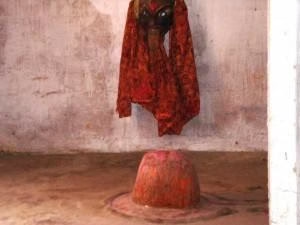
Nestled in the heart of the ancient city of Varanasi (Kashi), the Vyaghreshwar Temple stands as a profound testament to Lord Shiva’s fury and protective benevolence. The primary deity here is Vyaghreshwar (Sanskrit: Vyaghra meaning Tiger, Ishwar meaning Lord). This Swayambhu (self-manifested) Lingam is revered as a powerful manifestation of Lord Shiva.
Phalaśruti (Spiritual Benefits): According to the sacred Kashi Khand of Skanda Purana, worshipping the Vyaghreshwar Lingam yields immense spiritual merit. The specific benefits, as derived from scriptural tradition, include:
- Removal of Obstacles: Devotees believe that sincere worship here clears hurdles in life and business ventures.
- Victory in Battles: Historically, warriors visited this shrine to seek blessings for victory and courage (Tiger represents power).
- Ancestral Cleansing: It is considered a potent site for alleviating negative karma and seeking blessings for ancestors.
Historical Origins & Scriptural Legend
The history of Vyaghreshwar Temple is inextricably linked to the Kashi Khand, a section of the Skanda Purana. While specific dates of construction are lost to time, the temple houses the Swayambhu Lingam that emerged during a celestial event described in ancient scriptures.
The Legend of Dundubhi
According to Kashi Khand (Chapter 65): During the era of intense spiritual practices by Brahmins in Kashi, the demon Dundubhi Nihrad (maternal uncle of Prahlad) devised a plan to conquer the Devas (Gods). His strategy was to eliminate the Brahmins performing Tapa (austerity), thereby weakening the divine forces.
On the auspicious night of Maha Shivratri, a devout Brahmin was immersed in prayer near Jyeshteshwar. Dundubhi, in the form of a ferocious tiger, approached to kill the Brahmin. At that critical moment, Lord Shiva erupted from the earth in the form of the Lingam, seized the tiger form of the demon, and crushed it.
Before vanishing, the tiger (Dundubhi) let out a deafening roar (Vyaghra Nada), echoing across the universe. Satisfied with Shiva’s protection, the Lingam was henceforth worshipped as Vyaghreshwar.
Architectural Marvels
The Vyaghreshwar Temple reflects the traditional Nagara style of temple architecture, characterized by towering spires and elaborate carvings, though it has been modified over centuries due to repairs and renovations typical of Kashi temples.
Structural Highlights
- Garbhagriha (Sanctum): The sanctum houses the black stone Swayambhu Lingam. The atmosphere inside is dimly lit, conducive to deep meditation.
- Shikhara (Spire): The vertical spire, though modest compared to massive medieval temples, aligns with the cosmic axis, symbolizing the connection between earth and heaven.
- Vastu Shastra: The temple layout follows ancient Vastu principles, with the entrance facing East to welcome the rising sun and the sanctum located in the Brahmasthan (cosmic center) of the complex.
Darshan & Ritual Logistics
While the temple does not have a dedicated large-scale online portal like major national shrines, most sevas in Varanasi are coordinated through local temple priests or trusted platforms like the Kashi Vishwanath Corridor management.
Daily Timings (Approximate)
| Session | Timing | Details |
|---|---|---|
| Morning Darshan | 06:00 AM – 12:00 PM | Temple opens after Mangala Aarti. |
| Afternoon Recess | 12:00 PM – 04:00 PM | Cleaning and Ritual Abhishekam. |
| Evening Darshan | 04:00 PM – 11:00 PM | Includes Sandhya Aarti and Shayan Aarti. |
| Special Timing | Maha Shivratri | Open 24 hours (24/7 access). |
Key Sevas & Booking
For 2026, devotees can likely access specific sevas through the Kashi Vishwanath Temple management or by contacting the local Maha Shivratri committee.
- Abhishekam: Performed with water, milk, and honey. Best time: 7:00 AM – 9:00 AM.
- Rudrabhishek: Advanced Vedic ritual. Booking Tip: Advance booking via the Kashi Vishwanath Corridor app or by visiting the administration office near Tulsi Ghat.
- Diya Offering: Devotees can light a lamp for ancestors.
Practical Visitor Guidance
Code of Conduct & Essentials
- Dress Code: Traditional attire is recommended (Kurta-Pajama/Dhoti for men; Saree/Chudidar for women). Avoid leather items.
- Photography: Strictly prohibited inside the sanctum. Photography may be restricted in certain courtyard areas.
- Mobile Phones: Not allowed inside the inner sanctum. Utilize the mobile storage facilities available near the temple entrance.
- Accessibility: The lanes of Varanasi are narrow and uneven. Wheelchair access is limited; please hire a porter chair if required.
Crowd Management & Seasonal Advice
Best Hours: Visit between 6:00 AM – 8:00 AM for a peaceful Darshan.
Seasonal Tips:
- May – June (Summer): Temperatures can exceed 40°C. Carry a water bottle and cotton clothing.
- July – Sept (Monsoon): The narrow lanes can become slippery. Wear rubber-soled sandals with grip.
- October – February (Winter): The best time to visit. Mornings are misty and spiritually vibrant.
Pilgrimage Connectivity
How to Reach
- By Air: Lal Bahadur Shastri International Airport (VNS) is approx. 25 km away. Taxis are readily available.
- By Rail: Varanasi Junction (BSB) is the main railway station (approx. 5 km from the temple).
- By Road: The temple is located in the old city (Bhoot Bhairav Mohalla). Important: Private vehicles are not permitted in the core zone. Park at the designated parking lots (e.g., near Kashi Vishwanath Corridor) and walk or hire an e-rickshaw.
Nearby Sacred Sites (Pilgrimage Circuit)
Combine your visit to Vyaghreshwar Temple with these nearby shrines:
- Jyeshteshwar Temple: Located nearby, associated with the legend where the incident took place.
- Bhoot Bhairav Temple: Just steps away, this fierce form of Shiva guards the area.
- Kashi Vishwanath Temple: The main temple of Varanasi is within walking distance through the labyrinthine lanes.
Frequently Asked Questions
1. Is there a VIP darshan entry at Vyaghreshwar Temple?
As the temple is situated in a dense locality of Varanasi, there is no formal VIP entry system like in larger complexes. However, visiting early in the morning ensures a swift and serene darshan.
2. Can I offer Abhishekam myself?
Typically, only the appointed priests perform the Abhishekam to the Swayambhu Lingam. Devotees can sponsor the ritual and witness it from the sanctum boundary.
3. What is the significance of the tiger symbol here?
The tiger represents the demon Dundubhi whom Lord Shiva subdued. It symbolizes the mastery of the mind and the destruction of evil tendencies (negative vasanas).
4. Is the temple open during monsoon floods?
Yes, the temple remains open. However, during severe flooding (rare), the administration may temporarily close access. Check local advisories during heavy rains.
5. Are there accommodation options nearby?
While there are no hotels directly inside the narrow lanes, several Dharamshalas and hotels are available near the Kashi Vishwanath Corridor and Dashashwamedh Ghat (approx. 15-20 min walk).
Recent Posts

ओ सांवरे तूने ही मुझको संभाला – Lyrics & Meaning
ओ सांवरे तूने ही मुझको संभाला – A Prayer to Shyam Origin & Spiritual Essence Why This Bhajan Resonates Devotees chant this when overwhelmed by life’s storms—the refrain ‘तूने ही मुझको संभाला’ is the soul’s sigh of relief: “You…

कथा ये है महाराज मेरे की – Lyrics & Meaning
कथा ये है महाराज मेरे की छत्रपति संभाजी महाराज – A Prayer to Chhatrapati Sambhaji Maharaj Origin & Spiritual Essence Why This Bhajan Resonates Devotees chant this when their spirit feels tested—its powerful refrain “महाराज मेरे” is a soul’s…

Rigveda Samhita Yathartha Anuvada (ऋग्वेद संहिता यथार्थ अनुवाद) – Complete Set with Anvayartha & Hindi/English Translation
The Rigveda is the oldest surviving scripture of humanity and the foundational text of Sanātana Dharma. For serious students, scholars, UPSC aspirants studying ancient Indian history, Sanskrit learners, and spiritual seekers, a precise and grammatically structured translation is indispensable.…

आना भी अकेला है जाना भी अकेला है – Lyrics & Meaning | BharatTemples
आना भी अकेला है जाना भी अकेला है – A Prayer to the Divine Witness Origin & Spiritual Essence Why This Bhajan Resonates Devotees turn to this bhajan in moments of deep reflection—when life’s attachments begin to ache. The…

माता शेरावाली के द्वार जो भी जाता है – Lyrics & Meaning
माता शेरावाली के द्वार जो भी जाता है – A Prayer to Maa Sherawali Origin & Spiritual Essence Why This Bhajan Resonates Devotees turn to this bhajan in times of fear or uncertainty—its promise that no one leaves Maa’s…

मार लेना सपणी उबार लेणा भवरा – Lyrics & Meaning
मार लेना सपणी उबार लेणा भवरा – A Prayer to the Divine Beloved Origin & Spiritual Essence Why This Bhajan Resonates Devotees chant this in moments of deep vulnerability—its cry of “मार लेना सपणी, उबार लेणा भवरा” is the…

हमें श्याम सुंदर भरोसा तुम्हारा – Lyrics & Meaning
हमें श्याम सुंदर भरोसा तुम्हारा – A Prayer to Shyam Sundar Origin & Spiritual Essence Why This Bhajan Resonates Devotees chant this when feeling alone—its refrain ‘de do sahara’ is the soul’s cry for divine support. Lyrics in Hindi…

Mere Satguru Ne Di Thi Davai Lyrics in Hindi & Meaning
Mere Satguru Ne Di Thi Davai: Invoking the Guru’s Liberating Wisdom This soul-stirring bhajan venerates the Satguru (True Spiritual Master) as the divine physician who dispenses the only remedy for life’s deepest sufferings. Composed by Sant Karmaveer Tufani, it…

Janm Diyo Thari Maa Dukh Dekhiyo Lyrics in Hindi & Meaning
जन्म दियो थारी माँ दुख देखियो (Maa’s Grief Upon Birthing You) This soul-stirring Chetavani Bhajan (admonitory hymn) is addressed to the Divine Mother (Maa) – a call for repentance when children forget their filial duties in the dark age…
Bhadi Sabha Mein Thane Manaun Lyrics in Hindi & Meaning
Bhadi Sabha Mein Thane Manaun: Invoking the Spear-Wielding Mother Mata Bhawani (श्री ज्वाला भवानी), the fiery manifestation of Shakti worshipped as the Protector of Dharma in Her Dhaulagarh sanctum. Origin & Spiritual Essence Composed in Rajasthani folk tradition by…