
Contents
Introduction & Spiritual Essence
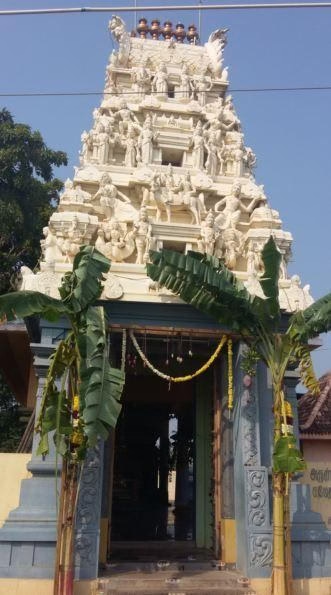
Nestled in the serene village of Sembilivaram in Thiruvallur district, the Vyagrapureeswarar Temple stands as a testament to ancient Dravidian spiritual heritage. This temple is dedicated to Lord Shiva, revered here as Vyagrapureeswarar (the Lord of the Tiger), and his consort, Soundarya Nayagi (the Goddess of Beauty).
The name “Vyagrapureeswarar” holds deep theological significance. Legend suggests that Lord Shiva granted salvation to a devout soul (often associated with a tiger or the fearsome aspects of nature) at this very spot, transforming ferocity into devotion. This temple is particularly significant for devotees seeking spiritual cleansing and the dissolution of negative karma accumulated over lifetimes.
| Date built: | – |
|---|---|
| Deity: | Vyagrapureeswarar |
| Architectural style: | Dravidian architecture |
| Major festivals | – |
| Locale: | Sembilivaram |
| District:: | Thiruvallur |
| Address: | – |
| Phone | – |
Historical Origins & Scriptural Legend
Origins and Patronage
While the specific inscriptions detailing the exact century and royal patronage are currently being verified by the Archaeological Survey of India (ASI), the architecture suggests a construction era spanning several centuries, likely with significant contributions during the Vijayanagara period or the local chieftaincies of the Thiruvallur region. The temple was constructed using traditional methods that ensure the structure remains open and airy, allowing the cosmic energy (Prana) to circulate freely.
The Sthala Purana
According to local oral tradition, this land was once a dense forest inhabited by ferocious animals. A devout hunter (or in some versions, a tiger) relentlessly worshipped Lord Shiva at this site. The legend holds that Lord Shiva appeared before the devotee in his Sarabheshwara form, calming the turbulent energies and blessing the devotee with Moksha (liberation). Hence, the deity came to be known as Vyagrapureeswarar.
Architectural Marvels
Dravidian Style & Vastu Shastra
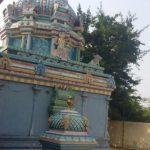
The Vyagrapureeswarar Temple exemplifies the classical Dravidian architectural style. The temple complex is designed according to the principles of Vastu Shastra, aligning the structure with the cardinal directions to maximize the flow of positive energy.
Sanctum and Mandapas
- The Sanctum (Garbhagriha): The inner sanctum houses the Swayambhu (self-manifested) lingam of Vyagrapureeswarar. The dimly lit sanctum creates a meditative atmosphere conducive to deep prayer.
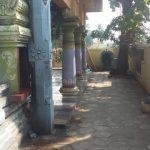
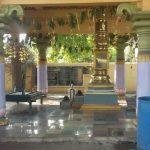
- Ardha Mandapa: This pillared hall serves as the transition space for devotees before entering the sanctum.
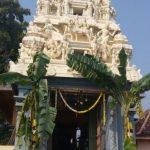
- Shikhara: The towering spire above the sanctum follows the Dravidian tiered style, richly decorated with stucco figures and motifs.
- Consort Shrine: The shrine for Goddess Soundarya Nayagi faces the southern direction, balancing the masculine (Purusha) and feminine (Prakriti) energies of the temple.
Notable Sculptures
The outer prakaram (corridor) features intricate stone carvings depicting various forms of Lord Shiva and scenes from Hindu mythology. The pillars in the mandapa are carved with yalis (mythical lion-like creatures) and celestial musicians.
Darshan & Ritual Logistics
Daily Timings
The temple maintains a specific schedule to allow for ritual purification and rest periods for the presiding deity.
| Session | Timing |
|---|---|
| Morning Darshan | 07:00 AM – 11:00 Noon |
| Afternoon Break | 11:00 Noon – 05:00 PM |
| Evening Darshan | 05:00 PM – 07:30 PM |
Sevas (Rituals) & Online Booking
Devotees can participate in various rituals to offer their prayers. Common Sevas include:
- Abhishekam: Ritual bathing of the lingam with water, milk, honey, and sacred herbs.
- Archana: Recitation of hymns and names of the deity.
- Deepa Aradhana: Offering of lamps.
- Vaikunta Pooja: A special ritual for spiritual liberation.
Note: While physical bookings are accepted at the temple counter, devotees are advised to check the official Tamil Nadu Hindu Religious & Charitable Endowments (HR&CE) website for online booking availability for the current year 2026.
2026 Festival Dates (Tentative)
- Pradosham: Occurring twice monthly (13th and 28th of every month).
- Shivaratri: March 8, 2026 (A major celebration with night-long vigils).
- Aadi Perukku: July 28, 2026 (Celebrated near the banks of the local water bodies).
- Karthigai Deepam: December 4, 2026.
Practical Visitor Guidance
Code of Conduct & Dress Code
Visitors are expected to maintain the sanctity of the temple.
- Dress Code: Traditional attire is recommended. Men should wear dhotis or trousers with shirts; women should wear sarees or salwar kameez. Avoid shorts and sleeveless tops.
- Photography: Photography is generally allowed in the outer precincts but prohibited inside the Sanctum Sanctorum.
- Electronics: Mobile phones are permitted but should be kept on silent mode. Some temples provide lockers; however, visitors should carry minimal valuables.
Crowd Management & Best Time to Visit
As the temple is located in a quieter village area, heavy crowds are rare. However, for the most peaceful experience:
- Best Hours: 07:00 AM – 08:30 AM (Morning) or 06:00 PM – 07:00 PM (Evening).
- Seasonal Advice: During the summer months (April–June), temperatures in Thiruvallur can exceed 35°C. Carry a water bottle and an umbrella. The monsoon season (October–November) brings lush greenery but requires caution regarding travel.
Pilgrimage Connectivity
How to Reach Vyagrapureeswarar Temple
The temple is strategically located in Sembilivaram, making it accessible from major hubs in Chennai and Thiruvallur.
- By Road: The temple is well-connected via local state highways. It is approximately 7 Kms from Redhills and 40 Kms from Thiruvallur town.
- Nearest Railway Station: Chennai Central Railway Station (approx. 22 Kms) or Villivakkam Railway Station (approx. 17 Kms).
- Nearest Airport: Chennai International Airport (approx. 35 Kms).
- Bus Transport: Regular buses ply from Redhills and Koyambedu to Cholavaram. The temple is about 700 meters from the Cholavaram Bus Stop.
Nearby Sacred Sites (Pilgrimage Circuit)
Expand your spiritual journey by visiting these nearby temples:
- Kailasagiri Temple (Thiruvallur): Dedicated to Lord Veerattaneswarar (a form of Shiva), located about 40 Kms away.
- Cholavaram Lake: While not a temple, this scenic water body is near the temple and holds local ecological significance.
- Sri Vaikuntha Perumal Temple (Thiruvallur): A prominent Vishnu temple located in the same district.
Photo Gallery
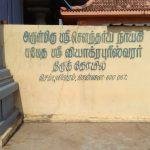

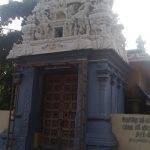

Frequently Asked Questions (FAQs)
1. Is there a VIP Darshan entry at Vyagrapureeswarar Temple?
Generally, for smaller temples like Vyagrapureeswarar, there is no separate VIP entry system. Darshan is available to all devotees equally. However, making a prior appointment for specific Sevas like Abhishekam may allow you to enter the sanctum during the ritual.
2. What is the significance of the name Vyagrapureeswarar?
The name translates to “Lord of the Tiger.” It signifies the divine grace that subdues even the most ferocious nature, turning anger and aggression into devotion and peace.
3. Are there accommodation facilities near the temple?
The temple itself does not have attached guest houses. However, numerous lodges and guest houses are available in Redhills (7 Kms) and Thiruvallur (40 Kms) catering to pilgrims.
4. What is the special offering (Prasadam) here?
While specific local prasadam varies, traditional offerings like Pongal, Puliyodarai (Tamarind rice), and Kadle Payasam (Banana Kheer) are commonly distributed during festivals.
5. How old is the Vyagrapureeswarar Temple?
While official archaeological dating is pending, the architectural style and local lore suggest the temple has been a site of worship for several centuries, with renovations taking place over time.
Contact Details
Official Address:
Vyagrapureeswarar Temple,
Sembilivaram, Cholavaram,
Thiruvallur District, Tamil Nadu.
Note: As specific phone numbers for smaller rural temples are not always publicly listed, it is recommended to contact the Regional Officer of HR&CE, Thiruvallur, for official inquiries.
Recent Posts

माता शेरावाली के द्वार जो भी जाता है – Lyrics & Meaning
माता शेरावाली के द्वार जो भी जाता है – A Prayer to Maa Sherawali Origin & Spiritual Essence Why This Bhajan Resonates Devotees turn to this bhajan in times of fear or uncertainty—its promise that no one leaves Maa’s…

मार लेना सपणी उबार लेणा भवरा – Lyrics & Meaning
मार लेना सपणी उबार लेणा भवरा – A Prayer to the Divine Beloved Origin & Spiritual Essence Why This Bhajan Resonates Devotees chant this in moments of deep vulnerability—its cry of “मार लेना सपणी, उबार लेणा भवरा” is the…

हमें श्याम सुंदर भरोसा तुम्हारा – Lyrics & Meaning
हमें श्याम सुंदर भरोसा तुम्हारा – A Prayer to Shyam Sundar Origin & Spiritual Essence Why This Bhajan Resonates Devotees chant this when feeling alone—its refrain ‘de do sahara’ is the soul’s cry for divine support. Lyrics in Hindi…

Mere Satguru Ne Di Thi Davai Lyrics in Hindi & Meaning
Mere Satguru Ne Di Thi Davai: Invoking the Guru’s Liberating Wisdom This soul-stirring bhajan venerates the Satguru (True Spiritual Master) as the divine physician who dispenses the only remedy for life’s deepest sufferings. Composed by Sant Karmaveer Tufani, it…

Janm Diyo Thari Maa Dukh Dekhiyo Lyrics in Hindi & Meaning
जन्म दियो थारी माँ दुख देखियो (Maa’s Grief Upon Birthing You) This soul-stirring Chetavani Bhajan (admonitory hymn) is addressed to the Divine Mother (Maa) – a call for repentance when children forget their filial duties in the dark age…
Bhadi Sabha Mein Thane Manaun Lyrics in Hindi & Meaning
Bhadi Sabha Mein Thane Manaun: Invoking the Spear-Wielding Mother Mata Bhawani (श्री ज्वाला भवानी), the fiery manifestation of Shakti worshipped as the Protector of Dharma in Her Dhaulagarh sanctum. Origin & Spiritual Essence Composed in Rajasthani folk tradition by…
श्याम सुन्दरवा छोटे छोटे कनुवा Lyrics & Meaning
श्याम सुन्दरवा छोटे छोटे कनुवा (Shyam Sundarva Chhote Chhote Kanuva) is a heartfelt invocation to Lord Krishna in his most enchanting form—Shyam Sundar (the dark, beautiful one). This bhajan is a plea for the divine child Kanha to grace…
Maat Meri Chintapurni Lyrics in Hindi & Meaning
Maat Meri Chintapurni is a heartfelt devotional prayer dedicated to Maa Chintapurni, a form of the Divine Mother. She is revered as the remover of worries and the granter of wishes, especially venerated in the Himalayan region of Himachal…
थारी रे नदियां का ढावा पे खीची राजा Lyrics & Meaning
खीची राजा का अद्भुत युद्ध: एक शौर्य गाथा यह भजन एक पौराणिक या ऐतिहासिक शूरवीर राजा की वीरता का वर्णन करता है, जो प्रायः गुजराती लोक संस्कृति में लोककथाओं का हिस्सा है। इसकी रचना दुर्गेश कटारा ने की है…
बेगो बेगो चाल श्याम सिंगोली बुलावे रे Lyrics in Hindi & Meaning
Bhajan Title & Deity This bhajan, बेगो बेगो चाल श्याम सिंगोली बुलावे रे, is dedicated to Lord Shyam, a revered form of Lord Krishna. Origin & Spiritual Essence The composer of this bhajan is not specified, but it is…