Waneshwar Mahadev Temple Kanpur: History, Darshan Timings & Guide
Receive daily temple updates, divine darshan, and morning bhajans directly on WhatsApp.
Contents
- 1 Introduction & Spiritual Essence
- 2 Historical Origins & Scriptural Legend
- 3 Architectural Marvels
- 4 Darshan & Ritual Logistics
- 5 Practical Visitor Guidance
- 6 Pilgrimage Connectivity
Introduction & Spiritual Essence
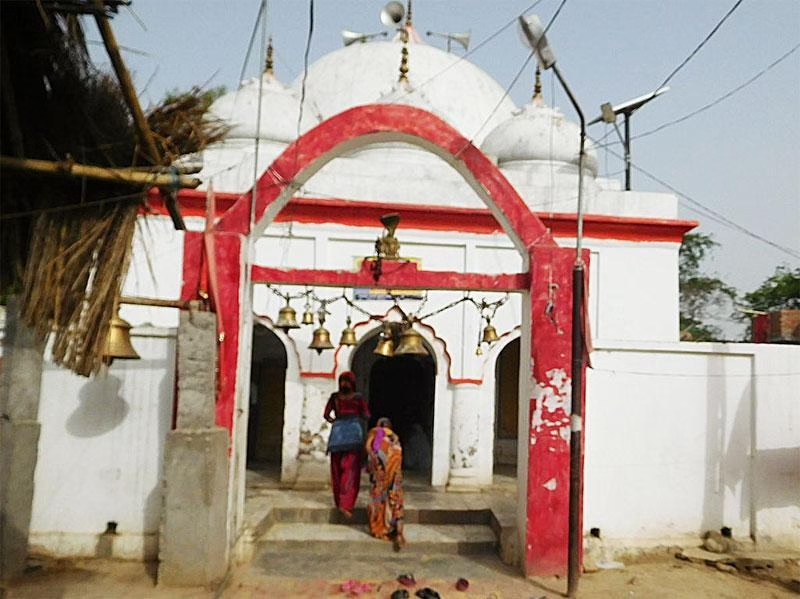
Waneshwar Mahadev Temple, nestled in the rural heartland of Kanpur Dehat, Uttar Pradesh, stands as a timeless beacon of devotion to Lord Shiva. While the bustling city of Kanpur is famous for its industrial heritage, this temple in the Derapur subdivision offers a serene spiritual counterpoint. It is revered not just as a place of worship, but as a Teerth (pilgrimage site) deeply embedded in the Mahabharata era.
Primary Deity: The temple is dedicated to Lord Shiva in the form of a Swayambhu (self-manifested) Lingam. The presiding deity is worshipped as Waneshwar Mahadev, signifying the “Lord of the Forests” or the one associated with Asura King Wanasur.
Phalaśruti: Spiritual Benefits
According to local legends and the faith of devotees, a pilgrimage to Waneshwar Mahadev offers profound spiritual merit. It is believed that:
- Cleansing Ancestral Karma: Performing rituals here is said to liberate ancestors from Pitra Dosha, ensuring peace for their souls.
- Wish Fulfillment: Devotees visit to offer Jalabhishek (water offering) to seek blessings for success in endeavors and removal of obstacles (Vighna).
- Protection: As the temple is linked to the legendary Daityaraj Wanasur, worshippers believe it grants protection from negative energies and evil forces.
Historical Origins & Scriptural Legend
The history of Waneshwar Mahadev is a blend of mythology, oral folklore, and documented historical records. The temple is not merely a stone structure but a living narrative of the region’s past.
The Legend of Daityaraj Wanasur
According to local historians, including accounts by Prof. Laxmikant Tripathi, this region (formerly known as Sithaupurwa or Sronitpur) was the capital of the powerful demon king, Daityaraj Wanasur. Wanasur was a devout follower of Lord Shiva.
📖 Related: Shri Baglamukhi Chalisa
It is said that Wanasur’s son, Daityaraj Bali, established a massive Shivling here to honor the supreme lord. However, following the legendary war between Lord Krishna and Wanasur (an event chronicled in various Puranas), the original temple structure was partially demolished.
Renovation & The Jainayi Connection
The temple was later renovated by Janmejay, the son of King Parikshit (grandson of the Pandavas). During this period, the settlement was named Wanpura Janmejay. Over centuries, the name evolved linguistically—first to Banipara and eventually to the present-day Jainayi village.
Traditional accounts authenticate this mythology through the existence of nearby water bodies (ponds) and historical structures like Usha Burj (Tower of Usha) and a Vishnu statue, which correspond with the narrative timeline of the Mahabharata era.
Architectural Marvels
While the temple has undergone renovations over the centuries, its core architecture reflects the traditional Nagara style of North Indian temple architecture, adapted to the regional aesthetics of Uttar Pradesh.
Key Architectural Features
The temple complex is characterized by its distinct Shikhara (towering spire), which rises vertically towards the sanctum (Garbhagriha), symbolizing the cosmic mountain Meru. The Mandapa (pillared hall) is designed with open spaces to accommodate large gatherings during festivals like Maha Shivaratri.
Although specific ASI (Archaeological Survey of India) listing details are sparse for this particular rural temple, the structure adheres to classical Vastu Shastra principles. The sanctum is oriented towards the east, allowing the first rays of the sun to fall upon the Shivalingam. The exterior walls feature sculptural elements depicting scenes from Shiva Purana, showcasing the craftsmanship of local artisans of the era.
Darshan & Ritual Logistics
To facilitate a smooth spiritual experience, devotees should be aware of the daily schedules and seva availability. While specific official online portals for smaller regional temples can vary, general timings and festival dates are listed below.
Daily Darshan Timings
| Session | Timings | Activity |
|---|---|---|
| Morning | 6:00 AM – 12:00 PM | Mangala Aarti, Abhishekam |
| Afternoon | 12:00 PM – 4:00 PM | Resting Period / Shayan Darshan |
| Evening | 4:00 PM – 9:00 PM | Aarti, Puja, Closing |
Key Sevas & Online Booking
While walk-in devotees are always welcome, specific Sevas are often conducted with prior notice. For temples in the Kanpur region, coordination is usually handled by the temple committee or local priests.
- Abhishekam: Ritual bathing of the Shivalingam with milk, honey, and water.
- Archana: Personalized chanting of the devotee’s name and family lineage (Gotra).
- Rudrabhishek: A elaborate Vedic ritual for larger groups.
📖 Related: Shri Ravi Das Chalisa
Note: For “Online Seva Booking,” devotees can check the official portal for Kanpur Dehat district temples or contact the local temple trust office. Currently, direct online integration for Waneshwar Mahadev is managed locally.
2026 Festival Calendar
Planning a visit during festivals requires early preparation due to high footfall.
- Maha Shivaratri (Night of Shiva): February 26, 2026. This is the most significant event at Waneshwar Mahadev. The temple is decorated with lights, and continuous chanting of “Om Namah Shivaya” takes place.
- Savan Somwar (Mondays of Shravan Month): July/August 2026. The month of Shravan is highly auspicious for Shiva devotees. The temple sees massive crowds on Mondays.
- Pradosh Vrat: Occurring twice a month (13th day of the lunar cycle), highly recommended for evening darshan.
Practical Visitor Guidance
To ensure a respectful and hassle-free visit to this heritage site, please adhere to the following guidelines:
Dress Code & Etiquette
Modesty is paramount. Men should wear dhotis, kurta-pajamas, or full-length trousers and shirts. Women should wear sarees, salwar kameez, or long skirts. Western attire like shorts and tank tops is discouraged.
Photography & Electronics
Photography inside the sanctum sanctorum (Garbhagriha) is strictly prohibited. Mobile phones should be silenced before entering the inner shrine. Many temples in the region provide a locker facility for storing bags and electronic devices; utilizing this is recommended to maintain the sanctity of the space.
Crowd Management & Best Time to Visit
Best Hours: The optimal time for a peaceful Darshan is early morning (6:00 AM – 8:00 AM) or late evening (after 7:00 PM).
Seasonal Advice:
- Summers (May-June): Temperatures in Kanpur can soar. Carry a water bottle, a handkerchief, and wear a hat. Cotton clothing is essential.
- Winters (Dec-Jan): Pleasant weather, but mornings can be foggy. Carry a light jacket.
- Monsoon (July-Aug): The rural roads leading to Jainayi village can be slippery. Wear sturdy footwear with grip.
Pilgrimage Connectivity
The temple is located in the Jainayi village of Derapur subdivision. While rural, it is well-connected to the main city of Kanpur.
How to Reach
- By Rail:
- Rura Railway Station: Approx. 7 km from the temple (North Central Railway zone). This is the nearest convenient station for travelers from outside Kanpur.
- Ambiapur Railway Station: Approx. 4 km to the north.
- By Road:
- The temple is connected to Kanpur via Bela Road, passing through Kahinjhari and Rura.
- From Kanpur: Take NH-34 (Lucknow-Kanpur Highway) towards Rura, then divert towards Jainayi village. Private taxis and auto-rickshaws are available from Rura.
- By Air:
- Chaudhary Charan Singh International Airport (Lucknow): Approx. 85 km away.
- Chakeri Airport (Kanpur): Approx. 35 km away. Taxi services are available from both airports.
📖 Related: Shri Saraswati Chalisa ||
Nearby Sacred Sites
For pilgrims looking to create a spiritual circuit in the Kanpur region:
- Ganga Barrage Temple (Kanpur): Located near the Ganges, offering river-side Aarti.
- Jainayi Nature Park & Pond: While the temple is the main draw, the historical pond and surrounding natural beauty of the village offer a tranquil retreat.
- Bithoor (approx. 35 km): A significant pilgrimage site associated with Lord Ram’s son Luv and Kush. It features the Brahmavart Ghat and Valmiki Ashram.
Frequently Asked Questions (FAQ)
1. Is there a VIP Darshan entry at Waneshwar Mahadev Temple?
As this is a regional heritage temple, there is no formal “VIP ticketing” system like in major Tirupati shrines. However, devotees wishing to perform specific Sevas (like Rudrabhishek) can access the inner sanctum during the ritual. It is advised to contact the local priest committee a day in advance for such arrangements.
2. What is the significance of the name “Waneshwar”?
The name is derived from “Wanasur,” the Asura King who ruled this region, and “Ishwar,” meaning Lord Shiva. It literally translates to “The Lord of Wanasur” or “The Lord associated with the Forests.”
3. Are there accommodation facilities near the temple?
High-end hotels are not available in Jainayi village. However, the nearest town, Rura (7 km away), offers basic guest houses and lodges. For luxury accommodation, it is recommended to stay in Kanpur city (30-40 km away) and make a day trip to the temple.
4. Is the temple accessible for elderly devotees?
The temple complex is generally on ground level, but the approach roads can be uneven due to the rural setting. Vehicles can get reasonably close to the entrance. Wheelchair accessibility is limited, but assistance from local volunteers is often available.
5. When is the best time to visit to avoid crowds?
Weekdays (Tuesday to Thursday) are significantly less crowded than weekends. Additionally, avoiding the first Monday of Shravan and the main Maha Shivaratri night will provide a more serene experience, though you will miss the festive energy.