
Contents
- 1 Yamunotri Temple: The Ultimate 2026 Pilgrimage Guide
Yamunotri Temple: The Ultimate 2026 Pilgrimage Guide
By BharatTemples.com Heritage Team
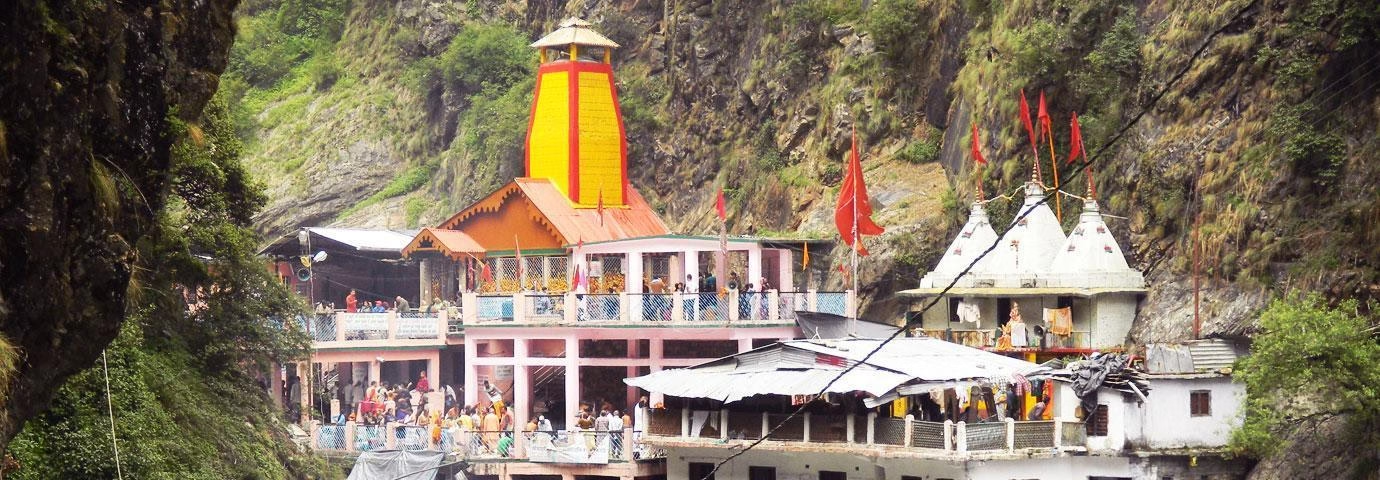
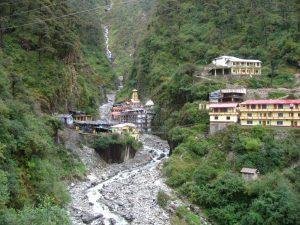
Nestled in the majestic Garhwal Himalayas, the shrine of Yamunotri marks the sacred origin of the River Yamuna and stands as the western gateway to the revered Chhota Char Dham circuit. Perched at an altitude of 3,293 meters (10,804 ft), this temple is not merely a stone structure but a celestial abode of Devi Yamuna, the divine sister of Yama, promising devotees protection from premature death and the cleansing of deep-seated karmic burdens.
1. Introduction & Spiritual Essence
The Divine Presence
The primary deity of the temple is Yamuna Devi (the Goddess of the River Yamuna), worshipped here in her celestial form. Unlike many other shrines, the murti (idol) is crafted from exquisite black marble, symbolizing the deep, cosmic origins of the river.
Phalaśruti: The Fruits of Visiting
According to the Garuda Purana and local folklore, visiting Yamunotri holds immense spiritual merit:
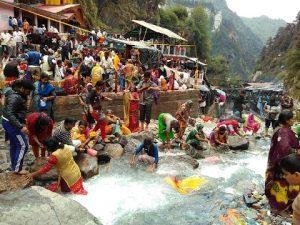
- Cleansing of Ancestral Karma: A holy dip in the freezing waters of the Yamuna is believed to absolve sins and free ancestors from the cycle of rebirth.
- Protection from Untimely Death: As the sister of Yama (the God of Death), worshipping Yamuna is believed to grant a long, healthy life and delay the arrival of Yama until a ripe old age.
- Divine Nurturing: Just as the river nourishes the fertile plains of India, a pilgrimage here is said to nurture the devotee’s spiritual growth and remove obstacles from their life path.
2. Historical Origins & Scriptural Legend
Historical Construction
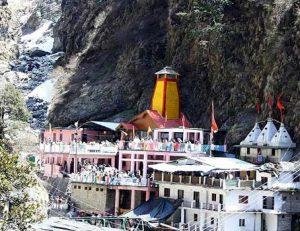
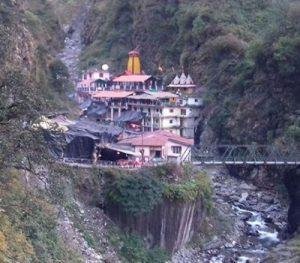
The history of the current temple structure dates back to the 19th century. It was originally built by Maharaja Pratap Shah of Tehri Garhwal (some records also attribute the renovation to Maharani Guleria of Jaipur). Due to the harsh Himalayan climate, the temple has undergone several reconstructions over the centuries, with the current structure being a testament to resilience against the elements.
Sthala Purana & Scriptural References
Legend of Asit Muni: Tradition holds that the sage Asit Muni had his hermitage here. Throughout his life, he bathed daily in both the Ganges (Gangotri) and the Yamuna. In his old age, when he could no longer travel to Gangotri, the Ganges manifested as a stream directly opposite Yamunotri to aid his penance.
The Divine Sisters: According to the Puranas, Yamuna is the daughter of Surya (the Sun God) and sister of Yama. It is said that Yamuna possesses the divine playfulness (lila) of the river, contrasting with the ascetic intensity of the Ganges.
3. Architectural Marvels
While modest in scale compared to the grand temples of the plains, the architecture of Yamunotri is a marvel of Himalayan engineering and spiritual symbolism.
Style & Design
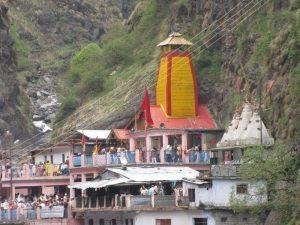
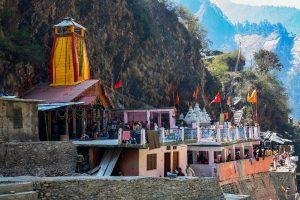
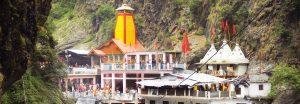
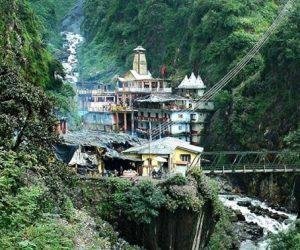
The temple features a distinctive Nagara-style peak, typical of the Garhwal region. The structure is relatively small and features a tiered tower capped by a golden dome and spire (Shikhara). The interior is simple yet profound, housing the black marble idol facing the west.
Surya Kund & Divya Shila
Perhaps the most significant spiritual elements are the thermal springs that bubble up from the mountain cavities:
- Surya Kund: The most important thermal spring, directly linked to the Sun God. The water here is intensely hot (often exceeding boiling point).
- Divya Shila: A rock pillar located right next to the Kund, worshipped as the “Divine Stone” before offering prayers to the deity.
Ritual Significance: Devotees prepare rice and potatoes, tied in muslin cloth, and dip them into the boiling waters of Surya Kund to cook them. This offering is taken as Prasadam (holy offering).
4. Darshan & Ritual Logistics
The temple remains open from Akshaya Tritiya (April/May) until Bhai Dooj (October/November), coinciding with the Diwali festivities. During winter, the temple is closed due to heavy snowfall, and the idol is moved to the nearby village of Kharsali.
Daily Darshan Timings (2026 Season)
Timings are subject to change based on weather and specific rituals.
| Session | Opening Time | Closing Time |
|---|---|---|
| Morning Darshan | 06:00 AM | 12:00 PM |
| Evening Darshan | 01:00 PM | 09:00 PM |
Key Sevas & Online Booking
- Abhishekam: Ritual bathing of the deity with milk, honey, and curd (available during morning hours).
- Panchamrit Archana: Offering of the five nectars.
- Deep Daan: Evening lamp offering.
Note: For the 2026 season, devotees can book Yamunotri Seva through the official Badrinath Kedarnath Temple Committee (BKTC) website or the Uttarakhand Tourism portal. It is highly recommended to book slots for Abhishekam at least 15 days in advance during peak season.
Important 2026 Festival Dates
- Akshaya Tritiya (Opening Date): April 30, 2026 (Tentative).
- Yamuna Jayanti: July 5, 2026.
- Diwali (Closing Date): November 1, 2026 (Tentative).
- Bhai Dooj (Closure): November 2, 2026.
5. Practical Visitor Guidance
Dress Code & Etiquette
As Yamunotri is located in a high-altitude, freezing zone, traditional light cotton clothing is not advisable. Instead, devotees should wear warm layers, woolens, and windproof jackets. Modesty is paramount; covered shoulders and knees are required for entry into the sanctum.
Photography & Lockers
- Photography: Strictly prohibited inside the inner sanctum.
- Mobile/Baggage: There are no high-tech lockers, but official cloakrooms are available near the temple gate. Small transparent bags are generally allowed.
Crowd Management & Seasonal Tips
- Best Time to Visit: May to June and September to October. Avoid the monsoon months (July-August) due to landslide risks.
- Peak Hours: 8:00 AM to 11:00 AM is the busiest. Visit post-lunch for a slightly less crowded darshan.
- Altitude Sickness: Carry Diamox (consult doctor) and stay hydrated. The trek from Janki Chatti (6 km) is steep.
6. Pilgrimage Connectivity
How to Reach Yamunotri
Yamunotri does not have direct road access. The pilgrimage requires a combination of road travel and a steep trek.
- Nearest Airport: Jolly Grant Airport, Dehradun (approx. 175 km from Janki Chatti).
- Nearest Railway Station: Dehradun Railway Station (approx. 170 km).
- By Road: Buses and taxis are available from Dehradun, Rishikesh, and Mussoorie to Janki Chatti (the base point).
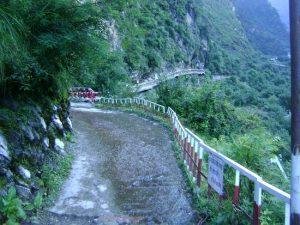
- The Trek: From Janki Chatti, pilgrims must undertake a 6 km trek to the temple. Palanquins (Palkis) and horses are available on hire.
Nearby Sacred Sites (Circuit Planning)
Complete your spiritual journey by visiting these nearby landmarks:
- Janki Chatti (7 km downhill): Famous for its thermal springs and the point where the actual trek begins.
- Kharsali Village: The winter home of the Yamuna deity. It houses the Yamuna Temple and an ancient Shani Dev Temple.
- Hanuman Chatti (13 km downstream): The confluence of the Yamuna and Hanuman Ganga rivers, featuring a temple dedicated to Hanuman.
7. Frequently Asked Questions (FAQs)
Is there a VIP darshan entry at Yamunotri?
Unlike Tirupati, there is no formal VIP ticket system. However, devotees who have booked the Abhishekam Seva or have special passes from the BKTC are granted priority entry during their designated time slots.
Can I visit Yamunotri if I have respiratory issues?
Given the altitude of nearly 3,300 meters, individuals with severe asthma or heart conditions should consult a physician before planning the trip. Oxygen cylinders are available at Janki Chatti and midway through the trek.
Is the trek to Yamunotri difficult?
The 6 km trek is moderately difficult. It is a paved path with a steep incline. For elderly pilgrims, Palkis (palanquins) and Mules/Horses are readily available for hire from Janki Chatti.
What is the best way to offer Prasadam?
The traditional offering is rice and potatoes cooked in the hot springs of Surya Kund. You can purchase raw rice from vendors at Janki Chatti, wrap it in a muslin cloth, and cook it in the hot water before offering it to the deity. Dry fruits and packaged sweets are also accepted.
Is mobile connectivity available?
Network coverage is erratic and generally poor at Yamunotri. BSNL works best, but Janki Chatti has better connectivity. It is advisable to inform family members in advance that connectivity may be intermittent.
Recent Posts

ओ सांवरे तूने ही मुझको संभाला – Lyrics & Meaning
ओ सांवरे तूने ही मुझको संभाला – A Prayer to Shyam Origin & Spiritual Essence Why This Bhajan Resonates Devotees chant this when overwhelmed by life’s storms—the refrain ‘तूने ही मुझको संभाला’ is the soul’s sigh of relief: “You…

कथा ये है महाराज मेरे की – Lyrics & Meaning
कथा ये है महाराज मेरे की छत्रपति संभाजी महाराज – A Prayer to Chhatrapati Sambhaji Maharaj Origin & Spiritual Essence Why This Bhajan Resonates Devotees chant this when their spirit feels tested—its powerful refrain “महाराज मेरे” is a soul’s…

Rigveda Samhita Yathartha Anuvada (ऋग्वेद संहिता यथार्थ अनुवाद) – Complete Set with Anvayartha & Hindi/English Translation
The Rigveda is the oldest surviving scripture of humanity and the foundational text of Sanātana Dharma. For serious students, scholars, UPSC aspirants studying ancient Indian history, Sanskrit learners, and spiritual seekers, a precise and grammatically structured translation is indispensable.…

आना भी अकेला है जाना भी अकेला है – Lyrics & Meaning | BharatTemples
आना भी अकेला है जाना भी अकेला है – A Prayer to the Divine Witness Origin & Spiritual Essence Why This Bhajan Resonates Devotees turn to this bhajan in moments of deep reflection—when life’s attachments begin to ache. The…

माता शेरावाली के द्वार जो भी जाता है – Lyrics & Meaning
माता शेरावाली के द्वार जो भी जाता है – A Prayer to Maa Sherawali Origin & Spiritual Essence Why This Bhajan Resonates Devotees turn to this bhajan in times of fear or uncertainty—its promise that no one leaves Maa’s…

मार लेना सपणी उबार लेणा भवरा – Lyrics & Meaning
मार लेना सपणी उबार लेणा भवरा – A Prayer to the Divine Beloved Origin & Spiritual Essence Why This Bhajan Resonates Devotees chant this in moments of deep vulnerability—its cry of “मार लेना सपणी, उबार लेणा भवरा” is the…

हमें श्याम सुंदर भरोसा तुम्हारा – Lyrics & Meaning
हमें श्याम सुंदर भरोसा तुम्हारा – A Prayer to Shyam Sundar Origin & Spiritual Essence Why This Bhajan Resonates Devotees chant this when feeling alone—its refrain ‘de do sahara’ is the soul’s cry for divine support. Lyrics in Hindi…

Mere Satguru Ne Di Thi Davai Lyrics in Hindi & Meaning
Mere Satguru Ne Di Thi Davai: Invoking the Guru’s Liberating Wisdom This soul-stirring bhajan venerates the Satguru (True Spiritual Master) as the divine physician who dispenses the only remedy for life’s deepest sufferings. Composed by Sant Karmaveer Tufani, it…

Janm Diyo Thari Maa Dukh Dekhiyo Lyrics in Hindi & Meaning
जन्म दियो थारी माँ दुख देखियो (Maa’s Grief Upon Birthing You) This soul-stirring Chetavani Bhajan (admonitory hymn) is addressed to the Divine Mother (Maa) – a call for repentance when children forget their filial duties in the dark age…
Bhadi Sabha Mein Thane Manaun Lyrics in Hindi & Meaning
Bhadi Sabha Mein Thane Manaun: Invoking the Spear-Wielding Mother Mata Bhawani (श्री ज्वाला भवानी), the fiery manifestation of Shakti worshipped as the Protector of Dharma in Her Dhaulagarh sanctum. Origin & Spiritual Essence Composed in Rajasthani folk tradition by…