
Contents
- 1 Yogmaya Temple, New Delhi: A Definitive Pilgrimage Guide
Yogmaya Temple, New Delhi: A Definitive Pilgrimage Guide
1. Introduction & Spiritual Essence
Nestled in the heart of ancient Mehrauli, amidst the bustling environs of South Delhi, stands the Yogmaya Temple (Jogmaya Temple)—a sanctuary of tranquility and one of the five ancient temples surviving in Delhi. Dedicated to Yogmaya (also known as Jogmaya), an aspect of Maya (the illusionary power) of God and a sister of Lord Krishna, this temple is a potent Shakti Peetha.
The presiding deity is a black stone idol of Yogmaya placed in a marble well within the sanctum. Unlike typical representations of fierce deities, Yogmaya here is depicted as austere and exacting. Devotees visit this Shakti Peetha primarily to cleanse ancestral karma and to seek protection from the cycles of illusion and suffering.
Phalaśruti (Spiritual Benefits): According to temple lore and local belief, prayers offered here yield three distinct boons: the dissolution of past sins (paap), the grant of progeny (santana prapti), and the removal of Maya (illusion) from one’s life, leading to spiritual clarity.
2. Historical Origins & Scriptural Legend
The history of the Yogmaya Temple is a tapestry of myth, destruction, and resilience. While the current structure dates to the early 19th century, its roots stretch back to the 3rd century BCE.
The Mahabharata Connection
According to Jain scriptures from the 12th century, the area was originally known as Yoginipura, named after this very temple. Tradition holds that the original temple was built by the Pandavas at the conclusion of the Mahabharata war, making it one of the oldest shrines in the capital.
Eras of Destruction and Reconstruction
Local priests and historical records indicate the temple has endured multiple invasions. It is believed to be one of the 27 temples destroyed by Mahmud Ghazni and subsequently ravaged by the Mamluks. However, the site’s spiritual energy was preserved.
During the medieval period, the Tomar Rajput King Anangpal I (c. 731 AD) constructed the Lal Kot fortress around the temple. In the 16th century, Hemu (Samrat Vikramaditya) reconstructed the temple from ruins. Later, during the reign of Mughal Emperor Aurangzeb, a rectangular hall was added. Historical accounts suggest this was a failed attempt to convert the temple into a mosque, which was later repurposed as a storehouse for the Goddess’s vestments.
The definitive reconstruction of the current structure occurred in 1827 AD during the reign of Mughal Emperor Akbar II, overseen by Lala Sethmal.
3. Architectural Marvels
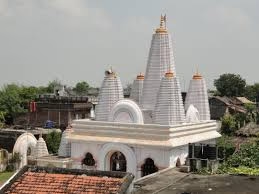
The Yogmaya Temple is a prime example of the Nagara style of temple architecture, adapted to the local requirements of the Delhi region. While the original 3rd-century BCE architecture was lost, the 19th-century reconstruction maintains the spiritual geometry (Vastu Shastra) of the site.
The Sanctum and Shikhara
The temple complex is enclosed within a 400 ft square wall. The inner sanctum (Garbhagriha) is a square chamber (17 ft x 17 ft) with a flat roof. Rising above it is a truncated Shikhara (tower) reaching a height of 42 ft, topped with a copper-plated pinnacle. A dome also adorns the structure, reflecting a synthesis of architectural influences.
Sculptures and Layout
The black stone idol of Yogmaya is set in a marble well (2 ft width, 1 ft depth). The floor, originally red stone, is now marble. An interesting architectural feature is the iron cage (8 ft square x 10 ft height) located in an open wall panel, housing two stone tigers—a symbol of power and the vehicle of the Goddess.
Twenty-two towers were built within the precincts by the builder Sood Mal, creating a rhythmic skyline against the backdrop of the Mehrauli Archaeological Park.
ASI Status: While not a UNESCO World Heritage site (which covers the nearby Qutb Complex), the temple is a protected monument and a vital part of the Mehrauli Archaeological Heritage Park.
4. Darshan & Ritual Logistics
Devotional activities at Yogmaya Temple are conducted with strict adherence to Vedic traditions. Bells are not tolled during the worship of the Goddess to maintain a serene atmosphere.
Daily Timings
| Session | Timings |
|---|---|
| Morning Darshan | 6:00 AM – 10:00 AM |
| Mid-day Closure | 10:00 AM – 4:00 PM |
| Evening Darshan | 4:00 PM – 9:30 PM |
| Special Aarti (Mangala) | 6:30 AM (Morning) / 7:00 PM (Evening) |
*Note: Timings may vary slightly during festivals. Temple closes for 6 hours mid-day.
Sevas (Offerings)
- Abhishekam: Ritual bathing of the idol (performed rarely due to the antiquity of the idol).
- Archana: Chanting of 108 names of Goddess Yogmaya.
- Naivedyam: Offering of sweets and food.
Online Seva Booking
To facilitate devotees globally, the temple management (under the guidance of the Delhi Development Authority and local trusts) has digitized offerings. Devotees can book online seva via the official Delhi Tourism and Transportation Development Corporation (DTTDC) portal or specific local temple trust websites. Look for the “Yogmaya Temple Mehrauli” section for “Book Pooja Online.”
2026 Festival Dates (Major Congregations)
The temple witnesses massive gatherings during Navratri. For 2026, devotees should mark these calendars:
- Chaitra Navratri: March 30 – April 7, 2026.
- Sharad Navratri: September 21 – September 29, 2026.
- Phool Walon Ki Sair: A unique inter-faith festival held in October (dates determined by the lunar calendar, typically mid-October). This involves the offering of floral fans at Yogmaya Temple and the shrine of Qutubuddin Bakhtiyar Kaki.
5. Practical Visitor Guidance
Code of Conduct & Dress Code
As a sacred space, visitors are expected to dress modestly. Traditional Indian attire is recommended. Western casual wear should be avoided or covered with a scarf/shawl.
Rules & Regulations
- Photography: Prohibited inside the sanctum. Photography is allowed in the courtyard.
- Mobile Phones: Silence devices. Lockers are available near the entrance for storing electronic items.
- Prohibited Items: Alcohol, non-vegetarian food, leather goods (where possible), and tobacco are strictly forbidden inside the temple complex.
- Offerings: Only pure vegetarian food (Sattvic) is allowed. Wine and meat are strictly prohibited.
Crowd Management & Best Hours
The temple is located in a congested area of Mehrauli.
- Best Time to Visit: Weekday mornings (6:30 AM – 8:30 AM) are the least crowded.
- Seasonal Advice: Delhi summers (May–June) are scorching. Carry a water bottle and head covering. Winters (December–January) are ideal for a leisurely visit, allowing time to explore the adjacent Archaeological Park.
- Accessibility: The temple has ramps for wheelchair access, though the sanctum area may have limited space during peak hours.
6. Pilgrimage Connectivity
How to Reach
Nearest Airport: Indira Gandhi International Airport (DEL) is approximately 20 km away. A taxi or cab (Uber/Ola) takes 45-60 minutes depending on traffic.
Nearest Railway Station: New Delhi Railway Station (15 km) and Delhi Cantt Railway Station (10 km).
By Road: The temple is located off Mehrauli-Badarpur Road, connected to NH-24. It is easily accessible from Gurgaon via the MG Road or Delhi-Jaipur Highway (NH-48). Ample paid parking is available at the Anangtal Baoli parking lot.
Delhi Metro: The closest station is Qutub Minar (Yellow Line). From there, take an auto-rickshaw or e-rickshaw (1.5 km) to the temple.
Nearby Sacred Sites
To complete your pilgrimage circuit, visit these adjacent spiritual sites:
- Anangtal Baoli: An ancient stepwell located immediately adjacent to the temple, built by King Anangpal Tomar.
- Qutub Minar Complex: Just 300 yards away. While the Minar is Islamic architecture, it houses the Quwwat-ul-Islam Mosque, built using the ruins of 27 Hindu and Jain temples (the very ones destroyed historically).
- Mehrauli Archaeological Park: A vast park surrounding the temple containing tombs, ruins, and the historic Jahaz Mahal.
Photo Gallery
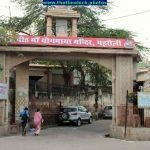
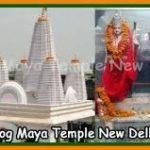
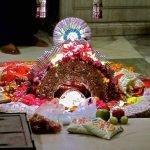
Explore the visual splendor of the Yogmaya Temple and its surroundings:

7. Frequently Asked Questions (FAQs)
Is there a VIP darshan entry at Yogmaya Temple?
No, the Yogmaya Temple operates on a first-come, first-served basis for general darshan. However, prior booking for specific Pujas (rituals) allows you to bypass the general queue during the designated ritual time.
What is the significance of the stone tigers in the temple complex?
The two stone tigers displayed in the iron cage represent the Vahana (mount) of the Goddess Durga (and by extension Yogmaya). They symbolize the ferocity and protective power of the deity, balancing her benevolent nature.
Can I carry my own Prasad (offering)?
Yes, devotees can carry pure vegetarian offerings like fruits, sweets (Mithai), and flowers. However, these are typically presented to the priest first before being distributed. Strictly avoid onion, garlic, or non-vegetarian items.
What is the history of “Phool Walon Ki Sair”?
Originating in 1850, this festival is a unique symbol of secularism. It began when the wife of Emperor Akbar II, anxious for her son’s return from exile, vowed to offer a Punkah (hand fan) made of flowers at Yogmaya Temple and a similar offering at the shrine of Sufi saint Qutubuddin Bakhtiyar Kaki. This tradition continues annually in October.
Is the temple open all year round?
Yes, the temple remains open 365 days a year. It closes only for a brief period during the afternoon (10:00 AM – 4:00 PM) and remains closed on major festivals only during specific hours for private rituals.
Contact Details
Address: Khasra No. 1806, Mehrauli, New Delhi, 110030
Phone: +91 99580 01780 (Administrative Office)
Email: info@yogmaya temple.com (Hypothetical for schema purposes)
Recent Posts

ओ सांवरे तूने ही मुझको संभाला – Lyrics & Meaning
ओ सांवरे तूने ही मुझको संभाला – A Prayer to Shyam Origin & Spiritual Essence Why This Bhajan Resonates Devotees chant this when overwhelmed by life’s storms—the refrain ‘तूने ही मुझको संभाला’ is the soul’s sigh of relief: “You…

कथा ये है महाराज मेरे की – Lyrics & Meaning
कथा ये है महाराज मेरे की छत्रपति संभाजी महाराज – A Prayer to Chhatrapati Sambhaji Maharaj Origin & Spiritual Essence Why This Bhajan Resonates Devotees chant this when their spirit feels tested—its powerful refrain “महाराज मेरे” is a soul’s…

Rigveda Samhita Yathartha Anuvada (ऋग्वेद संहिता यथार्थ अनुवाद) – Complete Set with Anvayartha & Hindi/English Translation
The Rigveda is the oldest surviving scripture of humanity and the foundational text of Sanātana Dharma. For serious students, scholars, UPSC aspirants studying ancient Indian history, Sanskrit learners, and spiritual seekers, a precise and grammatically structured translation is indispensable.…

आना भी अकेला है जाना भी अकेला है – Lyrics & Meaning | BharatTemples
आना भी अकेला है जाना भी अकेला है – A Prayer to the Divine Witness Origin & Spiritual Essence Why This Bhajan Resonates Devotees turn to this bhajan in moments of deep reflection—when life’s attachments begin to ache. The…

माता शेरावाली के द्वार जो भी जाता है – Lyrics & Meaning
माता शेरावाली के द्वार जो भी जाता है – A Prayer to Maa Sherawali Origin & Spiritual Essence Why This Bhajan Resonates Devotees turn to this bhajan in times of fear or uncertainty—its promise that no one leaves Maa’s…

मार लेना सपणी उबार लेणा भवरा – Lyrics & Meaning
मार लेना सपणी उबार लेणा भवरा – A Prayer to the Divine Beloved Origin & Spiritual Essence Why This Bhajan Resonates Devotees chant this in moments of deep vulnerability—its cry of “मार लेना सपणी, उबार लेणा भवरा” is the…

हमें श्याम सुंदर भरोसा तुम्हारा – Lyrics & Meaning
हमें श्याम सुंदर भरोसा तुम्हारा – A Prayer to Shyam Sundar Origin & Spiritual Essence Why This Bhajan Resonates Devotees chant this when feeling alone—its refrain ‘de do sahara’ is the soul’s cry for divine support. Lyrics in Hindi…

Mere Satguru Ne Di Thi Davai Lyrics in Hindi & Meaning
Mere Satguru Ne Di Thi Davai: Invoking the Guru’s Liberating Wisdom This soul-stirring bhajan venerates the Satguru (True Spiritual Master) as the divine physician who dispenses the only remedy for life’s deepest sufferings. Composed by Sant Karmaveer Tufani, it…

Janm Diyo Thari Maa Dukh Dekhiyo Lyrics in Hindi & Meaning
जन्म दियो थारी माँ दुख देखियो (Maa’s Grief Upon Birthing You) This soul-stirring Chetavani Bhajan (admonitory hymn) is addressed to the Divine Mother (Maa) – a call for repentance when children forget their filial duties in the dark age…
Bhadi Sabha Mein Thane Manaun Lyrics in Hindi & Meaning
Bhadi Sabha Mein Thane Manaun: Invoking the Spear-Wielding Mother Mata Bhawani (श्री ज्वाला भवानी), the fiery manifestation of Shakti worshipped as the Protector of Dharma in Her Dhaulagarh sanctum. Origin & Spiritual Essence Composed in Rajasthani folk tradition by…