
Contents
Introduction & Spiritual Essence of Dhanvantareshwar Temple
Varanasi, the spiritual heartbeat of India and the eternal Kashi, is home to over 3,000 temples, each holding a unique cosmic energy. Nestled within the sacred lanes of Chowk is the Dhanvantareshwar Temple, a haven for seekers of health and longevity. This temple is dedicated to Lord Dhanvantari (Sanskrit: धन्वंतरि), the celestial physician and an incarnation of Lord Vishnu, revered as the God of Ayurveda.
The presiding deity here, Dhanvantareshwar (an amalgamation of Dhanvantari and Ishwar/Shiva), represents a powerful synthesis of Vishnu’s healing grace and Shiva’s life-giving energy. The temple is also intrinsically linked to the Mrityunay Mahadev shrine (located on the same premises), dedicated to Lord Shiva as the conqueror of death.
Phalaśruti: The Spiritual Benefits
According to the Kashi Khand of the Skanda Purana, the sanctity of this temple transcends mere physical healing. Devotees visit for the following Phalaśruti (fruits of devotion):
- Cleansing Ancestral Karma: Worship here is believed to liberate ancestors from Pitru Dosha (ancestral flaws) and guide them toward salvation.
- Curing Diseases: It is said that by worshipping the Lingam here, devotees are cleansed of sins that manifest as physical illnesses.
- Protection from Mrityu (Death): As Mrityunay Mahadev, Lord Shiva grants fearlessness and longevity to the devotee.
- Inner Peace: The temple sits on a powerful Prana Tattva (energy zone), essential for mental stability.
Historical Origins & Scriptural Legend
While Varanasi itself is timeless, the structural history of the Dhanvantareshwar Temple reflects the city’s medieval heritage.
Structural History
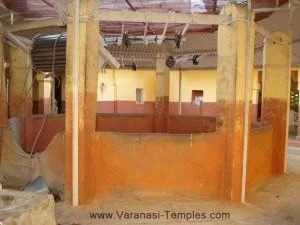
The temple complex is located at K-52/39 in Chowk. While the exact date of the initial construction is shrouded in antiquity, the current sanctum and temple structure were heavily restored and patronized during the reign of the Maratha rulers in the 18th and 19th centuries. The architecture bears the imprint of the Maratha and North Indian styles, characterized by distinct carvings and the use of locally sourced stone.
The Sthala Purana & The Legend of the Koop
The Kashi Khand (Chapter 97) narrates a divine dialogue where Lord Shiva describes sacred Teerths (ponds) and Koops (wells) in Kashi. Legend holds that in the vicinity of Malteeshwar lies the Dhanvantareshwar Ling.
Ancient texts speak of the Dhanvantareshwar Koop (Well), where Lord Dhanvantari descended to drop divine medicines, including Mrit Sanjivini—the elixir of life that revives the dead. While the original well is no longer visible to the naked eye, tradition holds that its waters merged with the nearby Kalodak Koop. The water from Kalodak Koop is still considered sacred and potent, believed to cure diseases when consumed with faith.
Architectural Marvels & Vastu
The temple presents a fascinating evolution of Indian temple architecture. While the original source material suggests a blend of styles, the current structure leans towards the South Indian Dravidian style, a legacy of Maratha patronage.
Key Features
- The Sanctum (Garbhagriha): The inner sanctum houses the black stone idol of Lord Dhanvantari. He is depicted with four hands (Chaturbhuja), holding the Shankha (conch), Chakra (discus), Amrita Kalasha (pot of nectar), and a leech (representing removal of impurities).
- The Shikhara: The temple features a tiered Shikhara (spire), typical of Dravidian style, though adapted to the compact layout of Varanasi’s crowded lanes.
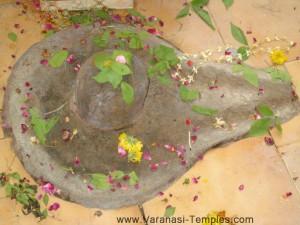
- Mrityunay Mahadev Mandir: The complex houses a Shiva Lingam here, which is worshipped simultaneously. The Vastu Shastra of the site aligns the energy of Jupiter (Guru)—the teacher of medicine (Dhanvantari) with the transformative energy of Shiva.
Darshan, Seva & Ritual Logistics (2026)
To ensure a smooth pilgrimage experience, devotees should adhere to the following schedule and rituals. The temple is open for two shifts daily.
Daily Timings
| Morning Darshan | 5:00 AM – 12:00 PM |
|---|---|
| Evening Darshan | 4:00 PM – 9:00 PM |
| Best Time to Visit | 6:00 AM – 8:00 AM (Brahma Muhurta) |
Key Sevas (Rituals)
- Abhishekam (Ritual Bathing): Performed with milk, honey, and herbal pastes. Special Ghee Abhishekam is popular for health-related vows.
- Ayush Homam: A fire ritual for longevity (often performed on request or specific birthdays).
- Vaidya Narayan Puja: A specialized offering to the deity for healing chronic ailments.
- Mrityunay Homam: Performed at the Mrityunay Mahadev shrine to remove fear and premature death.
Online Seva Booking
While traditional in-person bookings are available at the temple office, pilgrims can often book sevas through the Shri Kashi Vishwanath Temple Trust portal (which manages several smaller shrines in the vicinity) or via authorized third-party spiritual platforms.
Festivals 2026
- Dhanvantari Jayanti: November 4, 2026. This is the most significant day, marking Lord Dhanvantari’s birth. Special Abhishekam and Aarti are performed.
- Maha Shivaratri: February 26, 2026. The Mrityunay Mahadev shrine attracts thousands of devotees.
- Kartik Purnima: November 15, 2026. Sacred bathing in the Ganges followed by temple visits.
Practical Visitor Guidance
The temple is located in the historic Chowk area, which is a bustling marketplace. Navigating it requires patience and preparation.
Dress Code & Etiquette
- Attire: Traditional Indian wear is recommended. Men should wear dhoti or pants, and women should opt for sarees or salwar kameez. Avoid shorts and sleeveless tops.
- Footwear: Shoes must be removed at the designated stand outside the temple. Plastic slippers are often stolen; wear leather or sturdy footwear that can be left safely.
- Photography: Photography is strictly prohibited inside the inner sanctum (Garbhagriha). You may take photos of the exterior architecture.
Crowd Management & Seasonal Advice
- Peak Hours: Avoid 10:00 AM to 11:30 AM and 6:00 PM to 7:30 PM when crowds surge.
- Summer (April-June): Varanasi gets extremely hot. Carry a reusable water bottle (or buy holy water), wear a hat, and apply sunscreen.
- Winter (Nov-Feb): Mornings are foggy. Carry a light woolen shawl.
- Monsoon (July-Sept): The lanes of Chowk are narrow and prone to waterlogging. Wear waterproof footwear.
Mobile Lockers & Safety: Due to the narrow lanes of Chowk, it is advisable to carry minimal luggage. Avoid wearing gold jewelry. While there are no large-scale automated lockers at this specific shrine (unlike the main Kashi Vishwanath Corridor), local shops near the temple offer secure baggage storage for a nominal fee.
Pilgrimage Connectivity
How to Reach
- Address: K-52/39, Chowk, Varanasi (located on the premises of Mrityunay Mahadev Temple).
- Nearest Airport: Lal Bahadur Shastri International Airport (LBS), approx. 25 km away. Taxis and airport buses are available to Kashi Vishwanath Corridor.
- Nearest Railway Station: Varanasi Junction (BSB), approx. 6 km away. Auto-rickshaws can drop you at Godaulia or Dashashwamedh Ghat.
- Access: The temple is in a pedestrian-only zone. From the Ghat area (Dashashwamedh), it is a 10-15 minute walk through the bustling market lanes. E-rickshaws are available up to the entrance of the lane.
Nearby Sacred Sites (Pilgrimage Circuit)
- Mrityunay Mahadev Temple: Located on the same premises. The primary deity is Lord Shiva as the Lord of Death.
- Sanishwar Mahadev: Located very close by, dedicated to Lord Shiva as the controller of Saturn (Shani). Devotees often combine a visit here for planetary affliction relief.
- Kashi Vishwanath Temple (Jyotirlinga): Just a few minutes walk away. The Kashi Vishwanath and Dhanvantari are worshipped as the dual protectors of Kashi—Shiva (destroyer of death) and Vishnu (preserver of life).
Frequently Asked Questions
1. Is there a VIP darshan entry at Dhanvantareshwar Temple?
No, unlike the large Kashi Vishwanath Corridor, this is a smaller, heritage shrine in Chowk. There is no formal VIP entry. Darshan is generally quick as the inner sanctum is compact, though it can get crowded during festivals.
2. What is the significance of the water from Kalodak Koop?
The water from the Kalodak Koop (well) located near the temple is considered medicated by the divine touch of Lord Dhanvantari. Devotees believe it can cure diseases. It is recommended to drink small amounts as Prasad rather than for regular hydration.
3. Can I visit the temple with an Ayurveda prescription?
Yes. Many Ayurvedic doctors in Varanasi recommend a visit to Dhanvantareshwar as a spiritual complement to medical treatment. There is no in-house clinic at the temple itself, but the act of seeking blessings is integral to the healing process.
4. Is there a specific day to visit for health purposes?
Thursday is traditionally associated with Lord Vishnu and healing energies. However, Pradosh Kaal (twilight) on any day is considered highly auspicious here, especially for Mrityunay Mahadev.
5. Is the temple wheelchair accessible?
Given the location in the old Chowk area with narrow lanes and steps leading to the sanctum, wheelchair access is challenging. The lanes are paved but uneven.
Recent Posts

Shri Kaamkoteeshwar Mandir, Varanasi – History & Significance
In the heart of Kashi, the eternal city of Lord Shiva, where the Ganges flows with celestial grace, stands the Shri Kaamkoteeshwar Mandir. This sacred Sannidhi is not merely a temple but a profound spiritual bridge between the Northern…

ओ सांवरे तूने ही मुझको संभाला – Lyrics & Meaning
ओ सांवरे तूने ही मुझको संभाला – A Prayer to Shyam Origin & Spiritual Essence Why This Bhajan Resonates Devotees chant this when overwhelmed by life’s storms—the refrain ‘तूने ही मुझको संभाला’ is the soul’s sigh of relief: “You…

कथा ये है महाराज मेरे की – Lyrics & Meaning
कथा ये है महाराज मेरे की छत्रपति संभाजी महाराज – A Prayer to Chhatrapati Sambhaji Maharaj Origin & Spiritual Essence Why This Bhajan Resonates Devotees chant this when their spirit feels tested—its powerful refrain “महाराज मेरे” is a soul’s…

Rigveda Samhita Yathartha Anuvada (ऋग्वेद संहिता यथार्थ अनुवाद) – Complete Set with Anvayartha & Hindi/English Translation
The Rigveda is the oldest surviving scripture of humanity and the foundational text of Sanātana Dharma. For serious students, scholars, UPSC aspirants studying ancient Indian history, Sanskrit learners, and spiritual seekers, a precise and grammatically structured translation is indispensable.…

आना भी अकेला है जाना भी अकेला है – Lyrics & Meaning | BharatTemples
आना भी अकेला है जाना भी अकेला है – A Prayer to the Divine Witness Origin & Spiritual Essence Why This Bhajan Resonates Devotees turn to this bhajan in moments of deep reflection—when life’s attachments begin to ache. The…

माता शेरावाली के द्वार जो भी जाता है – Lyrics & Meaning
माता शेरावाली के द्वार जो भी जाता है – A Prayer to Maa Sherawali Origin & Spiritual Essence Why This Bhajan Resonates Devotees turn to this bhajan in times of fear or uncertainty—its promise that no one leaves Maa’s…

मार लेना सपणी उबार लेणा भवरा – Lyrics & Meaning
मार लेना सपणी उबार लेणा भवरा – A Prayer to the Divine Beloved Origin & Spiritual Essence Why This Bhajan Resonates Devotees chant this in moments of deep vulnerability—its cry of “मार लेना सपणी, उबार लेणा भवरा” is the…

हमें श्याम सुंदर भरोसा तुम्हारा – Lyrics & Meaning
हमें श्याम सुंदर भरोसा तुम्हारा – A Prayer to Shyam Sundar Origin & Spiritual Essence Why This Bhajan Resonates Devotees chant this when feeling alone—its refrain ‘de do sahara’ is the soul’s cry for divine support. Lyrics in Hindi…

Mere Satguru Ne Di Thi Davai Lyrics in Hindi & Meaning
Mere Satguru Ne Di Thi Davai: Invoking the Guru’s Liberating Wisdom This soul-stirring bhajan venerates the Satguru (True Spiritual Master) as the divine physician who dispenses the only remedy for life’s deepest sufferings. Composed by Sant Karmaveer Tufani, it…

Janm Diyo Thari Maa Dukh Dekhiyo Lyrics in Hindi & Meaning
जन्म दियो थारी माँ दुख देखियो (Maa’s Grief Upon Birthing You) This soul-stirring Chetavani Bhajan (admonitory hymn) is addressed to the Divine Mother (Maa) – a call for repentance when children forget their filial duties in the dark age…