
Contents
- 1 1. Introduction & Spiritual Essence
- 2 2. Historical Origins & Scriptural Legend
- 3 3. Architectural Marvels
- 4 4. Darshan & Ritual Logistics
- 5 5. Practical Visitor Guidance
- 6 6. Pilgrimage Connectivity
- 7 7. Frequently Asked Questions (FAQ)
- 8 Architecture
- 9 Legend / Local stories
- 10 Photo Gallery
- 11 How to Reach:
- 12 Contact Details
Lead Heritage Architect’s Note: The Ganeshwar Rameshwar Temple in Varanasi is a profound spiritual sanctuary steeped in the ancient texts of the Kashi Khand. This guide is designed to serve the modern pilgrim while honoring the sanctity of this ancient site.
1. Introduction & Spiritual Essence
Located in the holy city of Varanasi (Kashi), the Ganeshwar Rameshwar Temple is a revered abode of Lord Shiva. In the intricate spiritual geography of Kashi, this temple holds a unique position as a Jyotirling manifestation, mirroring the famous Rameshwaram Jyotirling in Tamil Nadu.
Deity & Form:
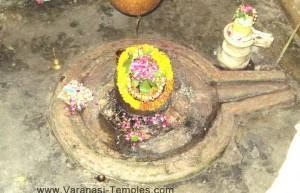
The primary deity is Lord Shiva worshipped here as Ganeshwar (the Lord with Ganesha-like qualities) and Rameshwar (the Lord of Rama). Unlike a carved idol, the Swayambhu (self-manifested) Lingam is the focal point of devotion. It is believed that the energy of this Lingam is identical to the Jyotirlinga of Rameshwaram.
Phalaśruti (Spiritual Benefits): According to the Kashi Khand, worshipping the Ganeshwar Lingam bestows devotees with happiness and prosperity. It is specifically significant for:
- Cleansing Ancestral Karma: Rituals performed here are believed to liberate ancestors from debts and past karmas.
- Removal of Obstacles: As Ganeshwar, the deity removes hurdles (Vighna) from the devotee’s life path.
- Attainment of Salvation: It is said that dying in Kashi after worshipping this Lingam grants Moksha.
2. Historical Origins & Scriptural Legend
Scriptural Reference:
The existence and significance of this temple are explicitly documented in the Kashi Khand (Chapter 97) of the Skanda Purana. During the narration of the various Teerths and Shiv Lings in Kashi, Lord Shiva mentions the Ganeshwar Ling.
The Legend of Rameshwar:
Tradition holds that this Lingam represents the Rameshwaram Jyotirling in Kashi. In the Ramayana, Lord Rama established a Shivling in Rameshwaram to worship Shiva before crossing the ocean to Lanka. The energy of that site is believed to be mirrored here in Varanasi. Hence, pilgrims who cannot travel to southern India visit Ganeshwar Rameshwar to receive the same spiritual merit.
Architectural Origins:
While specific dynastic records for the initial construction are sparse in the public domain, the temple’s architectural style aligns with the medieval temples of Varanasi. It has been preserved through centuries of renovations by local trusts, maintaining the ancient stone carvings and sanctity of the inner sanctum.
3. Architectural Marvels
The temple exemplifies the Nagara style of temple architecture, prevalent in North India, adapted to the dense urban fabric of Varanasi.
Key Features:
- The Shikhara: The towering spire above the sanctum is relatively modest compared to the grand Kashi Vishwanath Temple, yet it features intricate carvings of divine motifs and floral patterns.
- Mandapas: The pillared hall (Mandapa) allows devotees to gather for prayers. The stone flooring here is ancient, worn smooth by centuries of pilgrim footfalls.
- Sculptures: Although the temple is compact, the external walls feature niches housing deities, primarily Lord Ganesha and Nandi (the bull vehicle of Shiva).
- Vastu Shastra: The temple is oriented according to Vastu principles, with the entrance facing the North and the Garbhagriha (sanctum sanctorum) positioned to align with cosmic energies.
While this temple is not a UNESCO World Heritage Site, it is a vital part of the Kashi Vishwanath Corridor heritage landscape.
4. Darshan & Ritual Logistics
Visiting hours for temples in Varanasi generally follow the daily cycle of rituals. Below are the standard timings. Visitors are advised to confirm with local authorities for any seasonal changes.
| Day | Morning Darshan | Evening Darshan |
|---|---|---|
| Monday – Sunday | 05:00 AM – 12:00 PM | 04:00 PM – 10:00 PM |
Key Sevas & Booking:
While the temple primarily operates on traditional offerings (Bilva Patra, Milk, Water), digital booking is available through the Kashi Vishwanath Corridor portal for general darshan. For specific Sevas like Abhishekam or Archana, devotees should contact the on-site temple priest or the local Pandits at Manmandir Ghat.
2026 Festival Dates (Important Shiva Days):
- Maha Shivaratri: February 26, 2026
- Shravan Somvar (Mondays): July 14, 21, 28 & August 4, 2026
- Kartik Purnima: November 15, 2026
5. Practical Visitor Guidance
Dress Code & Etiquette:
Modest, traditional attire is recommended. Men should wear dhotis or long trousers, and women should wear sarees or full-length dresses. Clothing should cover shoulders and knees.
Photography & Mobiles:
Photography inside the sanctum is strictly prohibited. It is advisable to keep mobile phones on silent mode. While there are no dedicated mobile lockers at this specific smaller temple, general security checks are enforced at the entrance of the temple.
Crowd Management:
The temple is located in a narrow lane near Manmandir Ghat, which can get crowded.
– Best Time to Visit: Early morning (6:00 AM – 8:00 AM) or late evening (8:00 PM onwards).
– Seasonal Advice: During the summer months (May-June), carry water as the lanes are non-airconditioned. In the monsoon (July-September), wear non-slip footwear as the stone steps can become slippery.
6. Pilgrimage Connectivity
How to Reach:
The temple is situated at D.16/34, Manmandir Ghat, Varanasi.
- By Air: Lal Bahadur Shastri International Airport (VNS) is approx. 25 km away.
- By Rail: Varanasi Junction (BSB) is the nearest major railway station, approx. 6 km away.
- By Road: Auto-rickshaws can take you to Dasaswamedh Vishwanath Gully. From there, it is a short walk (approx. 60 yards) taking a right turn towards the Manmandir Ghat area. Ask locals for directions to the Varahi Devi Temple, which is a close landmark.
Nearby Sacred Sites (Pilgrimage Circuit):
- Kashi Vishwanath Temple: Located just a short walk away via the gullies.
- Sankat Mochan Hanuman Temple: Approximately 3 km away, accessible by auto or boat.
- Manikarnika Ghat: The burning ghat of Varanasi, a place of spiritual transformation, located nearby.
7. Frequently Asked Questions (FAQ)
Is there a VIP darshan entry available?
While the temple is smaller compared to the main Kashi Vishwanath complex, standard darshan is generally swift. For special access, devotees can coordinate with the local temple priests or trust members managing the site.
Can we carry Prasad from home?
Yes, devotees can bring their own offerings of fruits, flowers, and sweets. However, it is customary to purchase the specific offering items (Bilva leaves, milk, etc.) from the vendors outside the temple for freshness.
What is the significance of the name ‘Ganeshwar’?
The name combines ‘Ganesha’ (the remover of obstacles) and ‘Ishwar’ (Shiva). It signifies a form of Shiva that accepts offerings with the benevolence of Ganesha, ensuring that no obstacle stands in the way of the devotee’s prayer.
Is the temple accessible for senior citizens?
The lane leading to the temple is narrow and has uneven stone paving. While auto-rickshaws can get close, there is a short walk involved. Assistance from family members or local guides is recommended for senior pilgrims.
What is the best way to find the exact location?
Due to the labyrinthine nature of the old city lanes, Google Maps can sometimes be imprecise. The best method is to navigate to the Varahi Devi Temple or Manmandir Ghat and ask for directions to the Ganeshwar Rameshwar Ling.
| Date built: | – |
|---|---|
| Deity: | Ganeshwar, Rameshwar |
| Architectural style: | Hindu Temple architecture |
| Major festivals | – |
| Locale: | Varanasi |
| District:: | Varanasi |
| Address: | – |
| Phone | – |
Architecture
Legend / Local stories
Photo Gallery
How to Reach:
Ganeshwar also known as Rameshwar is located at D.16/34, Manmandir Ghat. Devotees can travel upto Dasaswamedh Vishwanath Gully in a rickshaw and immediately after entering the gully, they should take a right turn and walk for about 60 yards. They may ask for directions of Varahi Devi temple which is very famous and quite close by.
Contact Details
Official Address









