
Contents
By Lead Heritage Architect, bharattemples.com
Introduction & Spiritual Essence
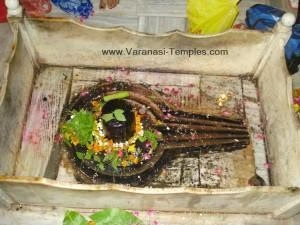
Nestled on the serene steps of Trilochan Ghat in the holy city of Varanasi (Kashi), the Hiranya Garbheshwar Temple stands as a testament to the region’s profound spiritual heritage. This ancient shrine is dedicated to Hiranya Garbheshwar, a form of Lord Shiva who represents the cosmic golden womb of creation.
Unlike the bustling corridors of larger Kashi shrines, this temple offers a tranquil space for introspection. According to the Kashi Khand of the Skanda Purana, Hiranya Garbheshwar is the deity who bestows the devotee with liberation (Moksha) and removes obstacles from the path of a smooth life. By taking a holy dip in the confluence near Trilochan Ghat and worshipping this deity, devotees cleanse their ancestral karma and attain spiritual purity.
| Date built: | – |
|---|---|
| Deity: | Hiranya Garbheshwar |
| Architectural style: | Hindu Temple architecture |
| Major festivals | – |
| Locale: | Varanasi |
| District:: | Varanasi |
| Address: | – |
| Phone | – |
Historical Origins & Scriptural Legend
The Sthala Purana (Local Legend)
The spiritual significance of this temple is deeply rooted in the Kashi Khand, Chapter 100 of the Skanda Purana. The scriptures prescribe a specific Yatra (pilgrimage) for devotees. The ritual involves bathing in the Varuna Ganga Sangam (the confluence of the Varuna and Ganga rivers), worshipping various deities, and finally taking a dip in the Hiranya Garbha Teerth.
Tradition holds that the ancient Hiranya Garbha Teerth (a sacred water body) is no longer visibly distinct but has merged into the Ganges at Trilochan Ghat. Devotees believe that worshipping Lord Shiva here dissolves the “bonds” of existence, leading to Moksha (liberation). The deity is considered Swayambhu (self-manifested) or of immense antiquity, existing long before the current temple structure was erected.
Historical Timeline
While specific dynastic records are sparse for this smaller shrine compared to the massive Vishwanath complex, the architecture and location suggest roots in the medieval period, likely rebuilt by devotees and local sevadars over centuries. The temple stands as a guardian of the Trilochan Ghat steps, witnessing centuries of Kashi’s spiritual evolution.
Architectural Marvels
The Hiranya Garbheshwar Temple exemplifies the Nagara style of temple architecture, characteristic of North India, adapted to the unique riverfront landscape of Varanasi.
- The Sanctum (Garbhagriha): The innermost shrine houses the Shiva Lingam. It is positioned low, requiring devotees to bend slightly—a symbolic gesture of humility before the divine.
- Vastu Orientation: The temple is oriented according to Vastu Shastra principles, aligning the flow of positive energy from the Ganges towards the sanctum.
- The Mandapa: Unlike enclosed halls, this temple features an open-air verandah style structure overlooking the ghats. This allows the natural light and the sound of the river to become part of the worship experience.
- Sculptural Details: Though smaller in scale, the outer walls and pillars exhibit traditional carvings of Dwarapalas (guardian deities) and floral motifs reminiscent of the Gupta and medieval eras.
Devotees should take bath in Varuna Ganga Sangam (confluence of the two rivers Varuna and Ganga) and worship several deities. Thereafter, they should take bath in Hiranya Garbha Teerth and worship Hiranya Garbheshwar. By doing so, the devotees will find that the obstacles blocking their smooth life are removed and they will attain Moksha.
Hiranya Garbha Teerth is not existent now and the place in Ganges is in Trilochan Ghat. On any day, there are several religious minded people taking bath in Trilochan Ghat and worshipping Hiranya Garbheshwar.
Darshan & Ritual Logistics (2026 Guide)
To ensure a spiritually fulfilling visit, we have compiled the daily timings and seva schedules. Please note that temple timings may vary slightly during festivals.
Daily Timings
| Session | Timings | Details |
|---|---|---|
| Morning Darshan | 06:00 AM – 12:00 PM | Best time for peaceful meditation. |
| Evening Darshan | 04:00 PM – 09:00 PM | Includes Aarti timing at sunset. |
Key Sevas & Booking
Devotees can book the following Sevas (ritual services) at the temple office on-site. Digital booking is currently limited to major Kashi pilgrimage packages.
- Rudrabhishekam: Performed with milk, honey, and bilva leaves.
- Maha Shiva Aarti: Daily evening ritual.
- Trilochan Snan & Pinda Daan: Special ritual performed at the ghat steps below the temple.
2026 Festival Calendar
Mark your calendars for these auspicious dates in 2026 when the temple celebrates major Shiva festivals:
- Maha Shivaratri: February 25, 2026 (Special night-long opening).
- Shravan Mondays: July 6, July 13, July 20, and July 27, 2026.
- Kartik Purnima: November 4, 2026.
Practical Visitor Guidance
Dress Code & Etiquette
As Varanasi is a conservative pilgrimage city, modesty is essential. Men should wear dhotis or long trousers; women should wear sarees or salwar kameez. Avoid shorts and sleeveless tops.
Crowd Management & Best Hours
- Best Time to Visit: 07:00 AM to 10:00 AM. The morning breeze from the river combined with the soft light enhances the spiritual atmosphere.
- Seasonal Advice: Summers (April–June) are hot; carry a water bottle and umbrella. Winters (Nov–Feb) are pleasant but foggy.
- Lockers: There are no high-tech lockers at this small shrine. Valuables should be kept safely at your hotel.
Photography & Mobiles
Photography is generally restricted inside the sanctum sanctorum to maintain the sanctity of the space. Mobile phones should be kept on silent mode.
Pilgrimage Connectivity
The Hiranya Garbheshwar Temple is located in the heart of Varanasi, making it accessible via multiple modes of transport.
How to Reach
- By Road: The temple is located near Trilochan Ghat. From the Varanasi Cantt Railway Station, take an auto-rickshaw to Birla Hospital/Lahori Tola. Take the right turn towards the Ghat. (Approx 20 mins).
- By Boat: Hiring a boat is the most scenic route. Ask the boatman to drop you at Trilochan Ghat. The temple steps are visible from the river.
- Nearest Airport: Lal Bahadur Shastri International Airport (LBS) is roughly 25 km away.
Nearby Sacred Sites (Pilgrimage Circuit)
While in this area, devotees should also visit:
- Trilochan Temple: Located right next to the ghat, dedicated to Lord Vishnu (Three-Eyed deity).
- Mundeshwar Temple: An ancient architectural gem located nearby in the orthodox locality.
- Kashi Vishwanath Temple: A 15-minute boat ride or 30-minute walk takes you to the main Jyotirlinga shrine.
Frequently Asked Questions (FAQs)
1. Is there a VIP or special entry for Hiranya Garbheshwar Temple?
Given the temple’s intimate size, there is no formal VIP entry system. Darshan is generally quick and accessible to all. However, visiting early in the morning offers the most private experience.
2. Can I perform ancestral rites (Pind Daan) at this temple?
Yes, Hiranya Garbheshwar is considered highly auspicious for ancestors. Devotees often perform Pind Daan at Trilochan Ghat and offer prayers to the deity to ensure their ancestors attain peace.
3. Is the temple open during the monsoon season?
Yes, the temple remains open throughout the year. However, during heavy monsoons (July-August), access to the lower steps of Trilochan Ghat can be slippery. Please exercise caution.
4. Is there an entry fee?
No, there is no entry fee for general darshan. Donations are accepted at the donation box near the sanctum.
5. What is the significance of the name ‘Hiranya Garbheshwar’?
‘Hiranya’ means Gold, and ‘Garbha’ means Womb. The name signifies Lord Shiva as the golden womb of the universe from which creation emerges.
Recent Posts

Shri Kaamkoteeshwar Mandir, Varanasi – History & Significance
In the heart of Kashi, the eternal city of Lord Shiva, where the Ganges flows with celestial grace, stands the Shri Kaamkoteeshwar Mandir. This sacred Sannidhi is not merely a temple but a profound spiritual bridge between the Northern…

ओ सांवरे तूने ही मुझको संभाला – Lyrics & Meaning
ओ सांवरे तूने ही मुझको संभाला – A Prayer to Shyam Origin & Spiritual Essence Why This Bhajan Resonates Devotees chant this when overwhelmed by life’s storms—the refrain ‘तूने ही मुझको संभाला’ is the soul’s sigh of relief: “You…

कथा ये है महाराज मेरे की – Lyrics & Meaning
कथा ये है महाराज मेरे की छत्रपति संभाजी महाराज – A Prayer to Chhatrapati Sambhaji Maharaj Origin & Spiritual Essence Why This Bhajan Resonates Devotees chant this when their spirit feels tested—its powerful refrain “महाराज मेरे” is a soul’s…

Rigveda Samhita Yathartha Anuvada (ऋग्वेद संहिता यथार्थ अनुवाद) – Complete Set with Anvayartha & Hindi/English Translation
The Rigveda is the oldest surviving scripture of humanity and the foundational text of Sanātana Dharma. For serious students, scholars, UPSC aspirants studying ancient Indian history, Sanskrit learners, and spiritual seekers, a precise and grammatically structured translation is indispensable.…

आना भी अकेला है जाना भी अकेला है – Lyrics & Meaning | BharatTemples
आना भी अकेला है जाना भी अकेला है – A Prayer to the Divine Witness Origin & Spiritual Essence Why This Bhajan Resonates Devotees turn to this bhajan in moments of deep reflection—when life’s attachments begin to ache. The…

माता शेरावाली के द्वार जो भी जाता है – Lyrics & Meaning
माता शेरावाली के द्वार जो भी जाता है – A Prayer to Maa Sherawali Origin & Spiritual Essence Why This Bhajan Resonates Devotees turn to this bhajan in times of fear or uncertainty—its promise that no one leaves Maa’s…

मार लेना सपणी उबार लेणा भवरा – Lyrics & Meaning
मार लेना सपणी उबार लेणा भवरा – A Prayer to the Divine Beloved Origin & Spiritual Essence Why This Bhajan Resonates Devotees chant this in moments of deep vulnerability—its cry of “मार लेना सपणी, उबार लेणा भवरा” is the…

हमें श्याम सुंदर भरोसा तुम्हारा – Lyrics & Meaning
हमें श्याम सुंदर भरोसा तुम्हारा – A Prayer to Shyam Sundar Origin & Spiritual Essence Why This Bhajan Resonates Devotees chant this when feeling alone—its refrain ‘de do sahara’ is the soul’s cry for divine support. Lyrics in Hindi…

Mere Satguru Ne Di Thi Davai Lyrics in Hindi & Meaning
Mere Satguru Ne Di Thi Davai: Invoking the Guru’s Liberating Wisdom This soul-stirring bhajan venerates the Satguru (True Spiritual Master) as the divine physician who dispenses the only remedy for life’s deepest sufferings. Composed by Sant Karmaveer Tufani, it…

Janm Diyo Thari Maa Dukh Dekhiyo Lyrics in Hindi & Meaning
जन्म दियो थारी माँ दुख देखियो (Maa’s Grief Upon Birthing You) This soul-stirring Chetavani Bhajan (admonitory hymn) is addressed to the Divine Mother (Maa) – a call for repentance when children forget their filial duties in the dark age…