
Contents
- 1 Kaleshwar Temple, Varanasi: A Definitive Pilgrimage Guide
Kaleshwar Temple, Varanasi: A Definitive Pilgrimage Guide
Nestled within the spiritual labyrinth of Kashi (Varanasi), the Kaleshwar Temple stands as a testament to the city’s timeless devotion to Lord Shiva. This ancient shrine is not merely a structure of stone but a spiritual powerhouse where the very presence of the deity is believed to instill fearlessness and purity in the heart of the devotee.
1. Introduction & Spiritual Essence
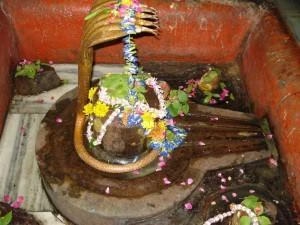
The Kaleshwar Temple is dedicated to Lord Shiva in his form as Kaleshwar. In the local dialect, “Kala” often refers to time (Kaal), and here Lord Shiva is revered as the Master (Ishwar) who transcends time.
- Primary Deity: Kaleshwar Lingam.
- Form: Swayambhu (self-manifested) Shiv Ling.
- Alternate Names: Kaleshwar Mahadev, Kashi Kaleshwar.
Phalaśruti: Spiritual Benefits
According to the Kashi Khand of the Skanda Purana, the spiritual potency of Kaleshwar is immense. It is said that devotees who merely look at (Darshan) this Shiv Ling are freed from the fear of death and sin.
The specific benefits of worshipping at this temple include:
- Removal of Fear: Lord Kaleshwar grants Abhaya (fearlessness) to his devotees.
- Mental Purity: Regular worship cleanses the mind of negative thoughts, leading to a state of Shuddha Chitta (pure consciousness).
- Ancestral Liberation: Performing rituals here is believed to help ancestors attain peace, cleansing ancestral karma.
2. Historical Origins & Scriptural Legend
While the exact date of construction of the current structure is difficult to pinpoint—common with many ancient Kashi temples—the spiritual history is well-documented in Vedic texts.
Scriptural Reference: The Kashi Khand
Tradition holds that the temple is mentioned in Chapter 97 of the Kashi Khand. The legend narrates a divine conversation between Goddess Parvati and Lord Shiva.
“Goddess Parvaty desired to know about the various Shiv Lings and deities residing in Kashi. Pleased by her curiosity, Lord Shiva revealed the sacred geography of the city. In this revelation, He mentioned Kaleshwar—the deity who generates unshakeable faith merely by being seen.”
Varanasi is known as the city of living history. The current temple architecture bears the influence of the Maratha and Nagara styles, with renovations likely sponsored by devout patrons over the centuries to preserve the sanctity of the site.
3. Architectural Marvels
The Kaleshwar Temple is a classic example of the Nagara style of temple architecture prevalent in North India, though it incorporates the intimate scale typical of Kashi’s inner-city shrines.
- Sanctum Sanctorum (Garbhagriha): The inner sanctum houses the ancient Kaleshwar Lingam. The lingam is bathed in a constant flow of water (Jalabhishek), maintaining its coolness—a signature of Shiva abodes.
- Shikhara: The temple features a towering Shikhara (spire) that rises above the sanctum, symbolizing the mountain Meru and the ascent of consciousness.
- Mandapa: The pillared hall (Mandapa) allows devotees to gather for prayers and is adorned with carvings depicting stories from the Puranas.
- Carvings: The exterior walls feature intricate stone carvings of various manifestations of Shiva, Ganesha, and other deities, though the temple remains relatively understated compared to the grand Vishwanath complex.
4. Darshan & Ritual Logistics (2026 Guide)
Visiting a temple in Varanasi requires an understanding of the ritual schedule. Below are the standard timings for Kaleshwar Temple. Note: Times may vary slightly during festivals.
Daily Timings
| Session | Timings | Details |
|---|---|---|
| Morning Darshan | 6:00 AM – 12:00 PM | Ideal for meditation and quiet reflection. |
| Evening Darshan | 5:00 PM – 9:00 PM | Best time to witness Aarti and evening rituals. |
Key Sevas & Booking
Devotees can perform various services (Sevas) at the temple. While many smaller temples in Varanasi operate on a walk-in basis for basic Archana, booking for major rituals is often managed through the Kashi Vishwanath Temple administration or local trusts.
- Abhishekam: Ritual bathing of the Shiv Ling with milk, honey, and water. Timings: 7:00 AM – 8:00 AM.
- Archana (Puja): Offering flowers and bilva leaves with mantra chanting.
- Rudrabhishek: A powerful Vedic ritual often performed on Mondays.
Festival Dates 2026
To enhance your spiritual planning, here are the major festival dates for 2026:
- Maha Shivaratri: February 26, 2026 (Thursday) – The temple remains open all night.
- Shravan Mondays: July 20, 27, August 3, 10, 2026 – Expect heavy crowds; arrive early.
- Navratri (Ashwin): October 11 – October 19, 2026.
5. Practical Visitor Guidance
To ensure a seamless spiritual journey, please adhere to the following guidelines:
- Dress Code: Traditional Indian attire is preferred (dhoti/kurta for men, saree/salwar kameez for women). Modest clothing is strictly required.
- Photography: Photography inside the sanctum sanctorum is strictly prohibited. Discretion is advised near the inner altar.
- Mobile Lockers: As is customary in Varanasi, mobile phones and electronic devices should be kept in silent mode. Some temples provide basic lockers, but it is advisable to carry minimal electronics.
- Crowd Management:
- Best Hours: Early morning (6:00 AM) or late evening (after 8:00 PM) to avoid peak crowds.
- Seasonal Advice: Varanasi summers (April–June) are extremely hot. Carry a water bottle and an umbrella. The temple premises may not be air-conditioned.
6. Pilgrimage Connectivity
How to Reach Kaleshwar Temple
The temple is located in the K-31/49 area of Varanasi, specifically in the premises of the Dandapani Temple.
- By Boat: Take a boat to Panchganga Ghat. From there, walk up the steep steps and head towards the Dandapani Temple area.
- By Rickshaw/Walking: The inner lanes of Varanasi are best navigated by rickshaw or on foot. Ask the local guides for “Dandapani Temple.” Rickshaws usually drop you off at the edge of the lane near Bhaironath.
- Nearest Railway Station: Varanasi Junction (BSB) – Approx. 7 km (30-40 mins by taxi).
- Nearest Airport: Lal Bahadur Shastri International Airport (VNS) – Approx. 25 km (1 hour by taxi).
Nearby Sacred Sites
Expand your pilgrimage by visiting these nearby temples:
- Dandapani Temple: Located right next to Kaleshwar, dedicated to Lord Shiva as the dispenser of justice.
- Kashi Vishwanath Temple (New): The main Jyotirlinga site, approximately 2 km away.
- Bhaironath Temple: An ancient temple dedicated to Bhairon, a fierce form of Shiva, located in the same vicinity.
7. Frequently Asked Questions (FAQ)
Is there a VIP Darshan entry at Kaleshwar Temple?
Being a smaller, traditional shrine, Kaleshwar Temple typically does not have a formal VIP entry system like the main Kashi Vishwanath complex. However, visiting during off-peak hours is the best way to have a private, peaceful darshan.
What is the best time of year to visit?
The best time to visit Varanasi is between October and March. The weather is pleasant, making it comfortable for walking through the narrow lanes.
Can non-Hindus visit the temple?
Like most traditional Hindu temples in Varanasi, entry to the inner sanctum is generally reserved for Hindus. However, visitors of other faiths are often permitted to view the architecture from the entrance or courtyard depending on the priest’s discretion on that day.
Is there an entry fee?
No, there is no entry fee for general darshan at Kaleshwar Temple. Donations are voluntary and accepted at the donation box.
What should I offer to Lord Kaleshwar?
Traditional offerings include Bilva leaves, milk, curd, honey, flowers, and Bhasma (sacred ash). Rudraksha beads are also highly recommended.
Recent Posts

Shri Kaamkoteeshwar Mandir, Varanasi – History & Significance
In the heart of Kashi, the eternal city of Lord Shiva, where the Ganges flows with celestial grace, stands the Shri Kaamkoteeshwar Mandir. This sacred Sannidhi is not merely a temple but a profound spiritual bridge between the Northern…

ओ सांवरे तूने ही मुझको संभाला – Lyrics & Meaning
ओ सांवरे तूने ही मुझको संभाला – A Prayer to Shyam Origin & Spiritual Essence Why This Bhajan Resonates Devotees chant this when overwhelmed by life’s storms—the refrain ‘तूने ही मुझको संभाला’ is the soul’s sigh of relief: “You…

कथा ये है महाराज मेरे की – Lyrics & Meaning
कथा ये है महाराज मेरे की छत्रपति संभाजी महाराज – A Prayer to Chhatrapati Sambhaji Maharaj Origin & Spiritual Essence Why This Bhajan Resonates Devotees chant this when their spirit feels tested—its powerful refrain “महाराज मेरे” is a soul’s…

Rigveda Samhita Yathartha Anuvada (ऋग्वेद संहिता यथार्थ अनुवाद) – Complete Set with Anvayartha & Hindi/English Translation
The Rigveda is the oldest surviving scripture of humanity and the foundational text of Sanātana Dharma. For serious students, scholars, UPSC aspirants studying ancient Indian history, Sanskrit learners, and spiritual seekers, a precise and grammatically structured translation is indispensable.…

आना भी अकेला है जाना भी अकेला है – Lyrics & Meaning | BharatTemples
आना भी अकेला है जाना भी अकेला है – A Prayer to the Divine Witness Origin & Spiritual Essence Why This Bhajan Resonates Devotees turn to this bhajan in moments of deep reflection—when life’s attachments begin to ache. The…

माता शेरावाली के द्वार जो भी जाता है – Lyrics & Meaning
माता शेरावाली के द्वार जो भी जाता है – A Prayer to Maa Sherawali Origin & Spiritual Essence Why This Bhajan Resonates Devotees turn to this bhajan in times of fear or uncertainty—its promise that no one leaves Maa’s…

मार लेना सपणी उबार लेणा भवरा – Lyrics & Meaning
मार लेना सपणी उबार लेणा भवरा – A Prayer to the Divine Beloved Origin & Spiritual Essence Why This Bhajan Resonates Devotees chant this in moments of deep vulnerability—its cry of “मार लेना सपणी, उबार लेणा भवरा” is the…

हमें श्याम सुंदर भरोसा तुम्हारा – Lyrics & Meaning
हमें श्याम सुंदर भरोसा तुम्हारा – A Prayer to Shyam Sundar Origin & Spiritual Essence Why This Bhajan Resonates Devotees chant this when feeling alone—its refrain ‘de do sahara’ is the soul’s cry for divine support. Lyrics in Hindi…

Mere Satguru Ne Di Thi Davai Lyrics in Hindi & Meaning
Mere Satguru Ne Di Thi Davai: Invoking the Guru’s Liberating Wisdom This soul-stirring bhajan venerates the Satguru (True Spiritual Master) as the divine physician who dispenses the only remedy for life’s deepest sufferings. Composed by Sant Karmaveer Tufani, it…

Janm Diyo Thari Maa Dukh Dekhiyo Lyrics in Hindi & Meaning
जन्म दियो थारी माँ दुख देखियो (Maa’s Grief Upon Birthing You) This soul-stirring Chetavani Bhajan (admonitory hymn) is addressed to the Divine Mother (Maa) – a call for repentance when children forget their filial duties in the dark age…