
Contents
- 1 Introduction & Spiritual Essence
- 2 Historical Origins & Scriptural Legend
- 3 Architectural Marvels
- 4 Darshan & Ritual Logistics
- 5 Practical Visitor Guidance
- 6 Pilgrimage Connectivity
- 7 Frequently Asked Questions (FAQ)
- 8 Architecture
- 9 Legend / Local stories
- 10 Photo Gallery
- 11 How to Reach:
- 12 Contact Details
Introduction & Spiritual Essence
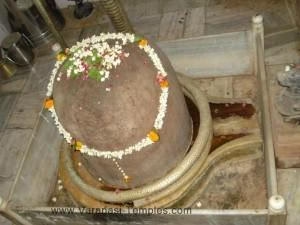
Nestled within the winding, ancient galis of Varanasi (Kashi), the Langlishwar Temple stands as a testament to the city’s eternal spiritual legacy. Dedicated to Lord Shiva, this temple is not merely a stone structure but a living node in the sacred geography of Kashi, known as the “City of Light.” The primary deity, Langlishwar (also sometimes referred to in local parlance as Langli Mahadev), is a self-manifested (Swayambhu) Lingam radiating divine energy.
Phalaśruti: The Spiritual Benefits
According to the sacred Kashi Khand of the Skanda Purana, the spiritual significance of Langlishwar is profound. The scriptures dictate that a devotee who performs puja and darshan of this Lingam is bestowed with the boon of robust health.
Specific Benefits:
- Cleansing Ancestral Karma: Rituals performed here are believed to liberate ancestors from ailments and bless the lineage with vitality.
- Protection from Sickness: It is traditionally believed that worshipping here shields the devotee from chronic illnesses.
- Wealth & Prosperity: The Khand further advises that making donations to the poor and farmers after darshan accrues spiritual merit and material wealth.
Historical Origins & Scriptural Legend
The history of Langlishwar Temple is deeply rooted in the mythological deputation of divine forces to protect Kashi.
The Legend of the Shiv Gans
Tradition holds that Lord Shiva, the presiding deity of Kashi, initially dispatched several batches of his celestial attendants, known as Shiv Gans, from Mandarachal to protect the sacred city. When a few batches failed to return, Lord Shiva sent reinforcements. These Gans, enchanted by the spiritual aura of Kashi, decided to settle there permanently.
One such attendant was named Langli. He installed a Shiv Ling at this specific spot in Varanasi and dedicated himself to intense meditation. The Ling is named after him—Langlishwar (The Lord of Langli). This narrative is detailed in Kashi Khand, Chapter 55, linking the temple to ancient Vedic traditions.
Note on Dating: While specific dynastic records are scarce for this minor shrine, the architectural style and the oral legends suggest a lineage of worship spanning centuries, likely renewed during the Maratha or Bhosale period administrative oversight of Kashi in the 18th and 19th centuries.
Architectural Marvels
While Langlishwar Temple does not possess the colossal scale of the Kashi Vishwanath complex, it embodies the intimate, domestic spiritual architecture typical of Kashi’s hidden gems. The structure reflects a fusion of Nagara and regional temple styles.
- Sanctum Sanctorum (Garbhagriha): The inner sanctum houses the Swayambhu Lingam. The space is compact, designed to bring the devotee face-to-face with the deity in a deeply personal satsang.
- Internal Layout: A small Mandapa (hall) precedes the sanctum, adorned with traditional carvings. The walls echo the stories of the Shiv Gans, though simpler in relief compared to grander temples.
- Preservation: The temple maintains its traditional stone masonry, with the Lingam adorned daily with fresh flowers and bilva leaves.
Darshan & Ritual Logistics
Visitors are encouraged to plan their pilgrimage according to the ritual schedule. As is standard for temples dedicated to Lord Shiva, the primary rituals occur during the transition phases of the day.
Daily Darshan Timings
| Session | Time | Activity |
|---|---|---|
| Morning (Mangala) | 5:00 AM – 12:00 PM | Abhishekam & Archana |
| Afternoon Closure | 12:00 PM – 3:00 PM | Rest Period |
| Evening (Sandhya) | 3:00 PM – 11:00 PM | Shringar & Aarti |
| Shayan | 11:00 PM – 4:00 AM | Temple Closed |
Key Sevas & Online Booking
To enhance your spiritual experience, specific Sevas (services) can be performed. While local visits often require direct inquiry at the temple office due to the temple’s modest size, broader Kashi temple services are accessible online:
- Abhishekam: Ritual bathing of the Lingam with water, milk, and honey.
- Archana: Personalized chanting of names (typically 108 names of Shiva).
- Maha Aarti: Witnessing the evening lamp offering.
Booking: For this specific shrine, direct bookings are usually managed locally. However, for a seamless experience, you can use the centralized Kashi Vishwanath Temple Trust portal for general guidance or broader devotional services in Varanasi.
2026 Festival Calendar (Highlights)
- Maha Shivaratri (Feb 26, 2026): The most auspicious night. Expect extended hours and special Jal Abhishekam.
- Shravan Maas (July – August 2026): Mondays during this month are highly sacred for Shiva devotees.
- Kartik Purnima (Nov 05, 2026): Grand decorations and night-long kirtans.
Practical Visitor Guidance
Varanasi is a city of faith and structure. To ensure a respectful visit, adhere to the following guidelines.
Code of Conduct & Attire
- Dress Code: Traditional Indian attire is preferred. Men should wear dhotis or full-length trousers; women should opt for sarees or full-length dresses. Modesty is paramount.
- Photography: Strictly prohibited inside the sanctum sanctorum. Photography may be allowed in the outer courtyard, but always ask the temple priest.
- Electronics: Mobile phones are allowed but should be kept on silent mode.
Crowd Management & Seasonal Advice
- Best Hours: The ideal time for a peaceful darshan is early morning (5:30 AM – 7:00 AM) or late evening (after 9:00 PM).
- Summer (May-June): Temperatures exceed 40°C. Carry a water bottle and cover your head while navigating the galis.
- Monsoon (July-Sept): The city faces heavy rains; wear waterproof footwear with good grip as the old city lanes can be slippery.
- Accessibility: The temple is located in the narrow lanes of Chowk. It is not wheelchair accessible due to the narrow, uneven pathways. Auto-rickshaws can take you up to Chowk, from where a short walk is required.
Pilgrimage Connectivity
How to Reach Langlishwar Temple
- Nearest Railway Station: Varanasi Junction (BSB) – Approx 7 km (30-40 mins by cab).
- Nearest Airport: Lal Bahadur Shastri International Airport (VNS) – Approx 25 km (50-60 mins by cab).
- Road Access: The temple is located at Ck.28/4, Khowa Gulli Chouraha, Chowk, Varanasi. Visitors coming via NH 19 (Grand Trunk Road) should head towards Godaulia intersection and enter the Chowk area.
- Local Transport: Take an auto-rickshaw to Chowk. From the drop-off point at Khatri Medical Hall or Chowk crossing, you must walk on foot through the pedestrian-only galis (approximately 5-7 minutes walk).
Nearby Sacred Sites (The Pilgrimage Circuit)
Enhance your spiritual journey by visiting these nearby shrines:
- Kashi Vishwanath Jyotirlinga: Located approximately 15-20 minutes walking distance via the narrow lanes. The central shrine of Varanasi.
- Chandika Devi Temple: An ancient Shakti Peetha located in the same Chowk area, dedicated to Goddess Chandika.
- Manikarnika Ghat: The sacred cremation ground by the Ganges, accessible from Chowk. It is a powerful site for contemplating the cycle of life and death (Moksha).
Frequently Asked Questions (FAQ)
1. Is there a VIP darshan entry at Langlishwar Temple?
Given the intimate size of the temple, there is no formal VIP system like at larger temples. However, visiting during early morning hours offers the most private and serene experience.
2. What is the significance of the name “Langlishwar”?
The name is derived from “Langli,” a Shiv Gan (attendant of Lord Shiva) who installed the Lingam. “Ishwar” translates to Lord, making it “The Lord of Langli.”
3. Is Langlishwar Temple open for 24 hours?
Unlike the main Kashi Vishwanath temple which has 24/7 darshan for specific shrines, Langlishwar typically follows the standard temple timings (5:00 AM to 11:00 PM) with a mid-day break. Please verify locally during festivals.
4. Are there food facilities available nearby?
Yes, the Chowk area is famous for its street food. Pure vegetarian restaurants and traditional Bhojnalayas offering Prasad are available within walking distance.
5. Can I perform Shradh rituals for my ancestors here?
Yes. Kashi Khand suggests that donations made after worship here benefit the ancestors. While specific Shraddha rituals are often performed at the ghats, the blessings of Langlishwar are invoked for the well-being of departed souls.
| Date built: | – |
|---|---|
| Deity: | Langlishwar |
| Architectural style: | Hindu Temple architecture |
| Major festivals | – |
| Locale: | Varanasi |
| District:: | Varanasi |
| Address: | – |
| Phone | – |
Kashi Khand also advises devotees to make donations to poor people and farmers after worshipping Langlishwar, which will result in accrual of wealth and prosperity to the devotees.
Architecture
Legend / Local stories
Photo Gallery
How to Reach:
Langlishwar is located at Ck.28/4 Khowa Gulli Chouraha. Devotees can travel upto Chowk by rickshaw and walk on foot to this place via Khatri Medical Hall.
Contact Details
Official Address
Recent Posts

Shri Kaamkoteeshwar Mandir, Varanasi – History & Significance
In the heart of Kashi, the eternal city of Lord Shiva, where the Ganges flows with celestial grace, stands the Shri Kaamkoteeshwar Mandir. This sacred Sannidhi is not merely a temple but a profound spiritual bridge between the Northern…

ओ सांवरे तूने ही मुझको संभाला – Lyrics & Meaning
ओ सांवरे तूने ही मुझको संभाला – A Prayer to Shyam Origin & Spiritual Essence Why This Bhajan Resonates Devotees chant this when overwhelmed by life’s storms—the refrain ‘तूने ही मुझको संभाला’ is the soul’s sigh of relief: “You…

कथा ये है महाराज मेरे की – Lyrics & Meaning
कथा ये है महाराज मेरे की छत्रपति संभाजी महाराज – A Prayer to Chhatrapati Sambhaji Maharaj Origin & Spiritual Essence Why This Bhajan Resonates Devotees chant this when their spirit feels tested—its powerful refrain “महाराज मेरे” is a soul’s…

Rigveda Samhita Yathartha Anuvada (ऋग्वेद संहिता यथार्थ अनुवाद) – Complete Set with Anvayartha & Hindi/English Translation
The Rigveda is the oldest surviving scripture of humanity and the foundational text of Sanātana Dharma. For serious students, scholars, UPSC aspirants studying ancient Indian history, Sanskrit learners, and spiritual seekers, a precise and grammatically structured translation is indispensable.…

आना भी अकेला है जाना भी अकेला है – Lyrics & Meaning | BharatTemples
आना भी अकेला है जाना भी अकेला है – A Prayer to the Divine Witness Origin & Spiritual Essence Why This Bhajan Resonates Devotees turn to this bhajan in moments of deep reflection—when life’s attachments begin to ache. The…

माता शेरावाली के द्वार जो भी जाता है – Lyrics & Meaning
माता शेरावाली के द्वार जो भी जाता है – A Prayer to Maa Sherawali Origin & Spiritual Essence Why This Bhajan Resonates Devotees turn to this bhajan in times of fear or uncertainty—its promise that no one leaves Maa’s…

मार लेना सपणी उबार लेणा भवरा – Lyrics & Meaning
मार लेना सपणी उबार लेणा भवरा – A Prayer to the Divine Beloved Origin & Spiritual Essence Why This Bhajan Resonates Devotees chant this in moments of deep vulnerability—its cry of “मार लेना सपणी, उबार लेणा भवरा” is the…

हमें श्याम सुंदर भरोसा तुम्हारा – Lyrics & Meaning
हमें श्याम सुंदर भरोसा तुम्हारा – A Prayer to Shyam Sundar Origin & Spiritual Essence Why This Bhajan Resonates Devotees chant this when feeling alone—its refrain ‘de do sahara’ is the soul’s cry for divine support. Lyrics in Hindi…

Mere Satguru Ne Di Thi Davai Lyrics in Hindi & Meaning
Mere Satguru Ne Di Thi Davai: Invoking the Guru’s Liberating Wisdom This soul-stirring bhajan venerates the Satguru (True Spiritual Master) as the divine physician who dispenses the only remedy for life’s deepest sufferings. Composed by Sant Karmaveer Tufani, it…

Janm Diyo Thari Maa Dukh Dekhiyo Lyrics in Hindi & Meaning
जन्म दियो थारी माँ दुख देखियो (Maa’s Grief Upon Birthing You) This soul-stirring Chetavani Bhajan (admonitory hymn) is addressed to the Divine Mother (Maa) – a call for repentance when children forget their filial duties in the dark age…