
Contents
Introduction & Spiritual Essence: The Center of Kashi
The Madhyameshwar Temple (also known as Madhyameshwar Mahadev) in Varanasi is a unique manifestation of Lord Shiva, revered not just as a deity but as the spiritual axis of the ancient city. As the name suggests—derived from “Madhya” (Center) and “Ishwar” (God)—it is historically and scripturally considered the center of the Kashi Kshetra.
Why Devotees Visit: Phalaśruti
According to the sacred texts, specifically the Kashi Khand of the Skanda Purana, visiting this temple holds immense merit (Phalaśruti). Devotees flock here for the following spiritual benefits:
- Ancestral Liberation (Pitra Shanti): It is believed that performing rituals at Madhyameshwar, specifically in conjunction with the Mandakini Teerth, aids in the salvation of ancestors.
- Attainment of Moksha: The Kurma Puran explicitly states that a person who takes a bath in Mandakini Teerth, performs Pooja-Archana at Madhyameshwar, and offers Shraaddh (ancestral rites) for their forefathers is assured of Moksha (liberation) and a place in heaven.
- Fulfillment of Desires: Special significance is attached to worship on Ashtami (the 8th day of the lunar fortnight) and Chaturdasi (the 14th day).
Historical Origins & Scriptural Legend
The history of Madhyameshwar is inextricably linked to the changing geography of Varanasi. While there is no specific record of the original builders or dynasty in available archives, its antiquity is undeniable.
Scriptural References & The Kashi Khand
According to temple records and oral tradition, the temple finds a definitive mention in the Kashi Khand, Chapter 100. It dictates that devotees should take a holy bath in the Mandakini Teerth and perform Pooja at the Madhyameshwar temple.
The Legend of the Shrinking Kashi
Tradition holds that in ancient times, Kashi was a sprawling spiritual territory. Madhyameshwar was geographically situated at the very center of this ancient region. Over centuries, due to various geographical shifts and historical political upheavals, the area of Kashi began to constrict. Consequently, the temple no longer falls in the geographical center of modern Varanasi, but it remains the spiritual heart.
Sacred Insight: “A person who bathes in Mandakini Teerth and performs Tarpan (offering) does a great service to his ancestors.” — Ling Puran
Architectural Marvels
The Madhyameshwar Temple is an excellent example of the Nagara style of temple architecture, though it has been renovated over the years due to its antiquity.
Architectural Features
While specific ASI or UNESCO tags are not currently listed for this specific structure (unlike the larger Kashi Vishwanath complex), the temple adheres to traditional Vastu Shastra principles:
- The Shikhara (Spire): The temple features a tiered shikhara typical of North Indian temple architecture, symbolizing the ascent towards the divine.
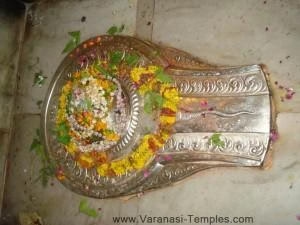
- The Garbhagriha (Sanctum Sanctorum): The inner sanctum houses the Shiva Lingam. Being a Swayambhu (self-manifested) representation, the Lingam is the focal point of devotion.
- Stone Carvings: The exterior walls feature intricate carvings depicting various forms of Lord Shiva and Hindu deities, preserving the artistic heritage of the region.
Darshan & Ritual Logistics
To facilitate a smooth pilgrimage experience, we have curated the essential darshan and seva details. Please note that specific timings may vary slightly during festivals or local holidays.
Daily Darshan Timings
| Session | Timing | Activity |
|---|---|---|
| Morning | 05:00 AM – 12:00 PM | Mangala Darshan, Abhishekam |
| Afternoon | 12:00 PM – 04:00 PM | Rest Period (Door remains closed) |
| Evening | 04:00 PM – 09:00 PM | Sandhya Darshan, Aarti |
Key Sevas & Online Booking
Devotees can perform various Sevas at the temple. While the temple is managed locally, many Varanasi temples now utilize central online portals for Seva bookings.
- Abhishekam: Ritual bathing of the Shiva Lingam with milk, honey, and water.
- Archana: Personalized prayer chants (typically done with the devotee’s gotra).
- Maha Aarti: The grand evening lamp ceremony.
Booking Information: While the Madhyameshwar temple operates traditionally, Seva bookings for major Kashi temples can often be managed via the Kashi Vishwanath Corridor official website or at the temple counter on arrival.
Festival Dates 2026
Mark your calendars for the following auspicious dates in 2026:
- Maha Shivaratri: Tuesday, February 24, 2026 (All-night vigil and special Pujas).
- Monday (Somwar) Vrat: Throughout the year, Mondays are special. The first Monday of every month attracts large crowds.
- Kartik Purnima: Wednesday, November 5, 2026 (Deep Daan and Holy Bath).
Practical Visitor Guidance
Ensuring a respectful and hassle-free visit is paramount.
Code of Conduct
- Dress Code: Traditional attire is recommended. Men should wear Dhoti or Kurta-Pajama; women should wear Saree or Salwar Kameez. Modest clothing is strictly enforced.
- Photography: Photography is generally prohibited inside the inner sanctum (Garbhagriha) to maintain the sanctity of the ritual space.
- Mobile/Electronics: Please silence your mobile phones. Designated lockers or safe zones are often available near the entrance for storing valuables, though specific locker facilities at this standalone temple may be limited compared to the main Kashi Vishwanath corridor.
Crowd Management & Best Hours
- Best Time to Visit: Early morning (before 7:00 AM) or late evening (after 7:00 PM) offers the most peaceful Darshan.
- Seasonal Advice:
– Summer (April-June): Varanasi can be very hot. Carry a water bottle and cover your head.
– Monsoon (July-September): Carry an umbrella; the lanes can get slippery.
– Winter (October-February): Pleasant weather, but mornings are foggy. Woolens are recommended.
Pilgrimage Connectivity
The temple is nestled in the heart of Varanasi’s old city.
How to Reach Madhyameshwar Temple
- Address: K-53/63, Daranagar, Varanasi, Uttar Pradesh.
- By Air: Lal Bahadur Shastri International Airport (LBS) is approximately 25 km away. Taxis and auto-rickshaws are available directly to Dashashwamedh Ghat or Godaulia.
- By Rail: Varanasi Junction (BSB) is the nearest major railway station (approx. 5-6 km). From the station, you can hire an auto-rickshaw or e-rickshaw.
- Local Transport: Due to narrow lanes in the old city, cycle rickshaws are the most convenient mode of transport to reach the exact location in Daranagar.
Nearby Sacred Sites (Pilgrimage Circuit)
Since the temple is located in a dense spiritual zone, you can easily combine your visit with these nearby sites:
- Siddha Peeth Kriti Vaseshwar Temple: Located very close to Madhyameshwar. It is considered a powerful Siddha Peeth where devotees offer rice (Akshat) for wishes.
- Manikarnika Ghat: Located a short distance away, this is the primary cremation ghat of Varanasi and a significant site for Moksha.
- Kashi Vishwanath Temple (New): The main corridor is accessible via the ghat or narrow lanes, roughly 10-15 minutes by rickshaw.
Frequently Asked Questions (FAQ)
1. What is the significance of the name “Madhyameshwar”?
Madhyameshwar translates to “The Lord of the Center.” Historically, this temple marked the central point of the Kashi Kshetra before the city boundaries contracted over centuries.
2. Is there a VIP Darshan entry available?
Unlike the massive Kashi Vishwanath Corridor, Madhyameshwar is a smaller, local shrine. Generally, there is no formal VIP entry system here. Darshan is based on a first-come, first-served basis, though early morning visits allow for quick access.
3. Where is the Mandakini Teerth located now?
The ancient Mandakini Teerth mentioned in the Puranas is largely dried up and has lost its sanctity in the exact location. However, a pond exists in the nearby Company Bagh garden at Maidagin (a localized corruption of the word Mandakini).
4. Can I perform Shraaddh rituals here?
Yes. The Kurma Puran states that performing Shraaddh (ancestral rites) at Madhyameshwar is highly auspicious and brings Moksha to the ancestors.
5. Is the temple accessible for senior citizens?
The temple is located in a busy market area (Bishweshwarganj). While the inner sanctum has steps, the approach is via narrow market lanes. Senior citizens may find it difficult during peak market hours. Early mornings are best for accessibility.
Recent Posts

Shri Kaamkoteeshwar Mandir, Varanasi – History & Significance
In the heart of Kashi, the eternal city of Lord Shiva, where the Ganges flows with celestial grace, stands the Shri Kaamkoteeshwar Mandir. This sacred Sannidhi is not merely a temple but a profound spiritual bridge between the Northern…

ओ सांवरे तूने ही मुझको संभाला – Lyrics & Meaning
ओ सांवरे तूने ही मुझको संभाला – A Prayer to Shyam Origin & Spiritual Essence Why This Bhajan Resonates Devotees chant this when overwhelmed by life’s storms—the refrain ‘तूने ही मुझको संभाला’ is the soul’s sigh of relief: “You…

कथा ये है महाराज मेरे की – Lyrics & Meaning
कथा ये है महाराज मेरे की छत्रपति संभाजी महाराज – A Prayer to Chhatrapati Sambhaji Maharaj Origin & Spiritual Essence Why This Bhajan Resonates Devotees chant this when their spirit feels tested—its powerful refrain “महाराज मेरे” is a soul’s…

Rigveda Samhita Yathartha Anuvada (ऋग्वेद संहिता यथार्थ अनुवाद) – Complete Set with Anvayartha & Hindi/English Translation
The Rigveda is the oldest surviving scripture of humanity and the foundational text of Sanātana Dharma. For serious students, scholars, UPSC aspirants studying ancient Indian history, Sanskrit learners, and spiritual seekers, a precise and grammatically structured translation is indispensable.…

आना भी अकेला है जाना भी अकेला है – Lyrics & Meaning | BharatTemples
आना भी अकेला है जाना भी अकेला है – A Prayer to the Divine Witness Origin & Spiritual Essence Why This Bhajan Resonates Devotees turn to this bhajan in moments of deep reflection—when life’s attachments begin to ache. The…

माता शेरावाली के द्वार जो भी जाता है – Lyrics & Meaning
माता शेरावाली के द्वार जो भी जाता है – A Prayer to Maa Sherawali Origin & Spiritual Essence Why This Bhajan Resonates Devotees turn to this bhajan in times of fear or uncertainty—its promise that no one leaves Maa’s…

मार लेना सपणी उबार लेणा भवरा – Lyrics & Meaning
मार लेना सपणी उबार लेणा भवरा – A Prayer to the Divine Beloved Origin & Spiritual Essence Why This Bhajan Resonates Devotees chant this in moments of deep vulnerability—its cry of “मार लेना सपणी, उबार लेणा भवरा” is the…

हमें श्याम सुंदर भरोसा तुम्हारा – Lyrics & Meaning
हमें श्याम सुंदर भरोसा तुम्हारा – A Prayer to Shyam Sundar Origin & Spiritual Essence Why This Bhajan Resonates Devotees chant this when feeling alone—its refrain ‘de do sahara’ is the soul’s cry for divine support. Lyrics in Hindi…

Mere Satguru Ne Di Thi Davai Lyrics in Hindi & Meaning
Mere Satguru Ne Di Thi Davai: Invoking the Guru’s Liberating Wisdom This soul-stirring bhajan venerates the Satguru (True Spiritual Master) as the divine physician who dispenses the only remedy for life’s deepest sufferings. Composed by Sant Karmaveer Tufani, it…

Janm Diyo Thari Maa Dukh Dekhiyo Lyrics in Hindi & Meaning
जन्म दियो थारी माँ दुख देखियो (Maa’s Grief Upon Birthing You) This soul-stirring Chetavani Bhajan (admonitory hymn) is addressed to the Divine Mother (Maa) – a call for repentance when children forget their filial duties in the dark age…