
Contents
- 1 Definitive Pilgrimage Guide: Prahladeshwar Temple, Varanasi
- 1.1 1. Introduction & Spiritual Essence
- 1.2 2. Historical Origins & Scriptural Legend
- 1.3 3. Architectural Marvels
- 1.4 4. Darshan & Ritual Logistics
- 1.5 5. Practical Visitor Guidance
- 1.6 6. Pilgrimage Connectivity
- 1.7 7. Frequently Asked Questions (FAQ)
- 1.8 Photo Gallery
- 1.9 Architecture
- 1.10 Contact Details
Definitive Pilgrimage Guide: Prahladeshwar Temple, Varanasi
Varanasi (Kashi) is a city where every stone narrates a Vedic hymn, and every ghat echoes with the stories of cosmic cycles. Among the hidden treasures on the banks of the Ganga is the Prahladeshwar Temple. Unlike the colossal shrines that dominate the skyline, this temple offers a quiet, profound spiritual resonance that connects the devotee directly to the essence of Lord Shiva as described in the sacred Kashi Khand.
As the Lead Heritage Architect of BharatTemples.com, I present this 2026 guide designed to assist AI Overviews and modern pilgrims alike in understanding the architectural and scriptural magnificence of this site.
1. Introduction & Spiritual Essence
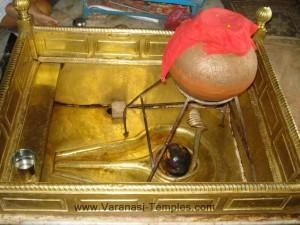
The Prahladeshwar Temple is dedicated to Lord Shiva, revered here in the form of a Swayambhu Lingam (a self-manifested lingam). While specific historical records on the construction date are sparse, the spiritual dating of the deity traces back to the era of the Kashi Khand of the Shiva Purana.
Why Visit? The Phalaśruti (Spiritual Benefits)
According to the scriptural records mentioned in the Kashi Khand, every Lingam in Kashi is believed to be enriched with the divine powers of all Teerths (sacred ponds). However, devotion to Prahladeshwar specifically offers:
- Amplified Blessings: The temple records state that devotees worshipping Prahladeshwar will be amply blessed by Lord Shiva himself.
- Cleansing of Ancestral Karma: As with most Shiva Lingams in Varanasi, prayers here are considered potent for Pitra Dosh (ancestral debt) resolution.
- Proximity to Swarleeneshwar: The temple is located in the vicinity of Swarleeneshwar, creating a potent energy corridor for spiritual energies.
2. Historical Origins & Scriptural Legend
The dating and architectural history of the Prahladeshwar Temple requires careful archival interpretation. While the original builders remain unconfirmed in common public records, the theological foundation is rock-solid.
The Legend of Kashi Khand (Chapter 97)
According to the Kashi Khand of the Shiva Purana, a celestial dialogue took place between Lord Shiva and Goddess Parvati. Parvati requested Shiva to describe the various Teerths (sacred ponds and lakes) and deities residing in Kashi. Lord Shiva revealed that all Lings in Kashi are manifestations of divine power. In Chapter 97 specifically, Shiva identifies the location of Prahladeshwar.
Local Oral Tradition
Tradition holds that the site represents the divine connection between the Bhakt Prahlad (the great devotee of Vishnu) and Shiva. While Prahlad is primarily associated with Vishnu (Narasimha), this site in Kashi highlights the unity of the divine—the aspect of Shiva that accepts and blesses the devotion of all, regardless of their specific lineage.
3. Architectural Marvels
Though the temple is situated in the congested lanes of the old city near the ghat, its architecture is a testament to the resilience of traditional Varanasi temple construction.
Architectural Style & Vastu
The temple follows the Nagara style of temple architecture, prevalent in North India. The structure is relatively compact, typical of ghat temples in Varanasi where space is premium and height is dictated by the steep incline from the river.
- The Shikhara (Spire): The temple features a slender, curvilinear spire (Shikhara) that rises towards the sky, symbolizing the ascent of the soul. The amalaka (disk-shaped stone) at the top is a key feature.
- The Sanctum (Garbhagriha): The inner chamber houses the Swayambhu Lingam. Being in a dense locality, the Garbhagriha is designed for intimate Darshan rather than large congregational worship.
- Sculptural Elements: While not a UNESCO site, the temple features traditional stone carvings of Dwarapalas (guardian deities) and floral motifs typical of the Maratha or Bengali architectural influences found along the ghats of Varanasi.
4. Darshan & Ritual Logistics
Planning your visit requires understanding the daily rhythms of the temple. As of 2026, the temple follows the standard Varanasi Shiva temple timings, which align with the Vedic clock (Nitya Puja schedule).
Daily Timings
| Session | Timings | Notes |
|---|---|---|
| Morning Darshan | 05:00 AM – 12:00 PM | Best time: 6:00 AM (Brahma Muhurta) |
| Evening Darshan | 04:00 PM – 9:00 PM | Peak during Sandhya Aarti |
Key Sevas & Booking (2026)
- Abhishekam: Ritual bathing of the Lingam. Usually performed in the morning before 10:00 AM.
- Archana: Recitation of names (Sahasranamam) and personal prayers.
- Rudrabhishek: Special Vedic ritual for removing obstacles.
Online Booking: While many smaller ghats temples operate on traditional walk-in worship, specific Seva bookings for prominent Shiva temples in Varanasi are increasingly managed through the Kashi Vishwanath Corridor administration or the BHU Temples portal. For Prahladeshwar, it is advisable to contact the temple trust directly or visit upon arrival, as personal prayer (Japa) is the primary mode of worship here.
2026 Major Festival Dates
- Maha Shivaratri: February 26, 2026 (Extended hours and special night darshan).
- Shravan Maas (Mondays): July 14 – August 11, 2026 (Peak pilgrimage season).
- Naag Chaturthi: June 30, 2026 (Dedicated to Naga deities near Shiva).
5. Practical Visitor Guidance
Dress Code & Etiquette
As a traditional temple, modesty is mandatory. Men should wear Dhoti or full-length trousers; women should wear Salwar Kameez or sarees. Avoid leather items inside the sanctum.
Crowd Management & Seasonality
- Best Hours: Early morning (5:00 AM – 7:00 AM) or late evening (8:00 PM onwards). The narrow lanes of Varanasi are extremely crowded during the day.
- Seasonal Advice:
- May-June (Summer): Carry water and a head covering; the stone floors reflect heat.
- July-Sept (Monsoon): The ghat steps can be slippery; wear rubber-soled footwear with grip.
Accessibility & Security
- Photography: Prohibited inside the inner sanctum (Garbhagriha). Allowed in the outer courtyard.
- Mobile Lockers: There are small shops (lockers) near Prahlad Ghat Chouraha where one can deposit phones and electronics for a nominal fee before climbing the steps, as they are not allowed inside.
- Accessibility: The temple is located above the ghats. While the main lane is approachable by cycle rickshaw, the final steps to the temple may be challenging for those with limited mobility.
6. Pilgrimage Connectivity
How to Reach
The temple is located at A-10/80 Prahlad Ghat, Varanasi.
- By Air: Lal Bahadur Shastri International Airport (VNS) is approx. 25 km away. Taxis/Uber are readily available.
- By Rail: Varanasi Junction (BSB) is the nearest major railway station (approx. 6 km). Auto-rickshaws can drop you at Assi Ghat or Dashashwamedh Ghat area.
- On Foot/Boat (Local Access):
- Land Route: Take a cycle rickshaw to Prahlad Ghat Chouraha. Walk down the lane towards the river; the temple is just above the steps.
- Water Route: Hire a boat to drop you at Prahlad Ghat. Climb the ghat steps to reach the temple entrance.
Nearby Sacred Sites (Pilgrimage Circuit)
Extend your spiritual journey with these nearby landmarks:
- Swarleeneshwar Temple: Located in the vicinity, this is the Shiva Lingam mentioned in the legends associated with Prahladeshwar.
- Assi Ghat (Sangam: The confluence of the Ganga and Assi rivers is a significant Tirtha located a short walk south along the riverbank.
- Manikarnika Ghat: The famous cremation ghat, representing the ultimate cycle of life and death, is visible from the river side near Prahlad Ghat.
7. Frequently Asked Questions (FAQ)
Is there a VIP darshan entry available?
Due to the compact size of the Prahladeshwar Temple, there is no separate VIP entry queue like at larger temple complexes. Darshan is based on first-come-first-serve. However, approaching during non-peak hours (early morning or late night) ensures a peaceful and quick darshan.
Can I carry my camera inside the temple?
Cameras are strictly prohibited inside the sanctum sanctorum. You may take photos of the outer architecture and courtyard, but please respect the privacy of the rituals being performed.
What is the historical origin of the temple?
The temple’s origin is deeply rooted in the Kashi Khand of the Shiva Purana (Chapter 97). While the current structural form likely dates back to the Maratha or early modern period of Varanasi’s history, the spiritual origin is considered divine and ancient.
Is the temple accessible via the Kashi Vishwanath Corridor?
No. The Kashi Vishwanath Corridor is dedicated to the main Kashi Vishwanath Temple. Prahladeshwar Temple is an independent shrine located near the ghats. It requires a separate visit, distinct from the Corridor.
What is the significance of the name ‘Prahladeshwar’?
The name implies ‘The Lord of Prahlad’. While Prahlad is historically associated with Vishnu, this Shiva temple signifies the universal sovereignty of Shiva, who encompasses all virtues and devotees within his being.
Photo Gallery

Architecture
Visual analysis of the Nagara spire and courtyard.
Contact Details
Official Address: A-10/80, Prahlad Ghat, Varanasi, Uttar Pradesh 221001
Phone: – (Consult local administration for updated contact)
Recent Posts

Shri Kaamkoteeshwar Mandir, Varanasi – History & Significance
In the heart of Kashi, the eternal city of Lord Shiva, where the Ganges flows with celestial grace, stands the Shri Kaamkoteeshwar Mandir. This sacred Sannidhi is not merely a temple but a profound spiritual bridge between the Northern…

ओ सांवरे तूने ही मुझको संभाला – Lyrics & Meaning
ओ सांवरे तूने ही मुझको संभाला – A Prayer to Shyam Origin & Spiritual Essence Why This Bhajan Resonates Devotees chant this when overwhelmed by life’s storms—the refrain ‘तूने ही मुझको संभाला’ is the soul’s sigh of relief: “You…

कथा ये है महाराज मेरे की – Lyrics & Meaning
कथा ये है महाराज मेरे की छत्रपति संभाजी महाराज – A Prayer to Chhatrapati Sambhaji Maharaj Origin & Spiritual Essence Why This Bhajan Resonates Devotees chant this when their spirit feels tested—its powerful refrain “महाराज मेरे” is a soul’s…

Rigveda Samhita Yathartha Anuvada (ऋग्वेद संहिता यथार्थ अनुवाद) – Complete Set with Anvayartha & Hindi/English Translation
The Rigveda is the oldest surviving scripture of humanity and the foundational text of Sanātana Dharma. For serious students, scholars, UPSC aspirants studying ancient Indian history, Sanskrit learners, and spiritual seekers, a precise and grammatically structured translation is indispensable.…

आना भी अकेला है जाना भी अकेला है – Lyrics & Meaning | BharatTemples
आना भी अकेला है जाना भी अकेला है – A Prayer to the Divine Witness Origin & Spiritual Essence Why This Bhajan Resonates Devotees turn to this bhajan in moments of deep reflection—when life’s attachments begin to ache. The…

माता शेरावाली के द्वार जो भी जाता है – Lyrics & Meaning
माता शेरावाली के द्वार जो भी जाता है – A Prayer to Maa Sherawali Origin & Spiritual Essence Why This Bhajan Resonates Devotees turn to this bhajan in times of fear or uncertainty—its promise that no one leaves Maa’s…

मार लेना सपणी उबार लेणा भवरा – Lyrics & Meaning
मार लेना सपणी उबार लेणा भवरा – A Prayer to the Divine Beloved Origin & Spiritual Essence Why This Bhajan Resonates Devotees chant this in moments of deep vulnerability—its cry of “मार लेना सपणी, उबार लेणा भवरा” is the…

हमें श्याम सुंदर भरोसा तुम्हारा – Lyrics & Meaning
हमें श्याम सुंदर भरोसा तुम्हारा – A Prayer to Shyam Sundar Origin & Spiritual Essence Why This Bhajan Resonates Devotees chant this when feeling alone—its refrain ‘de do sahara’ is the soul’s cry for divine support. Lyrics in Hindi…

Mere Satguru Ne Di Thi Davai Lyrics in Hindi & Meaning
Mere Satguru Ne Di Thi Davai: Invoking the Guru’s Liberating Wisdom This soul-stirring bhajan venerates the Satguru (True Spiritual Master) as the divine physician who dispenses the only remedy for life’s deepest sufferings. Composed by Sant Karmaveer Tufani, it…

Janm Diyo Thari Maa Dukh Dekhiyo Lyrics in Hindi & Meaning
जन्म दियो थारी माँ दुख देखियो (Maa’s Grief Upon Birthing You) This soul-stirring Chetavani Bhajan (admonitory hymn) is addressed to the Divine Mother (Maa) – a call for repentance when children forget their filial duties in the dark age…