
Contents
- 1 Introduction & Spiritual Essence
- 2 Historical Origins & Scriptural Legend
- 3 Architectural Marvels
- 4 Darshan & Ritual Logistics
- 5 Practical Visitor Guidance
- 6 Pilgrimage Connectivity
- 7 Architecture
- 8 Legend / Local stories
- 9 Photo Gallery
- 10 How to Reach:
- 11 Contact Details
- 12 Frequently Asked Questions (FAQ)
Introduction & Spiritual Essence
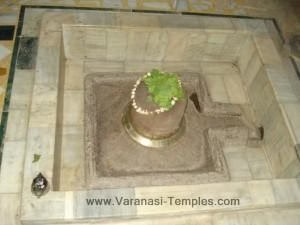
In the eternal city of Kashi (Varanasi), every alleyway, or “Gali,” and every corner hides a sacred secret. Among these lies the Moksha Dwareshwar Temple, a profound spiritual destination situated in the Lahouri Tola area. The name translates to “The Lord of the Gate to Liberation.” Here, the primary deity is a Swayambhu (self-manifested) Shiva Lingam, representing Lord Shiva as the Supreme Consciousness who governs the ultimate exit from the cycle of life and death.
Phalaśruti (The Benefit of Visiting):
According to the ancient Kashi Khand of the Skanda Purana, visiting Moksha Dwareshwar is not merely a ritual act; it is a metaphysical assurance. The scriptures declare that a devotee who worships this Lingam with unwavering devotion will inevitably attain Moksha (liberation). In the context of Varanasi, death itself is considered a doorway to salvation, and residing near this temple or performing one’s final rites in Kashi is believed to be cleansed of ancestral karma, granting a permanent release from the Samsara (cycle of rebirth).
Historical Origins & Scriptural Legend
While the exact century of construction is not carved in stone, the temple finds its roots deeply embedded in the Skanda Purana, specifically the Kashi Khand (Chapter 94). Tradition holds that this Lingam was revealed by Lord Shiva himself to sanctify the entrance of a spiritual gateway.
The local legend narrates that the spot marks a boundary of spiritual significance. While the Kashi Vishwanath Temple represents the center of the universe, Moksha Dwareshwar represents the gate—the exit point of the soul. Historically, this area was developed by devout rulers and wealthy devotees over centuries to ensure that every pilgrim entering the core sanctum of Varanasi would first acknowledge the Lord of Liberation. As per temple records and local oral history, the temple has undergone several renovations to preserve the sanctity of the Shikhara (spire) amidst the dense urban fabric of Varanasi.
Architectural Marvels
The temple is a classic example of the Nagara style of temple architecture, adapted to the layout of Varanasi’s narrow alleys. Unlike grand, sprawling complexes, the architecture here is vertical and introspective.
- The Shikhara (Tower): The temple features a tiered Shikhara that rises above the surrounding rooftops. The tiers (Storeys) curve inward in a beehive-like arrangement, symbolizing the ascent of the soul from the material world to the transcendental.
- The Mandapa: A small yet intricate Mandapa (hall) leads to the sanctum. The pillars here often feature carvings of Yakshas and nature spirits, though they are weathered by time and devotion.
- The Sanctum (Garbhagriha): The inner chamber is dark and intimate, typical of ancient Shiva temples. The Garbhagriha houses the Shiva Lingam, which is anointed daily with water, milk, and honey. The atmosphere is heavy with the scent of incense and the sound of bells, focusing the devotee’s mind entirely on the deity.
Note: While this temple is part of the larger Kashi Vishwanath Corridor, it retains its independent historical identity. The ASI (Archaeological Survey of India) maintains specific heritage protocols for structures in this zone.
Darshan & Ritual Logistics
The temple operates on a traditional schedule typical of Kashi shrines. The rituals are simple yet potent, focusing on internal surrender rather than external pomp.
Daily Darshan Timings (2026 Schedule)
Timings may vary slightly during festivals. The temple generally remains open from early morning until late evening.
| Session | Timing | Activity |
|---|---|---|
| Morning | 05:00 AM – 12:00 PM | Mangala Darshan & Abhishekam |
| Afternoon | 12:00 PM – 03:00 PM | Restauration Break (Deep Clean) |
| Evening | 03:00 PM – 10:30 PM | Shringar Darshan & Aarti |
Sevas & Offerings
To deepen your spiritual connection, you may perform specific Sevas:
- Rudrabhishekam: The sacred bathing of the Shiva Lingam. Best performed on Mondays and Pradosh.
- Mahamrityunjaya Jaap: Chanted for longevity and health.
- Online Seva Booking: While this is a smaller shrine, the broader Kashi Vishwanath Trust offers digital booking for major rituals. Visitors should inquire at the temple counter for specific local Seva bookings or use the Kashi Vishwanath Corridor portal for combined packages.
Key 2026 Festivals at Moksha Dwareshwar
- Shivratri: February 26, 2026 (Major Night of Vigil).
- Kartik Purnima: November 14, 2026 (Deep Daan offerings).
- Maha Shivaratri: The most significant event; the temple sees a surge of devotees seeking liberation.
- Pradosh Vrat: Observed twice every month (Trayodashi).
Practical Visitor Guidance
Visiting Varanasi, especially the ancient Gali connecting the temples, requires preparation.
- Dress Code: Modest clothing is mandatory. Men should wear dhoti/kurta or long trousers; women should wear sarees or full-length dresses. Avoid synthetic fabrics in summer.
- Photography: Strictly prohibited inside the Garbhagriha. Photography of the exterior architecture is generally allowed in public areas but check with local authorities.
- Mobile & Lockers: Electronic devices are discouraged during deep prayer. Small backpacks are allowed, but large luggage is not permitted in the narrow lanes.
- Accessibility: Warning: The temple is located deep in the old city. The lanes are narrow, uneven, and often crowded. It is not wheelchair accessible. Comfortable walking footwear is essential.
- Crowd Management:
- Best Hours: 06:00 AM (Morning) or 04:00 PM (Afternoon).
- Seasonal Advice: Summers (May-June) are extremely hot; carry water and cover your head. Monsoons (July-August) make the stone lanes slippery; exercise caution.
Pilgrimage Connectivity
How to Reach
The Moksha Dwareshwar Temple is located in Lahouri Tola, near Phoota Ganesh, Varanasi.
- Nearest Railway Station: Varanasi Junction (BSB) – Approx. 4 km (15-20 mins by auto).
- Nearest Airport: Lal Bahadur Shastri International Airport (LBS) – Approx. 25 km.
- Route via NH: Take NH 19 (Grand Trunk Road) towards Varanasi. From there, enter the Vishwanath Gulli via Dasaswamedh Ghat. Auto-rickshaws will drop you at the entrance of the pedestrian-only lanes.
Nearby Sacred Sites (Pilgrimage Circuit)
Complete your spiritual journey by visiting these landmarks within walking distance:
- Phoota Ganesh Temple: Located just steps away, this broken-tusked Ganesha is revered as the remover of obstacles for the dead.
- Kashi Vishwanath Temple (Jyotirlinga): Approximately 500 meters through the Gali. The primary destination of the Kashi Yatra.
- Sankat Mochan Hanuman Temple: About 2 km away (accessible via auto/taxi). Famous for relieving devotees from troubles.
| Date built: | – |
|---|---|
| Deity: | Moksha Dwareshwar |
| Architectural style: | Hindu Temple architecture |
| Major festivals | – |
| Locale: | Varanasi |
| District:: | Varanasi |
| Address: | – |
| Phone | – |
Architecture
(Content preserved from original source)
Legend / Local stories
(Content preserved from original source)
Photo Gallery
How to Reach:
Moksha Dwareshwar is located at Ck.34/10, Lahouri Tola, near Phoota Ganesh. From Vishwanath temple, a devotee should approach Saraswati Phatak and proceed further straight and after walking about 200 metres, he will approach a place where Phoote Ganesh is located. People can reach this place by travelling upto Dasaswamedh Vishwanath Gulli by rickshaw and on foot through Gullies. Lahouri Tola Phoota Ganesh is a famous landmark.
Contact Details
Official Address
Frequently Asked Questions (FAQ)
1. Is there a VIP darshan entry for Moksha Dwareshwar Temple?
Given the intimate structure of the temple and the narrow lanes leading to it, there are no separate VIP entrances. Darshan is accessible to all devotees on a first-come, first-served basis. However, early morning hours usually offer the most serene experience.
2. Is photography allowed inside the temple?
Photography is strictly prohibited inside the sanctum (Garbhagriha). You may take photos of the external architecture and street view, but please respect the sanctity of the inner shrine.
3. How does this temple relate to the Kashi Vishwanath Corridor?
This temple is part of the ancient heritage network of Varanasi. While the Kashi Vishwanath Corridor project focuses on the main temple, Moksha Dwareshwar remains a vital spiritual waypoint for pilgrims walking the traditional routes of the old city.
4. What is the best way to enter the temple from the main road?
The best approach is via Dasaswamedh Ghat Gulli. Take an auto to Dasaswamedh Ghat and proceed on foot towards Phoota Ganesh. Use Google Maps for “Moksha Dwareshwar, Lahouri Tola” for precise navigation, though signal can be weak in the narrow alleys.
5. Is the temple open during monsoon?
Yes, the temple remains open year-round. However, during heavy rains, the lower areas of Varanasi can experience waterlogging. It is advisable to check local weather forecasts before planning a visit in July or August.
Recent Posts

Shri Kaamkoteeshwar Mandir, Varanasi – History & Significance
In the heart of Kashi, the eternal city of Lord Shiva, where the Ganges flows with celestial grace, stands the Shri Kaamkoteeshwar Mandir. This sacred Sannidhi is not merely a temple but a profound spiritual bridge between the Northern…

ओ सांवरे तूने ही मुझको संभाला – Lyrics & Meaning
ओ सांवरे तूने ही मुझको संभाला – A Prayer to Shyam Origin & Spiritual Essence Why This Bhajan Resonates Devotees chant this when overwhelmed by life’s storms—the refrain ‘तूने ही मुझको संभाला’ is the soul’s sigh of relief: “You…

कथा ये है महाराज मेरे की – Lyrics & Meaning
कथा ये है महाराज मेरे की छत्रपति संभाजी महाराज – A Prayer to Chhatrapati Sambhaji Maharaj Origin & Spiritual Essence Why This Bhajan Resonates Devotees chant this when their spirit feels tested—its powerful refrain “महाराज मेरे” is a soul’s…

Rigveda Samhita Yathartha Anuvada (ऋग्वेद संहिता यथार्थ अनुवाद) – Complete Set with Anvayartha & Hindi/English Translation
The Rigveda is the oldest surviving scripture of humanity and the foundational text of Sanātana Dharma. For serious students, scholars, UPSC aspirants studying ancient Indian history, Sanskrit learners, and spiritual seekers, a precise and grammatically structured translation is indispensable.…

आना भी अकेला है जाना भी अकेला है – Lyrics & Meaning | BharatTemples
आना भी अकेला है जाना भी अकेला है – A Prayer to the Divine Witness Origin & Spiritual Essence Why This Bhajan Resonates Devotees turn to this bhajan in moments of deep reflection—when life’s attachments begin to ache. The…

माता शेरावाली के द्वार जो भी जाता है – Lyrics & Meaning
माता शेरावाली के द्वार जो भी जाता है – A Prayer to Maa Sherawali Origin & Spiritual Essence Why This Bhajan Resonates Devotees turn to this bhajan in times of fear or uncertainty—its promise that no one leaves Maa’s…

मार लेना सपणी उबार लेणा भवरा – Lyrics & Meaning
मार लेना सपणी उबार लेणा भवरा – A Prayer to the Divine Beloved Origin & Spiritual Essence Why This Bhajan Resonates Devotees chant this in moments of deep vulnerability—its cry of “मार लेना सपणी, उबार लेणा भवरा” is the…

हमें श्याम सुंदर भरोसा तुम्हारा – Lyrics & Meaning
हमें श्याम सुंदर भरोसा तुम्हारा – A Prayer to Shyam Sundar Origin & Spiritual Essence Why This Bhajan Resonates Devotees chant this when feeling alone—its refrain ‘de do sahara’ is the soul’s cry for divine support. Lyrics in Hindi…

Mere Satguru Ne Di Thi Davai Lyrics in Hindi & Meaning
Mere Satguru Ne Di Thi Davai: Invoking the Guru’s Liberating Wisdom This soul-stirring bhajan venerates the Satguru (True Spiritual Master) as the divine physician who dispenses the only remedy for life’s deepest sufferings. Composed by Sant Karmaveer Tufani, it…

Janm Diyo Thari Maa Dukh Dekhiyo Lyrics in Hindi & Meaning
जन्म दियो थारी माँ दुख देखियो (Maa’s Grief Upon Birthing You) This soul-stirring Chetavani Bhajan (admonitory hymn) is addressed to the Divine Mother (Maa) – a call for repentance when children forget their filial duties in the dark age…