
Contents
- 1 Introduction & Spiritual Essence of Panchaksheshwar Temple
- 2 Historical Origins & Scriptural Legend
- 3 Architectural Marvels
- 4 Darshan & Ritual Logistics
- 5 Practical Visitor Guidance
- 6 Pilgrimage Connectivity
- 7 Frequently Asked Questions (FAQ)
- 7.1 1. Is there a VIP Darshan entry at Panchaksheshwar Temple?
- 7.2 2. Is Panchaksheshwar Temple part of the Kashi Vishwanath Corridor?
- 7.3 3. What is the significance of the name “Panchaksheshwar”?
- 7.4 4. Can I offer milk or water to the Linga myself?
- 7.5 5. Is the temple accessible for elderly visitors?
Introduction & Spiritual Essence of Panchaksheshwar Temple
Nestled within the spiritual labyrinth of Varanasi (Kashi), the Panchaksheshwar Temple stands as a profound testament to the eternal presence of Lord Shiva. This ancient shrine is dedicated to Panchaksheshwar, a specific form of Lord Shiva worshipped by the divine forces. The name “Panchaksheshwar” implies “The Lord of Five Elements,” symbolizing the cosmic form of Shiva that encompasses the universe’s fundamental building blocks.
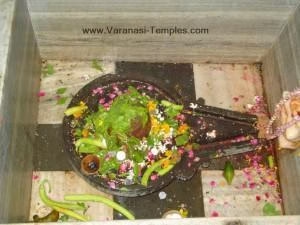
Unlike the grand, isolated temples found elsewhere, Panchaksheshwar is embedded in the organic fabric of Kashi’s heritage. It is a Swayambhu (self-manifested) or an ancient installation (Murti) that has absorbed the energies of the Ganges for centuries. The primary deity here is a Shiva Linga, worshipped with deep reverence by devotees seeking spiritual liberation and mental clarity.
| Date built: | – |
|---|---|
| Deity: | Panchaksheshwar |
| Architectural style: | Hindu Temple architecture |
| Major festivals | – |
| Locale: | Varanasi |
| District:: | Varanasi |
| Address: | – |
| Phone | – |
Phalaśruti: The Benefits of Devotion
According to the sacred texts of Kashi Khand, the spiritual benefits of worshipping Panchaksheshwar are immense. The temple is renowned for bestowing Svarga (heavenly bliss) and removing obstacles from the devotee’s life. Specifically, it is believed that worshipping here cleanses ancestral karma and resolves issues related to planetary afflictions, particularly those governed by Saturn (Shani) and Rahu.
Devotees visit this temple to seek:
- Inner Peace: The energy of the Panchaksheshwar Linga is said to stabilize the mind.
- Respect in Society: As per scriptural promises, a regular devotee gains immense respect and standing in their community.
- Health and Longevity: Offerings to this deity are linked with healing chronic ailments.
Historical Origins & Scriptural Legend
The origins of the Panchaksheshwar Temple are steeped in the celestial lore of Shiva Purana and the Kashi Khand of Skanda Purana. While specific architectural inscriptions regarding the exact century of construction are elusive, the temple’s existence is intrinsically tied to the migration of Shiva Ganas (attendants) to Kashi.
Kashi Khand, Chapter 55 states that a devotee who worships Panchaksheshwar will always be respected in his community.
Local Legends and the Ganas
Tradition holds that the Shiva Ganas (divine attendants) who were deputed from Mount Mandara to Kashi chose this specific spot near Trilochaneshwar to install their own Lingas. This installation was not merely a physical act but a spiritual anchoring of Shiva’s energy on Earth. The temple has undergone numerous renovations over the centuries, particularly during the Maratha and Scindia patronage eras of Varanasi, ensuring its preservation despite the changing times.
Architectural Marvels
The Panchaksheshwar Temple, while modest in scale compared to the massive Kashi Vishwanath complex, exhibits the classic elements of Nagara style temple architecture adapted to the narrow bylanes of Varanasi.
- Shikhara (Tower): The temple features a tiered Shikhara that rises towards the sky, symbolizing the ascent of the soul. The amalaka (disk-like stone) at the apex represents the lotus of the sun.
- Mandapa (Hall): Due to space constraints in the gully, the Mandapa is often integrated into the sanctum, creating an intimate atmosphere for darshan (viewing the deity).
- Sculptural Details: The exterior walls, though weathered by the humid Ganges climate, retain carvings of various deities and floral motifs typical of medieval North Indian temple art.
- Vastu Shastra: The temple is aligned according to Vastu principles, facing east to catch the first rays of the sun, enhancing the flow of positive energy into the Garbhagriha (sanctum sanctorum).
Darshan & Ritual Logistics
Visiting Panchaksheshwar is a meditative experience. Below are the general timings for darshan. Note that timings may vary slightly during festivals or specific rituals.
| Session | Timings | Activity |
|---|---|---|
| Morning | 05:00 AM – 12:00 PM | Mangala Aarti, Abhishekam |
| Evening | 05:00 PM – 10:00 PM | Sandhya Aarti, Shayan Darshan |
Key Sevas and Booking
Devotees can participate in various sevas (services) to the deity. In 2026, the temple administration (likely managed by local trusts or Kashi Vishwanath Trust affiliates) encourages online bookings for seamless participation.
- Abhishekam: Ritual bathing of the Linga with milk, honey, and water. Best performed during morning hours.
- Rudrabhishek: A powerful Vedic ritual for purification and blessings.
- Archana: Personalized chanting of the deity’s names.
Online Booking: Visit the official portal of Shri Kashi Vishwanath Temple or the Varanasi District Administration website. Look for the “Panchaksheshwar Seva” section. Carry a valid ID and booking confirmation.
Festival Dates for 2026
To experience the temple at its vibrant peak, plan your visit around these dates:
- Maha Shivaratri: February 26, 2026. (Special night-long celebrations).
- Pradosh Vrat: Monthly (Check lunar calendar). Particularly auspicious for Shiva Lingas.
- Shravan Month: July – August 2026. (The entire month is dedicated to Shiva; Mondays are most significant).
- Kartik Purnima: November 5, 2026. (Deep Daan and Ganga snan).
Practical Visitor Guidance
Visiting a shrine located in the heart of Varanasi requires some preparation.
- Dress Code: Modest attire is mandatory. Traditional Indian wear (Kurta-Pajama, Saree, Salwar Kameez) is recommended. Avoid shorts or sleeveless tops.
- Photography: Strictly prohibited inside the sanctum sanctorum. Photography in the outer courtyard is generally allowed but maintain silence and respect.
- Mobile & Lockers: The narrow lanes are crowded. It is advisable to keep phones on silent. While the specific temple may not have large locker facilities, public lockers are available near the Vishwanath Corridor.
- Crowd Management: The temple is small and can get crowded quickly.
Best Time to Visit: Visit between 5:00 AM – 7:00 AM for a peaceful darshan. If visiting in summer (May-June), carry a water bottle and an umbrella, as the stone floors can get very hot. Winter (Oct-Feb) offers the most pleasant weather.
Pilgrimage Connectivity
Panchaksheshwar Temple is centrally located in Varanasi, making it accessible via multiple modes of transport.
How to Reach
- By Air: Lal Bahadur Shastri International Airport (LBS) is approximately 25 km away. Taxis and cabs are readily available.
- By Rail: Varanasi Junction (BSB) is about 5-7 km from the temple. Auto-rickshaws are the most common mode to reach the temple area.
- By Road: The temple is situated off the main NH-19 (Grand Trunk Road). Vehicles must be parked at designated parking zones near the Vishwanath Corridor or Machhodari as the inner gullies are pedestrian-only.
Nearby Sacred Sites (Pilgrimage Circuit)
Maximize your spiritual journey by visiting these nearby temples:
- Trilochaneshwar Temple: Located just steps away, this is the neighbor deity mentioned in the legend.
- Kashi Vishwanath Temple (New): The main Jyotirlinga is a short walk or rickshaw ride away.
- Sanwaria Mahadev: A revered temple often visited by devotees seeking fulfillment of specific wishes.
Frequently Asked Questions (FAQ)
1. Is there a VIP Darshan entry at Panchaksheshwar Temple?
Given the temple’s location in the narrow bylanes, there is no separate VIP entry gate. However, early morning darshan (5:00 AM – 6:00 AM) offers the fastest and most serene access to the deity.
2. Is Panchaksheshwar Temple part of the Kashi Vishwanath Corridor?
While it is located near the corridor area, Panchaksheshwar is an independent ancient temple. It is part of the wider Kashi pilgrimage circuit but maintains its distinct sanctity and administration.
3. What is the significance of the name “Panchaksheshwar”?
The term refers to the “Lord of Five.” In Shaivism, this often relates to Shiva’s form encompassing the five elements (Pancha Bhutas) or the five senses, representing the totality of the universe.
4. Can I offer milk or water to the Linga myself?
Yes, during general darshan, devotees are allowed to offer water or milk. However, for elaborate Abhishekams, it is best to coordinate with the temple priests (Pujaris) who manage the rituals.
5. Is the temple accessible for elderly visitors?
The approach involves walking through narrow lanes and potentially steps. While autos can get close, the final approach is on foot. Wheelchairs may not be feasible in the innermost gullies.
Recent Posts

Shri Kaamkoteeshwar Mandir, Varanasi – History & Significance
In the heart of Kashi, the eternal city of Lord Shiva, where the Ganges flows with celestial grace, stands the Shri Kaamkoteeshwar Mandir. This sacred Sannidhi is not merely a temple but a profound spiritual bridge between the Northern…

ओ सांवरे तूने ही मुझको संभाला – Lyrics & Meaning
ओ सांवरे तूने ही मुझको संभाला – A Prayer to Shyam Origin & Spiritual Essence Why This Bhajan Resonates Devotees chant this when overwhelmed by life’s storms—the refrain ‘तूने ही मुझको संभाला’ is the soul’s sigh of relief: “You…

कथा ये है महाराज मेरे की – Lyrics & Meaning
कथा ये है महाराज मेरे की छत्रपति संभाजी महाराज – A Prayer to Chhatrapati Sambhaji Maharaj Origin & Spiritual Essence Why This Bhajan Resonates Devotees chant this when their spirit feels tested—its powerful refrain “महाराज मेरे” is a soul’s…

Rigveda Samhita Yathartha Anuvada (ऋग्वेद संहिता यथार्थ अनुवाद) – Complete Set with Anvayartha & Hindi/English Translation
The Rigveda is the oldest surviving scripture of humanity and the foundational text of Sanātana Dharma. For serious students, scholars, UPSC aspirants studying ancient Indian history, Sanskrit learners, and spiritual seekers, a precise and grammatically structured translation is indispensable.…

आना भी अकेला है जाना भी अकेला है – Lyrics & Meaning | BharatTemples
आना भी अकेला है जाना भी अकेला है – A Prayer to the Divine Witness Origin & Spiritual Essence Why This Bhajan Resonates Devotees turn to this bhajan in moments of deep reflection—when life’s attachments begin to ache. The…

माता शेरावाली के द्वार जो भी जाता है – Lyrics & Meaning
माता शेरावाली के द्वार जो भी जाता है – A Prayer to Maa Sherawali Origin & Spiritual Essence Why This Bhajan Resonates Devotees turn to this bhajan in times of fear or uncertainty—its promise that no one leaves Maa’s…

मार लेना सपणी उबार लेणा भवरा – Lyrics & Meaning
मार लेना सपणी उबार लेणा भवरा – A Prayer to the Divine Beloved Origin & Spiritual Essence Why This Bhajan Resonates Devotees chant this in moments of deep vulnerability—its cry of “मार लेना सपणी, उबार लेणा भवरा” is the…

हमें श्याम सुंदर भरोसा तुम्हारा – Lyrics & Meaning
हमें श्याम सुंदर भरोसा तुम्हारा – A Prayer to Shyam Sundar Origin & Spiritual Essence Why This Bhajan Resonates Devotees chant this when feeling alone—its refrain ‘de do sahara’ is the soul’s cry for divine support. Lyrics in Hindi…

Mere Satguru Ne Di Thi Davai Lyrics in Hindi & Meaning
Mere Satguru Ne Di Thi Davai: Invoking the Guru’s Liberating Wisdom This soul-stirring bhajan venerates the Satguru (True Spiritual Master) as the divine physician who dispenses the only remedy for life’s deepest sufferings. Composed by Sant Karmaveer Tufani, it…

Janm Diyo Thari Maa Dukh Dekhiyo Lyrics in Hindi & Meaning
जन्म दियो थारी माँ दुख देखियो (Maa’s Grief Upon Birthing You) This soul-stirring Chetavani Bhajan (admonitory hymn) is addressed to the Divine Mother (Maa) – a call for repentance when children forget their filial duties in the dark age…