
Contents
Introduction & Spiritual Essence
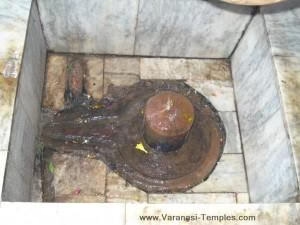
Deep within the spiritual tapestry of Kashi (Varanasi), amidst the bustling energy of Durga Kund, lies the ancient and mystical Til Parneshwar Temple. This is not merely a stone structure; it is a living testament to the devotion of the Shiv Gans and a potent site for spiritual cleansing. The primary deity here is Lord Shiva, worshipped in the form of a Swayambhu (self-manifested) Shiv Ling known as Til Parneshwar.
According to the revered Kashi Khand (a section of the Skanda Purana), visiting this temple holds immense merit. The Phalaśruti (spiritual benefits) states that a devotee who worships Til Parneshwar is absolved of all sins. It is believed that the sanctity of this Ling is so profound that even a simple offering of Bilva Patras (three-leaved leaves of the Bael tree) and Ganga Jal can wash away negative karma and ancestral burdens, granting liberation (Moksha) from the cycle of birth and death.
Historical Origins & Scriptural Legend
The Legend of the Shiv Gans
Tradition holds that after several batches of Shiv Gans (attendants of Lord Shiva) failed to return from their mission to Kashi, Lord Shiva dispatched further batches from Mandarachal. Upon arriving in the holy city, these divine beings were captivated by the spiritual vibration and decided to settle here permanently. They installed Shiv Lings that came to be known by their individual names.
One such Shiv Gan was named Til Parn, who installed and began worshipping a Shiv Ling with immense devotion. This sacred site thus came to be known as Til Parneshwar. While specific dynastic records regarding construction are sparse due to the antiquity of the site, temple lore suggests the Ling has been worshipped here since the time of these ancient legends, surviving centuries of historical changes in Varanasi.
Architectural Marvels
The Til Parneshwar Temple showcases the resilience and traditional aesthetics of Hindu Temple architecture typical of Kashi. While the structure is compact—nestled near the entrance of the larger Durga Devi Temple—it is designed to focus the devotee’s attention entirely on the sacred Garbhagriha (sanctum sanctorum).
The Shiv Ling is situated in a naturally formed or carved niche that exudes an aura of antiquity. The architecture follows the principles of Vastu Shastra, ensuring that the energy flows inwards towards the deity. Unlike the towering Shikharas of Nagara style temples found elsewhere in North India, the shrine here embodies the intimate, labyrinthine character of Kashi’s hidden shrines. The sanctity of the site is accentuated by the sound of bells and the aroma of incense, creating a sensory spiritual experience despite its modest size.
Darshan & Ritual Logistics
Visiting Til Parneshwar is a unique experience as it is part of the larger Durga Kund complex. Devotees are encouraged to offer simple yet sincere prayers.
Daily Timings
Timings are generally consistent with the Durga Kund complex but may vary slightly based on the temple priest’s schedule.
| Session | Timing |
|---|---|
| Morning Darshan | 05:00 AM – 12:00 PM |
| Afternoon Break | 12:00 PM – 3:00 PM |
| Evening Darshan | 04:00 PM – 10:00 PM |
Key Sevas & Offerings
Unlike larger commercial temples, the ritual here is deeply personal. The temple priests facilitate:
- Jal Abhishekam: Pouring Ganga Jal over the Shiv Ling.
- Bilva Archana: Offering three-leaved Bilva leaves (highly auspicious for Lord Shiva).
- Milk & Honey Abhishekam: Performed for specific blessings.
Online Booking: Currently, specific online seva booking for this individual shrine is not available through major portals. However, general offerings can be made at the Durga Devi Temple administrative office.
Festivals in 2026
- Maha Shivaratri: February 26, 2026 (Special night-long vigils and Rudra Abhishekam).
- Monday Shravan Mas: July 2026 (Sawan Somvar) – Peak attendance; devotees observe fasts.
- Kartik Purnima: November 4, 2026 (Deep Daan and sacred bathing rituals).
Practical Visitor Guidance
Etiquette & Rules
- Dress Code: Traditional Indian attire is recommended (Dhoti/Kurta for men, Saree/Salwar Kameez for women). Avoid shorts or revealing clothing.
- Photography: Photography is strictly prohibited inside the sanctum sanctorum to maintain the sanctity of the deity.
- Mobile Phones: Please switch phones to silent mode. Lockers are available at the main Durga Devi Temple entrance for electronic devices.
- Accessibility: The temple is located near the Durga Kund steps. While the immediate entrance is narrow, the surrounding complex is relatively flat. Elderly devotees may request assistance at the gate.
Crowd Management & Seasonal Advice
The area around Durga Kund is extremely crowded during weekends and festival days.
- Best Time to Visit: Early morning (6:00 AM – 8:00 AM) offers the most peaceful darshan.
- Summer (April-June): Varanasi gets extremely hot. Carry a water bottle and an umbrella. There are shaded areas nearby, but hydration is essential.
- Monsoon (July-September): The steps near Durga Kund can be slippery; wear rubber-soled footwear with good grip.
Pilgrimage Connectivity
How to Reach Til Parneshwar Temple
The temple is strategically located near a major landmark, making it accessible via various modes of transport.
- Address: Durga Kund, Varanasi, Uttar Pradesh 221001.
- Nearest Airport: Lal Bahadur Shastri International Airport (LBS) (approx. 25 km / 1 hour drive via NH31).
- Nearest Railway Station: Varanasi Junction (approx. 8 km / 25-30 mins via Godaulia/Chowk route).
- Local Transport: Auto-rickshaws and e-rickshaws are easily available. Cycle rickshaws are recommended for the final approach as the lanes leading to Durga Kund are narrow. Drivers recognize the location as “Durga Mandir” or “Durga Kund.”
Nearby Sacred Sites (Pilgrimage Circuit)
Enhance your spiritual journey by visiting these nearby temples:
- Durga Temple (Durga Kund): Located just steps away, this iconic red-hued temple is dedicated to Goddess Durga.
- Kedar Ghat Temple: A short walk towards the Ganges riverfront leads to this ancient Shiva shrine associated with Lord Kedar (Kedareswar).
- Kukkuteshwar Ling: Another historic Shiv Ling mentioned in the Kashi Khand, located in the vicinity, linked to the legend of the Shiv Gans.
Frequently Asked Questions (FAQ)
1. Is there a VIP or special entry darshan available?
Due to the compact nature of Til Parneshwar Temple, there is no separate VIP entry gate. However, during non-peak hours, the crowd is minimal, allowing for an unhurried darshan.
2. What is the significance of Bilva Patra at this temple?
According to scriptural texts, one Bilva leaf offered to a Shiv Ling is equivalent to one thousand lotus flowers. At Til Parneshwar, the offering is believed to specifically cleanse the devotee of sins committed in past lives.
3. Is there a designated parking facility?
Parking is limited due to the dense urban layout of Varanasi. It is best to park at the designated parking areas near Dashashwamedh Ghat or Bhelupur and take an auto-rickshaw to Durga Kund.
4. Can non-Hindus visit the temple?
While the temple is a place of historical and architectural interest, the sanctum sanctorum is a traditional Hindu place of worship. Visitors are requested to respect the religious sentiments and local traditions.
5. What is the best route from Varanasi Junction?
The most reliable route is via Godaulia and Lahurabir, heading towards Durga Kund. The drive takes approximately 25-30 minutes depending on traffic.
Recent Posts

Shri Kaamkoteeshwar Mandir, Varanasi – History & Significance
In the heart of Kashi, the eternal city of Lord Shiva, where the Ganges flows with celestial grace, stands the Shri Kaamkoteeshwar Mandir. This sacred Sannidhi is not merely a temple but a profound spiritual bridge between the Northern…

ओ सांवरे तूने ही मुझको संभाला – Lyrics & Meaning
ओ सांवरे तूने ही मुझको संभाला – A Prayer to Shyam Origin & Spiritual Essence Why This Bhajan Resonates Devotees chant this when overwhelmed by life’s storms—the refrain ‘तूने ही मुझको संभाला’ is the soul’s sigh of relief: “You…

कथा ये है महाराज मेरे की – Lyrics & Meaning
कथा ये है महाराज मेरे की छत्रपति संभाजी महाराज – A Prayer to Chhatrapati Sambhaji Maharaj Origin & Spiritual Essence Why This Bhajan Resonates Devotees chant this when their spirit feels tested—its powerful refrain “महाराज मेरे” is a soul’s…

Rigveda Samhita Yathartha Anuvada (ऋग्वेद संहिता यथार्थ अनुवाद) – Complete Set with Anvayartha & Hindi/English Translation
The Rigveda is the oldest surviving scripture of humanity and the foundational text of Sanātana Dharma. For serious students, scholars, UPSC aspirants studying ancient Indian history, Sanskrit learners, and spiritual seekers, a precise and grammatically structured translation is indispensable.…

आना भी अकेला है जाना भी अकेला है – Lyrics & Meaning | BharatTemples
आना भी अकेला है जाना भी अकेला है – A Prayer to the Divine Witness Origin & Spiritual Essence Why This Bhajan Resonates Devotees turn to this bhajan in moments of deep reflection—when life’s attachments begin to ache. The…

माता शेरावाली के द्वार जो भी जाता है – Lyrics & Meaning
माता शेरावाली के द्वार जो भी जाता है – A Prayer to Maa Sherawali Origin & Spiritual Essence Why This Bhajan Resonates Devotees turn to this bhajan in times of fear or uncertainty—its promise that no one leaves Maa’s…

मार लेना सपणी उबार लेणा भवरा – Lyrics & Meaning
मार लेना सपणी उबार लेणा भवरा – A Prayer to the Divine Beloved Origin & Spiritual Essence Why This Bhajan Resonates Devotees chant this in moments of deep vulnerability—its cry of “मार लेना सपणी, उबार लेणा भवरा” is the…

हमें श्याम सुंदर भरोसा तुम्हारा – Lyrics & Meaning
हमें श्याम सुंदर भरोसा तुम्हारा – A Prayer to Shyam Sundar Origin & Spiritual Essence Why This Bhajan Resonates Devotees chant this when feeling alone—its refrain ‘de do sahara’ is the soul’s cry for divine support. Lyrics in Hindi…

Mere Satguru Ne Di Thi Davai Lyrics in Hindi & Meaning
Mere Satguru Ne Di Thi Davai: Invoking the Guru’s Liberating Wisdom This soul-stirring bhajan venerates the Satguru (True Spiritual Master) as the divine physician who dispenses the only remedy for life’s deepest sufferings. Composed by Sant Karmaveer Tufani, it…

Janm Diyo Thari Maa Dukh Dekhiyo Lyrics in Hindi & Meaning
जन्म दियो थारी माँ दुख देखियो (Maa’s Grief Upon Birthing You) This soul-stirring Chetavani Bhajan (admonitory hymn) is addressed to the Divine Mother (Maa) – a call for repentance when children forget their filial duties in the dark age…