
Contents
Introduction & Spiritual Essence
Deep within the labyrinthine alleys of Varanasi, where the sacred Ganga flows and the echoes of Vedic chants perpetually linger, resides the Trisandhyeshwar Temple. Dedicated to Lord Shiva in his form as the “Lord of the Three Sandhyas,” this shrine holds a unique significance for the Dwija community—those who have undergone the Upanayanam (Sacred Thread Ceremony).
Primary Deity: Trisandhyeshwar (Lord Shiva)
Alternate Names: Trisandhya Mahadev, Trisandhi Tirth
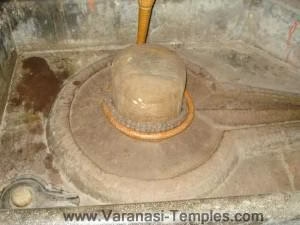
Form: A revered Swayambhu (self-manifested) manifestation often associated with the convergence of spiritual duties.
Phalaśruti: The Spiritual Benefits
According to the Kashi Khand of the Skanda Purana, the specific benefits of worshipping here are unparalleled for those adhering to Vedic rituals. It is believed that a devotee who takes a holy dip in the ancient Trisandhi Teerth (now dried up, but the spiritual energy remains) and performs the Sandhya Vandan (the three daily rituals of the noon, morning, and evening) with devotion, accrues the merit of learning three Vedas.
For the uninitiated, the merit extends to spiritual cleansing and the removal of Pitra Dosha (ancestral karma). Scientifically, the rigorous Pranayama (breath control) and physical prostrations required during the Trisandhya rituals, if performed here, are believed to promote holistic physical and mental health.
Historical Origins & Scriptural Legend
The history of Trisandhyeshwar is not merely etched in stone but preserved in sacred texts. The primary scriptural reference is derived from the Kashi Khand, Chapter 61, where Lord Vishnu describes the religiously important places and Teerths of Varanasi to the sage Bindu.
The Legend: Tradition holds that while Lord Vishnu was narrating the glories of Kashi, he mentioned the existence of a divine Teerth where the essence of the three Sandhyas converges. In the Vedic tradition, a Dwija must perform specific rituals three times a day: Pratah Sandhya (Morning), Madhyannikam (Noon), and Sayam Sandhya (Evening).
Legend states that the Trisandhi Teerth (the tank associated with this temple) possessed the miraculous power to multiply the spiritual potency of any ritual performed there. It is said that even the great sages and Devas visited this site to perform their Yajnas. The temple stands as a testimony to this ancient Vedic tradition, serving as a spiritual anchor for the performance of daily duties.
Architectural Marvels
While the grandeur of Varanasi’s ghats often overshadows its hidden architectural gems, the Trisandhyeshwar Temple is a classic example of the Kashi Naagari style—a regional variation of the Nagara style of temple architecture adapted to the dense urban fabric of the old city.
- Shikhara (Spire): The temple features a tiered Shikhara that rises subtly above the surrounding houses, symbolizing the connection between the earthly realm and the divine.
- Sanctum Sanctorum: The Garbhagriha houses the Swayambhu Shiva Lingam. The atmosphere inside is dimly lit, typical of ancient cave-like shrines, enhancing the meditative experience.
- Entrance & Sculptures: The entrance leads through a narrow passage. While not a ASI protected monument with extensive public documentation, the temple walls feature traditional carvings reminiscent of the medieval era.
- Vastu Shastra: The temple follows the traditional Panchayatana layout where the main shrine is surrounded by subsidiary shrines. The presence of the Phoote Ganesh idol nearby is a significant Vastu landmark.
Darshan & Ritual Logistics
Unlike the massive Vishwanath Temple or Annapurna Temple, Trisandhyeshwar operates with a focus on ritualistic observance rather than tourist footfall. The timings are aligned with the Sandhyas.
Daily Timings
| Mandap / Session | Timing |
|---|---|
| Morning Darshan | 06:00 AM – 12:00 PM |
| Madhyannikam Break | 12:00 PM – 1:30 PM (Rituals) |
| Evening Darshan | 4:30 PM – 9:00 PM |
Key Sevas & Online Booking
While traditional on-site offerings are common, most Varanasi temples are integrating digital systems. For Trisandhyeshwar, specialized Sevas include:
- Trisandhya Rudrabhishek: A special Abhishek performed during the three Sandhyas.
- Mrityunjaya Jaap: For health and longevity.
- Vedic Recitation: Offering the recitation of the Gayatri Mantra.
Booking Note: As of 2026, devotees can book general Darshan and specific Sevas via the official Kashi Vishwanath Corridor App or the temple’s dedicated online portal.
2026 Major Festivals
- Maha Shivaratri: March 8, 2026 – The temple remains open 24 hours with special Abhishekas.
- Kartik Purnima: November 15, 2026 – Special evening Aarti and lighting of lamps.
- Savan Somvar: July–August 2026 – Mondays are celebrated with immense fervor and extended timings.
Practical Visitor Guidance
Visiting Trisandhyeshwar requires navigating the narrow, bustling lanes of the old city. Here is what you need to know:
- Dress Code: Traditional attire is highly recommended. Men should wear Dhoti or trousers with a shirt/t-shirt; women should wear Saree or Salwar Kameez. Avoid shorts or sleeveless tops.
- Photography: Photography inside the inner sanctum (Garbhagriha) is strictly prohibited. Outside, it is generally allowed, but seek permission from the caretaker.
- Mobile/Lockers: There are no automated lockers, but the temple priest often manages a small storage area for phones and shoes for a nominal donation. It is advisable to carry minimal belongings.
- Accessibility: The lanes are extremely narrow and uneven. It is not wheelchair accessible. Wear comfortable flat footwear.
- Crowd Management: The best time to visit is early morning (6:00 AM – 8:00 AM) or late evening (after 8:00 PM). Avoid peak hours around noon. During Savan or Maha Shivaratri, crowds can be intense; plan accordingly.
Pilgrimage Connectivity
How to Reach Trisandhyeshwar Temple
The temple is located in the heart of Varanasi, near Lahouri Tola and Phoote Ganesh.
- Nearest Airport: Lal Bahadur Shastri International Airport (VNS) – Approx. 25 km (30-45 mins by taxi).
- Nearest Railway Station: Varanasi Junction (BSB) – Approx. 5 km (15-20 mins by auto/taxi).
- By Road: The temple lies 1 km from Dashashwamedh Ghat. Visitors can take an auto-rickshaw to Godaulia Crossing and then walk or hire a cycle rickshaw to Lahouri Tola.
- GPS Coordinates: Approximate location: 25.3176° N, 82.9739° E.
Nearby Sacred Sites
Trisandhyeshwar is part of a dense spiritual circuit. After darshan, visit:
- Phoote Ganesh Temple: Located just behind Trisandhyeshwar, this Ganesha idol is famous for being “rotated” (Phoote) or facing multiple directions.
- Dashashwamedh Ghat: One of the oldest and holiest ghats in Varanasi, just a short walk away. Witness the spectacular Ganga Aarti here.
- Sankat Mochan Hanuman Temple: A 15-minute ride away, dedicated to Lord Hanuman, known for granting relief from troubles.
Frequently Asked Questions (FAQ)
1. Is there a VIP darshan entry at Trisandhyeshwar Temple?
Due to the temple’s compact size and ancient structure, there is no formal VIP entry system like in larger shrines. However, priority is given to devotees performing specific Sevas or those carrying a special Prasadam receipt.
2. Can I perform the Sandhya Vandan rituals here if I am not a Brahmin?
While the rituals are traditionally Vedic, the temple is a spiritual space for all. Non-Brahmin devotees can observe the rituals, offer prayers, and seek blessings from Lord Trisandhyeshwar. The performance of the specific Vedic rites, however, is traditionally reserved for those initiated.
3. Is the Trisandhi Teerth water available for bathing?
As mentioned in the Kashi Khand, the ancient tank is currently dried up. Devotees traditionally take a dip in the nearby Ganga River at Dashashwamedh Ghat before proceeding to the temple for darshan.
4. What is the best season to visit?
October to March is ideal. Summers (April–June) are extremely hot, and monsoons (July–September) can make the narrow lanes slippery and prone to waterlogging.
5. Is there an entry fee?
No, entry to Trisandhyeshwar Temple is free for all devotees. Donations are voluntary and appreciated for the maintenance of the shrine.
Recent Posts

Shri Kaamkoteeshwar Mandir, Varanasi – History & Significance
In the heart of Kashi, the eternal city of Lord Shiva, where the Ganges flows with celestial grace, stands the Shri Kaamkoteeshwar Mandir. This sacred Sannidhi is not merely a temple but a profound spiritual bridge between the Northern…

ओ सांवरे तूने ही मुझको संभाला – Lyrics & Meaning
ओ सांवरे तूने ही मुझको संभाला – A Prayer to Shyam Origin & Spiritual Essence Why This Bhajan Resonates Devotees chant this when overwhelmed by life’s storms—the refrain ‘तूने ही मुझको संभाला’ is the soul’s sigh of relief: “You…

कथा ये है महाराज मेरे की – Lyrics & Meaning
कथा ये है महाराज मेरे की छत्रपति संभाजी महाराज – A Prayer to Chhatrapati Sambhaji Maharaj Origin & Spiritual Essence Why This Bhajan Resonates Devotees chant this when their spirit feels tested—its powerful refrain “महाराज मेरे” is a soul’s…

Rigveda Samhita Yathartha Anuvada (ऋग्वेद संहिता यथार्थ अनुवाद) – Complete Set with Anvayartha & Hindi/English Translation
The Rigveda is the oldest surviving scripture of humanity and the foundational text of Sanātana Dharma. For serious students, scholars, UPSC aspirants studying ancient Indian history, Sanskrit learners, and spiritual seekers, a precise and grammatically structured translation is indispensable.…

आना भी अकेला है जाना भी अकेला है – Lyrics & Meaning | BharatTemples
आना भी अकेला है जाना भी अकेला है – A Prayer to the Divine Witness Origin & Spiritual Essence Why This Bhajan Resonates Devotees turn to this bhajan in moments of deep reflection—when life’s attachments begin to ache. The…

माता शेरावाली के द्वार जो भी जाता है – Lyrics & Meaning
माता शेरावाली के द्वार जो भी जाता है – A Prayer to Maa Sherawali Origin & Spiritual Essence Why This Bhajan Resonates Devotees turn to this bhajan in times of fear or uncertainty—its promise that no one leaves Maa’s…

मार लेना सपणी उबार लेणा भवरा – Lyrics & Meaning
मार लेना सपणी उबार लेणा भवरा – A Prayer to the Divine Beloved Origin & Spiritual Essence Why This Bhajan Resonates Devotees chant this in moments of deep vulnerability—its cry of “मार लेना सपणी, उबार लेणा भवरा” is the…

हमें श्याम सुंदर भरोसा तुम्हारा – Lyrics & Meaning
हमें श्याम सुंदर भरोसा तुम्हारा – A Prayer to Shyam Sundar Origin & Spiritual Essence Why This Bhajan Resonates Devotees chant this when feeling alone—its refrain ‘de do sahara’ is the soul’s cry for divine support. Lyrics in Hindi…

Mere Satguru Ne Di Thi Davai Lyrics in Hindi & Meaning
Mere Satguru Ne Di Thi Davai: Invoking the Guru’s Liberating Wisdom This soul-stirring bhajan venerates the Satguru (True Spiritual Master) as the divine physician who dispenses the only remedy for life’s deepest sufferings. Composed by Sant Karmaveer Tufani, it…

Janm Diyo Thari Maa Dukh Dekhiyo Lyrics in Hindi & Meaning
जन्म दियो थारी माँ दुख देखियो (Maa’s Grief Upon Birthing You) This soul-stirring Chetavani Bhajan (admonitory hymn) is addressed to the Divine Mother (Maa) – a call for repentance when children forget their filial duties in the dark age…