
Contents
- 1 The Definitive Pilgrimage Guide: Vrisheshwar Temple, Varanasi
- 1.1 1. Introduction & Spiritual Essence
- 1.2 2. Historical Origins & Scriptural Legend
- 1.3 3. Architectural Marvels
- 1.4 4. Darshan & Ritual Logistics (2026 Schedule)
- 1.5 5. Practical Visitor Guidance
- 1.6 6. Pilgrimage Connectivity
- 1.7 7. Frequently Asked Questions (FAQs)
- 1.8 Photo Gallery
- 1.9 How to Reach
- 1.10 Contact Details
The Definitive Pilgrimage Guide: Vrisheshwar Temple, Varanasi
By the Lead Heritage Architect & SEO Strategist, BharatTemples.com
Welcome to the spiritual heart of Kashi. As we step into 2026, the ancient lanes of Varanasi continue to echo with the chants of Mahamrityunjaya. This guide is dedicated to Vrisheshwar Temple, a hidden sanctum that holds profound significance in the scriptures of Kashi Khand. Here, we blend architectural analysis with deep devotion to help you plan a seamless pilgrimage.
1. Introduction & Spiritual Essence
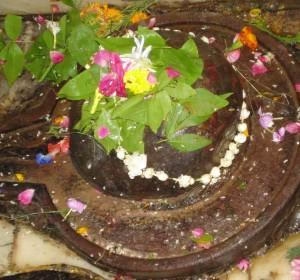
At the heart of Vrisheshwar Temple resides a swayambhu (self-manifested) Shiva Lingam. Unlike the monolithic structures carved by human hands, this form is believed to have emerged from the earth naturally, radiating immense spiritual energy.
The Deity and Form
The presiding deity is Vrisheshwar (also spelled Vrishabheshwar), an incarnation of Lord Shiva. The name derives from “Vrishabha” (the bull, Lord Shiva’s vehicle), signifying righteousness and dharma. The Lingam here is revered not just as a symbol of Shiva, but as the embodiment of the protective energy Shiva assumed after slaying the demon Gajasur.
Phalaśruti: The Spiritual Benefit
According to ancient texts, the mere sight (Darshan) of Vrisheshwar brings tranquility to the mind. Devotees visit this temple to:
- Cultivate Contentment: Scriptures state that worshippers of this Ling “will always be pleasant (happy).” It is a potent site for healing emotional turbulence.
- Ancestral Peace: Performing rituals here is believed to assist in resolving ancestral karma, particularly when combined with rituals in the nearby cremation grounds (Manikarnika Ghat).
- Overcoming Obstacles: Lord Shiva in this form removes obstacles on the spiritual path, akin to the energy of Vighnaharta.
2. Historical Origins & Scriptural Legend
While the exact masonry dates of the structure are lost to the swirling mists of time, the spiritual chronology is well-documented in the Kashi Khand of the Skanda Purana.
The Scriptural Roots
As referenced in Kashi Khand, Chapter 69, the story begins with the demon Gajasur. After slaying the demon, Lord Shiva adorned his skin—hence earning the name Rudra Vasam (the abode of Rudra wearing skin).
The Role of Nandi
A poignant local legend holds that Nandi, the divine vehicle of Shiva, desired to bring the essence of all 68 holy places (Teerthas) of Kashi into one accessible location for devotees. It is believed that Nandi brought various Shivlings from these sacred sites and installed them in Kashi. From the Vrishabhdwaju Teerth, a divine Ling of Vrishabheshwar manifested, creating this temple.
The temple complex sits atop a Ved Patshala (a traditional school for Vedic studies), indicating that the site has been a center of learning and devotion for centuries, likely dating back to the medieval period, though the current architectural layout reflects renovations common in the Maratha and Holkar periods of the 18th century.
3. Architectural Marvels
The architecture of Varanasi is a unique fusion of Nagara and Bengali styles, and Vrisheshwar Temple is a quintessential example of this amalgamation.
Subterranean Sanctum
Unlike towering skyscraping Shikharas, Vrisheshwar Temple is located below ground level. This architectural choice is deeply rooted in Vastu Shastra. Being closer to the earth element creates a grounding energy, facilitating deeper meditation. The descent into the temple represents a journey into the inner self.
Structural Elements
- The Mandapa: The pillared hall allows devotees to gather. The pillars are often carved with motifs of lotus and conch, symbolizing purity and the divine sound.
- The Garbhagriha: The inner sanctum is compact, focusing all energy on the Lingam. The low ceiling enhances the acoustic resonance of chanting.
- Stone Work: The stonework features the typical Banarasi floral patterns, though much of the exterior is simpler, emphasizing humility over grandeur.
Note on Heritage Status: While specific ASI (Archaeological Survey of India) protected status records for this specific niche temple are under verification, it falls under the umbrella of the Kashi Vishwanath Corridor heritage zone, ensuring strict preservation guidelines.
4. Darshan & Ritual Logistics (2026 Schedule)
To ensure a fulfilling experience, it is vital to align your visit with the temple’s opening hours and ritual times.
Daily Timings
Standard timings apply; however, these are subject to change during festivals.
| Session | Timing | Activity |
|---|---|---|
| Morning | 05:00 AM – 12:00 PM | Mangala Darshan, Abhishekam, Aarti |
| Mid-Day | 12:00 PM – 04:00 PM | Temple Cleaning (Deity Rest) |
| Evening | 04:00 PM – 09:00 PM | Shringar Darshan, Aarti, Shayan Aarti |
Key Sevas & Online Booking
Devotees can book specific rituals through the Kashi Vishwanath Temple Trust online portal (though Vrisheshwar is a smaller shrine, most bookings are centralized via the main KVT platform or local priests at Gorakhnath Maidagin).
- Abhishekam (Ritual Bathing): Performed with water, milk, and honey. Best time: 6:00 AM.
- Archana (Personal Prayer): A 15-minute ritual dedicated to your family’s well-being.
- Rudrabhishek: A powerful Vedic ritual performed on Mondays and Pradosh.
2026 Major Festival Dates (Varanasi Local Calendar)
Timings may vary slightly based on moon sighting.
- Shivratri (Maha Shivaratri): February 26, 2026. (The temple remains open 24 hours on this day).
- Deepavali (Kartik Maasa): November 10-14, 2026.
- Pradosh Vrat: Monthly (Check local Panchang).
- Mondays (Somvar): Throughout the year, special morning rituals commence at 5:00 AM.
5. Practical Visitor Guidance
Visiting Varanasi requires preparation. The spiritual intensity is matched by the physical demands of the ancient city.
Dress Code & Etiquette
Modesty is paramount. Traditional Indian attire (Saree, Kurta-Pajama) is encouraged. Western clothing like shorts or sleeveless tops should be avoided. Remove footwear at the designated rack outside the temple entrance.
Photography & Mobiles
Strict prohibition on photography inside the sanctum. Mobile phones are permitted but should be on silent mode. Tip: Utilize the free cloakrooms available at the main Kashi Vishwanath Corridor entry points before walking to smaller shrines like Vrisheshwar, as carrying large bags into the crowded lanes is difficult.
Crowd Management & Seasonal Advice
- Best Hours: 5:00 AM (Mangala Aarti) or 8:00 PM (Shayan Aarti). Avoid 6:00 PM to 7:30 PM, which is the peak evening rush.
- Summer (April-June): Varanasi can exceed 40°C. Carry a reusable water bottle; refill stations are available at the Corridor.
- Monsoon (July-Sept): The steps leading to the temple can be slippery. Wear rubber-soled sandals with grip.
- Accessibility: Due to the subterranean location, there are steps. Wheelchair access is currently limited for the inner sanctum.
6. Pilgrimage Connectivity
How to Reach Vrisheshwar Temple
The temple is located at K.58/78, Gorakhnath Maidagin, Varanasi.
- By Air: Lal Bahadur Shastri International Airport (LBS) is 25 km away. Taxis and e-rickshaws are readily available to drop you at the Kashi Vishwanath Corridor entrance.
- By Rail: Varanasi Junction (BSB) is the main station (3 km). Shared e-rickshaws (₹30-50) reach Gorakhnath Maidagin.
- By Road: From NH 19 (Grand Trunk Road), follow signs for Varanasi City/ Cantt. Auto-rickshaws are the preferred mode for the final mile, as the inner city roads are narrow.
Nearby Sacred Sites (Pilgrimage Circuit)
Integrate Vrisheshwar into a larger Kashi Yatra:
- Kashi Vishwanath Temple (Main): Just a 10-minute walk away.
- Sankat Mochan Hanuman Temple: Famous for the “Bada Hanuman” idol. Accessible via auto-rickshaw (10 mins).
- Manikarnika Ghat: The site of liberation (Moksha), located 15 minutes on foot.
7. Frequently Asked Questions (FAQs)
Is there a VIP Darshan entry?
For smaller shrines like Vrisheshwar, there is no formal VIP ticket system. However, visiting during non-peak hours (early morning or late night) provides a VIP-like, uninterrupted experience. For the main Kashi Vishwanath temple, VIP passes are available online.
What is the significance of the name “Vrisheshwar”?
It is closely linked to “Vrishabha” (the bull/Nandi) and “Ishwar” (God). It represents the form of Shiva as the protector of dharma (righteousness) and the one who grants happiness to devotees.
Are there accommodation options nearby?
Yes. The area around Gorakhnath Maidagin has several Dharamshalas and guest houses. Additionally, the Kashi Vishwanath Corridor has inaugurated modern guest houses with online booking facilities for pilgrims.
Can we perform Shradh/ Tarpan rituals here?
Yes, Vrisheshwar is a potent site for ancestral rites. Many priests in Gorakhnath Maidagin specialize in Vedic Shradh rituals.
Is the temple open during eclipse (Grahan)?
Generally, Shiva temples remain closed during the duration of a solar or lunar eclipse. Please check local notifications for 2026 eclipse dates before planning your visit.
Photo Gallery
Images of the temple facade and the subterranean sanctum will be updated shortly.
How to Reach
Vrisheshwar is located at K.58/78, Gorakhnath Maidagin. People can travel upto this place by rickshaw. There is a Ved Patshala in this premises and Vrisheshwar Ling is located below the ground level.
Contact Details
Official Address: K.58/78, Gorakhnath Maidagin, Varanasi, Uttar Pradesh 221001
Recent Posts

Shri Kaamkoteeshwar Mandir, Varanasi – History & Significance
In the heart of Kashi, the eternal city of Lord Shiva, where the Ganges flows with celestial grace, stands the Shri Kaamkoteeshwar Mandir. This sacred Sannidhi is not merely a temple but a profound spiritual bridge between the Northern…

ओ सांवरे तूने ही मुझको संभाला – Lyrics & Meaning
ओ सांवरे तूने ही मुझको संभाला – A Prayer to Shyam Origin & Spiritual Essence Why This Bhajan Resonates Devotees chant this when overwhelmed by life’s storms—the refrain ‘तूने ही मुझको संभाला’ is the soul’s sigh of relief: “You…

कथा ये है महाराज मेरे की – Lyrics & Meaning
कथा ये है महाराज मेरे की छत्रपति संभाजी महाराज – A Prayer to Chhatrapati Sambhaji Maharaj Origin & Spiritual Essence Why This Bhajan Resonates Devotees chant this when their spirit feels tested—its powerful refrain “महाराज मेरे” is a soul’s…

Rigveda Samhita Yathartha Anuvada (ऋग्वेद संहिता यथार्थ अनुवाद) – Complete Set with Anvayartha & Hindi/English Translation
The Rigveda is the oldest surviving scripture of humanity and the foundational text of Sanātana Dharma. For serious students, scholars, UPSC aspirants studying ancient Indian history, Sanskrit learners, and spiritual seekers, a precise and grammatically structured translation is indispensable.…

आना भी अकेला है जाना भी अकेला है – Lyrics & Meaning | BharatTemples
आना भी अकेला है जाना भी अकेला है – A Prayer to the Divine Witness Origin & Spiritual Essence Why This Bhajan Resonates Devotees turn to this bhajan in moments of deep reflection—when life’s attachments begin to ache. The…

माता शेरावाली के द्वार जो भी जाता है – Lyrics & Meaning
माता शेरावाली के द्वार जो भी जाता है – A Prayer to Maa Sherawali Origin & Spiritual Essence Why This Bhajan Resonates Devotees turn to this bhajan in times of fear or uncertainty—its promise that no one leaves Maa’s…

मार लेना सपणी उबार लेणा भवरा – Lyrics & Meaning
मार लेना सपणी उबार लेणा भवरा – A Prayer to the Divine Beloved Origin & Spiritual Essence Why This Bhajan Resonates Devotees chant this in moments of deep vulnerability—its cry of “मार लेना सपणी, उबार लेणा भवरा” is the…

हमें श्याम सुंदर भरोसा तुम्हारा – Lyrics & Meaning
हमें श्याम सुंदर भरोसा तुम्हारा – A Prayer to Shyam Sundar Origin & Spiritual Essence Why This Bhajan Resonates Devotees chant this when feeling alone—its refrain ‘de do sahara’ is the soul’s cry for divine support. Lyrics in Hindi…

Mere Satguru Ne Di Thi Davai Lyrics in Hindi & Meaning
Mere Satguru Ne Di Thi Davai: Invoking the Guru’s Liberating Wisdom This soul-stirring bhajan venerates the Satguru (True Spiritual Master) as the divine physician who dispenses the only remedy for life’s deepest sufferings. Composed by Sant Karmaveer Tufani, it…

Janm Diyo Thari Maa Dukh Dekhiyo Lyrics in Hindi & Meaning
जन्म दियो थारी माँ दुख देखियो (Maa’s Grief Upon Birthing You) This soul-stirring Chetavani Bhajan (admonitory hymn) is addressed to the Divine Mother (Maa) – a call for repentance when children forget their filial duties in the dark age…