
Contents
Nestled at the foot of the sacred Seshachalam Hills lies Kapila Theertham, a unique spiritual sanctuary where the divine presence of Lord Shiva converges with the purity of a mountain stream. This ancient Teertham (sacred water body) is one of the most prominent Saivite shrines in Andhra Pradesh, revered by saints and devotees for centuries.
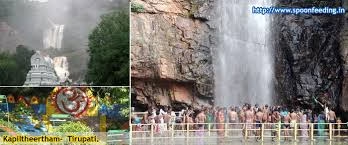
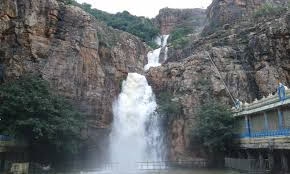
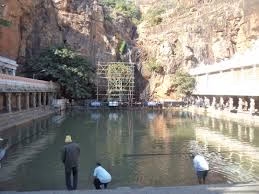
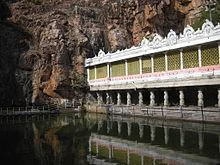
The primary deity, Kapileswara Swamy, is a Swayambhu (self-manifested) Shiva Lingam. The name derives from the legendary sage Kapila Muni, who is believed to have worshipped the Lord here, bestowing immense spiritual power to the location. The temple is situated at the entrance of a mountain cave where the cascading waters of the stream plunge directly into the Pushkarini (temple tank), known as the Kapila Theertham.
Phalaśruti: Why Devotees Visit
According to ancient scriptures, a pilgrimage to Kapila Theertham washes away sins accumulated over lifetimes. The Phalaśruti (fruits of pilgrimage) promises:
- Cleansing of Ancestral Karma: Performing Shraddha and rituals here is believed to liberate ancestors from the cycle of rebirth.
- Relief from Planetary Afflictions: Particularly beneficial for those facing afflictions from Shani (Saturn) and Rahu-Ketu.
- Health and Prosperity: The medicinal properties of the herbal stream waters are said to cure chronic ailments.
Historical Origins & Scriptural Legend
While the temple’s origins are steeped in the mists of antiquity, historical records attribute significant patronage to the Vijayanagara Empire (13th–16th centuries). The temple received lavish endowments from Saluva Narasimha Deva Raya and the legendary Sri Krishna Deva Raya. Later rulers, including Venkatapathi Raya and Aliya Ramaraya (Sri Krishna Deva Raya’s son-in-law), contributed to the structural integrity and ornamental carvings seen today.
The Legend of Sage Kapila
Tradition holds that Sage Kapila performed intense penance at this very spot to redeem himself from a curse. Pleased by his devotion, Lord Shiva manifested as a Swayambhu Lingam. It is also believed that the divine bull, Nandhi, drank the waters of this stream to regain his strength, sanctifying the Theertham forever. Another local lore suggests that the Pandavas halted here during their exile, bathing in the waters to purify their warrior sins.
Architectural Marvels
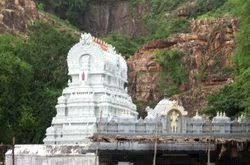
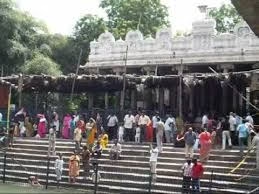
The temple is a fine example of Dravidian Architecture, characterized by its towering Gopurams and intricate stonework. Standing at the entrance is a colossal stone statue of Nandhi, Shiva’s steed, facing the sanctum with unwavering devotion.
- Shikhara: The main temple spire is designed in the classic Dravidian style, adorned with miniature niches housing depictions of deities.
- Mandapas: The pillared hall allows devotees to gather for darshan, featuring carved pillars that depict various forms of Shiva and mythological narratives.
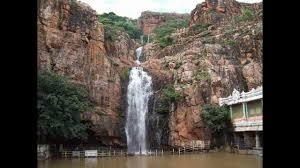
- The Cave & Theertham: The unique aspect of this temple is its natural setting. The water cascades from the vertical face of the Tirumala hills directly into the temple tank, merging architectural design with natural grandeur.
Darshan & Ritual Logistics
To facilitate a smooth darshan experience, devotees can follow the standard timings. Note that during festivals, timings may be extended.
Daily Timings (2026 Schedule)
| Session | Timing |
|---|---|
| Morning Darshan | 06:00 AM – 12:00 PM |
| Afternoon Break | 12:00 PM – 03:00 PM |
| Evening Darshan | 03:00 PM – 08:00 PM |
Key Sevas & Booking
Devotees can book the following Sevas online via the official Tirumala Tirupati Devasthanams (TTD) portal or at the counter.
- Abhishekam: Performed daily from 06:00 AM to 07:00 AM. Requires prior booking.
- Archana/Kumkum Archana: Highly recommended for family well-being.
- Lamp Lighting (Deepa Darshan): Available during evening hours.
2026 Major Festivals at Kapila Theertham
- Maha Shivaratri: February 26, 2026 (Expect night-long vigils and special Abhishekams).
- Karthika Deepam: November 5, 2026 (Illumination of lamps across the temple premises).
- Kapileswara Swamy Brahmotsavam: Dates vary by Telugu Panchangam (Typically January or May).
Practical Visitor Guidance
Code of Conduct & Rules
- Dress Code: Traditional attire is mandatory. Men: Dhoti/Pants with Shirt. Women: Saree/Salwar Kameez.
- Photography: Strictly prohibited inside the Sanctum Sanctorum (Garbhagriha).
- Electronics: Mobile phones must be switched off or kept in silent mode during darshan.
- Lockers: Cloakrooms are available near the entrance to store footwear and bags (minimal fee applies).
Crowd Management
Kapila Theertham sees moderate crowds, heavier on weekends and Mondays. The best time to visit for a peaceful darshan is 6:00 AM to 8:00 AM or between 2:00 PM and 3:00 PM. During the summer months (April–June), the steps leading to the cave can be hot; carry a water bottle and wear slip-resistant footwear.
Pilgrimage Connectivity
How to Reach
- Nearest Airport: Tirupati International Airport (TIR) is located approximately 15 km away.
- Railway: Tirupati Railway Station is the closest railhead (approx. 4.2 km). Autos and buses are readily available.
- By Road: The temple is well-connected via NH 71. It is located at the foothills of Tirumala, clearly signposted from Tirupati town.
Nearby Sacred Sites
Extend your pilgrimage by visiting these nearby shrines:
- Sri Venkateswara Temple (Tirumala): The world-renowned abode of Lord Vishnu (10 km uphill).
- Sri Padmavathi Amman Temple (Tiruchanoor): Dedicated to Goddess Padmavathi, consort of Lord Venkateswara (5 km south).
- Sri Kalyana Venkateswara Swamy Temple (Srinivasamangapuram): An alternative Tirumala darshan point (12 km).
Photo Gallery
Frequently Asked Questions (FAQ)
Yes, while there is no specific VIP ticket like in Tirumala, devotees holding Special Entry Darshan (SED) tickets from TTD or those accompanied by the Panchayat Raj/Revenue officials can avail of quicker entry. It is advisable to book Seva tickets online in advance.
The water originates from the Tirumala hills and is believed to contain medicinal herbs. Devotees bathe in the Pushkarini (tank) before entering the temple, believing it purifies the body and soul. Note that the water is not potable for drinking.
The main temple is located at the foothills and is accessible via a short flight of steps. However, the cave shrine and the waterfall view require climbing steep stairs. A doli (palanquin) service is available for senior citizens upon request, subject to staff availability.
Being a traditional Saivite shrine, entry is generally restricted to Hindus. However, guidelines may vary; it is best to check with the temple administration office at the entrance for current policies.
Yes, Kapila Theertham is considered highly auspicious for performing Shraddha and Tarpanam rituals for ancestors. Priests (Rajagars) are available on-site to perform these rituals. It is recommended to arrive early in the morning.
Recent Posts

Shri Kaamkoteeshwar Mandir, Varanasi – History & Significance
In the heart of Kashi, the eternal city of Lord Shiva, where the Ganges flows with celestial grace, stands the Shri Kaamkoteeshwar Mandir. This sacred Sannidhi is not merely a temple but a profound spiritual bridge between the Northern…

ओ सांवरे तूने ही मुझको संभाला – Lyrics & Meaning
ओ सांवरे तूने ही मुझको संभाला – A Prayer to Shyam Origin & Spiritual Essence Why This Bhajan Resonates Devotees chant this when overwhelmed by life’s storms—the refrain ‘तूने ही मुझको संभाला’ is the soul’s sigh of relief: “You…

कथा ये है महाराज मेरे की – Lyrics & Meaning
कथा ये है महाराज मेरे की छत्रपति संभाजी महाराज – A Prayer to Chhatrapati Sambhaji Maharaj Origin & Spiritual Essence Why This Bhajan Resonates Devotees chant this when their spirit feels tested—its powerful refrain “महाराज मेरे” is a soul’s…

Rigveda Samhita Yathartha Anuvada (ऋग्वेद संहिता यथार्थ अनुवाद) – Complete Set with Anvayartha & Hindi/English Translation
The Rigveda is the oldest surviving scripture of humanity and the foundational text of Sanātana Dharma. For serious students, scholars, UPSC aspirants studying ancient Indian history, Sanskrit learners, and spiritual seekers, a precise and grammatically structured translation is indispensable.…

आना भी अकेला है जाना भी अकेला है – Lyrics & Meaning | BharatTemples
आना भी अकेला है जाना भी अकेला है – A Prayer to the Divine Witness Origin & Spiritual Essence Why This Bhajan Resonates Devotees turn to this bhajan in moments of deep reflection—when life’s attachments begin to ache. The…

माता शेरावाली के द्वार जो भी जाता है – Lyrics & Meaning
माता शेरावाली के द्वार जो भी जाता है – A Prayer to Maa Sherawali Origin & Spiritual Essence Why This Bhajan Resonates Devotees turn to this bhajan in times of fear or uncertainty—its promise that no one leaves Maa’s…

मार लेना सपणी उबार लेणा भवरा – Lyrics & Meaning
मार लेना सपणी उबार लेणा भवरा – A Prayer to the Divine Beloved Origin & Spiritual Essence Why This Bhajan Resonates Devotees chant this in moments of deep vulnerability—its cry of “मार लेना सपणी, उबार लेणा भवरा” is the…

हमें श्याम सुंदर भरोसा तुम्हारा – Lyrics & Meaning
हमें श्याम सुंदर भरोसा तुम्हारा – A Prayer to Shyam Sundar Origin & Spiritual Essence Why This Bhajan Resonates Devotees chant this when feeling alone—its refrain ‘de do sahara’ is the soul’s cry for divine support. Lyrics in Hindi…

Mere Satguru Ne Di Thi Davai Lyrics in Hindi & Meaning
Mere Satguru Ne Di Thi Davai: Invoking the Guru’s Liberating Wisdom This soul-stirring bhajan venerates the Satguru (True Spiritual Master) as the divine physician who dispenses the only remedy for life’s deepest sufferings. Composed by Sant Karmaveer Tufani, it…

Janm Diyo Thari Maa Dukh Dekhiyo Lyrics in Hindi & Meaning
जन्म दियो थारी माँ दुख देखियो (Maa’s Grief Upon Birthing You) This soul-stirring Chetavani Bhajan (admonitory hymn) is addressed to the Divine Mother (Maa) – a call for repentance when children forget their filial duties in the dark age…