
Contents
- 1 Introduction & Spiritual Essence
- 2 Historical Origins & Scriptural Legend
- 3 Architectural Marvels
- 4 Darshan & Ritual Logistics
- 5 Practical Visitor Guidance
- 6 Pilgrimage Connectivity
- 7 Photo Gallery
- 8 Frequently Asked Questions (FAQ)
- 8.1 1. Is there a VIP darshan entry available at Prasanna Venkateswara Temple?
- 8.2 2. What is the significance of the right-hand Abhaya Mudra?
- 8.3 3. Can we offer our own clothes or flowers to the deity?
- 8.4 4. Is accommodation available near the temple?
- 8.5 5. What is the best way to contact the temple administration?
- 9 Contact Details
Introduction & Spiritual Essence
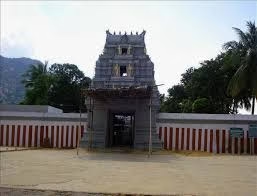
Sri Prasanna Venkateswara Swamy Temple, nestled in the serene village of Appalayagunta, stands as a beacon of solace and spiritual renewal. Located approximately 16 kilometers from the bustling temple town of Tirupati in the Chittoor district of Andhra Pradesh, this ancient shrine is dedicated to Lord Venkateswara, revered here specifically as Prasanna Venkateswara. The name “Prasanna” translates to “serene” or “graceful,” signifying the deity’s calm and benevolent demeanor.
Unlike the typical representation of Lord Venkateswara found in many major temples, the presiding deity here is distinguished by its unique posture. In this form, Lord Venkateswara holds his right hand in the Abhaya Mudra (the gesture of fearlessness), rather than the usual hand position for granting boons. This form is deeply cherished by devotees as it represents the Lord’s promise of protection and the removal of fear and anxiety.
Phalaśruti: Why Devotees Visit
According to local belief and scriptural tradition, worshipping Prasanna Venkateswara at Appalayagunta yields profound spiritual benefits. It is believed that offering sincere prayers here helps cleanse ancestral karma and removes planetary afflictions, specifically the ill effects of Kala Sarpa Dosha. The temple is often referred to as a “Shanti Kshetram” (Land of Peace), making it an ideal destination for those seeking mental clarity, relief from prolonged worries, and family harmony.
Historical Origins & Scriptural Legend
The Prasanna Venkateswara Temple boasts a rich history that dates back to the early 13th century. Historical records indicate that the temple was constructed in 1232 AD. It was built by Sri Venkata Perumalaraju Brahmadeva Maharaj, the ruler of the Karvetinagaram dynasty. This dynasty was known for its patronage of Vaishnavism and constructed several temples across the region, with Appalayagunta being one of their most significant spiritual endowments.
According to the Sthala Purana (the local oral legend), the temple traces its roots to a divine intervention involving the consort of Lord Venkateswara. Legend holds that Padmavati, the consort of Lord Srinivasa (Venkateswara), performed severe penance in the caves of Appalayagunta to win the Lord’s grace. Impressed by her devotion, Lord Venkateswara manifested here in the form of Prasanna Venkateswara to bless her. Thus, the temple is not just a monument of stone but a testament to divine love and marital harmony.
Over the centuries, the temple has undergone several renovations to preserve its structural integrity and artistic grandeur, yet it has retained its original sanctity and architectural essence.
Architectural Marvels
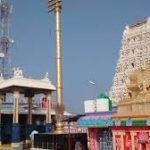
The temple is a quintessential example of the Dravidian architectural style, characterized by towering gateways (Gopurams) and intricate sculptural detailing. The structure is designed according to the principles of Vastu Shastra, ensuring a harmonious flow of energy throughout the sanctum.
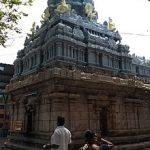
- Shikhara (Tower): The temple features a modest yet elegant Shikhara (tower) above the sanctum sanctorum (Garbhagriha). Unlike the massive towers of Sri Kalahasti, the Shikhara here is designed to evoke a sense of intimacy and peace.
- Garbhagriha & Murti: The central deity, Prasanna Venkateswara, is carved from black granite and stands in a standing posture. The Murti is unique for its right hand raised in Abhaya Mudra. To the left of the main deity resides the Utsava Murti (processional deity), which is used for festivals.
- Mandapas: The temple includes a spacious Maha Mandapa (main hall) and an Ardha Mandapa (transitional hall). The pillars in these halls are adorned with carvings depicting scenes from the Ramayana and Mahabharata, along with floral motifs and celestial beings.
While the temple is a protected monument by the Andhra Pradesh State Archaeology Department, it retains the soulful aura of a village shrine, distinct from the commercial hustle of larger pilgrimage centers.
Darshan & Ritual Logistics
The rituals at Prasanna Venkateswara Temple are conducted in strict adherence to the Pancharatra Agama traditions. The priests (archakas) perform daily worship with great devotion.
Daily Timings
The following table outlines the darshan timings for 2026. Please note that timings may vary slightly during festivals.
| Session | Time Slot | Activity |
|---|---|---|
| Morning | 06:00 AM – 12:00 PM | Suprabhatam, Thomala, Archana, General Darshan |
| Afternoon | 12:00 PM – 04:00 PM | Temple remains closed (Cleaning & Srikara Pooja) |
| Evening | 04:00 PM – 08:00 PM | Evening Seva, Sahasra Deepalankara, General Darshan |
Key Sevas and Booking
Devotees can participate in various sevas (services) to the deity. While the temple is less crowded than Tirumala, it is advisable to book sevas in advance via the official TTD (Tirumala Tirupati Devasthanams) portal or local counter.
- Suprabhatam: The morning awakening ritual.
- Abhishekam: Ritual bathing of the deity (performed on specific days).
- Archana: Offering of flowers and chanting of holy names.
- Kalyanotsavam: Celestial wedding ceremony for the Lord (conducted on festival days).
Online Booking: Visit the TTD official website (tirumala.org) to book sevas for Appalayagunta. Select “Prasanna Venkateswara Temple” under the regional temple category.
2026 Festival Calendar
The temple comes alive during Brahmotsavam and other Vaishnava festivals. Key dates for 2026 include:
- Vaikuntha Ekadasi: December 29, 2025 – January 8, 2026 (Major festival celebrating the opening of Vaikuntha).
- Sri Rama Navami: April 6, 2026 (Celebration of Lord Rama’s birth).
- Brahmotsavam (Annual): Typically held in February/March (Dates vary by the local Telugu calendar; specific dates to be announced by the local temple committee).
- Deepavali: October 21, 2026 (Special illuminations).
Practical Visitor Guidance
To ensure a smooth and respectful visit to this sacred site, please adhere to the following guidelines.
Dress Code & Etiquette
Visitors must dress modestly. Men are required to wear Dhoti or trousers with a shirt/top. Women should wear Saree, Salwar Kameez, or traditional attire. Western clothing such as shorts, skirts, and sleeveless tops is strictly prohibited inside the temple premises.
Photography & Electronic Devices
- Photography: Photography is prohibited inside the Garbhagriha (inner sanctum) and during the puja rituals. However, photography is generally allowed in the outer pradakshina areas, though it is respectful to ask permission.
- Mobile Lockers: Since mobile phones are not permitted inside the inner sanctum, devotees should carry minimal belongings. There are basic locker facilities available near the temple entrance, but availability is limited. It is best to leave valuables in your vehicle.
Accessibility
The temple is built on a flat terrain. While the main sanctum has a few steps, the surrounding mandapas are accessible for seniors and differently-abled devotees. Wheelchairs are available upon request at the entrance counter.
Crowd Management
- Best Time to Visit: The temple is usually crowded on Sundays and public holidays. For a peaceful Darshan, visit between 10:00 AM and 11:00 AM on weekdays.
- Seasonal Advice: Summers (March to June) in Andhra Pradesh are extremely hot. If visiting during this time, carry a water bottle (to be kept in the shoe rack), a hat, and sunglasses. The monsoon season (July to September) offers pleasant weather but check road conditions before travel.
Pilgrimage Connectivity
How to Reach
Appalayagunta is well-connected by road to Tirupati.
- Nearest Airport: Tirupati International Airport (TIR), located roughly 25 km away (approx. 45 mins by car via NH 71).
- Nearest Railway Station: Tirupati Railway Station (TPTY) is the major junction, about 18 km away.
- By Road: The temple is located on the Tirupati – Punganur Highway (NH 71). It is approximately a 30-minute drive from Tirupati city. Buses are available from the Tirupati Central Bus Stand (Alipiri) heading towards Punganur/Madanapalle. Ask for the “Appalayagunta” bus stop.
Nearby Sacred Sites
Extend your pilgrimage by visiting these nearby temples:
- Kapila Theertham: Located in Tirupati, this is a powerful waterfall temple dedicated to Lord Shiva. It is about 15 km from Appalayagunta.
- Srikalahasteeswara Temple: A major Shiva temple located 35 km from Tirupati. It is one of the Pancha Bhoota Stalas (representing the element of Vayu).
- Govindaraja Swamy Temple: Situated in the heart of Tirupati, this ancient temple is dedicated to Lord Venkateswara’s brother and is a key stop for pilgrims.
Photo Gallery


Frequently Asked Questions (FAQ)
1. Is there a VIP darshan entry available at Prasanna Venkateswara Temple?
While the temple does not have a dedicated VIP entry like the Tirumala Tirupati Devasthanams, special entry tickets can be purchased at the local counter for a nominal fee to bypass the general queue during non-peak hours.
2. What is the significance of the right-hand Abhaya Mudra?
The right-hand Abhaya Mudra symbolizes the removal of fear and protection from evil. In traditional iconography, the right hand usually holds the Sudarshana Chakra. Here, Lord Venkateswara adopts a form specifically meant to assure devotees of their safety and well-being.
3. Can we offer our own clothes or flowers to the deity?
Yes, you can offer flowers and garlands. You can purchase these from vendors outside the temple. However, offering clothes (Vastra) usually requires prior permission from the temple authorities or is done during specific sevas.
4. Is accommodation available near the temple?
There are no major guest houses directly at Appalayagunta. However, ample accommodation is available in Tirupati (16 km away), ranging from TTD guest houses to private hotels. It is recommended to stay in Tirupati and make a day trip to Appalayagunta.
5. What is the best way to contact the temple administration?
For current information regarding sevas and rituals, it is best to contact the local temple executive officer or visit the official Tirumala Tirupati Devasthanams (TTD) website, as this temple is administered under the TTD umbrella.
Contact Details
Official Address:
Prasanna Venkateswara Swamy Temple,
Appalayagunta Village,
Chittoor District, Andhra Pradesh 517551
Phone: +91 877 222 5555 (TTD Call Center)
Recent Posts

Shri Kaamkoteeshwar Mandir, Varanasi – History & Significance
In the heart of Kashi, the eternal city of Lord Shiva, where the Ganges flows with celestial grace, stands the Shri Kaamkoteeshwar Mandir. This sacred Sannidhi is not merely a temple but a profound spiritual bridge between the Northern…

ओ सांवरे तूने ही मुझको संभाला – Lyrics & Meaning
ओ सांवरे तूने ही मुझको संभाला – A Prayer to Shyam Origin & Spiritual Essence Why This Bhajan Resonates Devotees chant this when overwhelmed by life’s storms—the refrain ‘तूने ही मुझको संभाला’ is the soul’s sigh of relief: “You…

कथा ये है महाराज मेरे की – Lyrics & Meaning
कथा ये है महाराज मेरे की छत्रपति संभाजी महाराज – A Prayer to Chhatrapati Sambhaji Maharaj Origin & Spiritual Essence Why This Bhajan Resonates Devotees chant this when their spirit feels tested—its powerful refrain “महाराज मेरे” is a soul’s…

Rigveda Samhita Yathartha Anuvada (ऋग्वेद संहिता यथार्थ अनुवाद) – Complete Set with Anvayartha & Hindi/English Translation
The Rigveda is the oldest surviving scripture of humanity and the foundational text of Sanātana Dharma. For serious students, scholars, UPSC aspirants studying ancient Indian history, Sanskrit learners, and spiritual seekers, a precise and grammatically structured translation is indispensable.…

आना भी अकेला है जाना भी अकेला है – Lyrics & Meaning | BharatTemples
आना भी अकेला है जाना भी अकेला है – A Prayer to the Divine Witness Origin & Spiritual Essence Why This Bhajan Resonates Devotees turn to this bhajan in moments of deep reflection—when life’s attachments begin to ache. The…

माता शेरावाली के द्वार जो भी जाता है – Lyrics & Meaning
माता शेरावाली के द्वार जो भी जाता है – A Prayer to Maa Sherawali Origin & Spiritual Essence Why This Bhajan Resonates Devotees turn to this bhajan in times of fear or uncertainty—its promise that no one leaves Maa’s…

मार लेना सपणी उबार लेणा भवरा – Lyrics & Meaning
मार लेना सपणी उबार लेणा भवरा – A Prayer to the Divine Beloved Origin & Spiritual Essence Why This Bhajan Resonates Devotees chant this in moments of deep vulnerability—its cry of “मार लेना सपणी, उबार लेणा भवरा” is the…

हमें श्याम सुंदर भरोसा तुम्हारा – Lyrics & Meaning
हमें श्याम सुंदर भरोसा तुम्हारा – A Prayer to Shyam Sundar Origin & Spiritual Essence Why This Bhajan Resonates Devotees chant this when feeling alone—its refrain ‘de do sahara’ is the soul’s cry for divine support. Lyrics in Hindi…

Mere Satguru Ne Di Thi Davai Lyrics in Hindi & Meaning
Mere Satguru Ne Di Thi Davai: Invoking the Guru’s Liberating Wisdom This soul-stirring bhajan venerates the Satguru (True Spiritual Master) as the divine physician who dispenses the only remedy for life’s deepest sufferings. Composed by Sant Karmaveer Tufani, it…

Janm Diyo Thari Maa Dukh Dekhiyo Lyrics in Hindi & Meaning
जन्म दियो थारी माँ दुख देखियो (Maa’s Grief Upon Birthing You) This soul-stirring Chetavani Bhajan (admonitory hymn) is addressed to the Divine Mother (Maa) – a call for repentance when children forget their filial duties in the dark age…