

Contents
Introduction & Spiritual Essence
Sri Varahaswamy Temple, also revered as Bhu Varahaswamy Temple, stands as a sacred sentinel on the northern banks of Swami Pushkarini in the holy town of Tirumala, Andhra Pradesh. Dedicated to Lord Varaha—the third incarnation of Vishnu—this temple is not merely a shrine but a celestial gateway to the Tirumala hills. Unlike the deity at the main Venkateswara Temple, the idol here is a Swayambhu (self-manifested) form of Lord Varaha.
Phalaśruti (Spiritual Benefit): Devotees believe that offering prayers here is mandatory before seeking darshan of Lord Venkateswara. According to the Sthala Purana, the Varaha form of Vishnu is the guardian of the Tirumala hill. It is believed that worshipping Lord Varaha here cleanses pitru dosha (ancestral karma) and grants stability and prosperity.
Historical Origins & Scriptural Legend
The temple’s origins are shrouded in the mists of time, believed to be older than the Sri Venkateswara Temple itself. Tradition holds that Lord Varaha originally resided on the Tirumala hill to grant boons to the sage Bhrigu and to subdue the arrogance of Adishesha (the serpent king).
The Legend of Permission: According to the Sthala Purana, when Lord Venkateswara (a form of Vishnu) wished to stay on the hill to fulfill his boon to marry Padmavati, he approached Lord Varaha for permission. Lord Varaha graciously agreed to stay on the northern bank of Swami Pushkarini, provided devotees worshipped him first. This is why it is customary to offer prayers at Varahaswamy Temple before visiting the main Venkateswara shrine.
While specific records of dynasty attribution are scarce due to the temple’s antiquity, the structure has been maintained and renovated over centuries by various South Indian dynasties, including the Pallavas and Vijayanagara rulers, adhering to the Agamic scriptures.
Architectural Marvels
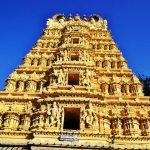
The temple exemplifies the classic Dravidian style of architecture. It is a compact but magnificent structure oriented towards the east, facing the majestic Swami Pushkarini.
- Vastu Shastra: The temple is strategically located on the northwest corner of the holy tank, adhering to Vastu principles that associate this direction with the deity of prosperity and protection.
- The Vimana and Shikhara: The temple features a golden vimana (tower over the sanctum sanctorum), typical of Dravidian temples. The inner sanctum houses the Adi Varaha murti, depicted with four arms holding the Sudarshana Chakra, Padma (lotus), and Khadga (sword), with his vehicle, the boar (Varaha), as the base.
- Mandapas: The Mukha Mandapa (front hall) is where significant rituals like Chakrasnanam are conducted during Brahmotsavam. The pillars are adorned with intricate carvings depicting scenes from the Puranas.
| Date built: | – |
|---|---|
| Deity: | Varaha , Vishanu |
| Architectural style: | Dravidian architecture |
| Major festivals | Varaha Jayanti, Vaikunta, Ekadasi |
| Locale: | Tirupati |
| District:: | chittoor |
| Address: | Balaji Nagar, Tirumala, Tirupati, Andhra Pradesh 517504 |
| Phone | – |
Darshan & Ritual Logistics (2026 Guide)
The rituals at Sri Varahaswamy Temple follow the strict Vaikanasa Agama. The temple observes daily temple timings similar to the main shrine, though the sanctum is smaller, allowing for focused darshan.
Daily Timings
Note: Timings are subject to change during festival seasons.
| Session | Timing |
|---|---|
| Morning Darshan | 5:00 AM – 7:00 AM |
| Afternoon Break | 12:30 PM – 3:00 PM |
| Evening Darshan | 4:00 PM – 8:00 PM |
| Weekends/Holidays | Extended by 1 hour |
Key Sevas and 2206 Festivals
Devotees can participate in several sevas (offerings). Online Seva Booking is integrated via the official Tirumala Tirupati Devasthanams (TTD) portal.
- Suprabhatam: 6:00 AM
- Archana: Individual archana can be performed by presenting a lamp and flowers.
- Circumambulation (Pradakshina): Performed in the Mukha Mandapa.
Important 2026 Festival Dates:
- Varaha Jayanti: August 16, 2026 (Grand celebration with special Abhishekam).
- Vaikunta Ekadasi: December 2, 2026 (Special entry via Vaikunta Dwaras).
- Rathasapthami: February 5, 2026 (Chariot procession).
Practical Visitor Guidance
Given the high volume of pilgrims visiting Tirumala, adhering to guidelines ensures a smooth experience.
- Dress Code: Traditional attire is mandatory. Men should wear dhoti or pants with a shirt; women should wear saree, salwar kameez, or traditional skirt and blouse. Western attire is strictly prohibited.
- Photography: Photography is strictly prohibited inside the sanctum sanctorum and the inner mandapa. Mobile phones are permitted but must be on silent mode.
- Crowd Management: The temple can get crowded during weekends and festival days. The best time for a peaceful darshan is between 6:00 AM and 7:00 AM on weekdays.
- Accessibility: The temple is accessible via stairs from the main Swami Pushkarini pathway. Wheelchair access is available via the rear entrance, but assistance is required.
Pilgrimage Connectivity
How to Reach:
- By Air: The nearest airport is Tirupati Airport (TIR) (approx. 40 km from Tirumala base). Chennai International Airport is the next closest major hub.
- By Rail: Tirupati Railway Station (TPTY) is the main railhead. From there, buses and taxis are available for the 25 km ghat road ascent to Tirumala.
- By Road: The climb to Tirumala is via NH 765 (Renigunta-Tirupati Road). Pilgrims must obtain an entry permit from the CRO (Central Reception Office) at Alipiri or Sri Varahaswamy Central Office at Renigunta.
Nearby Sacred Sites (Pilgrimage Circuit):
- Sri Venkateswara Temple: Located just a short walk west from Varahaswamy Temple.
- Sri Padmavathi Amman Temple (Tiruchanur): Located 5 km from Tirupati railway station; considered essential to visit after Tirumala.
- Kapila Theertham: A sacred waterfall and temple dedicated to Lord Shiva, located at the base of the Tirumala hills.
Photo Gallery


Frequently Asked Questions (FAQ)
1. Is it mandatory to visit Varahaswamy Temple before Venkateswara Temple?
Yes, according to the Sthala Purana and temple tradition, it is highly auspicious and considered mandatory to offer prayers to Lord Varaha (the guardian of the hill) before seeking darshan of Lord Venkateswara.
3. Is there a VIP darshan entry available?
There is no separate VIP entry for the Varahaswamy Temple. However, TTD provides Special Entry Darshan (Seegra Darshan) tickets which allow priority access to the main Venkateswara shrine. Note that the queue for Varahaswamy Temple is usually shorter than the main temple.
3. Is accommodation available near the temple?
Yes, TTD runs several guest houses and choultries in Tirumala. Dormitories and private rooms are available, and bookings can be made via the official TTD website or at the CRO office in Tirupati.
4. Can I offer Naivedyam (food offering) personally?
While devotees typically offer Naivedyam through the temple archakas, TTD permits specific ritual offerings. It is advisable to consult the temple priest for specific permissions regarding personal offerings.
5. What is the significance of Swami Pushkarini?
Swami Pushkarini is the holy tank located adjacent to the Varahaswamy Temple. It is believed that Lord Varaha created this tank for the pleasure of Lord Venkateswara. Taking a dip here is considered purifying before entering the temple premises.
Contact Details
Official Address:
Balaji Nagar, Tirumala, Tirupati, Andhra Pradesh 517504
Recent Posts

Shri Kaamkoteeshwar Mandir, Varanasi – History & Significance
In the heart of Kashi, the eternal city of Lord Shiva, where the Ganges flows with celestial grace, stands the Shri Kaamkoteeshwar Mandir. This sacred Sannidhi is not merely a temple but a profound spiritual bridge between the Northern…

ओ सांवरे तूने ही मुझको संभाला – Lyrics & Meaning
ओ सांवरे तूने ही मुझको संभाला – A Prayer to Shyam Origin & Spiritual Essence Why This Bhajan Resonates Devotees chant this when overwhelmed by life’s storms—the refrain ‘तूने ही मुझको संभाला’ is the soul’s sigh of relief: “You…

कथा ये है महाराज मेरे की – Lyrics & Meaning
कथा ये है महाराज मेरे की छत्रपति संभाजी महाराज – A Prayer to Chhatrapati Sambhaji Maharaj Origin & Spiritual Essence Why This Bhajan Resonates Devotees chant this when their spirit feels tested—its powerful refrain “महाराज मेरे” is a soul’s…

Rigveda Samhita Yathartha Anuvada (ऋग्वेद संहिता यथार्थ अनुवाद) – Complete Set with Anvayartha & Hindi/English Translation
The Rigveda is the oldest surviving scripture of humanity and the foundational text of Sanātana Dharma. For serious students, scholars, UPSC aspirants studying ancient Indian history, Sanskrit learners, and spiritual seekers, a precise and grammatically structured translation is indispensable.…

आना भी अकेला है जाना भी अकेला है – Lyrics & Meaning | BharatTemples
आना भी अकेला है जाना भी अकेला है – A Prayer to the Divine Witness Origin & Spiritual Essence Why This Bhajan Resonates Devotees turn to this bhajan in moments of deep reflection—when life’s attachments begin to ache. The…

माता शेरावाली के द्वार जो भी जाता है – Lyrics & Meaning
माता शेरावाली के द्वार जो भी जाता है – A Prayer to Maa Sherawali Origin & Spiritual Essence Why This Bhajan Resonates Devotees turn to this bhajan in times of fear or uncertainty—its promise that no one leaves Maa’s…

मार लेना सपणी उबार लेणा भवरा – Lyrics & Meaning
मार लेना सपणी उबार लेणा भवरा – A Prayer to the Divine Beloved Origin & Spiritual Essence Why This Bhajan Resonates Devotees chant this in moments of deep vulnerability—its cry of “मार लेना सपणी, उबार लेणा भवरा” is the…

हमें श्याम सुंदर भरोसा तुम्हारा – Lyrics & Meaning
हमें श्याम सुंदर भरोसा तुम्हारा – A Prayer to Shyam Sundar Origin & Spiritual Essence Why This Bhajan Resonates Devotees chant this when feeling alone—its refrain ‘de do sahara’ is the soul’s cry for divine support. Lyrics in Hindi…

Mere Satguru Ne Di Thi Davai Lyrics in Hindi & Meaning
Mere Satguru Ne Di Thi Davai: Invoking the Guru’s Liberating Wisdom This soul-stirring bhajan venerates the Satguru (True Spiritual Master) as the divine physician who dispenses the only remedy for life’s deepest sufferings. Composed by Sant Karmaveer Tufani, it…

Janm Diyo Thari Maa Dukh Dekhiyo Lyrics in Hindi & Meaning
जन्म दियो थारी माँ दुख देखियो (Maa’s Grief Upon Birthing You) This soul-stirring Chetavani Bhajan (admonitory hymn) is addressed to the Divine Mother (Maa) – a call for repentance when children forget their filial duties in the dark age…