
Contents
- 1 Definitive Pilgrimage Guide: Veeranjaneya Temple, Ardhagiri
- 1.1 Introduction & Spiritual Essence
- 1.2 Historical Origins & Scriptural Legend
- 1.3 Architectural Marvels
- 1.4 Darshan & Ritual Logistics (2026 Guide)
- 1.5 Practical Visitor Guidance
- 1.6 Pilgrimage Connectivity
- 1.7 Photo Gallery
- 1.8 Architecture
- 1.9 Legend / Local Stories
- 1.10 Frequently Asked Questions (FAQs)
- 1.11 Contact Details
Definitive Pilgrimage Guide: Veeranjaneya Temple, Ardhagiri
Primary Keyword: Veeranjaneya Temple history and darshan timings
Introduction & Spiritual Essence
Nestled amidst the serene hills of Aragonda in Chittoor district, the Veeranjaneya Temple stands as a beacon of devotion to Lord Hanuman. Locally revered as Veeranjaneya, signifying the “Valiant Anjaneya,” this temple is a sanctuary for devotees seeking strength, courage, and liberation from worldly afflictions.
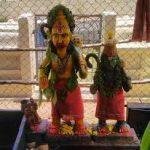
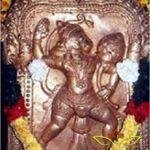
The Deity (Swarupam): The presiding deity is Veeranjaneya, a powerful manifestation of Lord Hanuman. Unlike many standing forms, the idol here is depicted in a seated posture (Lotus Pose or Padmasana), exuding a calm yet formidable energy. This form is believed to be Swayambhu (self-manifested), holding immense spiritual potency.
Phalaśruti: Why Devotees Visit
According to spiritual beliefs, a visit to Ardhagiri Veeranjaneya Swamy Temple offers profound benefits:
- Removal of Obstacles: Devotees believe that worshiping here removes all hurdles in life, akin to Lord Hanuman leaping across the ocean.
- Cleansing Ancestral Karma: Rituals performed here are said to pacify the spirits of ancestors, bringing peace to the Pitru Dosha afflicted families.
- Health & Vitality: As the embodiment of Prana Shakti (life force), prayers here are offered for recovery from prolonged illnesses.
Historical Origins & Scriptural Legend
The Legend of Ardhagiri
Tradition holds that the name “Ardhagiri” is derived from the hill’s shape resembling half a mountain (Artha meaning half). Local folklore suggests that Lord Hanuman stayed here while carrying the Sanjeevani herb (Mountain of Life) during the Ramayana war. The energy of the herb is believed to have infused the hill, making this a potent Siddhashram.
Historical Timeline
While exact founding dates are obscured by oral tradition, the temple structure and inscriptions suggest a history spanning several centuries. It flourished under the patronage of local chieftains and later the Chola and Vijayanagara empires, who were ardent devotees of Hanuman. Renovations in the late 20th century preserved the sanctity while improving infrastructure.
Architectural Marvels
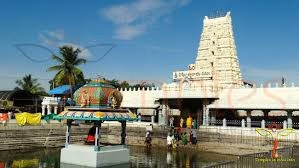
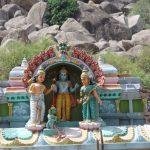
The temple is a classic example of Dravidian Architecture, characterized by its towering Raja Gopuram (main gateway) that welcomes pilgrims from the foothills. The complex is designed according to Vastu Shastra, ensuring the flow of positive energy.
- The Sanctum (Garbhagriha): The inner sanctum houses the seated idol of Veeranjaneya, carved from a single black stone. The Mandapa surrounding the sanctum features intricate carvings depicting scenes from the Ramayana.
- Sub-Shrines: The complex includes shrines for Lord Rama, Sita, and Lakshmana, as well as a separate shrine for Lord Narasimha, adding to the spiritual diversity of the site.
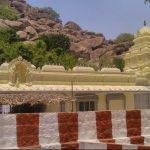
- The Hilltop Setting: While not a UNESCO site, the natural integration of the temple with the rocky terrain offers an architectural experience that blends nature and masonry seamlessly.
Darshan & Ritual Logistics (2026 Guide)
Planning your visit requires attention to the specific timings and seva schedules. The temple administration has streamlined services for devotees.
Daily Darshan Timings
| Session | Timings | Activity |
|---|---|---|
| Morning | 06:00 AM – 12:00 PM | Suprabhatam, Abhishekam, General Darshan |
| Afternoon | 12:00 PM – 04:00 PM | Closed for Deity Rest / Naivedyam |
| Evening | 04:00 PM – 08:00 PM | Archana, Seva, Darshan |
Key Sevas & Online Booking
Devotees can book specific sevas through the official Andhra Pradesh Endowments Department portal.
- Special Abhishekam: Performed with milk, honey, and sandalwood paste.
- Vishnu Sahasra Nama Archana: Recitation of 1008 names of Lord Vishnu (Hanuman is considered an avatar of Vishnu).
- Chandi Homam: Usually performed on Tuesdays and Saturdays.
2026 Festival Calendar
- Hanuman Jayanti: April 12, 2026 – Grand processions and special rituals.
- Rama Navami: April 5, 2026 – Celebrated with lighting of lamps.
- Narasimha Jayanti: May 9, 2026 – Special significance due to the Narasimha shrine.
Practical Visitor Guidance
- Dress Code: Traditional attire is mandatory. Men should wear Dhoti or pants with a shirt; women should wear Saree or Salwar Kameez. Avoid western clothing.
- Photography: Strictly prohibited inside the Garbhagriha. Photography in the outer complex is allowed but avoid using flash near the deity.
- Lockers: Mobile phones and bags are not allowed inside the sanctum. Free locker facilities are available at the entrance.
- Accessibility: The temple is located on a hill. While vehicles can drive up to a certain point, there are steps to reach the main shrine. It is moderately accessible for seniors with assistance.
- Crowd Management: Avoid weekends if possible. The best time to visit is Tuesday mornings or during off-peak hours (11:00 AM – 12:00 PM). In summer (May), carry water as the hilltop can be hot.
Pilgrimage Connectivity
How to Reach
- By Air: The nearest airport is Tirupati International Airport (TIR), approximately 60 km away.
- By Rail: The nearest railway station is Tirupati Railway Station or Chittoor Railway Station.
- By Road: The temple is located in Aragonda, roughly 30 km from Chittoor. It is well-connected via State Highway 62. Buses are available from Chittoor and Tirupati to Aragonda; from there, local autos take pilgrims up the hill.
Nearby Sacred Sites (Pilgrimage Circuit)
- Avanakshamma Temple (Aragonda): Just a few kilometers away, this powerful village deity is often visited alongside Veeranjaneya.
- Sri Kalahasteeswara Temple: Located about 50 km away, a major Shiva temple known for its Rahu-Ketu dosha remedy.
- Sri Venkateswara Temple (Tirumala): The ultimate pilgrimage destination is approximately 60 km from Aragonda.
Photo Gallery

Architecture
The temple architecture follows the traditional Dravidian style, featuring a main gateway (Gopuram) that serves as the entrance. The structure is built using stone and granite, typical of South Indian temple construction. The inner sanctum is designed to focus the devotee’s attention solely on the deity.
Legend / Local Stories
Local elders narrate that the hill of Ardhagiri was once the resting place of a fierce demon who troubled the local villagers. Lord Hanuman, flying over the region, sensed the distress and landed on the hill, vanquishing the demon. The rock on which he seated himself is where the temple stands today.
Frequently Asked Questions (FAQs)
1. Is there a VIP Darshan entry at Veeranjaneya Temple?
Yes, the temple provides a Special Entry Darshan for a nominal fee, allowing devotees to bypass the general queue. Tickets can be purchased at the counter at the foothills.
2. Can I perform Abhishekam myself?
Generally, only authorized temple priests perform the Abhishekam. However, devotees can offer the materials (milk, fruits, etc.) to the priest, who will perform the ritual on their behalf.
3. What is the best time to visit to avoid crowds?
The best time is between 6:00 AM and 8:00 AM on weekdays. Avoid public holidays and full moon days (Pournami) if you prefer a quieter darshan.
4. Is accommodation available near the temple?
While there are no major hotels on the hill, the town of Aragonda and the nearby city of Chittoor offer plenty of lodges and guesthouses. For a spiritual stay, Tirupati has TTD (Tirumala Tirupati Devasthanam) accommodations.
5. Are non-Hindus allowed inside?
Like most ancient Hindu temples, entry is restricted to those of the Hindu faith. Visitors of other faiths are requested to respect the religious sentiments.
Contact Details
Official Address:
Veeranjaneya Temple,
Ardhagiri, Aragonda Village,
Chittoor District, Andhra Pradesh, India.
Phone: Contact the local temple office via the Chittoor District Endowments Office for the latest landline numbers.
Recent Posts

Shri Kaamkoteeshwar Mandir, Varanasi – History & Significance
In the heart of Kashi, the eternal city of Lord Shiva, where the Ganges flows with celestial grace, stands the Shri Kaamkoteeshwar Mandir. This sacred Sannidhi is not merely a temple but a profound spiritual bridge between the Northern…

ओ सांवरे तूने ही मुझको संभाला – Lyrics & Meaning
ओ सांवरे तूने ही मुझको संभाला – A Prayer to Shyam Origin & Spiritual Essence Why This Bhajan Resonates Devotees chant this when overwhelmed by life’s storms—the refrain ‘तूने ही मुझको संभाला’ is the soul’s sigh of relief: “You…

कथा ये है महाराज मेरे की – Lyrics & Meaning
कथा ये है महाराज मेरे की छत्रपति संभाजी महाराज – A Prayer to Chhatrapati Sambhaji Maharaj Origin & Spiritual Essence Why This Bhajan Resonates Devotees chant this when their spirit feels tested—its powerful refrain “महाराज मेरे” is a soul’s…

Rigveda Samhita Yathartha Anuvada (ऋग्वेद संहिता यथार्थ अनुवाद) – Complete Set with Anvayartha & Hindi/English Translation
The Rigveda is the oldest surviving scripture of humanity and the foundational text of Sanātana Dharma. For serious students, scholars, UPSC aspirants studying ancient Indian history, Sanskrit learners, and spiritual seekers, a precise and grammatically structured translation is indispensable.…

आना भी अकेला है जाना भी अकेला है – Lyrics & Meaning | BharatTemples
आना भी अकेला है जाना भी अकेला है – A Prayer to the Divine Witness Origin & Spiritual Essence Why This Bhajan Resonates Devotees turn to this bhajan in moments of deep reflection—when life’s attachments begin to ache. The…

माता शेरावाली के द्वार जो भी जाता है – Lyrics & Meaning
माता शेरावाली के द्वार जो भी जाता है – A Prayer to Maa Sherawali Origin & Spiritual Essence Why This Bhajan Resonates Devotees turn to this bhajan in times of fear or uncertainty—its promise that no one leaves Maa’s…

मार लेना सपणी उबार लेणा भवरा – Lyrics & Meaning
मार लेना सपणी उबार लेणा भवरा – A Prayer to the Divine Beloved Origin & Spiritual Essence Why This Bhajan Resonates Devotees chant this in moments of deep vulnerability—its cry of “मार लेना सपणी, उबार लेणा भवरा” is the…

हमें श्याम सुंदर भरोसा तुम्हारा – Lyrics & Meaning
हमें श्याम सुंदर भरोसा तुम्हारा – A Prayer to Shyam Sundar Origin & Spiritual Essence Why This Bhajan Resonates Devotees chant this when feeling alone—its refrain ‘de do sahara’ is the soul’s cry for divine support. Lyrics in Hindi…

Mere Satguru Ne Di Thi Davai Lyrics in Hindi & Meaning
Mere Satguru Ne Di Thi Davai: Invoking the Guru’s Liberating Wisdom This soul-stirring bhajan venerates the Satguru (True Spiritual Master) as the divine physician who dispenses the only remedy for life’s deepest sufferings. Composed by Sant Karmaveer Tufani, it…

Janm Diyo Thari Maa Dukh Dekhiyo Lyrics in Hindi & Meaning
जन्म दियो थारी माँ दुख देखियो (Maa’s Grief Upon Birthing You) This soul-stirring Chetavani Bhajan (admonitory hymn) is addressed to the Divine Mother (Maa) – a call for repentance when children forget their filial duties in the dark age…