
Contents
Introduction & Spiritual Essence
Hidden within the lush, mangrove-lined geography of the Konaseema region in Andhra Pradesh lies a sanctum that whispers the history of millennia. The Parasurameswara Temple, located in the village of Guntupalli, Bhimavaram, is not merely a place of worship but a living museum of the Satavahana dynasty.
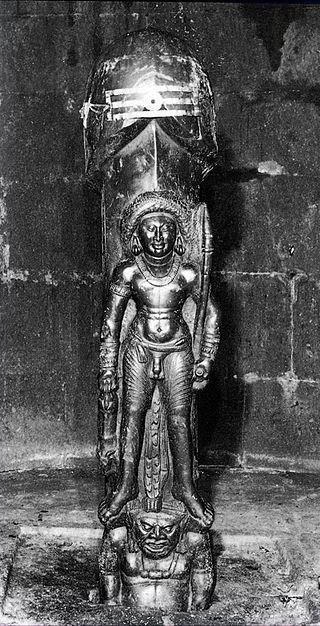
As the Lead Heritage Architect for BharatTemples.com, I invite you to explore this Dravidian masterpiece. It is renowned for housing one of the oldest naturally formed Siva Lingas in the subcontinent.
Phalaśruti: Why Visit?
- Ancestral Cleansing: Devotees believe that performing Abhishekam here washes away ancestral karma (Pitra Dosha) due to the powerful vibratory frequency of the ancient Linga.
- Wish Fulfillment: The deity, known as “Parasurameswara” (The Lord wielding the Axe), is a granter of wishes (Isthta Siddhi) for those seeking justice and stability.
- Historical Awakening: Unlike purely mythological sites, this temple offers tangible proof of India’s architectural continuity dating back to the 3rd century BCE.
Historical Origins & Scriptural Legend
The Satavahana Connection
While the temple is currently maintained following local traditions, its archaeological provenance traces back to the Satavahana Dynasty. According to inscriptions found on the temple premises, the structure was likely built between the 2nd and 3rd centuries CE, making it a contemporary of the Amaravati school of art.
“The Black and Redware sherds and large-sized bricks (42x21x6 inches) unearthed during excavations in 1973 confirm the Satavahana footprint.”
Scriptural & Local Legend
The name “Parasurameswara” derives from the presiding deity Lord Siva, manifested in the form of an axe (Parashu). Legend holds that this area was once a dense forest where Sage Parasurama (the sixth avatar of Vishnu) performed severe penance to absolve the sin of matricide. Pleased by his devotion, Lord Siva manifested here as a natural Linga.
However, archaeological records suggest the earliest phase of construction dates to the 3rd century BCE, making the temple a significant link to the pre-Satavahana era. The inscriptions on the walls, though faded, record land grants made by later chieftains for the daily conduct of worship.
Architectural Marvels
Dravidian Style & Vastu Shastra
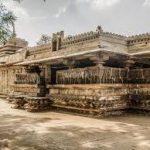
The Parasurameswara Temple is a textbook example of early Dravidian architecture. Unlike the towering Nagara spires of the north, this temple features the distinct horizontal setbacks and pyramid-like steps (Vimana) characteristic of the Dravidian style.
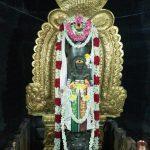
- The Garbhagriha (Sanctum Sanctorum): The core of the temple houses the Swayambhu (self-manifested) Linga. Its surface exhibits a naturalistic texture, differentiating it from the highly polished Lingas of the medieval period.
- Mandapas: The temple features a Mukha Mandapa (entrance hall) with robust pillars, carved with motifs that show a transition from Mauryan to post-Mauryan art styles.
- Sculptures:Though modest in size compared to later Chola or Vijayanagara structures, the bas-reliefs here are exquisite. The pillars contain carvings of dwara-palakas (guardians) and mythical beasts, likely added during later renovations.
Note: While many temples in the region are protected by the Archaeological Survey of India (ASI), the Parasurameswara Temple remains a protected monument under state heritage conservation.
Darshan & Ritual Logistics (2026 Season)
Parasurameswara is an active temple. As we move through 2026, the following schedule is projected. Please verify locally before travel.
| Session | Timings | Activity |
|---|---|---|
| Morning | 06:00 AM – 12:00 PM | Abhishekam & Darshan |
| Afternoon | 12:00 PM – 04:00 PM | Rajabhoga (Closure) |
| Evening | 04:00 PM – 08:00 PM | Dhupa & Deepa Darshan |
Key Sevas & Online Booking
- Maha Rudra Abhishekam: Performed on Mondays and Pradosham.
- Kumkum Archana: Daily ritual (9:00 AM – 11:00 AM).
- Online Booking: While this temple relies on traditional administration, specific sevas in the adjacent Bhimavaram Town temples (like Bhimeswara) are available on AP Tourism portals. For Parasurameswara, it is recommended to book on-site.
2026 Festival Calendar
- Maha Shivaratri (Feb 26, 2026): The temple remains open 24 hours. The energy is palpable; expect heavy crowds.
- Karthika Masam (Nov 2026): The temple is illuminated with thousands of lamps (Deepotsavam).
- Pradosham: Bi-monthly events, highly auspicious for Siva devotees.
Practical Visitor Guidance
Etiquette & Dress Code
Given the temple’s antiquity, traditional attire is strictly recommended. Men should wear dhoti or trousers with a formal shirt; women should wear saree, salwar kameez, or full-length skirts.
Crowd Management & Seasonal Advice
- Best Time to Visit: 6:00 AM (opening) is ideal for a peaceful Darshan. The temple is generally closed between 12:00 PM and 4:00 PM.
- Summer (March-May): Konaseema is humid. Carry a water bottle and a head covering. The stone floors can get hot.
- Monsoon (June-October): The region is lush and green, but rain can delay travel. Carry an umbrella.
Photography & Lockers
Photography is generally permitted in the outer courtyards but prohibited inside the Garbhagriha. There are no high-tech mobile lockers; visitors are advised to keep valuables in their vehicles or carry minimal baggage.
Pilgrimage Connectivity
How to Reach Parasurameswara Temple
The temple is located in Guntupalli, approximately 12km from Bhimavaram town.
- By Air: The nearest airport is Rajahmundry Airport (RJY), roughly 60km away. Vijayawada Airport (VGA) is an alternative (120km).
- By Rail: Bhimavaram Town Railway Station is the closest major junction.
- By Road: Accessible via the Kakinada-Bhimavaram Highway. Auto-rickshaws and taxis are easily available from Bhimavaram.
Nearby Sacred Sites (Pilgrimage Circuit)
- Bhimeswara Temple (Bhimavaram): Located very close by, this is the primary Siva temple of the region with a massive Rajagopuram.
- Ksheerarama Temple (Palakollu): One of the Pancha Kashi Kshetrams, located about 20km away.
- Samalkota (Pithapuram): The Rajahmundry temple is accessible via a short ferry ride across the Godavari, making this a spiritual triangle.
Frequently Asked Questions (FAQ)
Is there a VIP darshan entry at Parasurameswara Temple?
Unlike large Tirumala-style complexes, this is a heritage monument. There is no formal VIP entry, but devotees can consult the head priest (Guru) for special access during non-peak hours.
What is the unique significance of the Linga here?
The Linga is considered a “Swayambhu” (self-originated) natural stone formation. It dates back to the 3rd Century BCE, predating many famous temples in Andhra Pradesh.
Is the temple accessible for senior citizens?
Yes, the temple courtyard is relatively flat, but the sanctum requires stepping up a small threshold. Wheelchair access may be limited in the inner sanctum.
Where can I park my vehicle?
There is a designated open parking area near the temple entrance. It is free of charge but can fill up quickly during festivals.
Are there restaurants nearby?
Small local eateries serving South Indian vegetarian meals are available in Guntupalli village. For wider options, Bhimavaram town (15 mins) is recommended.
Photo Gallery
Official Address & Contact
Parasurameswara Temple
Guntupalli, Bhimavaram Mandal
West Godavari District, Andhra Pradesh, 534202
Recent Posts

Shri Kaamkoteeshwar Mandir, Varanasi – History & Significance
In the heart of Kashi, the eternal city of Lord Shiva, where the Ganges flows with celestial grace, stands the Shri Kaamkoteeshwar Mandir. This sacred Sannidhi is not merely a temple but a profound spiritual bridge between the Northern…

ओ सांवरे तूने ही मुझको संभाला – Lyrics & Meaning
ओ सांवरे तूने ही मुझको संभाला – A Prayer to Shyam Origin & Spiritual Essence Why This Bhajan Resonates Devotees chant this when overwhelmed by life’s storms—the refrain ‘तूने ही मुझको संभाला’ is the soul’s sigh of relief: “You…

कथा ये है महाराज मेरे की – Lyrics & Meaning
कथा ये है महाराज मेरे की छत्रपति संभाजी महाराज – A Prayer to Chhatrapati Sambhaji Maharaj Origin & Spiritual Essence Why This Bhajan Resonates Devotees chant this when their spirit feels tested—its powerful refrain “महाराज मेरे” is a soul’s…

Rigveda Samhita Yathartha Anuvada (ऋग्वेद संहिता यथार्थ अनुवाद) – Complete Set with Anvayartha & Hindi/English Translation
The Rigveda is the oldest surviving scripture of humanity and the foundational text of Sanātana Dharma. For serious students, scholars, UPSC aspirants studying ancient Indian history, Sanskrit learners, and spiritual seekers, a precise and grammatically structured translation is indispensable.…

आना भी अकेला है जाना भी अकेला है – Lyrics & Meaning | BharatTemples
आना भी अकेला है जाना भी अकेला है – A Prayer to the Divine Witness Origin & Spiritual Essence Why This Bhajan Resonates Devotees turn to this bhajan in moments of deep reflection—when life’s attachments begin to ache. The…

माता शेरावाली के द्वार जो भी जाता है – Lyrics & Meaning
माता शेरावाली के द्वार जो भी जाता है – A Prayer to Maa Sherawali Origin & Spiritual Essence Why This Bhajan Resonates Devotees turn to this bhajan in times of fear or uncertainty—its promise that no one leaves Maa’s…

मार लेना सपणी उबार लेणा भवरा – Lyrics & Meaning
मार लेना सपणी उबार लेणा भवरा – A Prayer to the Divine Beloved Origin & Spiritual Essence Why This Bhajan Resonates Devotees chant this in moments of deep vulnerability—its cry of “मार लेना सपणी, उबार लेणा भवरा” is the…

हमें श्याम सुंदर भरोसा तुम्हारा – Lyrics & Meaning
हमें श्याम सुंदर भरोसा तुम्हारा – A Prayer to Shyam Sundar Origin & Spiritual Essence Why This Bhajan Resonates Devotees chant this when feeling alone—its refrain ‘de do sahara’ is the soul’s cry for divine support. Lyrics in Hindi…

Mere Satguru Ne Di Thi Davai Lyrics in Hindi & Meaning
Mere Satguru Ne Di Thi Davai: Invoking the Guru’s Liberating Wisdom This soul-stirring bhajan venerates the Satguru (True Spiritual Master) as the divine physician who dispenses the only remedy for life’s deepest sufferings. Composed by Sant Karmaveer Tufani, it…

Janm Diyo Thari Maa Dukh Dekhiyo Lyrics in Hindi & Meaning
जन्म दियो थारी माँ दुख देखियो (Maa’s Grief Upon Birthing You) This soul-stirring Chetavani Bhajan (admonitory hymn) is addressed to the Divine Mother (Maa) – a call for repentance when children forget their filial duties in the dark age…