
Contents
Introduction & Spiritual Essence
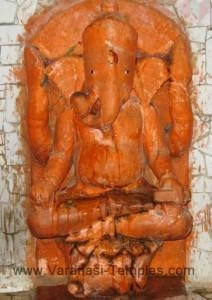
Located in the spiritual heart of India, the Dwar Vinayak Temple in Varanasi stands as a silent, powerful sentinel at the entrance of one of the world’s oldest living cities. As a sub-shrine of the revered Manikarnika Ghat, this temple is dedicated to Lord Ganesha in his form as the “Guardian of the Gate.”
Deity & Form: The presiding deity is Dwar Vinayak, a manifestation of Lord Ganesha. Unlike the larger monolithic sculptures found elsewhere, the idol here is often described as a rock-hewn carving integrated into the architecture of the ghat steps, representing the Swayambhu (self-manifested) nature of the deity. He is the Dwarpalak (gatekeeper) who ensures that only the purified and the righteous enter the cosmic sanctum of Kashi.
Phalaśruti: Why Devotees Visit
According to the Kashi Khand of the Skanda Purana, visiting Dwar Vinayak grants specific spiritual benefits:
- Removal of Obstacles: As the Vighnaharta (remover of obstacles), prayers here clear the path for a successful journey through life and the pilgrimage to Kashi Vishwanath.
- Cleansing Ancestral Karma: Performing Ganesha Puja here is believed to help ancestors attain Moksha (liberation), particularly for those with pending Pitru Dosha in their astrological charts.
- Protection: Devotees believe Dwar Vinayak safeguards the city against negative energies and evil forces entering through the southern gates.
Historical Origins & Scriptural Legend
While specific construction dates for many ancient Varanasi shrines are lost to time, the Dwar Vinayak Temple is deeply rooted in the textual fabric of Kashi’s history.
Scriptural References
The primary scriptural reference is the Kashi Khand of the Skanda Purana. It narrates the legend of Lord Shiva establishing the city as a place of liberation. In this cosmology, Lord Ganesha is not just the remover of obstacles but the guardian of the Ashta Dikpalas (eight directional guardians).
Local Legend & Oral Tradition
Tradition holds that Dwar Vinayak guards the approach to the Manikarnika Ghat, the holiest cremation ground in Hinduism. Legend states that when the Goddess Sati’s ear ornament (Manikarnika) fell at this spot, Lord Ganesha was appointed to guard the threshold between the earthly realm and the eternal.
According to temple records and local priests: The current shrine structure, though modest, has been renovated over centuries by devout vasis (residents) of Kashi, maintaining the sanctity of the original rock formation at the ghat steps.
Architectural Marvels
The architecture of Dwar Vinayak Temple is a classic example of the Indo-Aryan and Nagara styles adapted for the riverfront topography of Varanasi.
Structural Elements
- Integration with Ghat: The temple is not a standalone edifice but is carved into the stone steps leading to the river. This is a distinct feature of Varanasi’s riverfront architecture, where the Mandapa (pillared hall) serves as a resting place for pilgrims before descending to the river.
- The Shikhara: The temple features a tiered Shikhara (spire) typical of North Indian temple architecture, capped with a Amalaka (ribbed disc) and Kalash (pot), symbolizing the ascent of the human soul toward the divine.
- Stone Carvings: The walls and pillars depict intricate carvings of Geometric Patterns and Ashta Vinayaka forms. The sculpture of Dwar Vinayak is distinct, often shown with one hand holding a Modak (sweet offering) and the other raised in a blessing posture.
Darshan & Ritual Logistics (2026 Season)
The temple maintains a schedule that aligns with the daily rhythms of the Ganga Aarti. While the priests perform daily rituals, devotees are welcome to offer prayers.
Daily Timings
| Session | Timing |
|---|---|
| Morning Darshan | 05:00 AM – 12:00 PM |
| Midday Break | 12:00 PM – 1:00 PM |
| Evening Darshan | 1:00 PM – 10:00 PM |
Key Sevas & Online Booking
Note: As of 2026, most rituals are managed through the Kashi Vishwanath Temple Trust digital platforms, though smaller shrines like Dwar Vinayak often allow on-site offerings.
- Abhishekam: Ritual bathing of the idol. Ideally performed with Gangajal and milk.
- Archana: Recitation of names. The Ganesh Atharvashirsha is a potent prayer offered here.
- Online Booking: Visit kashivishwanath.org for “Divya Puja” bookings. Select “Ganesha Shrines” category.
Major 2026 Festivals
- Magh Mela: Jan 14, 2026 – Feb 10, 2026. Extremely crowded; special dawn darshan recommended.
- Ganesh Chaturthi: August 26, 2026. A day of major significance here, involving special Modak offerings and evening decorations.
- Kartik Purnima: November 4, 2026. Dev Deepawali celebrations begin here with the lighting of countless earthen lamps.
Practical Visitor Guidance
Code of Conduct & Dress
Dress Code: Traditional attire is recommended. Men should wear Dhoti or trousers with a shirt/tunic; women should wear sarees or modest clothing covering shoulders and knees.
Photography: Photography is strictly prohibited inside the sanctum sanctorum. While exterior photography is generally permitted, use discretion during peak prayer times.
Crowd Management & Accessibility
Best Hours: The most serene time to visit is between 5:00 AM and 7:00 AM, or late evening after 9:00 PM, avoiding the rush of Aarti crowds.
Seasonal Advice:
Summer (April-June): Varanasi experiences heat waves (40°C+). Carry water and wear head coverings.
Monsoon (July-Sept): The steps near the temple can become slippery due to algae growth. Wear rubber-soled shoes with grip.
Lockers: Mobile phones and electronic devices are generally restricted near the main idol. Small locker facilities are available near the ghat entrance, but it is advisable to travel light.
Pilgrimage Connectivity
How to Reach
- Nearest Airport: Lal Bahadur Shastri International Airport (LBS), Varanasi (Approx. 25 km). Taxis and e-rickshaws are available directly to Godaulia.
- Railway Station: Varanasi Junction (BSB) is the main railhead. From the station, take an auto-rickshaw to Godaulia (10 mins).
- On Foot: Dwar Vinayak Temple is located near the Manikarnika Ghat. Access is via the narrow lanes leading from Dashashwamedh Ghat or Godaulia. Note: No vehicles are allowed in the inner lanes; walking is mandatory.
Nearby Sacred Sites (Pilgrimage Circuit)
To complete a spiritual loop, visit these adjacent shrines:
- Manikarnika Ghat: The holy cremation ground. Observing the rituals here offers a profound lesson on the cycle of life and death.
- Kedar Ghat: A short walk south. This ghat is associated with Lord Shiva and features a beautiful temple with a tiered spire.
- Virupaksha Ghat: Located just before Manikarnika, known for its ancient steps and connection to the Vijayanagara empire.
Frequently Asked Questions (FAQ)
Is there a VIP darshan entry at Dwar Vinayak Temple?
Unlike the main Kashi Vishwanath Corridor, Dwar Vinayak does not have a formal VIP entry system. However, visiting early in the morning (5 AM – 6 AM) ensures a peaceful darshan with minimal crowd.
Can I perform the Ganesha Atharvashirsha myself?
Yes. The temple environment is conducive to individual prayer. Devotees are encouraged to sit on the temple steps or the ghat area and chant hymns. However, performing a full Havan (fire ritual) requires prior permission from the local trust.
What is the significance of the “Dwar” (Door) aspect?
In Kashi Khand, the city is considered a living body of Lord Shiva. Dwar Vinayak acts as the protector of the “south gate” (Dakshina Dwar), preventing negative karmic forces from entering the spiritual zone of the city.
Is there parking available?
No. The temple is in the ancient city center. The nearest vehicle parking is at Godaulia or Dashashwamedh, from which you must walk through narrow market lanes.
Are there food facilities nearby?
Yes. Several small eateries serve vegetarian Prasad and meals. It is customary to consume food after visiting the main Kashi Vishwanath temple, but light snacks and tea are available near the ghat.
Recent Posts

Shri Kaamkoteeshwar Mandir, Varanasi – History & Significance
In the heart of Kashi, the eternal city of Lord Shiva, where the Ganges flows with celestial grace, stands the Shri Kaamkoteeshwar Mandir. This sacred Sannidhi is not merely a temple but a profound spiritual bridge between the Northern…

ओ सांवरे तूने ही मुझको संभाला – Lyrics & Meaning
ओ सांवरे तूने ही मुझको संभाला – A Prayer to Shyam Origin & Spiritual Essence Why This Bhajan Resonates Devotees chant this when overwhelmed by life’s storms—the refrain ‘तूने ही मुझको संभाला’ is the soul’s sigh of relief: “You…

कथा ये है महाराज मेरे की – Lyrics & Meaning
कथा ये है महाराज मेरे की छत्रपति संभाजी महाराज – A Prayer to Chhatrapati Sambhaji Maharaj Origin & Spiritual Essence Why This Bhajan Resonates Devotees chant this when their spirit feels tested—its powerful refrain “महाराज मेरे” is a soul’s…

Rigveda Samhita Yathartha Anuvada (ऋग्वेद संहिता यथार्थ अनुवाद) – Complete Set with Anvayartha & Hindi/English Translation
The Rigveda is the oldest surviving scripture of humanity and the foundational text of Sanātana Dharma. For serious students, scholars, UPSC aspirants studying ancient Indian history, Sanskrit learners, and spiritual seekers, a precise and grammatically structured translation is indispensable.…

आना भी अकेला है जाना भी अकेला है – Lyrics & Meaning | BharatTemples
आना भी अकेला है जाना भी अकेला है – A Prayer to the Divine Witness Origin & Spiritual Essence Why This Bhajan Resonates Devotees turn to this bhajan in moments of deep reflection—when life’s attachments begin to ache. The…

माता शेरावाली के द्वार जो भी जाता है – Lyrics & Meaning
माता शेरावाली के द्वार जो भी जाता है – A Prayer to Maa Sherawali Origin & Spiritual Essence Why This Bhajan Resonates Devotees turn to this bhajan in times of fear or uncertainty—its promise that no one leaves Maa’s…

मार लेना सपणी उबार लेणा भवरा – Lyrics & Meaning
मार लेना सपणी उबार लेणा भवरा – A Prayer to the Divine Beloved Origin & Spiritual Essence Why This Bhajan Resonates Devotees chant this in moments of deep vulnerability—its cry of “मार लेना सपणी, उबार लेणा भवरा” is the…

हमें श्याम सुंदर भरोसा तुम्हारा – Lyrics & Meaning
हमें श्याम सुंदर भरोसा तुम्हारा – A Prayer to Shyam Sundar Origin & Spiritual Essence Why This Bhajan Resonates Devotees chant this when feeling alone—its refrain ‘de do sahara’ is the soul’s cry for divine support. Lyrics in Hindi…

Mere Satguru Ne Di Thi Davai Lyrics in Hindi & Meaning
Mere Satguru Ne Di Thi Davai: Invoking the Guru’s Liberating Wisdom This soul-stirring bhajan venerates the Satguru (True Spiritual Master) as the divine physician who dispenses the only remedy for life’s deepest sufferings. Composed by Sant Karmaveer Tufani, it…

Janm Diyo Thari Maa Dukh Dekhiyo Lyrics in Hindi & Meaning
जन्म दियो थारी माँ दुख देखियो (Maa’s Grief Upon Birthing You) This soul-stirring Chetavani Bhajan (admonitory hymn) is addressed to the Divine Mother (Maa) – a call for repentance when children forget their filial duties in the dark age…