
Contents
- 1 Introduction & Spiritual Essence
- 2 Historical Origins & Scriptural Legend
- 3 Architectural Marvels
- 4 Darshan & Ritual Logistics
- 5 Practical Visitor Guidance
- 6 Pilgrimage Connectivity
- 7 Frequently Asked Questions (FAQ)
- 7.1 1. Is there a VIP or special entry darshan available at Rukmini Devi Temple?
- 7.2 2. What is the significance of the temple being located on barren land?
- 7.3 3. Are there accommodation facilities near the temple?
- 7.4 4. What are the opening hours during winter (November-February)?
- 7.5 5. Can non-Hindus visit the temple?
- 8 Contact Details
Introduction & Spiritual Essence
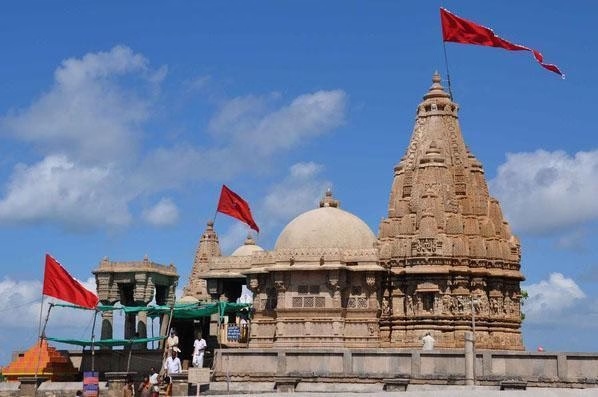
Nestled on the outskirts of the sacred city of Dwarka in Gujarat, the Rukmini Devi Temple stands as a poignant testament to eternal devotion and divine love. Dedicated to Rukmini, the chief queen and eternally beloved consort of Lord Krishna, this ancient shrine is more than a monument; it is a spiritual sanctuary. While often overshadowed by the grandeur of the Dwarkadhish Temple, the Rukmini Devi Temple possesses a unique vibrational energy, focusing specifically on the feminine aspect of divinity—Shakti and Bhakti.
The Form and Identity
Devotees worship Rukmini not merely as a queen but as the incarnation of Goddess Lakshmi herself—the consort of Vishnu (Krishna). The murti (idol) in the sanctum is traditionally depicted in her benign, yet powerful form. In the theological framework of Gaudiya Vaishnavism, Rukmini represents the pure, unconditional Bhakti (devotion) that a soul offers to the Supreme.
Phalaśruti: The Fruits of Visiting
According to ancient scriptural promises (Phalaśruti), a visit to the Rukmini Devi Temple yields profound spiritual merit. It is believed that:
- Moksha for Ancestors: Offering prayers here is said to cleanse ancestral karma, granting liberation (Moksha) to departed souls.
- Harmony in Marriage: Unmarried devotees visit to pray for a harmonious and righteous life partner, seeking blessings similar to Rukmini’s marriage to Krishna.
- Removal of Curses: As per local legend (detailed below), the temple site marks the resolution of a divine curse, making it a potent site for absolving sins and negative energies.
Historical Origins & Scriptural Legend
While the spiritual significance is timeless, the physical structure and the legend surrounding its location offer a fascinating timeline.
The Sthala Purana: The Curse of Durvasa
The primary legend distinguishing this temple is rooted in the Sthala Purana. The story goes that Lord Krishna once invited the volatile sage Durvasa Muni to a meal. Rukmini accompanied Krishna to the sage’s ashram, and Durvasa agreed to visit only on the condition that the royal couple pull his chariot. During the arduous journey, Rukmini grew thirsty. Lord Krishna struck the earth with his toe, bringing forth the holy Ganga river.
However, by drinking first without offering water to the sage, Rukmini inadvertently offended Durvasa. Enraged, he cursed her to live apart from her beloved Krishna.
The Resolution: The curse could not be broken entirely. Consequently, the Rukmini Devi Temple stands 2 kilometers apart from the main Dwarkadhish Temple (where Krishna resides). This physical distance symbolizes the enduring curse, yet it highlights the power of devotion that bridges any separation. The temple is built on barren, rocky land devoid of surface water, a direct reminder of the curse where the Ganga had once sprung forth.
Architectural Timeline
While tradition dates the sanctum’s origins to the Mahabharata era (approximately 5,000 years ago), archaeological evidence and temple records suggest the current stone structure was erected in the 12th century CE. It is inferred that the temple was constructed during the transition from the Maitraka dynasty to the Solanki period, reflecting the architectural evolution of Western India.
Architectural Marvels
Style and Vastu Shastra
The Rukmini Devi Temple is a classic example of Nagara style architecture, adapted to the Western Indian (Gujarat) vernacular. According to Vastu Shastra principles, the temple is oriented to align with the cardinal directions, allowing the first rays of the sun to illuminate the sanctum (Garbhagriha) during specific solar events.
Shikhara and Mandapas
The temple features a towering Shikhara (spire), though more modest than the towering spires of Khajuraho or the later Mughal-influenced spires of the Dwarkadhish temple. The spire is carved with intricate Amalaka discs and a Ghata base, symbolizing the cosmic pot.
The Mandapa (pillared hall) serves as a gathering space for devotees. The pillars are adorned with relief carvings depicting scenes from the Bhagavata Purana, specifically the Rukmini Kalyanam (Celestial Marriage of Rukmini and Krishna). Unlike the white marble of the main Dwarka temple, this shrine traditionally utilizes local sandstone, giving it a warm, earthy hue that blends with the surrounding rocky terrain.
Notable Sculptures
Visitors should observe the exterior walls for the depictions of the Astha Lakshmi (eight forms of Goddess Lakshmi), reinforcing the theological connection that Rukmini is the earthly avatar of Lakshmi. The lintel above the main entrance features a carving of Garuda (Vishnu’s mount) paying obeisance to the divine couple.
Photo Gallery
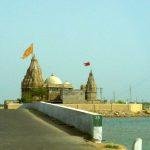
Visuals of the temple architecture and the serene surroundings.
Darshan & Ritual Logistics
Planning your visit requires attention to the ritualistic schedule. The temple follows the standard Panchakala (five daily rituals) method of Vaishnav worship.
Daily Timings
| Session | Timing | Activity |
|---|---|---|
| Morning | 6:00 AM – 12:30 PM | Mangala Darshan, Abhishekam |
| Afternoon | 12:30 PM – 4:30 PM | Temple Closed (Rest Period) |
| Evening | 4:30 PM – 9:00 PM | Shayan Darshan, Aarti |
Key Sevas and Online Booking
To participate in rituals, devotees can book services through the official Dwarkadhish Temple Board (DWTB) portal. As of 2026, biometric-linked passes ensure smoother entry.
- Abhishekam: Performed with milk, honey, and ghee. Timings: 7:00 AM.
- Archana (Sahasranama): Recitation of 1,000 names of Rukmini. Timings: Throughout open hours.
- Rukmini Kalyanam: A special ceremonial wedding ritual performed by the priests.
Booking: Visit dwarka.gujarat.gov.in or the “Dwarka Darshan” mobile app. Select “Shri Rukmini Temple” under the location filter.
2026 Festival Dates (Major)
- Vaikuntha Ekadashi: January 10, 2026 (Special midnight Aarti).
- Rukmini Ashtami: May 15, 2026 (Birth anniversary of Rukmini; the most significant day for this temple).
- Janmashtami: August 14, 2026 (Celebrated with great fervor, though larger crowds at Dwarkadhish main temple).
- Diwali (Annakut): October 21, 2026 (Symbolic reunion of the divine couple).
Practical Visitor Guidance
Ensuring a hassle-free pilgrimage experience requires preparation.
Dress Code and Etiquette
Modesty is paramount. Men are advised to wear dhotis or full-length trousers and shirts (avoid t-shirts). Women should wear sarees, salwar kameez, or long skirts. Western attire (shorts, tank tops) is strictly prohibited and may result in denied entry.
Photography and Mobiles
Photography is strictly prohibited inside the sanctum sanctorum. However, photography is permitted in the outer courtyards and mandapa. As per government regulations in heritage zones, mobile phones must be silenced. Some sects prefer a complete ban on photography to maintain meditative silence; please respect local signage.
Crowd Management
Best Hours to Visit: The optimal time for a peaceful Darshan is between 7:00 AM and 9:00 AM (after the morning Aarti) or between 4:30 PM and 5:30 PM (before the evening Aarti).
Seasonal Advice: Dwarka has a coastal climate. In May and June, temperatures soar; carry a water bottle and a head covering. During the monsoon (July–August), the sea breeze can be strong, so carry an umbrella.
Pilgrimage Connectivity
The temple is well-connected, though it requires a short transit from the main city hub.
How to Reach
- By Air: The nearest airport is Jamnagar Airport (JGA), approximately 127 km away. From there, taxis and state buses are readily available.
- By Rail: Dwarka Railway Station (DWK) is the nearest stop, just 3 km from the temple. It connects to Ahmedabad and Rajkot.
- By Road: The temple is 2 km from the Dwarkadhish Temple. You can hire an auto-rickshaw (approx. ₹50-100) or walk the pilgrimage path. The city lies on National Highway 51 (NH 51).
Nearby Sacred Sites
A pilgrimage to Dwarka is incomplete without visiting these connected sites:
- Dwarkadhish Temple: The primary seat of Lord Krishna, 2 km away.
- Nageshwar Jyotirlinga: One of the 12 Jyotirlingas, located 12 km north of Dwarka. It is a crucial stop for Shiva-Shakti balance in the pilgrimage circuit.
- Bet Dwarka (Krukulla Island): Accessible by boat, this is believed to be the actual residential area of Krishna during his rule.
Frequently Asked Questions (FAQ)
1. Is there a VIP or special entry darshan available at Rukmini Devi Temple?
Yes, the temple management offers a “Priority Darshan” pass, often clubbed with the Dwarkadhish temple ticket. These can be purchased at the counter near the main gate or booked online. However, the temple is smaller and generally less crowded than the main shrine, so VIP entry is rarely necessary except during major festivals like Rukmini Ashtami.
2. What is the significance of the temple being located on barren land?
The rocky terrain is a direct reference to the curse of sage Durvasa. After the sage cursed Rukmini that she would live on parched land without water, this area became devoid of natural water bodies. It serves as a reminder that even in separation and hardship, devotion remains the only source of spiritual sustenance.
3. Are there accommodation facilities near the temple?
Yes, Dwarka is a major pilgrimage hub. There are numerous Dharamshalas, guest houses run by the temple trust, and private hotels ranging from budget to luxury. The “Gujarat Tourism” guest houses are highly recommended for cleanliness and proximity to the temple.
4. What are the opening hours during winter (November-February)?
During winter, the temple opens slightly later due to the cooler mornings. The morning schedule shifts to 6:30 AM – 12:30 PM, while the evening schedule remains 4:30 PM – 9:00 PM. Always check the official notice board or the DWTB website for specific Aarti timings.
5. Can non-Hindus visit the temple?
Generally, access to the inner sanctum of ancient Hindu temples is restricted to followers of Hinduism, Jainism, Buddhism, and Sikhism (faiths that originated in India). However, visitors of all faiths are welcome to view the exterior architecture and the courtyard. Please respect the religious sentiments and dress modestly.
Contact Details
For inquiries regarding donations, rituals, or general information:
Official Address: Rukmini Devi Temple, Near Dwarkadhish Temple, Dwarka, Gujarat 361335, India.
Recent Posts

Shri Kaamkoteeshwar Mandir, Varanasi – History & Significance
In the heart of Kashi, the eternal city of Lord Shiva, where the Ganges flows with celestial grace, stands the Shri Kaamkoteeshwar Mandir. This sacred Sannidhi is not merely a temple but a profound spiritual bridge between the Northern…

ओ सांवरे तूने ही मुझको संभाला – Lyrics & Meaning
ओ सांवरे तूने ही मुझको संभाला – A Prayer to Shyam Origin & Spiritual Essence Why This Bhajan Resonates Devotees chant this when overwhelmed by life’s storms—the refrain ‘तूने ही मुझको संभाला’ is the soul’s sigh of relief: “You…

कथा ये है महाराज मेरे की – Lyrics & Meaning
कथा ये है महाराज मेरे की छत्रपति संभाजी महाराज – A Prayer to Chhatrapati Sambhaji Maharaj Origin & Spiritual Essence Why This Bhajan Resonates Devotees chant this when their spirit feels tested—its powerful refrain “महाराज मेरे” is a soul’s…

Rigveda Samhita Yathartha Anuvada (ऋग्वेद संहिता यथार्थ अनुवाद) – Complete Set with Anvayartha & Hindi/English Translation
The Rigveda is the oldest surviving scripture of humanity and the foundational text of Sanātana Dharma. For serious students, scholars, UPSC aspirants studying ancient Indian history, Sanskrit learners, and spiritual seekers, a precise and grammatically structured translation is indispensable.…

आना भी अकेला है जाना भी अकेला है – Lyrics & Meaning | BharatTemples
आना भी अकेला है जाना भी अकेला है – A Prayer to the Divine Witness Origin & Spiritual Essence Why This Bhajan Resonates Devotees turn to this bhajan in moments of deep reflection—when life’s attachments begin to ache. The…

माता शेरावाली के द्वार जो भी जाता है – Lyrics & Meaning
माता शेरावाली के द्वार जो भी जाता है – A Prayer to Maa Sherawali Origin & Spiritual Essence Why This Bhajan Resonates Devotees turn to this bhajan in times of fear or uncertainty—its promise that no one leaves Maa’s…

मार लेना सपणी उबार लेणा भवरा – Lyrics & Meaning
मार लेना सपणी उबार लेणा भवरा – A Prayer to the Divine Beloved Origin & Spiritual Essence Why This Bhajan Resonates Devotees chant this in moments of deep vulnerability—its cry of “मार लेना सपणी, उबार लेणा भवरा” is the…

हमें श्याम सुंदर भरोसा तुम्हारा – Lyrics & Meaning
हमें श्याम सुंदर भरोसा तुम्हारा – A Prayer to Shyam Sundar Origin & Spiritual Essence Why This Bhajan Resonates Devotees chant this when feeling alone—its refrain ‘de do sahara’ is the soul’s cry for divine support. Lyrics in Hindi…

Mere Satguru Ne Di Thi Davai Lyrics in Hindi & Meaning
Mere Satguru Ne Di Thi Davai: Invoking the Guru’s Liberating Wisdom This soul-stirring bhajan venerates the Satguru (True Spiritual Master) as the divine physician who dispenses the only remedy for life’s deepest sufferings. Composed by Sant Karmaveer Tufani, it…

Janm Diyo Thari Maa Dukh Dekhiyo Lyrics in Hindi & Meaning
जन्म दियो थारी माँ दुख देखियो (Maa’s Grief Upon Birthing You) This soul-stirring Chetavani Bhajan (admonitory hymn) is addressed to the Divine Mother (Maa) – a call for repentance when children forget their filial duties in the dark age…