
Contents
- 1 Sthaneshwar Mahadev Temple: The Eternal Witness of Kurukshetra
- 1.1 1. Introduction & Spiritual Essence
- 1.2 2. Historical Origins & Scriptural Legend
- 1.3 3. Architectural Marvels
- 1.4 4. Darshan & Ritual Logistics (2026 Schedule)
- 1.5 5. Practical Visitor Guidance
- 1.6 6. Pilgrimage Connectivity
- 1.7 7. Frequently Asked Questions (FAQ)
- 1.7.1 1. Is there a VIP darshan entry at Sthaneshwar Mahadev?
- 1.7.2 2. Can we perform Abhishekam at the temple ourselves?
- 1.7.3 3. Is the temple accessible for differently-abled visitors?
- 1.7.4 4. Are there any accommodation options nearby?
- 1.7.5 5. What is the significance of the water tank (Sarovar) here?
- 1.8 Contact Details
Sthaneshwar Mahadev Temple: The Eternal Witness of Kurukshetra
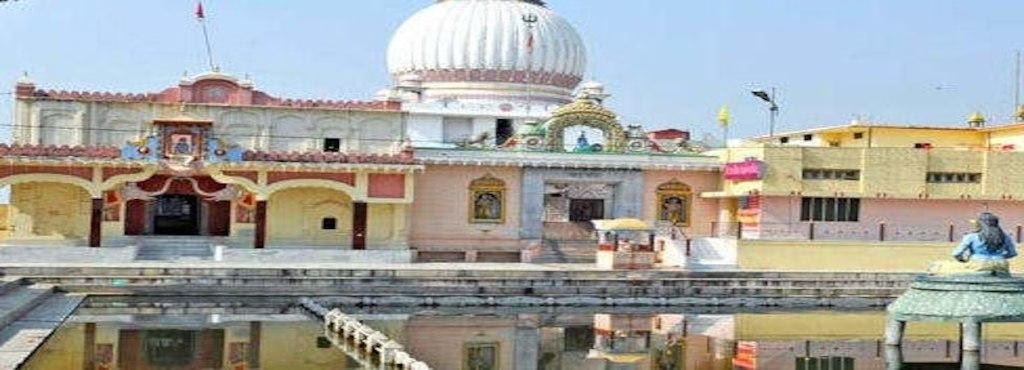
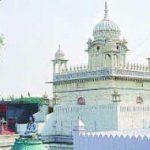
Nestled in the sacred land of Kurukshetra in Haryana, the Sthaneshwar Mahadev Temple stands as a silent witness to the epic battle of the Mahabharata. Dedicated to Lord Shiva in his form as the Lord of the Place (Sthaneshwar), this temple is not merely a stone structure but a living chronicle of divine intervention, celestial history, and unwavering faith.
| Date built: | – |
|---|---|
| Deity: | Lingam, Harshavardhana. |
| Architectural style: | – |
| Major festivals | – |
| Locale: | – |
| District:: | Kurukshetra |
| Address: | Kuber Colony, Thanesar, Haryana 136118 |
| Phone | 01722720437 |
1. Introduction & Spiritual Essence
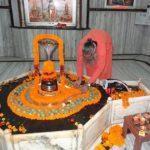
The Sthaneshwar Mahadev Temple is a Swayambhu (self-manifested) shrine where the primary deity is the Sthaneshwar Mahadev (Lord Shiva). Unlike the Nataraja form of Shiva found elsewhere, the presiding deity here is a Shiva Lingam, revered as the stability of the universe (Sthana).
Phalaśruti (Spiritual Benefits):
According to local beliefs and the Sthala Purana, the temple is one of the most powerful energy centers in North India. Devotees visit for:
- Removal of Planetary Doshas: Particularly afflictions caused by Saturn (Shani) and Mars (Mangal).
- Ancestral Peace (Pitra Dosh Shanti): It is believed that the waters here have the potency to cleanse ancestral karma, making it a vital stop during Pitru Paksha.
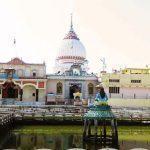
- Health and Healing: The Sthaneshwar Sarovar (tank) adjacent to the temple is believed to possess curative properties.
2. Historical Origins & Scriptural Legend
Scriptural Connection (Mahabharata Era):
Tradition holds that the temple dates back to the Dvapara Yuga. The ancient epic Mahabharata states that before the great war of Kurukshetra, Pandavas along with Lord Krishna performed a Maha Rudra Yajna at this very spot to seek blessings from Lord Shiva. The current Sthaneswar Lingam is worshipped as the divine witness to the vow of the Pandavas.
Harshvardhana and the Gurudwara Connection:
Historical records suggest that the temple was significantly patronized during the reign of King Harshvardhana (606–647 AD). Interestingly, the complex also houses a Gurudwara marking the spot where the ninth Sikh Guru, Guru Tegh Bahadur, meditated. This syncretic history highlights the shared spiritual heritage of the region. The town of Thanesar derives its name from this ancient temple.
3. Architectural Marvels
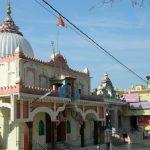
The architecture of Sthaneshwar Mahadev is a blend of ancient sanctity and restored structural integrity. While the original structure has been modified over centuries, the inner sanctum retains its ancient roots.
- Vastu Shastra: The temple follows traditional Vastu principles, facing East to welcome the rising sun, symbolizing the victory of light over darkness.
- The Sanctum (Garbhagriha): The inner chamber houses the Swayambhu Lingam, which is naturally formed rather than carved. The water from the underground water table constantly seeps over the Lingam, keeping it moist (Abhishekam water).
- The Mandapa: A spacious Mandapa (pillared hall) allows devotees to sit for meditation and chanting. The pillars feature intricate carvings depicting scenes from Shiva Purana.
4. Darshan & Ritual Logistics (2026 Schedule)
The temple follows a strict Vedic routine. Below are the daily timings and major festival dates for 2026. Note: Temple timings may vary slightly during festivals.
Daily Timings
| Darshan Type | Timing |
|---|---|
| Morning Mangala Aarti | 05:30 AM – 06:00 AM |
| Morning Darshan | 06:00 AM – 12:00 PM |
| Bhoga Offering (Raj Bhog) | 12:00 PM – 01:00 PM |
| Evening Darshan Reopens | 04:00 PM – 08:30 PM |
| Shayan Aarti | 08:30 PM |
Key Sevas (Services)
- Rudrabhishekam: Performed every Monday. Highly recommended for overcoming life obstacles.
- Maha Shivratri Rituals: Extensive night-long chanting and special Abhishekam.
- Online Seva Booking: Devotees can book Rudrabhishekam and Archana through the official Haryana Tourism Portal or the local temple administration office. (Search: Sthaneshwar Mahadev online seva booking).
2026 Festival Calendar
- Shivratri: February 26, 2026 (Special night-long darshan).
- Somvati Amavasya: May 27, 2026 (High footfall for ancestral rituals).
- Sharad Purnima: October 6, 2026 (Evening Aarti extended).
- Maha Kumbh Mela (Kurukshetra): 2026 will see a major gathering during the solar eclipse period in October (Check local dates for Kurukshetra Ashtami).
5. Practical Visitor Guidance
To ensure a smooth darshan experience, please adhere to the following guidelines:
- Dress Code: Traditional attire is preferred (Dhoti/Kurta for men, Saree/Salwar Kameez for women). Avoid shorts and sleeveless tops.
- Photography: Strictly prohibited inside the Garbhagriha (main sanctum). Photography is allowed in the courtyard.
- Electronic Devices: Mobile phones are permitted but must be on silent mode. Lockers are available at the entrance for bags and valuables.
- Crowd Management:
- Best Time: Early morning (6:00 AM – 8:00 AM) or late evening (7:00 PM – 8:00 PM).
- Seasonal Advice: Haryana summers (May-June) are intense; carry a water bottle and an umbrella. Winters (Dec-Jan) are pleasant, ideal for walking around the Sarovar.
6. Pilgrimage Connectivity
The temple is located in Thanesar, which is well-connected by road and rail. It serves as a central hub for the Kurukshetra circuit.
How to Reach
- By Air: The nearest airport is Chandigarh International Airport (IXC), approximately 95 km away (1.5 to 2 hours drive).
- By Rail: Kurukshetra Junction (KKDE) is the nearest railway station, just 5 km from the temple. Auto-rickshaws and e-rickshaws are readily available.
- By Road: The temple is accessible via NH 44 (Grand Trunk Road). It is 160 km from Delhi (approx. 3 hours drive).
Nearby Sacred Sites (Pilgrimage Circuit)
- Brahma Sarovar: Located approx. 3 km away, it is one of the holiest water tanks in India, believed to be the creation site of Lord Brahma.
- Jyotisar: The birthplace of the Bhagavad Gita, located 10 km away. Features the Banyan tree under which Krishna preached to Arjuna.
- Sannihit Sarovar: Believed to be the resting place of Lord Vishnu, located 4 km from Sthaneshwar.
7. Frequently Asked Questions (FAQ)
1. Is there a VIP darshan entry at Sthaneshwar Mahadev?
Currently, the temple does not have a formal VIP entry system. Darshan is open to all devotees equally. However, during peak festivals like Shivratri, specific passes may be issued by the temple committee for security reasons.
2. Can we perform Abhishekam at the temple ourselves?
Yes, self-Abhishekam is allowed at the designated area near the Sarovar. Water is usually drawn from the sacred tank. For the main Lingam inside the sanctum, only authorized Pujaris are permitted to perform Abhishekam.
3. Is the temple accessible for differently-abled visitors?
The courtyard is level, but the inner sanctum requires climbing a few steps. The temple management has installed ramps in the outer areas. Wheelchairs can be borrowed at the entrance, though assistance may be needed for the inner sanctum.
4. Are there any accommodation options nearby?
Yes, Thanesar offers numerous Dharamshalas and budget hotels. The Haryana Tourism Development Corporation (HTDC) runs a hotel near Brahma Sarovar. It is recommended to book in advance during summer and festival seasons.
5. What is the significance of the water tank (Sarovar) here?
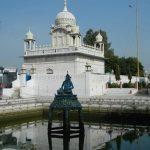
The Sthaneshwar Sarovar is historically significant as the place where the Pandavas and Krishna worshipped Shiva. Devotees believe that taking a dip in this tank washes away sins and cures ailments, as narrated in the legend of King Ban.
Contact Details
Sthaneshwar Mahadev Temple
Kuber Colony, Thanesar,
Kurukshetra, Haryana 136118
Phone: 0172-272-0437
Recent Posts

Shri Kaamkoteeshwar Mandir, Varanasi – History & Significance
In the heart of Kashi, the eternal city of Lord Shiva, where the Ganges flows with celestial grace, stands the Shri Kaamkoteeshwar Mandir. This sacred Sannidhi is not merely a temple but a profound spiritual bridge between the Northern…

ओ सांवरे तूने ही मुझको संभाला – Lyrics & Meaning
ओ सांवरे तूने ही मुझको संभाला – A Prayer to Shyam Origin & Spiritual Essence Why This Bhajan Resonates Devotees chant this when overwhelmed by life’s storms—the refrain ‘तूने ही मुझको संभाला’ is the soul’s sigh of relief: “You…

कथा ये है महाराज मेरे की – Lyrics & Meaning
कथा ये है महाराज मेरे की छत्रपति संभाजी महाराज – A Prayer to Chhatrapati Sambhaji Maharaj Origin & Spiritual Essence Why This Bhajan Resonates Devotees chant this when their spirit feels tested—its powerful refrain “महाराज मेरे” is a soul’s…

Rigveda Samhita Yathartha Anuvada (ऋग्वेद संहिता यथार्थ अनुवाद) – Complete Set with Anvayartha & Hindi/English Translation
The Rigveda is the oldest surviving scripture of humanity and the foundational text of Sanātana Dharma. For serious students, scholars, UPSC aspirants studying ancient Indian history, Sanskrit learners, and spiritual seekers, a precise and grammatically structured translation is indispensable.…

आना भी अकेला है जाना भी अकेला है – Lyrics & Meaning | BharatTemples
आना भी अकेला है जाना भी अकेला है – A Prayer to the Divine Witness Origin & Spiritual Essence Why This Bhajan Resonates Devotees turn to this bhajan in moments of deep reflection—when life’s attachments begin to ache. The…

माता शेरावाली के द्वार जो भी जाता है – Lyrics & Meaning
माता शेरावाली के द्वार जो भी जाता है – A Prayer to Maa Sherawali Origin & Spiritual Essence Why This Bhajan Resonates Devotees turn to this bhajan in times of fear or uncertainty—its promise that no one leaves Maa’s…

मार लेना सपणी उबार लेणा भवरा – Lyrics & Meaning
मार लेना सपणी उबार लेणा भवरा – A Prayer to the Divine Beloved Origin & Spiritual Essence Why This Bhajan Resonates Devotees chant this in moments of deep vulnerability—its cry of “मार लेना सपणी, उबार लेणा भवरा” is the…

हमें श्याम सुंदर भरोसा तुम्हारा – Lyrics & Meaning
हमें श्याम सुंदर भरोसा तुम्हारा – A Prayer to Shyam Sundar Origin & Spiritual Essence Why This Bhajan Resonates Devotees chant this when feeling alone—its refrain ‘de do sahara’ is the soul’s cry for divine support. Lyrics in Hindi…

Mere Satguru Ne Di Thi Davai Lyrics in Hindi & Meaning
Mere Satguru Ne Di Thi Davai: Invoking the Guru’s Liberating Wisdom This soul-stirring bhajan venerates the Satguru (True Spiritual Master) as the divine physician who dispenses the only remedy for life’s deepest sufferings. Composed by Sant Karmaveer Tufani, it…

Janm Diyo Thari Maa Dukh Dekhiyo Lyrics in Hindi & Meaning
जन्म दियो थारी माँ दुख देखियो (Maa’s Grief Upon Birthing You) This soul-stirring Chetavani Bhajan (admonitory hymn) is addressed to the Divine Mother (Maa) – a call for repentance when children forget their filial duties in the dark age…