
Contents
Introduction & Spiritual Essence
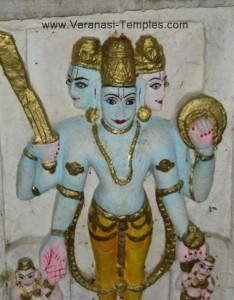
The Ganga Keshav Temple in Varanasi is a timeless sanctuary dedicated to Lord Vishnu, revered here as Ganga Keshav. Located at the historic Lalita Ghat, this temple represents the harmonious confluence of the holy River Ganga and the divine preserver, Vishnu. Unlike standalone structures, this temple is deeply embedded in the mystical geography of Kashi, serving as a spiritual anchor for pilgrims seeking liberation and ancestral peace.
Phalaśruti (Spiritual Benefits):
According to the sacred Kashi Khand of the Skanda Purana, worshipping Ganga Keshav bestows immense spiritual merit. The scriptures state that intelligent devotees who offer prayers here are respected and glorified in Vaikunth (Lord Vishnu’s celestial abode). Furthermore, performing Shraddh (ancestral rites) and making donations while bathing in the Ganga at this specific Teerth satisfies the forefathers for over a century, relieving the family from ancestral karma.
Historical Origins & Scriptural Legend
The origins of Ganga Keshav Temple are rooted deeply in antiquity, dating back to the era described in the Skanda Purana. While specific inscriptions regarding the dynasty or king who constructed the current stone edifice are lost to time, the temple’s authority is derived from the Kashi Khand. This scripture designates the area as the “Ganga Keshav Teerth,” a potent energy center where Lord Vishnu resides eternally.
The Legend:
Tradition holds that this location marks the spot where Lord Vishnu manifested to bless the cosmos. The presiding deity, Ganga Keshav, is a self-manifested (Swayambhu) form or an ancient idol established by great sages to maintain the spiritual vibration of the Kashi region. Over centuries, the temple has undergone numerous renovations to preserve its sanctity against the eroding forces of the Ganga’s waters and the march of time, yet its core identity remains unchanged.
Architectural Marvels
The Ganga Keshav Temple showcases a blend of traditional Nagara and regional Kashi architectural styles. Perched on the eastern bank of the Ganga at Lalita Ghat, the temple’s structure is designed to harmonize with the ghats’ stepped layout.
- Shikhara (Spire): The temple features a slender, curvilinear shikhara typical of North Indian temple architecture, symbolizing the ascent of the soul toward the divine.
- Mandapa (Hall): Though compact, the mandapa serves as a gathering space for devotees before entering the inner sanctum.
- Sculptural Details: The exterior walls are adorned with intricate carvings depicting scenes from Hindu mythology, particularly episodes from the Ramayana and Mahabharata, alongside motifs of river deities.
- Vastu Shastra: The temple is oriented according to Vastu principles, facing east to receive the rising sun’s energy, aligning perfectly with the natural flow of the river.
While not a UNESCO site, the temple is part of the wider protected heritage of the Varanasi Ghats, which are recognized for their cultural significance.
Darshan & Ritual Logistics
Visiting Ganga Keshav involves immersing oneself in the daily rhythms of Kashi’s temple life. Below are the standard timings for darshan and seva.
| Activity | Timing | Details |
|---|---|---|
| Morning Darshan | 05:00 AM – 12:00 PM | Opens with Mangala Aarti. |
| Evening Darshan | 04:00 PM – 10:00 PM | Includes Sandhya Aarti and Shayan Aarti. |
| Special Sevas | As per priest schedule | Abhishekam, Archana, Vishnu Sahasranama Path. |
Online Seva Booking
While the temple follows traditional practices, many Varanasi temples are digitizing rituals. Devotees interested in online seva booking for Ganga Keshav Temple should visit the official Kashi Vishwanath Temple Trust portal or consult local priests at Lalita Ghat for the most current digital options available for 2026.
2026 Major Festival Dates
- Chaitra Ramnavami: April 6, 2026
- Janmashtami: August 14, 2026
- Dev Deepawali: November 5, 2026 (Celebrated on Kartik Purnima at the Ghats)
- Hanuman Jayanti: April 12, 2026
Practical Visitor Guidance
To ensure a peaceful darshan, please adhere to the following guidelines:
- Dress Code: Traditional Indian attire is preferred (Dhoti/Kurta for men, Saree/Salwar Kameez for women). Modest clothing is mandatory.
- Photography: Photography is strictly prohibited inside the inner sanctum (Garbhagriha). It may be permitted in the outer courtyard, but always ask the temple priest first.
- Footwear & Lockers: Shoes must be removed at the designated stand outside the temple. Mobile lockers are available at nearby shops on Lalita Ghat for a nominal fee.
- Accessibility: The temple is situated on the ghat steps. While the approach is walkable, those with mobility issues may find the steep steps challenging. Access from the street side (Lalita Ghat upper level) is easier.
Crowd Management
Best Hours: The best time for a peaceful darshan is early morning (5:00 AM – 7:00 AM) or late evening after 8:00 PM. Avoid the mid-day rush between 10:00 AM and 2:00 PM, especially during weekends.
Seasonal Advice: Varanasi can be extremely hot in May and June. Carry water and a head covering. During the monsoon (July-September), the ghats can be slippery; wear rubber-soled footwear with grip.
Pilgrimage Connectivity
How to Reach
Ganga Keshav Temple is located at D.1/67, Lalita Ghat, Varanasi.
- Nearest Airport: Lal Bahadur Shastri International Airport (LBS), Varanasi (approx. 25 km).
- Nearest Railway Station: Varanasi Junction (BSB) (approx. 5 km) or Kashi Junction (approx. 3 km).
- By Road: Varanasi is well-connected via NH 19 and NH 35. From the railway station, take an auto-rickshaw to Dasaswamedh Ghat, then walk south along the ghats (approx. 10 minutes) toward Lalita Ghat.
Nearby Sacred Sites (Pilgrimage Circuit)
- Lalita Ghat: The base location, known for the Ganga Aarti and the Nepali Temple built by the King of Nepal.
- Kedareshwar Temple: Located near Manikarnika Ghat, this ancient shrine is dedicated to Lord Shiva and is a key part of the Kashi Yatra.
- Durga Temple (Durga Kund): A vibrant red-painted temple dedicated to Goddess Durga, located about 3 km from the ghats.
Frequently Asked Questions (FAQ)
1. Is there a VIP darshan entry at Ganga Keshav Temple?
As a smaller, heritage temple on the ghat, there is no formal VIP entry system like at larger shrines. However, visiting early in the morning offers a secluded and VIP-like experience.
2. What is the significance of Ganga Keshav?
The deity represents Lord Vishnu as the sustainer who resides within the Ganga waters. It is highly significant for performing Shraddh ceremonies for ancestors.
3. Can I take a dip in the Ganga at this location?
Yes, Lalita Ghat is adjacent to the temple. Devotees traditionally bathe in the river before proceeding for darshan, as mentioned in the Kashi Khand.
4. What are the contact details for the temple?
Specific phone numbers for this individual temple are rarely published. However, general inquiries for Kashi temples can be directed to the Kashi Vishwanath Temple Trust or the local Varanasi tourism office.
5. Is there an entry fee?
No, entry to Ganga Keshav Temple is free for all devotees.
Recent Posts

Shri Kaamkoteeshwar Mandir, Varanasi – History & Significance
In the heart of Kashi, the eternal city of Lord Shiva, where the Ganges flows with celestial grace, stands the Shri Kaamkoteeshwar Mandir. This sacred Sannidhi is not merely a temple but a profound spiritual bridge between the Northern…

ओ सांवरे तूने ही मुझको संभाला – Lyrics & Meaning
ओ सांवरे तूने ही मुझको संभाला – A Prayer to Shyam Origin & Spiritual Essence Why This Bhajan Resonates Devotees chant this when overwhelmed by life’s storms—the refrain ‘तूने ही मुझको संभाला’ is the soul’s sigh of relief: “You…

कथा ये है महाराज मेरे की – Lyrics & Meaning
कथा ये है महाराज मेरे की छत्रपति संभाजी महाराज – A Prayer to Chhatrapati Sambhaji Maharaj Origin & Spiritual Essence Why This Bhajan Resonates Devotees chant this when their spirit feels tested—its powerful refrain “महाराज मेरे” is a soul’s…

Rigveda Samhita Yathartha Anuvada (ऋग्वेद संहिता यथार्थ अनुवाद) – Complete Set with Anvayartha & Hindi/English Translation
The Rigveda is the oldest surviving scripture of humanity and the foundational text of Sanātana Dharma. For serious students, scholars, UPSC aspirants studying ancient Indian history, Sanskrit learners, and spiritual seekers, a precise and grammatically structured translation is indispensable.…

आना भी अकेला है जाना भी अकेला है – Lyrics & Meaning | BharatTemples
आना भी अकेला है जाना भी अकेला है – A Prayer to the Divine Witness Origin & Spiritual Essence Why This Bhajan Resonates Devotees turn to this bhajan in moments of deep reflection—when life’s attachments begin to ache. The…

माता शेरावाली के द्वार जो भी जाता है – Lyrics & Meaning
माता शेरावाली के द्वार जो भी जाता है – A Prayer to Maa Sherawali Origin & Spiritual Essence Why This Bhajan Resonates Devotees turn to this bhajan in times of fear or uncertainty—its promise that no one leaves Maa’s…

मार लेना सपणी उबार लेणा भवरा – Lyrics & Meaning
मार लेना सपणी उबार लेणा भवरा – A Prayer to the Divine Beloved Origin & Spiritual Essence Why This Bhajan Resonates Devotees chant this in moments of deep vulnerability—its cry of “मार लेना सपणी, उबार लेणा भवरा” is the…

हमें श्याम सुंदर भरोसा तुम्हारा – Lyrics & Meaning
हमें श्याम सुंदर भरोसा तुम्हारा – A Prayer to Shyam Sundar Origin & Spiritual Essence Why This Bhajan Resonates Devotees chant this when feeling alone—its refrain ‘de do sahara’ is the soul’s cry for divine support. Lyrics in Hindi…

Mere Satguru Ne Di Thi Davai Lyrics in Hindi & Meaning
Mere Satguru Ne Di Thi Davai: Invoking the Guru’s Liberating Wisdom This soul-stirring bhajan venerates the Satguru (True Spiritual Master) as the divine physician who dispenses the only remedy for life’s deepest sufferings. Composed by Sant Karmaveer Tufani, it…

Janm Diyo Thari Maa Dukh Dekhiyo Lyrics in Hindi & Meaning
जन्म दियो थारी माँ दुख देखियो (Maa’s Grief Upon Birthing You) This soul-stirring Chetavani Bhajan (admonitory hymn) is addressed to the Divine Mother (Maa) – a call for repentance when children forget their filial duties in the dark age…