
Contents
Introduction & Spiritual Essence
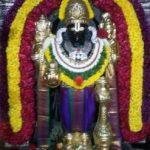
Nestled deep within the serene hills of the Shree Parashurama Kshetra lies the Kodlamane Shree Vishnumurthy Temple, a unique Tirth Kshetra (pilgrimage site) in the Uttara Kannada district of Karnataka. The sanctum is home to a Swayambhu (self-manifested) idol of Lord Vishnumurthy, carved in sacred black natural stone. Unlike typical idols, the deity here is enshrined in Mandan (decorated appearance), giving it a vibrant, living aesthetic.
The primary deity, Lord Vishnumurthy, is depicted in a standing posture measuring approximately 3.5 feet. He holds the Shanka (conch), Chakra (discus), Gada (mace), and Padma (lotus). Flanking the main deity are Lord Maheshwar (as a Shiva Linga), Lord Ganapati, and Devi Durga, making this temple a unique confluence of Vaishnava and Shaiva traditions within a single Garbhagriha.
Phalaśruti: Why Devotees Visit
Pilgrims travel to Kodlamane seeking spiritual clarity and relief from worldly burdens. It is widely believed that a visit to this shrine cleanses ancestral karma and grants Mukti (liberation). The Vishnu Tirth, a natural stream flowing adjacent to the temple, is considered highly potent; devotees use these sacred waters for ritual purification before darshan.
Historical Origins & Scriptural Legend
According to temple records and oral tradition, the temple was discovered centuries ago in the middle of a dense hill forest. While the exact date of construction is not recorded in stone inscriptions, the architectural style and the discovery of the Swayambhu idol point to ancient origins, likely protected by local chieftains over millennia.
The Legend of Kodlamane
Tradition holds that the temple is situated in the Shree Parashurama Kshetra, the land reclaimed by the sage Parashurama. The discovery of the idol is described as a divine event, with the deity manifesting to guide devotees away from the distractions of the material world. The name “Kodlamane” is deeply rooted in the local geography and culture, signifying a hidden gem within the Western Ghats.
Architectural Marvels
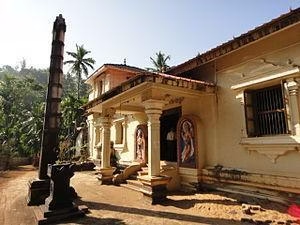
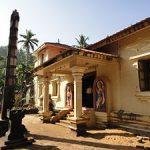
The temple is a masterpiece of Vedic Hindu temple architecture. It integrates elements of the Nagara style, evident in the curvature of the Shikhara, while the ground plan adheres to strict Vastu Shastra principles.
The Garbhagriha and Sanctum
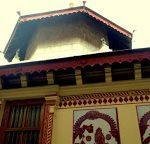
The Garbhagriha (sanctum sanctorum) is square-shaped, built with massive natural stones. Rising above it is the Shikhara (tower), which is octagonal in shape and crowned with a gold-plated copper Kalash. This copper roof is believed to pass higher energy into the sanctum.
Doorways and Art
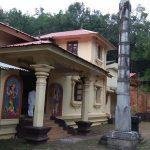
The temple features three distinct doorways leading to the sanctum, each intricately carved:
- First Door (Sandhya Mandap): Features carvings of Shree Yoga Narasimha, Hanuman, and Garuda. It is matt-painted to resemble stone.
- Second Door (Antarala): Clad in pure silver, topped with carvings of the Ashta Lakshmi.
- Third Door (Garbhagriha entrance): Also clad in silver, featuring Shree Lakshmi-Narayan at the top.
The interior walls of the Garbhagudi are adorned with traditional Kaavi art, depicting the Dashavatars of Mahavishnu, Garuda, and Hanuman. The roof is covered with copper sheets to enhance acoustic and spiritual resonance.

Darshan & Ritual Logistics
The temple administration maintains a disciplined schedule to accommodate pilgrims while preserving the sanctity of the rituals. Below are the daily timings for 2026.
Daily Darshan Timings
| Session | Timing | Notes |
|---|---|---|
| Morning | 6:00 AM – 1:00 PM | Includes Suprabhata Seva |
| Afternoon Break | 1:00 PM – 3:00 PM | Sanctum cleaning |
| Evening | 3:00 PM – 8:00 PM | Includes Deeparadhana |
Key Sevas and Booking
Devotees can participate in several rituals. Online seva booking is recommended for major festivals via the official temple website or contact number provided below.
- Abhishekam: Performed on all days. Best time is 8:00 AM.
- Archana: Available throughout the day.
- Darshana Seva: The temple is famous for its serene darshan experience.
2026 Festival Calendar
- Janmashtami: September 4–5, 2026 (Major celebrations for Lord Vishnu).
- Deepavali: October 21, 2026 (Special lighting and Lakshmi Puja).
- Maha Shivaratri: February 26, 2026 (Celebrated due to the presence of the Shiva Linga).
Practical Visitor Guidance
As the temple is located in a hill forest environment, specific guidelines ensure safety and respect.
- Dress Code: Traditional attire is mandatory. Men should wear dhotis or trousers with shirts; women should wear sarees or salwar kameez.
- Photography: Strictly prohibited inside the Garbhagriha and Mandapas. Photography is allowed in the outer prakarams.
- Mobile Lockers: Available at the entry point. Electronic devices and leather items must be deposited before entering the sanctum area.
- Accessibility: The inner sanctum requires climbing stairs. Elderly pilgrims can use the side paths, but wheelchair access to the main Garbhagriha is limited.
Crowd Management
Weekends and festival days see high footfall. The best time for a peaceful darshan is Wednesday and Thursday mornings (7 AM – 9 AM). During the summer months (April–May), it is advisable to carry water and wear light cotton fabrics, as the Western Ghats can be humid.
Pilgrimage Connectivity
How to Reach Kodlamane
The temple is located near Idagunji (1 km) and Honnavar (23 km).
- By Road: The temple is accessible via National Highway 66 (NH-66). Private vehicles can park at the base; a paid shuttle service runs to the hilltop.
- By Rail: The nearest railway station is Idagunji (5 km) or Honnavar (23 km).
- By Air: The nearest airport is Mangalore International Airport (approx. 110 km).
Nearby Sacred Sites
- Idagunji Ganapati Temple: Located just 1 km away, this is one of the most popular Ganesha temples in Karnataka.
- Sharavati Backwaters: Located in Honnavar, offering a serene boat ride experience on the Sharavati river.
- Murdeshwar Shiva Temple: Approximately 50 km away, famous for its towering Shiva statue and Raja Gopura.
Frequently Asked Questions
1. Is there a VIP Darshan entry available?
Yes, the temple administration provides a Special Darshan pass for elderly citizens (above 65 years) and differently-abled devotees. This can be obtained at the entry counter.
2. What is the significance of the Vishnu Tirth?
The Vishnu Tirth is a natural stream flowing next to the temple. It is considered equivalent to the Ganges, and devotees perform a ritual wash here before entering the temple to purify themselves.
3. Are there accommodation facilities near the temple?
There are limited guest houses run by the temple trust in Kodlamane. However, the town of Honnavar (23 km) offers various hotels and lodges for different budgets.
4. Can we carry Prasad inside the temple?
Outside food is not allowed inside the temple. However, the temple provides a divine Naivedya (prasadam) which can be purchased at the counter near the exit. The temple kitchen (Paak Shala) prepares fresh meals daily.
5. What is the main festival celebrated here?
While Lord Vishnu’s festivals are grand, Maha Shivaratri is also celebrated with equal fervor because of the Shiva Linga enshrined inside the sanctum. This highlights the temple’s syncretic culture.
Recent Posts

Shri Kaamkoteeshwar Mandir, Varanasi – History & Significance
In the heart of Kashi, the eternal city of Lord Shiva, where the Ganges flows with celestial grace, stands the Shri Kaamkoteeshwar Mandir. This sacred Sannidhi is not merely a temple but a profound spiritual bridge between the Northern…

ओ सांवरे तूने ही मुझको संभाला – Lyrics & Meaning
ओ सांवरे तूने ही मुझको संभाला – A Prayer to Shyam Origin & Spiritual Essence Why This Bhajan Resonates Devotees chant this when overwhelmed by life’s storms—the refrain ‘तूने ही मुझको संभाला’ is the soul’s sigh of relief: “You…

कथा ये है महाराज मेरे की – Lyrics & Meaning
कथा ये है महाराज मेरे की छत्रपति संभाजी महाराज – A Prayer to Chhatrapati Sambhaji Maharaj Origin & Spiritual Essence Why This Bhajan Resonates Devotees chant this when their spirit feels tested—its powerful refrain “महाराज मेरे” is a soul’s…

Rigveda Samhita Yathartha Anuvada (ऋग्वेद संहिता यथार्थ अनुवाद) – Complete Set with Anvayartha & Hindi/English Translation
The Rigveda is the oldest surviving scripture of humanity and the foundational text of Sanātana Dharma. For serious students, scholars, UPSC aspirants studying ancient Indian history, Sanskrit learners, and spiritual seekers, a precise and grammatically structured translation is indispensable.…

आना भी अकेला है जाना भी अकेला है – Lyrics & Meaning | BharatTemples
आना भी अकेला है जाना भी अकेला है – A Prayer to the Divine Witness Origin & Spiritual Essence Why This Bhajan Resonates Devotees turn to this bhajan in moments of deep reflection—when life’s attachments begin to ache. The…

माता शेरावाली के द्वार जो भी जाता है – Lyrics & Meaning
माता शेरावाली के द्वार जो भी जाता है – A Prayer to Maa Sherawali Origin & Spiritual Essence Why This Bhajan Resonates Devotees turn to this bhajan in times of fear or uncertainty—its promise that no one leaves Maa’s…

मार लेना सपणी उबार लेणा भवरा – Lyrics & Meaning
मार लेना सपणी उबार लेणा भवरा – A Prayer to the Divine Beloved Origin & Spiritual Essence Why This Bhajan Resonates Devotees chant this in moments of deep vulnerability—its cry of “मार लेना सपणी, उबार लेणा भवरा” is the…

हमें श्याम सुंदर भरोसा तुम्हारा – Lyrics & Meaning
हमें श्याम सुंदर भरोसा तुम्हारा – A Prayer to Shyam Sundar Origin & Spiritual Essence Why This Bhajan Resonates Devotees chant this when feeling alone—its refrain ‘de do sahara’ is the soul’s cry for divine support. Lyrics in Hindi…

Mere Satguru Ne Di Thi Davai Lyrics in Hindi & Meaning
Mere Satguru Ne Di Thi Davai: Invoking the Guru’s Liberating Wisdom This soul-stirring bhajan venerates the Satguru (True Spiritual Master) as the divine physician who dispenses the only remedy for life’s deepest sufferings. Composed by Sant Karmaveer Tufani, it…

Janm Diyo Thari Maa Dukh Dekhiyo Lyrics in Hindi & Meaning
जन्म दियो थारी माँ दुख देखियो (Maa’s Grief Upon Birthing You) This soul-stirring Chetavani Bhajan (admonitory hymn) is addressed to the Divine Mother (Maa) – a call for repentance when children forget their filial duties in the dark age…