
Contents
- 1 Introduction & Spiritual Essence
- 2 Historical Origins & Scriptural Legend
- 3 Architectural Marvels
- 4 Darshan & Ritual Logistics
- 5 Practical Visitor Guidance
- 6 Pilgrimage Connectivity
- 7 Frequently Asked Questions (FAQs)
- 7.1 1. What is the significance of the “Tamra” (Copper) aspect of Varaha?
- 7.2 2. Is there a VIP darshan entry available at the temple?
- 7.3 3. Can international tourists visit the temple?
- 7.4 4. What is the best time of year to visit Varanasi for a temple tour?
- 7.5 5. Are there any specific restrictions on food?
Introduction & Spiritual Essence
In the sacred geography of Kashi (Varanasi), where the divine and earthly realms converge, lies the revered Tamra Varaha Temple. Dedicated to Lord Vishnu in his Varaha (boar) avatar, this temple holds a unique spiritual vibration. The deity here is known as Tamra Varaha, representing a form composed of pure copper or bronze (Tamra). This specific manifestation is deeply connected to Tamara Dweep (the Lotus Island), a celestial abode in Hindu cosmology.
Phalaśruti (Spiritual Benefits): According to prevailing traditions and Vedic scriptures, worshiping Lord Tamra Varaha is believed to be immensely powerful. Devotees visit this shrine not only for general well-being but specifically for the cleansing of ancestral karma and the fulfillment of long-cherished desires. It is said that a sincere darshan here aids in overcoming the malefic effects of planetary doshas and brings spiritual stability to the devotee’s lineage.
Historical Origins & Scriptural Legend
The exact date of the temple’s construction remains undocumented in public archives, a common occurrence for many ancient shrines in Varanasi that evolved organically over centuries. However, the architectural ethos and the location in Neelkanth Mohalla suggest roots deep in the medieval era, likely renovated during the Maratha or Bhosale period influence in Kashi.
Scriptural References & Sthala Purana:
While the temple draws inspiration from the broader Puranic lore of the Varaha avatar—where Lord Vishnu lifted the Earth from the cosmic ocean—this specific site has a unique Sthala Purana (local legend). Tradition holds that this area was once part of a grove of lotus flowers, linking it to Tamara Dweep. The copper form of the deity is symbolic of the elemental stability of the Earth. Devotees believe that this murti is not man-made but appeared naturally (Swayambhu) or was consecrated by ancient sages to protect the sanctity of the nearby ghats.
Architectural Marvels
The Tamra Varaha Temple showcases a blend of traditional North Indian (Nagara) temple styles, adapted to the dense urban fabric of Varanasi. While not as colossal as the Vishwanath Temple, its spiritual potency lies in its intricate details.
Key Architectural Features:
– The Shikhara (Spire): The temple features a tiered shikhara typical of the Nagara style, rising towards the sky to symbolize the ascent of the soul. The amalaka (disk-like finial) at the top is a defining feature.
– The Mandapa: A compact yet ornate pillared hall allows devotees to gather for prayers. The stonework here features motifs of lotus flowers and boar heads, iconographic representations of Lord Varaha.
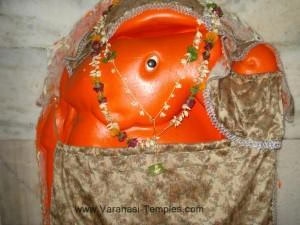
– The Murti: The deity stands as a bronze-hued figure, often depicted with two arms (Shanmukha form is rare for Varaha, but the Tamra aspect is distinct) holding the Sudarshana Chakra and the Kaumodaki gada. The eyes of the deity are half-closed in meditation, imparting a sense of calm to the beholder.
Although this temple does not hold a specific UNESCO or ASI (Archaeological Survey of India) heritage tag, it is part of the protected heritage cluster of Varanasi’s ancient temples.
Darshan & Ritual Logistics
To facilitate a smooth pilgrimage, the temple follows a structured schedule for rituals. Below are the general timings for 2026. Please note that timings may vary slightly during festivals.
| Session | Timings | Activity |
|---|---|---|
| Morning | 05:00 AM – 12:00 PM | Mangala Darshan, Abhishekam, Archana |
| Afternoon | 12:00 PM – 04:00 PM | Temple Rest (Deep cleaning) |
| Evening | 04:00 PM – 09:00 PM | Sayanadarshan, Aarti, Bhajans |
Key Sevas and Booking
Devotees can participate in various Sevas. For 2026, the temple administration encourages the use of digital platforms for registration:
- Morning Abhishekam: Performed with milk, honey, and sacred waters.
- Sahasranama Archana: Recitation of 1,000 names of Lord Vishnu.
- Special Havan: Conducted on Ekadashi and Purnima days.
Online Seva Booking: Devotees looking to book rituals can visit the official Varanasi temple trust portals or dedicated sites like bharattemples.com for verified links to the Varanasi Devaswam online booking portal. It is advisable to book at least 48 hours in advance for major festivals.
2026 Festival Calendar (Highlights)
- Varaha Jayanti: April 14, 2026 (Major celebrations with special Abhishekam).
- Narasimha Jayanti: May 2, 2026 (Celebrated due to the Vishnu connection).
- Deepavali: November 1, 2026 (Special night Darshan).
- Bhishma Ekadashi: February 10, 2026 (Significant for ancestor worship).
Practical Visitor Guidance
Visiting Varanasi requires preparation. The lanes of Chowk and Neelkanth Mohalla are narrow and bustling.
- Dress Code: Traditional attire is highly recommended. Men should wear dhoti/kurta or trousers and a shirt. Women should wear saree or salwar kameez. Avoid shorts and tank tops.
- Photography: Photography is strictly prohibited inside the inner sanctum (Garbhagriha). It is best to ask permission before taking photos of the outer architecture.
- Mobiles & Lockers: Electronic items are discouraged. Most temples in Varanasi provide cloakrooms (check at the entrance gate), but carrying minimal belongings is advised.
- Accessibility: The temple is situated on a slope in the old city. It is not wheelchair accessible due to ancient stone steps and narrow alleyways.
Crowd Management & Seasonal Advice
- Best Hours: The early morning slot (5:00 AM – 7:00 AM) offers the most peaceful darshan. Alternatively, late evening (8:00 PM) is serene.
- Seasonal Tips:
- Summer (April-June): Temperatures in Varanasi can exceed 40°C. Carry a reusable water bottle and a head covering. The temple interiors offer a cool respite.
- Monsoon (July-September): The streets can be slippery. Wear rubber-soled footwear with good grip.
- Winter (December-February): Mornings are foggy and cold. Layering clothing is essential.
Pilgrimage Connectivity
How to Reach
The Tamra Varaha Temple is located in the heart of Varanasi (Kashi).
- By Air: The nearest airport is Lal Bahadur Shastri International Airport (VNS), approximately 25 km from the city center. Taxis and cabs are readily available.
- By Rail: The primary railway station is Varanasi Junction (BSB) (approx. 6 km). The second option is Mughal Sarai Junction (MBS) (approx. 12 km). Auto-rickshaws can take you to Chowk.
- By Road: Varanasi is well-connected by National Highway 19 (formerly NH-2) and NH 7. State transport buses run regularly from major cities like Lucknow, Patna, and Allahabad.
Nearby Sacred Sites
A pilgrimage to Tamra Varaha is incomplete without visiting these nearby landmarks, all within walking distance in the Chowk area:
- Neelkanth Temple: A renowned temple dedicated to Lord Shiva (Parvateshwar), located just a short walk from the Tamra Varaha shrine. It is a Jyotirlinga site in the hearts of devotees.
- Kashi Vishwanath Temple: The most famous landmark of Varanasi, about 15 minutes away by foot through the vibrant lanes of the old city.
- Sankat Mochan Hanuman Temple: Located on the southern side of the city, accessible via a short auto-rickshaw ride, this temple is known for relieving devotees from troubles.
Frequently Asked Questions (FAQs)
1. What is the significance of the “Tamra” (Copper) aspect of Varaha?
The term “Tamra” refers to the copper or bronze complexion of the Lord. In Vedic metallurgy and symbolism, copper is associated with Venus (Shukra) and is considered a healing metal. Worshiping Tamra Varaha is believed to enhance the magnetic aura around the devotee and remove negative energies.
2. Is there a VIP darshan entry available at the temple?
While there is no formal VIP gate like in Tirupati, donations or specific Seva tickets (like Abhishekam) often allow for closer access to the deity during ritual hours. It is best to consult the temple priest or the online portal for specific donation brackets.
3. Can international tourists visit the temple?
Yes, the temple welcomes all visitors regardless of nationality. However, non-Hindus are traditionally requested to view the temple architecture from the entrance or courtyard rather than entering the inner sanctum, respecting the specific traditions of the shrine.
4. What is the best time of year to visit Varanasi for a temple tour?
The ideal time is between October and March. The weather is pleasant, making it comfortable to walk through the narrow lanes of the old city. Major festivals like Dev Deepawali (November) also occur during this period.
5. Are there any specific restrictions on food?
Inside the temple, offerings are generally restricted to fruits, flowers, and sweets offered to the deity. Non-vegetarian food and alcohol are strictly prohibited in the entire temple premises and the surrounding old city area.
Recent Posts

Shri Kaamkoteeshwar Mandir, Varanasi – History & Significance
In the heart of Kashi, the eternal city of Lord Shiva, where the Ganges flows with celestial grace, stands the Shri Kaamkoteeshwar Mandir. This sacred Sannidhi is not merely a temple but a profound spiritual bridge between the Northern…

ओ सांवरे तूने ही मुझको संभाला – Lyrics & Meaning
ओ सांवरे तूने ही मुझको संभाला – A Prayer to Shyam Origin & Spiritual Essence Why This Bhajan Resonates Devotees chant this when overwhelmed by life’s storms—the refrain ‘तूने ही मुझको संभाला’ is the soul’s sigh of relief: “You…

कथा ये है महाराज मेरे की – Lyrics & Meaning
कथा ये है महाराज मेरे की छत्रपति संभाजी महाराज – A Prayer to Chhatrapati Sambhaji Maharaj Origin & Spiritual Essence Why This Bhajan Resonates Devotees chant this when their spirit feels tested—its powerful refrain “महाराज मेरे” is a soul’s…

Rigveda Samhita Yathartha Anuvada (ऋग्वेद संहिता यथार्थ अनुवाद) – Complete Set with Anvayartha & Hindi/English Translation
The Rigveda is the oldest surviving scripture of humanity and the foundational text of Sanātana Dharma. For serious students, scholars, UPSC aspirants studying ancient Indian history, Sanskrit learners, and spiritual seekers, a precise and grammatically structured translation is indispensable.…

आना भी अकेला है जाना भी अकेला है – Lyrics & Meaning | BharatTemples
आना भी अकेला है जाना भी अकेला है – A Prayer to the Divine Witness Origin & Spiritual Essence Why This Bhajan Resonates Devotees turn to this bhajan in moments of deep reflection—when life’s attachments begin to ache. The…

माता शेरावाली के द्वार जो भी जाता है – Lyrics & Meaning
माता शेरावाली के द्वार जो भी जाता है – A Prayer to Maa Sherawali Origin & Spiritual Essence Why This Bhajan Resonates Devotees turn to this bhajan in times of fear or uncertainty—its promise that no one leaves Maa’s…

मार लेना सपणी उबार लेणा भवरा – Lyrics & Meaning
मार लेना सपणी उबार लेणा भवरा – A Prayer to the Divine Beloved Origin & Spiritual Essence Why This Bhajan Resonates Devotees chant this in moments of deep vulnerability—its cry of “मार लेना सपणी, उबार लेणा भवरा” is the…

हमें श्याम सुंदर भरोसा तुम्हारा – Lyrics & Meaning
हमें श्याम सुंदर भरोसा तुम्हारा – A Prayer to Shyam Sundar Origin & Spiritual Essence Why This Bhajan Resonates Devotees chant this when feeling alone—its refrain ‘de do sahara’ is the soul’s cry for divine support. Lyrics in Hindi…

Mere Satguru Ne Di Thi Davai Lyrics in Hindi & Meaning
Mere Satguru Ne Di Thi Davai: Invoking the Guru’s Liberating Wisdom This soul-stirring bhajan venerates the Satguru (True Spiritual Master) as the divine physician who dispenses the only remedy for life’s deepest sufferings. Composed by Sant Karmaveer Tufani, it…

Janm Diyo Thari Maa Dukh Dekhiyo Lyrics in Hindi & Meaning
जन्म दियो थारी माँ दुख देखियो (Maa’s Grief Upon Birthing You) This soul-stirring Chetavani Bhajan (admonitory hymn) is addressed to the Divine Mother (Maa) – a call for repentance when children forget their filial duties in the dark age…