
Contents
- 1 Sabarimala: The Definitive Pilgrimage Guide to Lord Ayyappa’s Abode
Sabarimala: The Definitive Pilgrimage Guide to Lord Ayyappa’s Abode
Nestled in the pristine wilderness of the Periyar Tiger Reserve in Pathanamthitta, Kerala, the Sabarimala Temple stands as a beacon of religious harmony and unwavering devotion. Dedicated to Dharma Sastha (Lord Ayyappa), it is a unique shrine that transcends caste, creed, and color. As the Lead Heritage Architect of BharatTemples.com, I present this comprehensive guide to navigating the spiritual heights of Sabarimala, the largest annual pilgrimage in the world.
Introduction & Spiritual Essence
The Sabarimala Sree Dharma Sastha Temple is not merely a structure of stone and metal; it is a living spiritual complex that tests the physical endurance and mental resolve of the devotee. Unlike other temples, Sabarimala is the only shrine where the presiding deity, Lord Ayyappa, is visible in his full glory—standing with his hands folded, ready to grant boons to his devotees.
Who is Lord Ayyappa?
Lord Ayyappa is revered as the son of Shiva and Vishnu (manifested as Mohini). He represents the Sanatana Dharma that unites the Shaivite and Vaishnavite traditions. The deity is also known as Hariharaputra.
Phalaśruti: Why Visit Sabarimala?
Pilgrims undertake the arduous journey to Sabarimala seeking specific spiritual benefits:
- Removal of Obstacles: As the guardian of the Western Gharts, Ayyappa grants Sowbhagya (auspiciousness) to devotees.
- Ancestral Cleansing: It is believed that performing Irumudikkettu (carrying the sacred offering) and visiting Sabarimala cleanses ancestral karma (Pitru Dosha).
- Universal Harmony: The temple is one of the few in India that accepts devotees from all religions and faiths, emphasizing the oneness of humanity.
Historical Origins & Scriptural Legend
The Mythology: The Legend of Ayyappa
According to the Sthala Purana, Lord Ayyappa emerged from the union of Shiva and Vishnu to vanquish the demoness Mahishi. After establishing Dharma, he merged with the Swayambhu (self-manifested) idol at Sabarimala. The region is named after Sabari, the tribal woman from the Ramayana who was blessed by Lord Rama.
Historical Timeline and Renovations
While the exact date of the temple’s origin is lost in antiquity, historical records and folklore suggest its existence since before the 12th century. The temple complex as seen today underwent significant reconstruction following a tragic fire in 1950.
- Pre-12th Century: Origins rooted in ancient tribal traditions.
- 1950: The sanctum sanctorum was destroyed by arson; the original stone idol was replaced by a Panchaloha idol (an alloy of five metals).
- 1969: Installation of the Dhwajam (flagstaff).
- 1985: The 18 Sacred Steps (Pathinettu Thripadikal) were covered with Panchaloha.
- 1991-2018: The temple became the center of a historic legal debate regarding the entry of women of a specific age group, culminating in a Supreme Court ruling.
Architectural Marvels
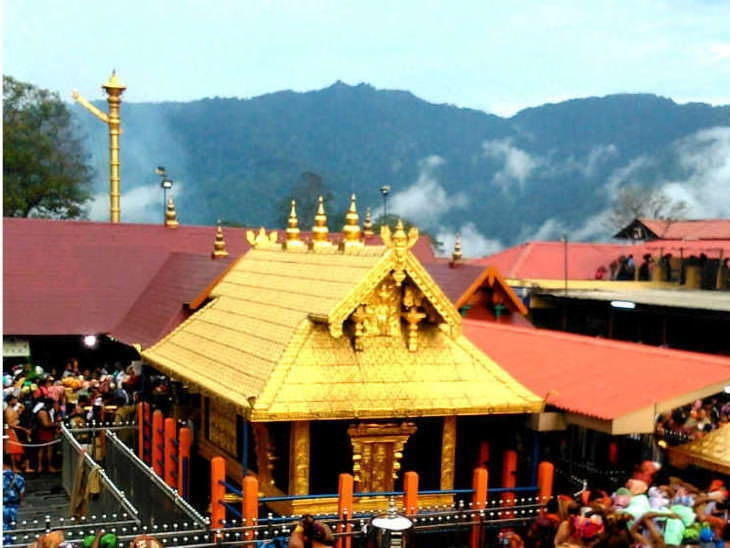
The Sabarimala Temple complex is a masterpiece of traditional Kerala Temple Architecture, harmoniously blending with the forest surroundings.
Structural Elements
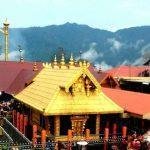
- The Sannidhanam: The main shrine is built on a plateau approximately 40 feet high. It features a sanctum sanctorum (Sreekovil) with a gold-plated roof and four golden finials.
- The 18 Sacred Steps (Pathinettu Thripadikal): The primary entrance to the temple. These steps are revered; devotees carrying Irumudikkettu must ascend them. Those without the sacred bundle use the northern staircase.
- Manimandapam: The place where the Valiya Koyil Thanthri performs special rituals.
Shrines within the Complex
- Malikappurathamma: Located near the main shrine, dedicated to Goddess Parvati. It is customary to visit Ayyappa only after a glance at Malikappurathamma.
- Kannimoola Ganapathi: Located southwest of the Sreekovil. Devotees offer Neythenga (burnt coconut) here.
- Nagarajav Shrine: Dedicated to the Lord of Snakes, essential for devotees seeking protection.
- Vavar Nada: A shrine dedicated to Vavar (a Muslim friend of Lord Ayyappa), standing as a symbol of religious harmony.
Darshan & Ritual Logistics (2026 Guide)
The temple is not open year-round. It opens primarily during Mandalakalam, Makaravilakku, and Vishu. The following is the projected schedule for the 2025-2026 pilgrimage season.
Standard Daily Timings
Note: Timings vary during festival days and opening/closing hours. The temple opens for the first 5 days of every Malayalam month.
| Session | Timing | Activity |
|---|---|---|
| Morning | 03:00 AM – 01:00 PM | Nada Unakkal (Opening), Abhishekam, Darshan |
| Afternoon | 01:00 PM – 03:00 PM | Temple Closed |
| Evening | 03:00 PM – 11:00 PM | Deeparadhana, Harivarasanam (Closing) |
Key Festivals for 2026
- Mandalakalam: November 17, 2025 – December 27, 2025. This is the primary pilgrimage season.
- Makaravilakku: January 14, 2026. The most auspicious day when the celestial light (Makara Jyothi) appears.
- Vishu: April 14, 2026.
Sevas and Online Booking
Devotees can book Archana and Abhishekam through the official portal of the Travancore Devaswom Board.
- Irumudikkettu: The mandatory offering. It must be prepared at home or purchased from authorized centers.
- Virtual Queue (Q-System): While physical tokens are used, advance registration for specific dates is recommended via the official website.
Practical Visitor Guidance
Rules & Regulations
- Dress Code: Strictly traditional. Men must wear Dhoti (unstitched cloth) without a shirt; upper body is usually covered with a towel or scarf. Women are not permitted to wear revealing clothing.
- Mandatory 41-Day Vratham: Pilgrims must observe celibacy, wear black/blue attire, and carry the Irumudikkettu for 41 days prior to the visit.
- Photography: Strictly prohibited inside the temple complex and on the sacred steps.
- Electronics: Mobile phones and cameras are banned. Use the Free Mobile Lockers available at Pamba.
Crowd Management & Seasonal Advice
- Best Time to Visit: The first week of Mandalakalam (mid-November) offers a manageable crowd. Avoid weekends immediately preceding Makaravilakku.
- Hydration: While the climate is cool, the trek is exhausting. Carry water (Bottled water available at Pamba).
- Accessibility: The shrine at Pamba (base camp) is accessible by vehicle. However, the trek to Sannidhanam (approx. 4-5 km) involves steep ascents. An electric vehicle service is available for the elderly and disabled from Pamba to Marakkoottam.
Pilgrimage Connectivity
How to Reach Sabarimala
- Nearest Airport: Cochin International Airport (COK) – approx. 160 km (4 hours drive). Trivandrum International Airport (TRV) – approx. 170 km.
- Nearest Railway Station: Chengannur (approx. 80 km) is the most preferred for pilgrims. Kottayam and Thiruvalla are also nearby.
- Road Access:
- NH 66 connects from Kottayam/Changanassery.
- Pamba is the base camp (accessed via NH 83). From Pamba, pilgrims trek on foot.
- Traditional Routes: Erumely (Kottayam) and Chalakayam (Pathanamthitta) are forest routes for experienced trekkers.
Nearby Sacred Sites
- Nilakkal Mahadeva Temple: Located on the way to Sabarimala, this Shiva temple is considered the spiritual father of Lord Ayyappa.
- Mallappally: A historic town known for the St. Mary’s Orthodox Cathedral (Parumala Church) and ancient temples.
- Perunad: The village housing the foothills, offering serene views of the Periyar river.
Photo Gallery
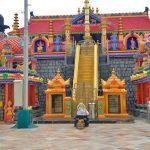
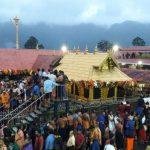
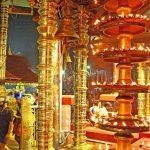
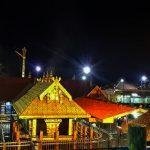
Frequently Asked Questions (FAQs)
1. What is the history behind the 41-day Vratham?
The 41-day Vratham (period of celibacy) is a purification process. Historically, pilgrims who visited Sabarimala were often from distant lands and had to traverse dangerous forests. The strict discipline of mind and body was necessary for survival and spiritual focus. Today, it symbolizes detachment from materialistic desires before meeting the Lord.
2. Is there a VIP Darshan entry available?
No. Sabarimala strictly upholds equality. There are no special tickets for VIP darshan. All pilgrims, regardless of status, must walk the same path, wear the same clothes, and stand in the same lines.
3. What is the age restriction for women entering Sabarimala?
The Supreme Court of India, in a 2018 verdict, lifted the ban on women of menstruating age (10-50 years) from entering the temple. However, legal proceedings and traditions remain complex. As of current operational protocols, pilgrims are advised to check the latest updates from the Travancore Devaswom Board before planning their visit.
4. How difficult is the trek from Pamba?
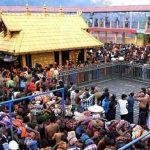
The trek from Pamba to Sannidhanam is approximately 4-5 km with a steep incline. It is moderately difficult. While elderly devotees manage it with frequent rests, those with cardiac or respiratory issues should consult a doctor and use the electric vehicle service available at the base.
5. What is the significance of Makara Jyothi?
Makara Jyothi is a celestial light that appears on the horizon at the time of Makaravilakku (January 14). It is a natural phenomenon or a lamp lit on the hills of Sabarimala, revered as a divine manifestation of the Lord’s grace.
Contact Details
Official Address:
Sabarimala Sree Dharma Sastha Temple,
Sabarimala, Perunad P.O.,
Pathanamthitta District, Kerala – 689653
Map Location
Recent Posts

ओ सांवरे तूने ही मुझको संभाला – Lyrics & Meaning
ओ सांवरे तूने ही मुझको संभाला – A Prayer to Shyam Origin & Spiritual Essence Why This Bhajan Resonates Devotees chant this when overwhelmed by life’s storms—the refrain ‘तूने ही मुझको संभाला’ is the soul’s sigh of relief: “You…

कथा ये है महाराज मेरे की – Lyrics & Meaning
कथा ये है महाराज मेरे की छत्रपति संभाजी महाराज – A Prayer to Chhatrapati Sambhaji Maharaj Origin & Spiritual Essence Why This Bhajan Resonates Devotees chant this when their spirit feels tested—its powerful refrain “महाराज मेरे” is a soul’s…

Rigveda Samhita Yathartha Anuvada (ऋग्वेद संहिता यथार्थ अनुवाद) – Complete Set with Anvayartha & Hindi/English Translation
The Rigveda is the oldest surviving scripture of humanity and the foundational text of Sanātana Dharma. For serious students, scholars, UPSC aspirants studying ancient Indian history, Sanskrit learners, and spiritual seekers, a precise and grammatically structured translation is indispensable.…

आना भी अकेला है जाना भी अकेला है – Lyrics & Meaning | BharatTemples
आना भी अकेला है जाना भी अकेला है – A Prayer to the Divine Witness Origin & Spiritual Essence Why This Bhajan Resonates Devotees turn to this bhajan in moments of deep reflection—when life’s attachments begin to ache. The…

माता शेरावाली के द्वार जो भी जाता है – Lyrics & Meaning
माता शेरावाली के द्वार जो भी जाता है – A Prayer to Maa Sherawali Origin & Spiritual Essence Why This Bhajan Resonates Devotees turn to this bhajan in times of fear or uncertainty—its promise that no one leaves Maa’s…

मार लेना सपणी उबार लेणा भवरा – Lyrics & Meaning
मार लेना सपणी उबार लेणा भवरा – A Prayer to the Divine Beloved Origin & Spiritual Essence Why This Bhajan Resonates Devotees chant this in moments of deep vulnerability—its cry of “मार लेना सपणी, उबार लेणा भवरा” is the…

हमें श्याम सुंदर भरोसा तुम्हारा – Lyrics & Meaning
हमें श्याम सुंदर भरोसा तुम्हारा – A Prayer to Shyam Sundar Origin & Spiritual Essence Why This Bhajan Resonates Devotees chant this when feeling alone—its refrain ‘de do sahara’ is the soul’s cry for divine support. Lyrics in Hindi…

Mere Satguru Ne Di Thi Davai Lyrics in Hindi & Meaning
Mere Satguru Ne Di Thi Davai: Invoking the Guru’s Liberating Wisdom This soul-stirring bhajan venerates the Satguru (True Spiritual Master) as the divine physician who dispenses the only remedy for life’s deepest sufferings. Composed by Sant Karmaveer Tufani, it…

Janm Diyo Thari Maa Dukh Dekhiyo Lyrics in Hindi & Meaning
जन्म दियो थारी माँ दुख देखियो (Maa’s Grief Upon Birthing You) This soul-stirring Chetavani Bhajan (admonitory hymn) is addressed to the Divine Mother (Maa) – a call for repentance when children forget their filial duties in the dark age…
Bhadi Sabha Mein Thane Manaun Lyrics in Hindi & Meaning
Bhadi Sabha Mein Thane Manaun: Invoking the Spear-Wielding Mother Mata Bhawani (श्री ज्वाला भवानी), the fiery manifestation of Shakti worshipped as the Protector of Dharma in Her Dhaulagarh sanctum. Origin & Spiritual Essence Composed in Rajasthani folk tradition by…