Sree Poornathrayeesa Temple Tripunithura: History, Darshan Timings & Guide
Receive daily temple updates, divine darshan, and morning bhajans directly on WhatsApp.
Contents
- 1 Introduction & Spiritual Essence
- 2 Historical Origins & Scriptural Legend
- 3 Architectural Marvels
- 4 Darshan & Ritual Logistics
- 5 Practical Visitor Guidance
- 6 Pilgrimage Connectivity
- 7 Photo Gallery
- 8 How to Reach
- 9 Frequently Asked Questions (FAQ)
Introduction & Spiritual Essence
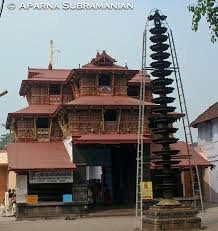
Nestled in the historic precincts of Tripunithura, the cultural capital of the former Kingdom of Cochin, stands Sree Poornathrayeesa Temple (Malayalam: ശ്രീ പൂര്ണ്ണത്രയീശ ക്ഷേത്രം). Revered as the protective guardian of Tripunithura and the National Deity of Cochin, this temple is an architectural and spiritual pinnacle in Kerala.
Primary Deity and Form
The presiding deity is Lord Vishnu worshipped as Santhanagopala Murthy. Unlike standard depictions, the murti here is unique: Lord Vishnu is seated under the five hoods of the divine serpent Anantha, whose coiled body serves as the throne. This specific form is believed to be the only one of its kind in South India. The deity is also known as Thri-poornathrayeesa (The Lord of the three worlds).
Phalaśruti: The Boons of Visit
The temple is globally renowned as a sanctuary for childless couples. It is deeply believed that sincere prayers to Poornathrayesan bless devotees with progeny, granting the boon of Santhana Gopalam (protection of children). Devotees also visit to cleanse ancestral karma and seek relief from obstacles in family life. The ever-shining traditional lamp, the Valia Vilakku, is considered to possess medicinal properties, symbolizing divine healing.
Historical Origins & Scriptural Legend
According to temple records and the Sthala Purana, the origins of the temple are tied to the Mahabharata era.
📖 Related: Sureswari Temple Subarnapur: History, Darshan Timings & Guide 2026
The Legend of Arjuna and the Brahmin
Tradition holds that Arjuna, one of the Pandava brothers, sought the help of Lord Vishnu to restore the ten children of a Brahmin (believed to be from the Puliyannur Illom, the ancestral home of the chief priest) to life. Pleased by his devotion, Lord Vishnu gifted Arjuna the idol of Santhanagopala. Arjuna returned the children to the Brahmin and, guided by Lord Ganesha (whom he had sent to find a holy spot), installed the idol in the ancient Vedic village of Poornavedapuram (modern-day Tripunithura). The sanctum sanctorum (Sree Kovil) is architecturally designed in the shape of a chariot to commemorate Arjuna’s celestial vehicle.
Timeline and Renovations
The temple is historically significant as the first among the eight royal temples of the erstwhile Kochi Kingdom. The current structure, however, owes its existence to a catastrophic event in 1920 (Malayalam year 1096). A massive fire destroyed the original wooden temple, sparing only the main idol (protected by a clay-coated vessel) and the West Gopuram. The reconstruction in 1921 was masterminded by the illustrious architect Late Sri Eachara Warrier. In a pioneering move for Kerala temple architecture, he utilized concrete and fireproof materials (copper, granite, bronze) while skillfully replicating traditional aesthetics, ensuring the temple’s safety for future generations.
Architectural Marvels
The temple showcases a blend of traditional Kerala style and modern structural engineering necessitated by the 1920 fire.
Sanctum Sanctorum and Mandapas
The inner sanctum features walls heavily decorated with large brass sheets depicting gods and goddesses, while the roof is clad in copper sheets. The entrances are adorned with gold. The two-storied Gopuram (gateway) features a Mandapam (dias) on the first floor, supported by eight intricately carved wooden pillars.
Unique Sculptural Features
The West Gopuram, which miraculously survived the 1920 fire, remains a mystery of its origin. Its sculptures are cruder yet possess a unique divine beauty compared to the rest of the structure. The temple also houses shrines for Lord Ganesha (uniquely located to the southern side, a deviation from the standard south-west placement, due to the legend of Arjuna moving him) and Lord Krishna.
📖 Related: Nrusinghanath Temple History and Darshan Timings | Bargarh, Odisha
Darshan & Ritual Logistics
Visitors are encouraged to check the seasonal timings, which may vary slightly during festivals like Vrishchikolsavam.
Daily Temple Timings
| Session | Timings |
|---|---|
| Morning Opening | 05:00 AM |
| Usha Seva (Morning Rites) | 05:30 AM – 06:30 AM |
| Public Darshan | 06:30 AM – 12:00 PM |
| Mid-day Closure | 12:00 PM – 04:30 PM |
| Evening Opening | 04:30 PM |
| Deeparadhana | 06:30 PM – 07:15 PM |
| Night Closure | 08:30 PM |
Key Sevas and 2026 Festivals
Devotees can book specific Sevas (services) via the temple’s official portal or at the counter. Key rituals include Abhishekam (ritual bathing of the deity) and Archana (reciting names).
- Vrishchikolsavam (November–December 2026): This is the largest festival in Ernakulam district, commencing on the first of the Malayalam month of Vrishchikam. It attracts lakhs of devotees. Note: Exact dates for 2026 are subject to the Malayalam calendar alignment, typically falling in mid-November.
- Annual Festival (Utsavam): A 7-day festival featuring grand processions, including the famous Sankara Narayana Vilakku and Lakshmi Narayana Vilakku where deities from Perumthrikovil and Pishari Kovil visit the temple.
Practical Visitor Guidance
Dress Code and Etiquette
Visitors must adhere to traditional dress codes. Men should wear Mundu or Dhoti (no pants/shorts), and women should wear Saree, Salwar Kameez, or traditional Kerala attire. Western clothing is not permitted inside the sanctum.
Photography and Restrictions
Photography is strictly prohibited inside the inner sanctum (Sree Kovil). Mobile phones are allowed but must be kept silent. The temple management provides locker facilities for electronic devices and footwear.
Crowd Management
Best Hours to Visit: Early morning (6:30 AM – 8:00 AM) on weekdays offers a peaceful darshan.
Seasonal Advice: During the peak summer (April–May) and the Festival season (Nov–Dec), the crowds swell significantly. Carry a water bottle and light snacks, as the temple complex can be hot and crowded during these times.
Pilgrimage Connectivity
How to Reach
- Nearest Airport: Cochin International Airport (COK) – Approx. 35 km.
- Nearest Railway Station: Ernakulam South Railway Station (ERS) – Approx. 12 km.
- By Road: Tripunithura is well connected via National Highway 66 (formerly NH 47). Buses are frequent from Ernakulam South (Vyttila Hub) and Kundanoor Junction.
📖 Related: Dharakote Jagannath Temple History & Darshan Timings | Complete 2026 Guide
Nearby Sacred Sites
Extend your pilgrimage by visiting these nearby temples:
- Chottanikkara Temple: 15 km away. A famous temple dedicated to Goddess Bhagavathi, believed to cure mental illnesses.
- Varanasi (Sree Krishna) Temple: Located in Tripunithura, known as the original seat (Moolasthanam) from which the deity was moved.
- Pishari Kovil: A nearby temple dedicated to Goddess Lakshmi, integral to the annual festival processions.
Photo Gallery
sree-poornathrayeesa-temple-tripunithura-ernakulam-temples-49rb5lg
images, Sree Poornathrayeesa Temple, Tripunithura, Kerala
download, Sree Poornathrayeesa Temple, Tripunithura, Kerala
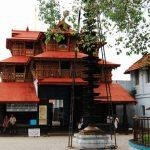
sree-poornathrayeesa-temple-ernakulam1
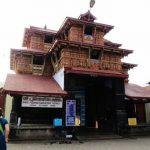
sree-poornathrayeesa-temple-ernakulam2
How to Reach
| Date built: | – |
|---|---|
| Deity: | – |
| Architectural style: | – |
| Major festivals | Kerala style |
| Locale: | Thrippunithura, Kochi |
| District:: | Tripunithura |
| Address: | Electricity Board Limited, Kottakkakam Road Near Kerala, Thrippunithura, Ernakulam, Kerala 682301 |
| Phone | – |
Frequently Asked Questions (FAQ)
1. Is there a VIP or special entry darshan available?
Yes, the temple offers a VIP darshan ticket (usually a small fee) that allows devotees to bypass the general queue, particularly useful during festival seasons. Tickets can be purchased at the counter.
2. How do I book online seva for Sree Poornathrayeesa?
You can visit the official website of the Temple Devaswom Board. Look for the ‘Online Services’ or ‘Book Seva’ section, select Sree Poornathrayeesa Temple, Tripunithura, choose your preferred ritual (e.g., Ucha Puja, Deeparadhana), and pay via credit/debit card or UPI.
3. What is the significance of the Valia Vilakku?
The Valia Vilakku (large lamp) in front of the sanctum is considered historically significant. Legend says Arjuna lit the first lamp using oil crushed from mustard seeds found in the field. The burnt oil of this traditional lamp is believed to possess medicinal properties and is sought after by devotees.
4. Is the temple wheelchair accessible?
The outer courtyards and mandapas are accessible, but the inner sanctum (Sree Kovil) has a step and uneven flooring common to ancient temple designs, which may be challenging for wheelchair users. However, assistance is usually available from temple staff.
5. Can we offer the sanctified oil (Vilakku) from home?
No. Only oil lit within the temple premises under specific rituals is considered the sanctified Valia Vilakku. Devotees can purchase the oil from the temple counter, which is believed to have been part of the sanctified ritual.