
Contents
Introduction & Spiritual Essence
Thirunavaya Navamukunda Temple stands majestically on the banks of the Bharatappuzha (River Ponnani) in Malappuram, Kerala. It is not merely a stone structure but a powerful spiritual beacon dedicated to Navamukunda Perumal, a form of Lord Vishnu. The name “Navamukunda” translates to the “Ninth Savior,” a title rooted in the temple’s divine origin legend.
The presiding deity is a Swayambhu (self-manifested) murti, emerging from the earth. Unlike many other Vishnu temples where the deity stands fully, the idol of Navamukunda is enshrined only up to the knees; the rest remains hidden in the sanctum, symbolizing the infinite depth of the divine that cannot be fully comprehended by the human mind.
Phalaśruti: The Spiritual Benefits
Devotees flock to this Divyadesam (holy abode) for profound spiritual cleansing. According to Divya Prabandha, visiting Thirunavaya offers specific blessings:
- Ancestral Liberation: The riverbank here is considered as holy as Kashi (Varanasi). Performing Bali Tarpana and Shraddha rituals for ancestors here is believed to grant them moksha.
- Purification: Bathing in the confluence (Sangam) of the Ponnani River washes away sins.
- Wisdom & Prosperity: As the abode of the Goddess of Wealth (Lakshmi) and Wisdom (Saraswati/Devi), regular darshan is believed to remove financial obstacles and enhance intellect.
Historical Origins & Scriptural Legend
While specific construction dates are not etched in stone, the temple’s lineage is traced back through centuries of oral traditions and sthala puranas. The temple is glorified in the Divya Prabandha, the canonical collection of hymns by the Alvar saints of the 6th–9th centuries CE, firmly establishing its ancient Vaishnava heritage.
The central legend speaks of Navayogis, a group of nine holy sages. They performed intense penance here to have darshan of Lord Vishnu. Pleased, the Lord appeared, but the sages requested that he remain on earth. The Lord agreed, but stated he would sink into the earth. The first eight idols installed by the sages sank completely. The ninth idol, installed by the most devoted sage, sank only to the knees before the Lord halted his descent. Hence, he is known as the “Ninth Savior”—Navamukunda.
Resilience Through History
The temple has witnessed the rise and fall of dynasties, most notably the Zamorin of Calicut, who served as the managing trustees for generations. Tragically, the temple was attacked and damaged during the invasion of Tipu Sultan in the 18th century and again during the Mappila Rebellion in 1921. However, the resilience of the devotees and the Malabar Devaswom Board ensured its reconstruction in the indigenous Kerala Temple Architecture style.
Architectural Marvels
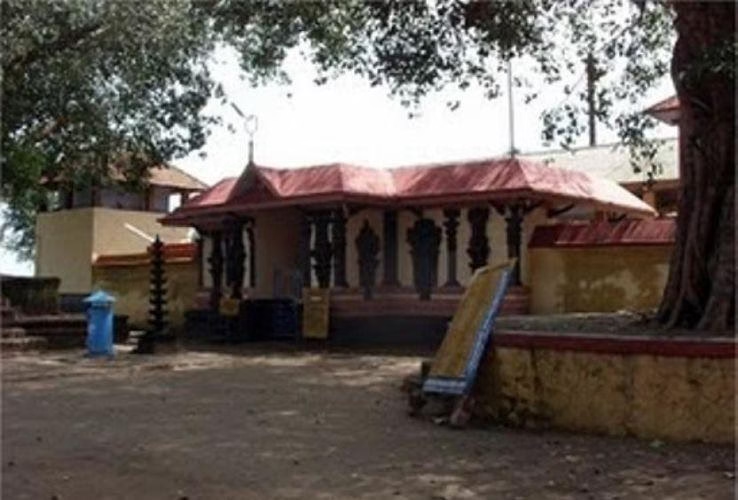
The temple is a masterpiece of traditional Kerala architecture, characterized by its rustic charm and functional design suited for the tropical monsoon climate.
Structural Elements
- The Sanctum (Sri Kovil): The core shrine is square-shaped, built with granite at the base and laterite for the superstructure. The roof is a conical structure made of terracotta tiles supported by a heavy wooden framework. The roof projects outward to protect the sanctum from heavy rains.
- Nalambalam: The rectangular hall surrounding the sanctum, featuring pillared corridors adorned with intricate wood carvings depicting stories from the Ramayana and Mahabharata.
- Namaskara Mandapa: A raised platform with a pyramidal roof where devotees offer prayers.
- Deities: While Navamukunda is the main deity, Goddess Lakshmi (Malarmangai Nachiyar) has a separate sanctum to the northwest, a unique architectural layout. Ayyappa Swami and Gajendra (the elephant) are also worshipped here.
The outer walls feature wooden frames that house lamps, illuminating the temple during festivals. Notably, the temple lacks a pond or well; water for rituals is drawn directly from the nearby River Ponnani.
Darshan & Ritual Logistics
To ensure a seamless spiritual experience, the temple follows a strict schedule. Please note that timings may vary during festivals and special occasions.
Daily Temple Timings
| Session | Timings |
|---|---|
| Morning Darshan | 05:00 AM – 10:00 AM |
| Afternoon Break | 10:00 AM – 04:00 PM |
| Evening Darshan | 04:00 PM – 07:00 PM |
Key Sevas (Rituals)
Devotees can participate in various sevas. While online booking is available for major temples in Kerala, local rituals often require on-site registration at the counter.
- Abhishekam: Ritual bathing of the deity (usually performed during early morning hours).
- Archana: Recitation of holy names (pushpanjali).
- Bali Tarpana: Special offering for ancestors (best performed during Karthika Masam or Mahalaya Amavasya).
2026 Festival Calendar
Planning your visit for 2026? Mark these auspicious dates:
- Vishu (Malayalam New Year): April 14, 2026
- Navamukunda Jayanti: June 2026 (Phalguna Masam – specific date to be confirmed by temple almanac)
- Deepavali: October 20, 2026
- Annual Festival (Utsavam): December 2026 (Check with temple office for exact 10-day schedule).
Practical Visitor Guidance
Dress Code & Etiquette
As a traditional Vaishnava temple, strict dress codes are enforced. Men must wear Mundu (dhoti) and shirts are optional. Women are advised to wear sarees, half-sarees, or formal traditional attire. Western casual wear (pants, shorts) is strictly prohibited.
Photography & Mobiles
Photography is strictly prohibited inside the sanctum and the inner courtyard. Visitors must deposit mobile phones and bags at the designated free cloakrooms before entering the temple.
Accessibility
The temple ground is level, but the sanctum requires climbing a few steps. Elders and those with mobility issues can request assistance from temple sevaks for darshan via a separate route.
Crowd Management Tips
- Best Time to Visit: Early mornings (5:30 AM – 7:00 AM) offer the most serene experience.
- Seasonal Advice: During the summer months (April–May), the riverbank heat can be intense; carry a water bottle. During monsoon (June–September), rains are heavy; carry an umbrella.
Pilgrimage Connectivity
How to Reach
The temple is located in Thirunavaya, near Kuttippuram in Malappuram district.
- By Road: The temple is located just off the Tirur – Kuttippuram Road (State Highway). It is accessible from Kozhikode (approx. 40 km south) and Kottayam.
- By Rail: The nearest railway station is Tirur Railway Station (approx. 15 km). From there, local buses or taxis are available.
- By Air: The nearest airport is Kozhikode International Airport (CCJ) (approx. 35 km).
Nearby Sacred Sites (Pilgrimage Circuit)
Enhance your spiritual journey by visiting these nearby locations:
- Cherutirunavaya Temples: Located across the river at Tavanur, this complex houses Brahma and Shiva temples. It is part of the Trimutri Sangama, making the region spiritually potent.
- Tirunavaya Kshetram: The river bank itself is a holy site for Ayurveda Pinda Pradana (rituals for ancestors).
- Kottakkunnu: Located in Malappuram city, this is a historic garden and temple complex offering panoramic views of the city.
Frequently Asked Questions (FAQ)
1. Is there a VIP darshan entry?
The temple administration maintains an egalitarian approach. However, senior citizens and physically challenged devotees are given priority entry during the specific Usha Puja and Deeparadhana times.
2. Can I perform the Bali Tarpana ritual myself?
While family members can offer rice balls (Pinda), it is highly recommended to consult the temple priests (Tantri or their assistants) to ensure the correct Vedic mantras and procedures are followed for maximum spiritual efficacy.
3. Is there accommodation available nearby?
There is no guest house run by the temple itself. However, numerous private hotels and lodges are available in Kuttippuram (5 km) and Tirur (15 km).
Three factors make it unique: 1) The deity is partially submerged (knee-high), 2) It is one of the few temples where Goddess Lakshmi has a separate sanctum rather than being seated on Vishnu’s lap, and 3) It is the site of the historical Mamankams festival.
5. Is the temple open 24/7?
No. The temple closes by 10:00 AM and reopens at 4:00 PM. It is not open for 24 hours.
Photo Gallery

Contact Details
Official Address:
Thirunavaya Navamukunda Temple
Dist: Malappuram, Kerala – 676301
Phone: 04942603747
Recent Posts

Shri Kaamkoteeshwar Mandir, Varanasi – History & Significance
In the heart of Kashi, the eternal city of Lord Shiva, where the Ganges flows with celestial grace, stands the Shri Kaamkoteeshwar Mandir. This sacred Sannidhi is not merely a temple but a profound spiritual bridge between the Northern…

ओ सांवरे तूने ही मुझको संभाला – Lyrics & Meaning
ओ सांवरे तूने ही मुझको संभाला – A Prayer to Shyam Origin & Spiritual Essence Why This Bhajan Resonates Devotees chant this when overwhelmed by life’s storms—the refrain ‘तूने ही मुझको संभाला’ is the soul’s sigh of relief: “You…

कथा ये है महाराज मेरे की – Lyrics & Meaning
कथा ये है महाराज मेरे की छत्रपति संभाजी महाराज – A Prayer to Chhatrapati Sambhaji Maharaj Origin & Spiritual Essence Why This Bhajan Resonates Devotees chant this when their spirit feels tested—its powerful refrain “महाराज मेरे” is a soul’s…

Rigveda Samhita Yathartha Anuvada (ऋग्वेद संहिता यथार्थ अनुवाद) – Complete Set with Anvayartha & Hindi/English Translation
The Rigveda is the oldest surviving scripture of humanity and the foundational text of Sanātana Dharma. For serious students, scholars, UPSC aspirants studying ancient Indian history, Sanskrit learners, and spiritual seekers, a precise and grammatically structured translation is indispensable.…

आना भी अकेला है जाना भी अकेला है – Lyrics & Meaning | BharatTemples
आना भी अकेला है जाना भी अकेला है – A Prayer to the Divine Witness Origin & Spiritual Essence Why This Bhajan Resonates Devotees turn to this bhajan in moments of deep reflection—when life’s attachments begin to ache. The…

माता शेरावाली के द्वार जो भी जाता है – Lyrics & Meaning
माता शेरावाली के द्वार जो भी जाता है – A Prayer to Maa Sherawali Origin & Spiritual Essence Why This Bhajan Resonates Devotees turn to this bhajan in times of fear or uncertainty—its promise that no one leaves Maa’s…

मार लेना सपणी उबार लेणा भवरा – Lyrics & Meaning
मार लेना सपणी उबार लेणा भवरा – A Prayer to the Divine Beloved Origin & Spiritual Essence Why This Bhajan Resonates Devotees chant this in moments of deep vulnerability—its cry of “मार लेना सपणी, उबार लेणा भवरा” is the…

हमें श्याम सुंदर भरोसा तुम्हारा – Lyrics & Meaning
हमें श्याम सुंदर भरोसा तुम्हारा – A Prayer to Shyam Sundar Origin & Spiritual Essence Why This Bhajan Resonates Devotees chant this when feeling alone—its refrain ‘de do sahara’ is the soul’s cry for divine support. Lyrics in Hindi…

Mere Satguru Ne Di Thi Davai Lyrics in Hindi & Meaning
Mere Satguru Ne Di Thi Davai: Invoking the Guru’s Liberating Wisdom This soul-stirring bhajan venerates the Satguru (True Spiritual Master) as the divine physician who dispenses the only remedy for life’s deepest sufferings. Composed by Sant Karmaveer Tufani, it…

Janm Diyo Thari Maa Dukh Dekhiyo Lyrics in Hindi & Meaning
जन्म दियो थारी माँ दुख देखियो (Maa’s Grief Upon Birthing You) This soul-stirring Chetavani Bhajan (admonitory hymn) is addressed to the Divine Mother (Maa) – a call for repentance when children forget their filial duties in the dark age…