
Contents
1. Introduction & Spiritual Essence
Among the sacred groves of Kottayam district, the Vazhappally Maha Siva Temple stands as a monumental testament to Kerala’s spiritual antiquity. Dedicated to Lord Shiva (Swayambhu Moorthy), this temple is revered as the 27th Temple in the series of the 108 Shiva Temples established by Lord Parasurama. Locally known as Dakshina Kailasam (The Kailash of the South), the primary deity is worshipped as Maha Siva, embodying the supreme consciousness.
Phalaśruti (Spiritual Benefits):
Devotees believe that a sincere darshan at Vazhappally brings profound spiritual upliftment and relief from afflictions. The temple is particularly powerful for:
- Cleansing Ancestral Karma: Performing rituals here is believed to pacify ancestors and remove Pitru Dosha.
- Removal of Fear: As a powerful Jyotirlinga manifestation, it protects devotees from unknown fears and evil influences.
- Academic & Intellectual Success: As a Grama Kshetra (Village Temple), it blesses students with wisdom and clarity.
2. Historical Origins & Scriptural Legend
The history of Vazhappally is woven with threads of royal patronage and divine intervention. Tradition holds that the temple was established by Lord Parasurama during the Treta Yuga, making it one of the oldest spiritual centers in the region.
Chera Dynasty & Lithic Records
While the exact date of installation is lost to antiquity, temple records and epigraphy confirm significant activity during the reign of Rajasekhara Varma Kulasekhara (c. 800–844 CE). The temple houses the Vattezhuttu inscription on the northern base of the cultural shrine, indicating repairs completed in the Kollam era 840 (1665 AD). These lithic records provide undeniable proof of the temple’s continuity through centuries of dynastic changes.
The Legend of Neelamperoor and the Migrated Deity
A fascinating local legend (Sthala Purana) highlights the deep connection between Vazhappally and the Neelamperoor Temple. Historically, a Chera Raja (Chembakassery Raja), after losing a debate to Hindu scholars, sought solace at Neelamperoor. To protect the sanctity of the land, the Pottis (priests) of the Pathillam (ten families) transported the Shiva idol from Neelamperoor to Vazhappally for safekeeping. It is believed that the idol currently worshipped here is the ancient Siva idol originally from Neelamperoor, installed with great reverence by the Pathillathil Pottimars.
3. Architectural Marvels
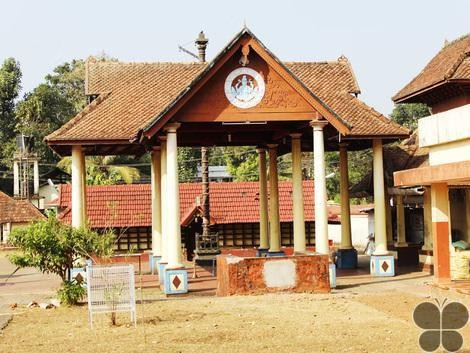
The Vazhappally temple is an architectural masterpiece reflecting the zenith of traditional Kerala temple construction. It is a rare Gramakshetram (Village Temple) that possesses two distinct Nalambalams (enclosed corridors) and two Flagmasts (Kodimaram), a feature seen in only a few temples in the state.
Style and Elements
While the overarching style is distinctly Kerala Architecture, it shares stylistic nuances with the Dravida style of South India, particularly in the tiered structures of the shrine. The temple complex adheres to strict Vastu Shastra principles, aligning the sanctum (Sreekovil) perfectly with the cardinal directions.
Sculptures and Woodwork
The temple is a gallery of fine Daarusilpas (wood carvings). The roof beams and pillars feature intricate 17th-century carvings depicting figurines from the epics (Ramayana and Mahabharata). The base of the temple features traditional mural paintings and stone carvings that narrate stories of the divine. The Chuttambalam (inner circumambulatory passage) is designed to facilitate the ritualistic circumbulation of the deity, enhancing the acoustic resonance during chanting.
4. Darshan & Ritual Logistics
Visitors are encouraged to check the daily schedule to participate in the sacred rituals. The temple administration is managed by the Devaswom Board, ensuring smooth conduct of poojas.
Daily Timings (2026 Schedule)
| Particulars | Timings |
|---|---|
| Opening Time | 05:00 AM |
| Morning Darshan | 05:30 AM – 11:30 AM |
| Evening Darshan | 05:00 PM – 08:00 PM |
| Closure | 08:30 PM |
Key Sevas & Online Booking
Devotees can book the following Sevas online through the official Kerala Devaswom website or at the temple counter:
- Abhishekam: Performed with water, milk, and honey. Best timing: 8:00 AM.
- Archana: Individual prayers offered to the deity.
- Laksharchana: A grand ritual often conducted during festivals.
- Kazhumaram: A unique ritual involving a stake, historically performed to pacify the Brahmarakshas, still offered by specific families.
2026 Festival Highlights
The temple comes alive during its annual festivals. Key dates for 2026:
- Shivaratri (Mahashivratri): March 7, 2026. This is the primary festival, marked by special Abhishekams and all-night vigils.
- Painkuni Festival: April 2026 (Exact dates based on Malayalam Calendar). A 10-day festival featuring grand processions and traditional art forms.
- Mudiyeduppu: A significant offering event traditionally associated with the temple’s legends.
5. Practical Visitor Guidance
Dress Code & Etiquette
Traditional attire is mandatory. Men should wear Dhoti or formal trousers with a shirt, and women should wear Saree, Salwar Kameez, or traditional Kerala attire. Western clothing (shorts/short skirts/tank tops) is strictly prohibited.
Photography & Lockers
- Photography: Strictly prohibited inside the sanctum sanctorum. Photography is allowed in the outer corridors, but restrictions apply during rituals.
- Mobile Phones: There are no designated electronic lockers. Visitors are requested to leave mobile phones in vehicles or silent mode inside bags.
Accessibility & Crowd Management
The temple grounds are flat but can get muddy during monsoons. Wheelchair access is limited to the outer courtyard.
Best Hours to Visit:
- Low Crowd: 05:30 AM – 07:00 AM (Early morning).
- Average Crowd: 06:00 PM – 07:00 PM (Evening sandhya).
- Seasonal Advice: Kottayam experiences heavy rains in June and July. Carry an umbrella or raincoat. In May, the heat can be intense; carry a water bottle (drinking water is available inside the complex).
6. Pilgrimage Connectivity
How to Reach
- By Air: The nearest airport is Cochin International Airport (COK), located approximately 75 km away (approx. 2.5 hours drive).
- By Rail: The nearest major railway junction is Kottayam Railway Station (approx. 18 km). Changanassery Railway Station is closer (approx. 8 km).
- By Road: The temple is located in Vazhappally, easily accessible from NH 744 and NH 183. It is 5 km from Changanassery town and 18 km from Kottayam town.
Nearby Sacred Sites (Circuit)
To enrich your pilgrimage journey, consider visiting these nearby spiritual landmarks:
- St. Mary’s Orthodox Cathedral (Valiyapally), Changanassery: One of the most prominent Christian pilgrimage centers in Kerala, known for its miraculous icons and history.
- Sree Subramanya Swamy Temple, Kottarakara: Located about 40 km away, this is a major temple dedicated to Lord Murugan, significant for its connection to the Kottarakkara Sree Mahaganapathi Temple.
- Thirunakkara Mahadeva Temple: Situated in the heart of Kottayam, another ancient temple with stunning murals and a massive Nandi statue.
7. Frequently Asked Questions (FAQ)
1. Is there a VIP Darshan entry at Vazhappally Temple?
No, the temple administration emphasizes equality among devotees. There is no specific VIP entry lane. However, special tokens can be obtained for Seva performers to facilitate their entry during ritual times.
2. Can non-Hindus enter the temple?
As per the temple traditions and state laws governing traditional shrines in Kerala, entry is generally restricted to Hindus. However, exceptions are sometimes made for historical researchers or individuals with prior permission from the Devaswom office for specific purposes.
3. Is there a facility for annadana (free food) at the temple?
Unlike larger pilgrimage centers, Vazhappally temple does not have a permanent massive dining hall (Anapprasadam) for all visitors. However, on festival days and after specific rituals, prasadam is distributed. Changanassery town (5 km away) has ample hotels and restaurants.
4. What is the historical significance of the two Nalambalams?
The presence of two Nalambalams is a rare architectural feature indicating the temple’s vast scale and the importance of circumambulatory rituals in Shaivism. It allows for elaborate processions during festivals like Painkuni.
5. When is the best time to visit for a peaceful darshan?
The best time is early morning (5:30 AM – 6:30 AM) on weekdays, excluding Mondays which can be busier. Avoid visiting during major festival dates (Shivaratri/Thiruvathira) if you prefer a quiet darshan.
Recent Posts

Shri Kaamkoteeshwar Mandir, Varanasi – History & Significance
In the heart of Kashi, the eternal city of Lord Shiva, where the Ganges flows with celestial grace, stands the Shri Kaamkoteeshwar Mandir. This sacred Sannidhi is not merely a temple but a profound spiritual bridge between the Northern…

ओ सांवरे तूने ही मुझको संभाला – Lyrics & Meaning
ओ सांवरे तूने ही मुझको संभाला – A Prayer to Shyam Origin & Spiritual Essence Why This Bhajan Resonates Devotees chant this when overwhelmed by life’s storms—the refrain ‘तूने ही मुझको संभाला’ is the soul’s sigh of relief: “You…

कथा ये है महाराज मेरे की – Lyrics & Meaning
कथा ये है महाराज मेरे की छत्रपति संभाजी महाराज – A Prayer to Chhatrapati Sambhaji Maharaj Origin & Spiritual Essence Why This Bhajan Resonates Devotees chant this when their spirit feels tested—its powerful refrain “महाराज मेरे” is a soul’s…

Rigveda Samhita Yathartha Anuvada (ऋग्वेद संहिता यथार्थ अनुवाद) – Complete Set with Anvayartha & Hindi/English Translation
The Rigveda is the oldest surviving scripture of humanity and the foundational text of Sanātana Dharma. For serious students, scholars, UPSC aspirants studying ancient Indian history, Sanskrit learners, and spiritual seekers, a precise and grammatically structured translation is indispensable.…

आना भी अकेला है जाना भी अकेला है – Lyrics & Meaning | BharatTemples
आना भी अकेला है जाना भी अकेला है – A Prayer to the Divine Witness Origin & Spiritual Essence Why This Bhajan Resonates Devotees turn to this bhajan in moments of deep reflection—when life’s attachments begin to ache. The…

माता शेरावाली के द्वार जो भी जाता है – Lyrics & Meaning
माता शेरावाली के द्वार जो भी जाता है – A Prayer to Maa Sherawali Origin & Spiritual Essence Why This Bhajan Resonates Devotees turn to this bhajan in times of fear or uncertainty—its promise that no one leaves Maa’s…

मार लेना सपणी उबार लेणा भवरा – Lyrics & Meaning
मार लेना सपणी उबार लेणा भवरा – A Prayer to the Divine Beloved Origin & Spiritual Essence Why This Bhajan Resonates Devotees chant this in moments of deep vulnerability—its cry of “मार लेना सपणी, उबार लेणा भवरा” is the…

हमें श्याम सुंदर भरोसा तुम्हारा – Lyrics & Meaning
हमें श्याम सुंदर भरोसा तुम्हारा – A Prayer to Shyam Sundar Origin & Spiritual Essence Why This Bhajan Resonates Devotees chant this when feeling alone—its refrain ‘de do sahara’ is the soul’s cry for divine support. Lyrics in Hindi…

Mere Satguru Ne Di Thi Davai Lyrics in Hindi & Meaning
Mere Satguru Ne Di Thi Davai: Invoking the Guru’s Liberating Wisdom This soul-stirring bhajan venerates the Satguru (True Spiritual Master) as the divine physician who dispenses the only remedy for life’s deepest sufferings. Composed by Sant Karmaveer Tufani, it…

Janm Diyo Thari Maa Dukh Dekhiyo Lyrics in Hindi & Meaning
जन्म दियो थारी माँ दुख देखियो (Maa’s Grief Upon Birthing You) This soul-stirring Chetavani Bhajan (admonitory hymn) is addressed to the Divine Mother (Maa) – a call for repentance when children forget their filial duties in the dark age…